Φιλελές είναι το ον που μασουλά κρατικό χρήμα πιο γρήγορα κι απ'τη σκιά του.
Γαμώ τον Περισσό.
"I like elephants, and God likes elephants" Terry Davies
Expansion has nothing to do with it. Germans did the same way more often (and tried to genocide them along the way) yet none of these nations harbor even 1% of hatred for Germany than they have for Russia.
The difference is that due to their slavic inferiority complex, they consider Germans and western Europe as a superior civilization, so being conquered and even slaughtered by them is not a big deal, not a big offense.
But due to this complex they've come to see everything eastern, orthodox and genuinely Slavic as backwards, inferior, subhuman. So when the supposed backwards inferior Eastern Slavic Russia conquers them, it's a major slight to their worldview, to their national consciousness. Cuz now youre being ruled by inferior people, not those übermensch Germans you aspire to be. And that creates GENERATIONAL, GENOCIDAL hatred that will for centuries. The worst thing you can do to a western/catholic Slav is remove German heel from his face.
Same thing with Finland really. They've been nothing but cumbuckets and Canon fodder for centuries under Sweden. Their first true autonomy and dignity came under Russia. But that doesn't matter. Swedes are master race, they bring civilization, Ruskis are Mongolian orcs. So we're mad they ruled us.
A kylix showing King Aigeus consulting the oracle in Delphi. 5th century BC. Altes Museum, Berlin.
Οἶδα δ᾿ ἐγὼ ψάμμου τ᾿ ἀριθμὸν καὶ μέτρα θαλάσσης,
καὶ κωφοῦ συνίημι, καὶ οὐ φωνεῦντος ἀκούω.
-
I know how the number of the grains of sand and the size of the sea,
I understand the dumb and hear the voiceless.
Herodotus, Histories 1.47
This new propaganda attempt is so pathetic.
So when in Turkish you say "Rum" you mean the Italians? The eastern Romans were Greeks who had become Roman citizens and continued to rule the Eastern Roman State after the demise of the Western one for more than a thousand years! Greek culture and language was a major pillar of what is called GRAECO-ROMAN civilisation!
Most other Europeans called them "Greeks" and their state "Greece", and they as well acknowledged their Greek heritage alongside their rightful claim to Roman Imperium. Let's see how they viewed themselves by what they were saying:
"Present your shield, swords, arrows, and spears to them, imagining that you are a hunting party after wild boars, so that the impious may learn that they are dealing not with dumb animals but with their lords and masters, the descendants of the Greeks and the Romans".
Emperor Constantine XI Palaiologos, 1453
@demirgyt@an8rwpos01@ksakkas_t@turkic_facts And who do you compare yourself with? Your nation was formed 100 years ago from a bunch of different ethnicities. Even now there are dozens of minorities (official or not) in your country. Your grandsons will be at least 1/4 Kurdish. Keep coping
@MuhAliOzTurk@NikKo_ial@turkic_facts Turks, the perpetuators of 3 of the biggest Genocides in human history, claiming Greeks to be a genocidal nation. The copium is unreal. You want to occupy our islands but you cry about Israel all the time. Cinema.
Albanophones settled Greece, you don’t say. We thought Arvanites spawned out of thin air…
The point is that albanian admixture is minimal, even in Arvanites (most of the foreign admixture they mediated was not albanian). They descend overwhelmingly from dehellenized Greeks after all.
David is correctly pointing out that the similarity lies largely in the fact that the two share less Slavic ancestry, which is correct.
If Bulgarians had less Slavic, their East Med would by proportion be higher, which would shift them down to Greeks.
Πού βολοδέρνεις ψυχούλα μου; Τρίτη ημέρα χαμένη στη συνοικία Ποσειδωνία Αγίων Αποστόλων Καλάμου Αττικής! Το όνομά της είναι Μίνι. τηλ:6948436000 https://t.co/lz7V6Uxs2K
A Minoan krater from Phaistos, ca. 1700 BC. Heraklion Archaeological Museum.
Ἐκ χρυσοῦ ποτηρίου πίνειν φάρµακον καὶ παρὰ φίλου ἀγνώµονος συµβουλίαν λαµβάνειν ταὐτόν ἐστιν.
-
Drinking poison from a golden cup and getting advice from an ignorant friend is the same.
Plutarch, Corpus Parisinum
"The Ottomans and that Genghis Khan are (like) paternal cousins. The ancestors of the House of Osman—Süleyman Shah and Ertuğrul—went to the land of the Greeks (Rum of the Greeks). (‘Rum-ı Yunaniyan’)"
After the Oghuz origins of Etruscans , the Turk Homer, the Yörükler Hittites, now we even have claims to a supposed Ottoman "Rum heritate" and an attempted distortion of the medieval Greek past by our neighbors.
But what Turks were saying or writing about 400 years ago?
Evliya Çelebi (1611 – 1682) is well known to anyone having an interest in 17th century Ottoman things, since Evliya, who travelled for forty years recording his Seyahatnâme, left us a quite rich source of information.
Not famous for his "academic" background Evliya writes down and expresses though what would be considered known or expected for the average Osmanli reader.
Let's see what he writes about Greeks, their past and their neighbors:
“The Ottomans and that Genghis Khan are (like) paternal cousins. The ancestors of the House of Osman—Süleyman Shah and Ertuğrul—went to the land of the Greeks (Rum of the Greeks).” (‘Rum-ı Yunaniyan’).
Osmanlı ile o Cengiz Han amca oğullarıdır. Osmanoğlu'nun ataları Süleyman Şah ve Ertuğrul, Rum-ı Yunaniyan'a giderler."
Pretty clear.
While describing Athens he documents what he believed to be historically accurate:
"The Greek people originated in the time of the prophet David and, multiplying in the country of Greece and acquiring property and territory, first built the great city of Macedonia which is Filibe; then the city of Pozanta (Byzantium) which was latter called Kostantiniye (Constantinople) and now is called Islambol (‘Islam-plenty’ – i.e., Istanbul). Then they built this city of Athens on the Rumelia side of the Sea of Rum (i.e., the Aegean) at the end of the Gulf (of Corinth) to the north and west.
Later Constantine, the ruler of Istanbul, expanded and embellished it. His army ruled over this city of Athens, which already had a 1,700 year history as a great entrepôt and a medrese (!) and abode of philosophers. It passed from king to king and emperor to emperor, eventually passing from the hands of Spain to the Venetian Franks and then, in the year (—), being conquered by the Ottomans in the person of Sultan Mehmed the Conqueror.
Zira Yunan kavmi Hazret-i Davud aleyhisselam asrında Rumeli'de çoğalarak mülk sahibi olduklarında ilk yaptıkları büyük şehir Makedonya şehri ki Filibe şehridir. Sonra Pozanta şehri ki sonra ona Kostantiniyye dediler, hala İstanbul derler. Sonra bu Atina şehrini Rum kavmi, Rum denizinin Rumeli tarafının kuzeyi ve batısı tarafının körfezi bitiminde yaptılar.
Sonra İstanbul sahibi Kostantin de fazlaca imar etti. Onun askerleri bu Atina şehrine hükmedip hekimler medresesi şehri olmuş idi. 2.700 yıllık eski yapı ve büyük bir şehirdir. Nice yüz adet kraldan krala geçmiş bir şehir olup içinde nice padişahlar ve nice hekimler sakin oldu. İspanya elinden Venedik Frengi eline girip ondan (---) tarihinde Osmanlılardan bizzat Fatih Sultan Mehmed Han fethidir."
While for the language his contemporary Greeks spoke:
“Because in the Greek language the letters ta and sa are close in articulation, the Greek people call this city Asina, that is, it means (---).
Rumcada ta ile sa harflerinin mahreç yakınlıkları olduğundan Rum kavmi bu şehre Asina derler, yani (---) demek olur. "
Rum, when not referring to the general Greek Orthodox population - as it was its secondary parallel meaning - could be in contrast to non Greek but Orthodox populations, such as the Arvanites in Hasia in Attica:
"The village of Haşa: it belongs to the voivodeship (district) of Athens and is a village of 100 households of Arvanites (‘Arnavut’) infidels. Fifty of the households, all of them reaya, are exempt (from taxes) in order to guard the pass.
Haşa Köyü: Atina kazası voyvodalığıdır ki 100 haneli Arnavut keferesi köyüdür. 50 hanenin tüm reayası geçit yolunu beklemek için muaflardır."
Or when describing the town of Langada in Macedonia:
"The inhabitants of this town, both the reaya and the common people, are entirely Greek (‘Rum’) infidels, Bulgarian rabble, and Wallachian Christians, and in winter they hunt these birds with firearms and eat them.”
Bu kasaba sakinlerinden olan reaya ve berayası tamamen Rum keferesi, Bulgar feceresi ve Eflak Hıristiyanı olup kış günlerinde bu kuşları tüfeng ile vurup avlayıp yerler."
In his narration on Athens he continues:
"Yunan dilini bildirir/Explanation of the Greek language
Samples of the language, beginning with the numerals. ena 1 dhiyo 2 tiriya 3 tethera 4 pende 5 eksi 6 efta 7 ohto 8 enga 9 dheka 10 endeka 11 dodeka 12 dheka triya 13 dheka tethera 14 dheka pende 15 dheka eksi 16 dheka efta 17 dheka ohto 18 dheka enga 19 ikoş 20 tiryanda 30 saranda 40 peninda 50 eksinda 60 efdominda 70 ogdonda 90 [sic] etc.
hiristos name of God mikraçko kalo little good Jesus.
[...]"
The people he knows are "Rum Yunan" from Trebizond till Ioannina and Mystras and have a specific language:
"As for those who came after these disciples, the Greeks call them Aya Niko, Aya Yoro, Aya Kasim, Aya Vestos, Aya Hıdrellez, and Aya İsvet Nikola. Aya means saint and kala yoroz means great priest.
Bu adı geçen halifelerden sonra gelenlere Rum Yunan kavmi, Aya Niko ve Aya Yora ve Aya Kasım ve Aya Vestos ve Aya Hıdrellez ve Aya İsvet Nikola derler. "Aya" lafzı "evliya" demektir. "Kalayoroz" ulu papazdır."
And records some nice examples of vernacular of his contemporary Greeks:
"psomi bread nero water tiri cheese kıryaş meat ankurya cucumber pe pon melon koromidya onion keri candle angeli angel İsvet Nikola Sarı Saltık nalderfim sister ipsarya fish. pu payistu Where were you? esi sopa ela kaç kato Hey you, be quiet, come, sit down sika pano matyam Get up my dear doz mga fora nase dhoko ena folori Give me once I’ll give you a ducat kali mera kiritsi Good morning sir kalisi mera mastori Good morning to you master. keratsa young lady kiritsi gentleman pedaki boy magır, mahır knife kasro castle pirgaz fortress ela mesa come in ladhika priest mitropolid kadi patrigah (ecclesiastical) magistrate at the rank of great king"
In other parts of his text, king Philip of Macedonia is interchangeably either "Rum Feylekos", or "Rum Yunan Feylekos", or simply "Yunanlı Melik Feylekos".
Similar sources and references are endless.
Sources:
An Ottoman Traveller Selections from the Book of Travels of Evliya Çelebi, translation and commentary by Robert Dankoff and Sooyong Kim
EVLİYA ÇELEBİ Günümüz Türkçesiyle Evliya Çelebi Seyahatnamesi: Gümülcine, Kavala, Selanik, Tırhala, Atina, Mora, Navarin, Girit Adası, Hanya, Kandiye, Elbasan, Ohri, Tekirdağı 8. Kitap 1. Cilt Hazırlayan: Seyit Ali Kahraman
@NefeliPng@niki_klm Χα-λά-ρω-σε.
Έλεος πια με όλους και όλες σας που σε κάθε τουίτ βλέπετε εχθρούς, εγκληματίες, κακοπροαίρετους, ταδεκτόνους, αντίwhatever culture κλπ.
Έγραψε κάτι η Νίκη για τον εαυτό της σχετικά, όχι για σένα και κοντεύεις να της ζητήσεις το κεφάλι της ;
Στο Κίεβο οι αρχές κατέστρεψαν το άγαλμα του Μπουλγκάκοφ. Ναι , του συγγραφέα Ο Δάσκαλος και η Μαργαρίτα , του ανθρώπου που γεννήθηκε στο Κίεβο.
Στο βίντεο ο εκπρόσωπος του νέου ευρωπαϊκού πολιτισμού της πόλης πανηγυρίζει για το γεγονός
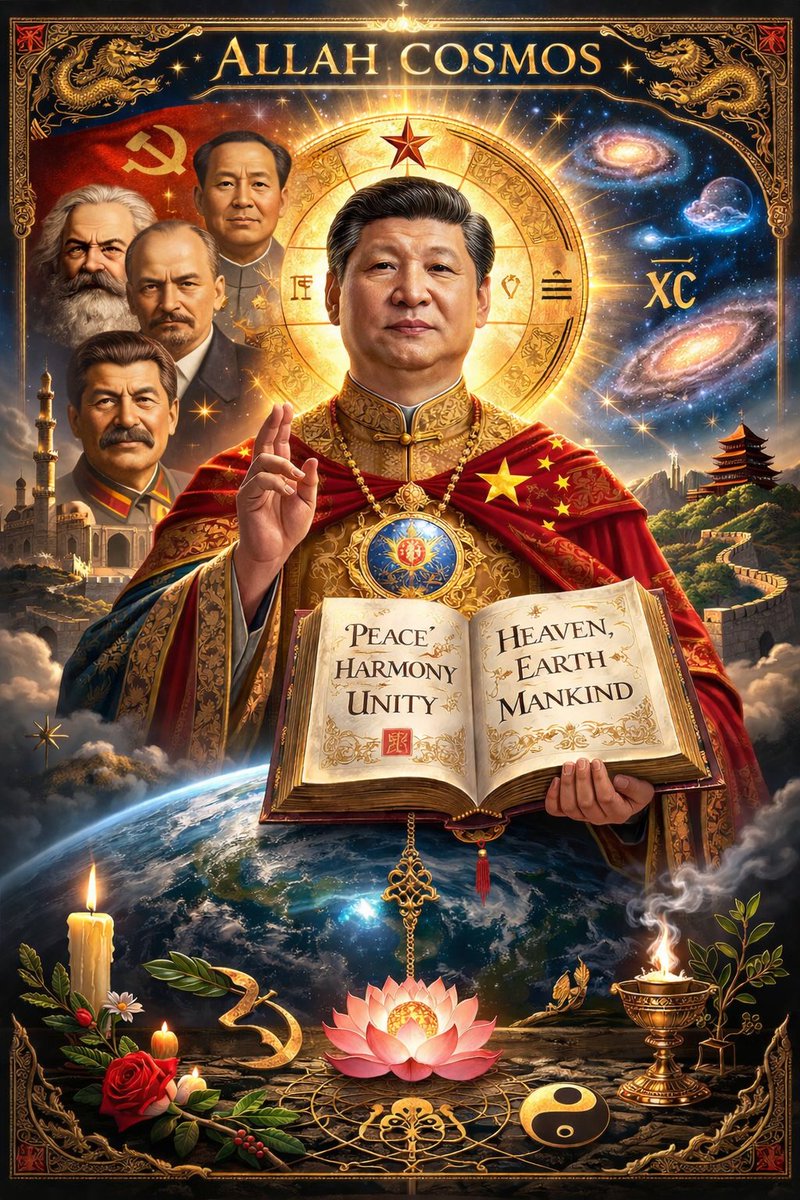
"Allah Cosmos Xi Xinping" =
Allah/Islam - (submission to the will of God - meaning the call to re-identify the objective material conditions meaning the reality of mans production mediated by nature)
Cosmos - the cosmic universal established by the new Marxist Leninist global (universal) consciousness of the submission to the world's real existing productive capacity
Xi Xingping - the "Warlord" of the war on production, meaning the concentrated half of global productive capacity within the PRC, the new center of the world under the mandate of heaven.
Πήραν τηλέφωνο ηλικιωμένη γειτόνισσα για να της στήσουν την γνωστή απάτη με την κόρη/γιο που έχει εμπλακεί σε τροχαίο
Η γυναίκα δεν τσίμπησε αλλά κλαίει εδώ κ 2 μέρες γιατί της είπαν ότι μιλάει με την κόρη της,την κόρη της που πέθανε πριν λίγους μήνες
@DFNDbreed@DorukCanErgul@HeraldOfRome He is a turkified Laz. He most probably speaks his mother tongue with difficulty and hates belonging to a minority in a country, the population of which was formed from a soup of ethnicities/minorities 100 years ago.
What a pity.
@merkourios_@DorukCanErgul@HeraldOfRome Imagine the rest of them. But, that guy probably feels inferior in his own country, because of the stereotypes they have about Laz people. Let's show him some compassion.
🚨BREAKING: The father of infant Sam Fahd Abu Heikal cradles and kisses his baby for the last time after Israeli forces killed the infant in Hebron West Bank yesterday.


![Alyunan00's tweet photo. "The Ottomans and that Genghis Khan are (like) paternal cousins. The ancestors of the House of Osman—Süleyman Shah and Ertuğrul—went to the land of the Greeks (Rum of the Greeks). (‘Rum-ı Yunaniyan’)"
After the Oghuz origins of Etruscans , the Turk Homer, the Yörükler Hittites, now we even have claims to a supposed Ottoman "Rum heritate" and an attempted distortion of the medieval Greek past by our neighbors.
But what Turks were saying or writing about 400 years ago?
Evliya Çelebi (1611 – 1682) is well known to anyone having an interest in 17th century Ottoman things, since Evliya, who travelled for forty years recording his Seyahatnâme, left us a quite rich source of information.
Not famous for his "academic" background Evliya writes down and expresses though what would be considered known or expected for the average Osmanli reader.
Let's see what he writes about Greeks, their past and their neighbors:
“The Ottomans and that Genghis Khan are (like) paternal cousins. The ancestors of the House of Osman—Süleyman Shah and Ertuğrul—went to the land of the Greeks (Rum of the Greeks).” (‘Rum-ı Yunaniyan’).
Osmanlı ile o Cengiz Han amca oğullarıdır. Osmanoğlu'nun ataları Süleyman Şah ve Ertuğrul, Rum-ı Yunaniyan'a giderler."
Pretty clear.
While describing Athens he documents what he believed to be historically accurate:
"The Greek people originated in the time of the prophet David and, multiplying in the country of Greece and acquiring property and territory, first built the great city of Macedonia which is Filibe; then the city of Pozanta (Byzantium) which was latter called Kostantiniye (Constantinople) and now is called Islambol (‘Islam-plenty’ – i.e., Istanbul). Then they built this city of Athens on the Rumelia side of the Sea of Rum (i.e., the Aegean) at the end of the Gulf (of Corinth) to the north and west.
Later Constantine, the ruler of Istanbul, expanded and embellished it. His army ruled over this city of Athens, which already had a 1,700 year history as a great entrepôt and a medrese (!) and abode of philosophers. It passed from king to king and emperor to emperor, eventually passing from the hands of Spain to the Venetian Franks and then, in the year (—), being conquered by the Ottomans in the person of Sultan Mehmed the Conqueror.
Zira Yunan kavmi Hazret-i Davud aleyhisselam asrında Rumeli'de çoğalarak mülk sahibi olduklarında ilk yaptıkları büyük şehir Makedonya şehri ki Filibe şehridir. Sonra Pozanta şehri ki sonra ona Kostantiniyye dediler, hala İstanbul derler. Sonra bu Atina şehrini Rum kavmi, Rum denizinin Rumeli tarafının kuzeyi ve batısı tarafının körfezi bitiminde yaptılar.
Sonra İstanbul sahibi Kostantin de fazlaca imar etti. Onun askerleri bu Atina şehrine hükmedip hekimler medresesi şehri olmuş idi. 2.700 yıllık eski yapı ve büyük bir şehirdir. Nice yüz adet kraldan krala geçmiş bir şehir olup içinde nice padişahlar ve nice hekimler sakin oldu. İspanya elinden Venedik Frengi eline girip ondan (---) tarihinde Osmanlılardan bizzat Fatih Sultan Mehmed Han fethidir."
While for the language his contemporary Greeks spoke:
“Because in the Greek language the letters ta and sa are close in articulation, the Greek people call this city Asina, that is, it means (---).
Rumcada ta ile sa harflerinin mahreç yakınlıkları olduğundan Rum kavmi bu şehre Asina derler, yani (---) demek olur. "
Rum, when not referring to the general Greek Orthodox population - as it was its secondary parallel meaning - could be in contrast to non Greek but Orthodox populations, such as the Arvanites in Hasia in Attica:
"The village of Haşa: it belongs to the voivodeship (district) of Athens and is a village of 100 households of Arvanites (‘Arnavut’) infidels. Fifty of the households, all of them reaya, are exempt (from taxes) in order to guard the pass.
Haşa Köyü: Atina kazası voyvodalığıdır ki 100 haneli Arnavut keferesi köyüdür. 50 hanenin tüm reayası geçit yolunu beklemek için muaflardır."
Or when describing the town of Langada in Macedonia:
"The inhabitants of this town, both the reaya and the common people, are entirely Greek (‘Rum’) infidels, Bulgarian rabble, and Wallachian Christians, and in winter they hunt these birds with firearms and eat them.”
Bu kasaba sakinlerinden olan reaya ve berayası tamamen Rum keferesi, Bulgar feceresi ve Eflak Hıristiyanı olup kış günlerinde bu kuşları tüfeng ile vurup avlayıp yerler."
In his narration on Athens he continues:
"Yunan dilini bildirir/Explanation of the Greek language
Samples of the language, beginning with the numerals. ena 1 dhiyo 2 tiriya 3 tethera 4 pende 5 eksi 6 efta 7 ohto 8 enga 9 dheka 10 endeka 11 dodeka 12 dheka triya 13 dheka tethera 14 dheka pende 15 dheka eksi 16 dheka efta 17 dheka ohto 18 dheka enga 19 ikoş 20 tiryanda 30 saranda 40 peninda 50 eksinda 60 efdominda 70 ogdonda 90 [sic] etc.
hiristos name of God mikraçko kalo little good Jesus.
[...]"
The people he knows are "Rum Yunan" from Trebizond till Ioannina and Mystras and have a specific language:
"As for those who came after these disciples, the Greeks call them Aya Niko, Aya Yoro, Aya Kasim, Aya Vestos, Aya Hıdrellez, and Aya İsvet Nikola. Aya means saint and kala yoroz means great priest.
Bu adı geçen halifelerden sonra gelenlere Rum Yunan kavmi, Aya Niko ve Aya Yora ve Aya Kasım ve Aya Vestos ve Aya Hıdrellez ve Aya İsvet Nikola derler. "Aya" lafzı "evliya" demektir. "Kalayoroz" ulu papazdır."
And records some nice examples of vernacular of his contemporary Greeks:
"psomi bread nero water tiri cheese kıryaş meat ankurya cucumber pe pon melon koromidya onion keri candle angeli angel İsvet Nikola Sarı Saltık nalderfim sister ipsarya fish. pu payistu Where were you? esi sopa ela kaç kato Hey you, be quiet, come, sit down sika pano matyam Get up my dear doz mga fora nase dhoko ena folori Give me once I’ll give you a ducat kali mera kiritsi Good morning sir kalisi mera mastori Good morning to you master. keratsa young lady kiritsi gentleman pedaki boy magır, mahır knife kasro castle pirgaz fortress ela mesa come in ladhika priest mitropolid kadi patrigah (ecclesiastical) magistrate at the rank of great king"
In other parts of his text, king Philip of Macedonia is interchangeably either "Rum Feylekos", or "Rum Yunan Feylekos", or simply "Yunanlı Melik Feylekos".
Similar sources and references are endless.
Sources:
An Ottoman Traveller Selections from the Book of Travels of Evliya Çelebi, translation and commentary by Robert Dankoff and Sooyong Kim
EVLİYA ÇELEBİ Günümüz Türkçesiyle Evliya Çelebi Seyahatnamesi: Gümülcine, Kavala, Selanik, Tırhala, Atina, Mora, Navarin, Girit Adası, Hanya, Kandiye, Elbasan, Ohri, Tekirdağı 8. Kitap 1. Cilt Hazırlayan: Seyit Ali Kahraman](https://pbs.twimg.com/media/HEbsPXkbIAAPfKL.png)