One of the most striking things about Rituparno Ghosh was his ability to make the personal feel universal. Watch him in 'Memories in March' and you realise how effortlessly he could dismantle prejudice, not through confrontation, but through empathy, intelligence and conversation.
Beyond his extraordinary filmmaking, Rituparno was a rare performer. Every line he delivered carried the weight of lived experience. His characters never felt written, they felt understood.
After Satyajit Ray, few filmmakers explored the emotional architecture of human relationships with such depth and precision. He had an uncanny gift for entering the inner worlds of his characters and presenting them with honesty, tenderness and complexity.
On his remembrance day, remembering not just a filmmaker, but a cultural force who expanded the possibilities of Indian cinema and taught us that sensitivity can be a form of radical courage.
Tributes to Bengal's "seventh ritu (season)" and one of the finest artistic minds of our time. 🎬
The most interesting takeaway here is not just the tourism numbers.
It's the idea that long-term conservation, when backed by sustained investment and governance, can create jobs, attract visitors and strengthen local economies.
What happens when conservation is treated not as a constraint on development, but as a catalyst for growth?
@kaziranga_ may have the answer.
With a record-breaking 5.48 lakh visitors since April 2025, the national park is emerging as one of India's most compelling tourism success stories. 🧵
1/9
There was a time during our school days when one Bengali song ruled every cassette shop, every local function and every teenage playlist 'Amar Sangee'.
For many of us outside Bengal too, that was the moment we unknowingly fell in love with Bengali cinema. And at the centre of that craze stood one man, @prosenjitbumba Chatterjee. Or as generations lovingly call him, Bumba Da.
What makes his story remarkable is that he didn’t inherit an empire. He built one.
At a time when Bengali cinema was struggling with shrinking theatres, financial uncertainty and fading mass appeal, Prosenjit Chatterjee carried the industry on his shoulders film after film, year after year. Commercial hits, family dramas, romances, experiments, he became the bridge between survival and revival of Tollywood.
Many actors dream of “moving out” to validate success. Bumba Da chose differently. Despite receiving opportunities beyond Bengal, he consciously stayed rooted in regional cinema because he believed Bengali stories deserved scale, dignity and stardom too. That decision shaped an entire industry’s confidence.
And yet, he was never limited by language.
His work in Bollywood and national projects always left a mark whether it was the intense and layered performances in Shanghai, Traffic, or more recently Jubilee, where his portrayal carried both old-world charisma and quiet melancholy. Jubilee especially introduced a whole new generation across India to the depth of his craft.
What is fascinating is how beautifully he evolved with time.
From the larger-than-life romantic hero of the 80s to deeply nuanced characters like Lalan Fakir, Prabir Babu and many more in contemporary Bengali cinema, he never stayed trapped inside his own superstardom. He kept reinventing himself, sometimes vulnerable, sometimes flawed, sometimes fierce but always compelling.
That is why his relevance never faded.
Millennials grew up idolising him. Gen Z discovered him again through OTT. Few actors manage to remain culturally alive across generations the way Bumba Da has.
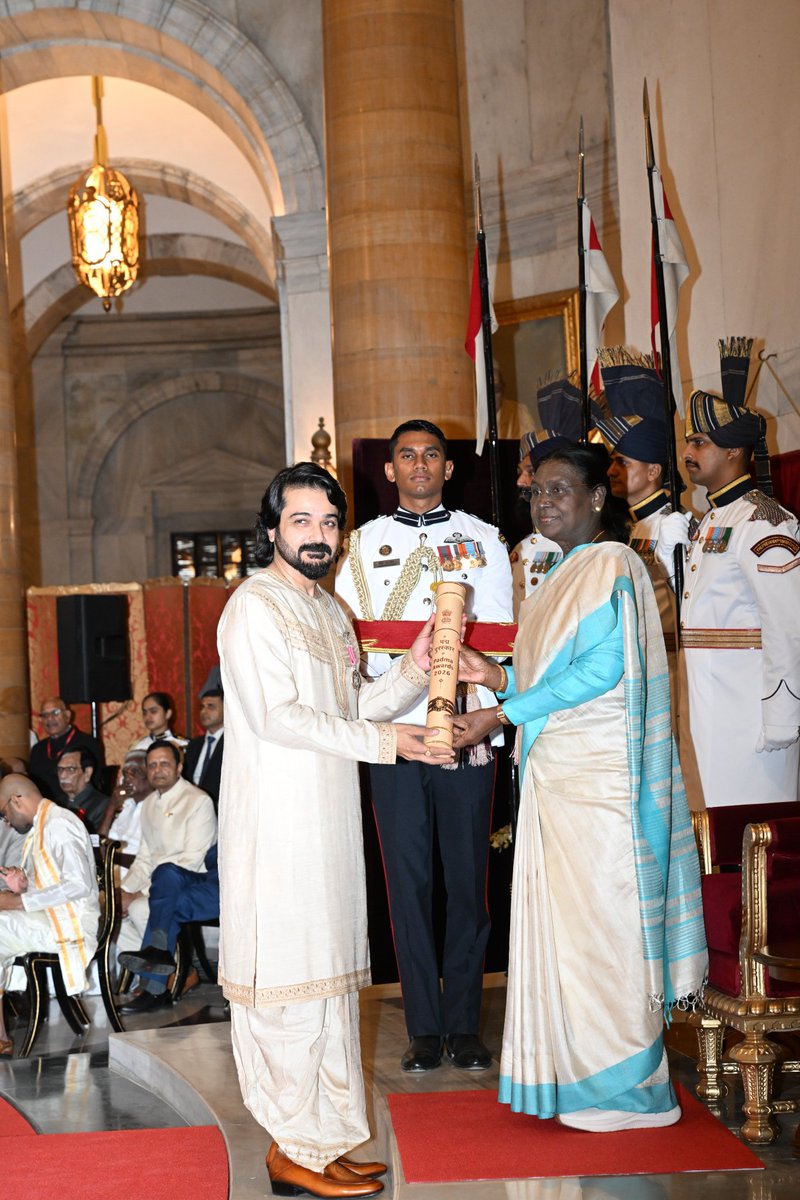
And perhaps that is why this Padma Shri recognition feels emotional beyond cinema.
It is not just an honour for Prosenjit Chatterjee the actor. It is recognition for every artist who chose regional storytelling over easier fame. It is proof that language is never a barrier when talent, discipline and conviction speak universally.
Some stars dominate an era.
Very few become the era itself.
There was a time during our school days when one Bengali song ruled every cassette shop, every local function and every teenage playlist 'Amar Sangee'.
For many of us outside Bengal too, that was the moment we unknowingly fell in love with Bengali cinema. And at the centre of that craze stood one man, @prosenjitbumba Chatterjee. Or as generations lovingly call him, Bumba Da.
What makes his story remarkable is that he didn’t inherit an empire. He built one.
At a time when Bengali cinema was struggling with shrinking theatres, financial uncertainty and fading mass appeal, Prosenjit Chatterjee carried the industry on his shoulders film after film, year after year. Commercial hits, family dramas, romances, experiments, he became the bridge between survival and revival of Tollywood.
Many actors dream of “moving out” to validate success. Bumba Da chose differently. Despite receiving opportunities beyond Bengal, he consciously stayed rooted in regional cinema because he believed Bengali stories deserved scale, dignity and stardom too. That decision shaped an entire industry’s confidence.
And yet, he was never limited by language.
His work in Bollywood and national projects always left a mark whether it was the intense and layered performances in Shanghai, Traffic, or more recently Jubilee, where his portrayal carried both old-world charisma and quiet melancholy. Jubilee especially introduced a whole new generation across India to the depth of his craft.
What is fascinating is how beautifully he evolved with time.
From the larger-than-life romantic hero of the 80s to deeply nuanced characters like Lalan Fakir, Prabir Babu and many more in contemporary Bengali cinema, he never stayed trapped inside his own superstardom. He kept reinventing himself, sometimes vulnerable, sometimes flawed, sometimes fierce but always compelling.
That is why his relevance never faded.
Millennials grew up idolising him. Gen Z discovered him again through OTT. Few actors manage to remain culturally alive across generations the way Bumba Da has.
And perhaps that is why this Padma Shri recognition feels emotional beyond cinema.
It is not just an honour for Prosenjit Chatterjee the actor. It is recognition for every artist who chose regional storytelling over easier fame. It is proof that language is never a barrier when talent, discipline and conviction speak universally.
Some stars dominate an era.
Very few become the era itself.
The first sitting of the #AssamCabinet of NDA 3.0 has approved the draft UCC Bill. A key promise of our Sankalpa Patra is now one step closer to being fulfilled.
Rituals and customs practised by the people of Assam will remain outside the scope of the UCC in the state.
🎬 Assam has endless stories, but many of its finest literary works still remain unexplored through cinema.
That is why Moromor Deuta feels special. Based on a novel by the legendary Dr. Bhabendranath Saikia and directed by @himjyoti, likely his third feature film, the movie releases on 15 May.
Hopefully #MoromorDeuta becomes another reminder that some of India’s most powerful stories still lie beyond the mainstream.
https://t.co/JHgKdeOwT6
🎬 Assam has endless stories, but many of its finest literary works still remain unexplored through cinema.
That is why Moromor Deuta feels special. Based on a novel by the legendary Dr. Bhabendranath Saikia and directed by @himjyoti, likely his third feature film, the movie releases on 15 May.
Hopefully #MoromorDeuta becomes another reminder that some of India’s most powerful stories still lie beyond the mainstream.
https://t.co/JHgKdeOwT6
From Two Seats to the Political Centre Stage: The BJP’s North East Story Nobody Saw Coming
For decades, many believed the North East was politically distant from the national mainstream. Yet the BJP’s rise across the region has rewritten that assumption through organisation building, cultural understanding and sustained grassroots engagement.
The BJP understood that the North East does not respond to tokenism. It responds to respect, representation and genuine participation. Improved connectivity, economic integration, infrastructure growth and celebration of indigenous cultures helped bridge both emotional and political distances.
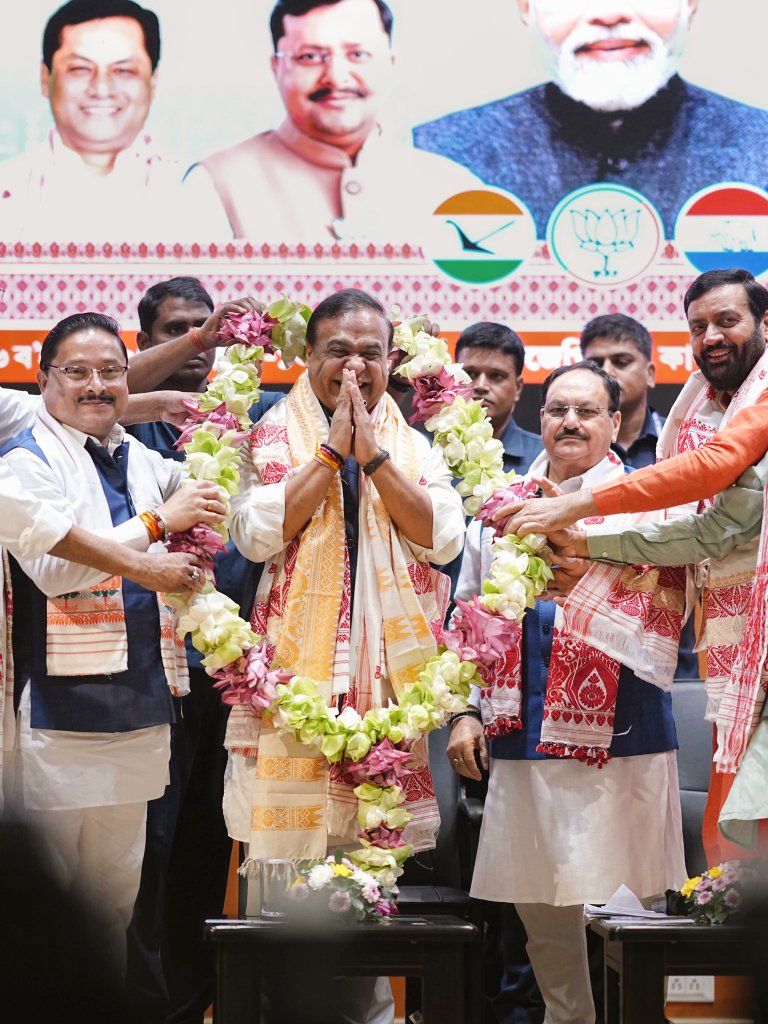
Leaders like Dr. @himantabiswa, now chosen once again as BJP Legislature Party leader and NDA’s CM face for a second consecutive term, became central to that connect between governance and public sentiment.
Critics often labelled the BJP as limited to the Hindi heartland, but electoral realities continue to challenge that narrative. From the North East to growing influence in states like West Bengal, the party’s expansion reflects an ability to adapt locally while communicating nationally.
Beyond party lines, this transformation has become a genuine case study in political organisation, mass communication and public trust.
In the end, durable acceptance is not built through slogans alone. It is earned booth by booth, people to people and through shared aspiration.
From Two Seats to the Political Centre Stage: The BJP’s North East Story Nobody Saw Coming
For decades, many believed the North East was politically distant from the national mainstream. Yet the BJP’s rise across the region has rewritten that assumption through organisation building, cultural understanding and sustained grassroots engagement.
The BJP understood that the North East does not respond to tokenism. It responds to respect, representation and genuine participation. Improved connectivity, economic integration, infrastructure growth and celebration of indigenous cultures helped bridge both emotional and political distances.
Leaders like Dr. @himantabiswa, now chosen once again as BJP Legislature Party leader and NDA’s CM face for a second consecutive term, became central to that connect between governance and public sentiment.
Critics often labelled the BJP as limited to the Hindi heartland, but electoral realities continue to challenge that narrative. From the North East to growing influence in states like West Bengal, the party’s expansion reflects an ability to adapt locally while communicating nationally.
Beyond party lines, this transformation has become a genuine case study in political organisation, mass communication and public trust.
In the end, durable acceptance is not built through slogans alone. It is earned booth by booth, people to people and through shared aspiration.
From Two Seats to the Political Centre Stage: The BJP’s North East Story Nobody Saw Coming
For decades, many believed the North East was politically distant from the national mainstream. Yet the BJP’s rise across the region has rewritten that assumption through organisation building, cultural understanding and sustained grassroots engagement.
The BJP understood that the North East does not respond to tokenism. It responds to respect, representation and genuine participation. Improved connectivity, economic integration, infrastructure growth and celebration of indigenous cultures helped bridge both emotional and political distances.
Leaders like Dr. @himantabiswa, now chosen once again as BJP Legislature Party leader and NDA’s CM face for a second consecutive term, became central to that connect between governance and public sentiment.
Critics often labelled the BJP as limited to the Hindi heartland, but electoral realities continue to challenge that narrative. From the North East to growing influence in states like West Bengal, the party’s expansion reflects an ability to adapt locally while communicating nationally.
Beyond party lines, this transformation has become a genuine case study in political organisation, mass communication and public trust.
In the end, durable acceptance is not built through slogans alone. It is earned booth by booth, people to people and through shared aspiration.
Beautiful Lives (Assamese)
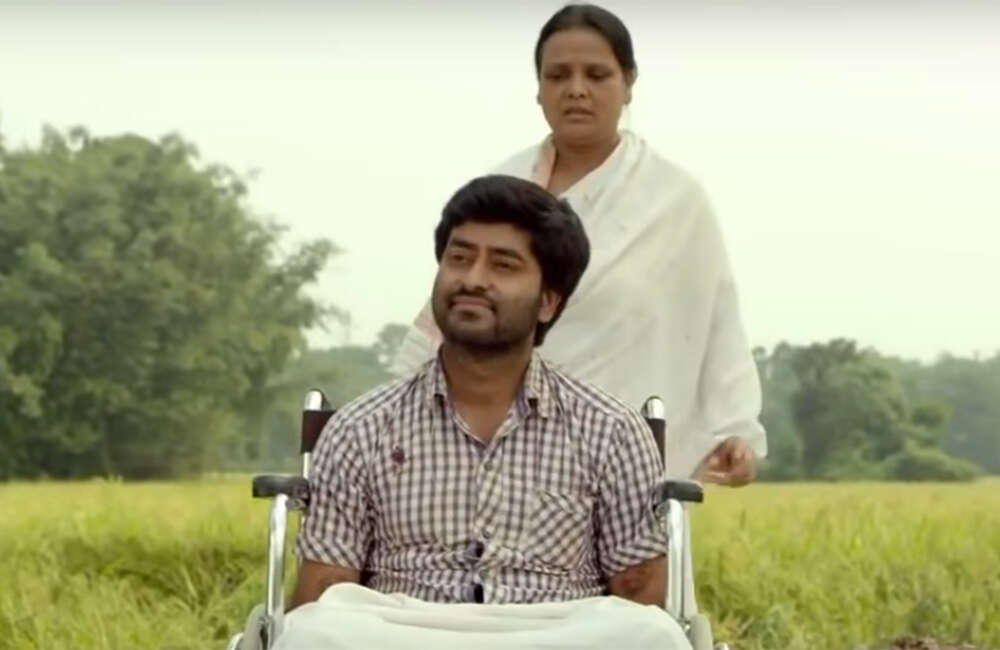
A heartbreaking story of a bomb blast survivor left physically disabled, and his mother Dasami who becomes his only support system. The film explores dependence, loneliness, dignity and a mother’s unconditional care with rare emotional honesty.
6/6
A mother in Indian cinema is never just a character. She is memory, sacrifice, strength and home itself.
Across languages, some films captured motherhood so beautifully that they became timeless. A small thread on 5 unforgettable films ❤️
🧵
1/6
Shyamchi Aai (Marathi)
Vanamala gave one of Indian cinema’s most heartfelt performances as a mother whose compassion, discipline and values shape her son’s entire worldview.
5/6
From a young A. P. J. Abdul Kalam standing beside Agni in 1989 to India successfully testing an advanced Agni missile with MIRV capability in 2026 from Dr. APJ Abdul Kalam Island.
India’s missile journey is a story of scientific resolve, strategic power and national confidence.