Just shipped something small that I’m really proud of 💪
A tool for @Trading212 and @RevolutApp users to calculate capital gains and automatically separate long-term vs short-term holdings.
Runs 100% locally in your browser.. no signup, no tracking.
Free for everyone 👉 link in bio
#buildinpublic
Someone built a fitness app using the same psychological mechanics as gambling
This might work better than every normal fitness app 😭😭
You bet money on whether you’ll hit 10,000 steps today
If you fail, you lose your money
If you succeed, you split the money from everyone who didn’t
So disciplined people literally profit off lazy people
Most fitness apps try motivating you with streaks and notifications
This one motivates you with financial fear
Imagine realizing at 11:52pm you still need 1,700 more steps or you lose $30
Entire friend groups would be outside walking laps around their neighborhood before midnight trying not to lose their steppa challenge
It sounds stupid but this would probably motivate people better than any other fitness product
Would you use this yourself?
New in Claude Code: auto mode.
Instead of approving every file write and bash command, or skipping permissions entirely, auto mode lets Claude make permission decisions on your behalf.
Safeguards check each action before it runs.
After some time of using local AI cluster (Bob), here is my honest take on the good, the bad and overall use case.
About a year ago I started playing with local AI models because of the work we do at BottleCap AI. I realised how amazing it actually is to own my own stack and my own data.
At first, we used local models mainly because of security reasons as we do lots of AI efficiency research and new product concepts based on that.
After OpenClaw was released, something changed for me. I started using local models much more, until they replaced cloud models for most of my deep-thinking tasks beyond work. Eventually, I canceled all my AI cloud subscriptions just to see if I could actually run fully on my local cluster.
Hardware:
• 2x Mac Studio with M3 Ultra and 512GB unified memory, 32-core CPU
• 1x NVIDIA DGX Spark, added recently for prefills and, hopefully soon, faster inference
• 10GB LAN Switch for connecting Spark and Mac Studio’s
Current models: this is changing pretty frequently
1) “Bob OG”:
• Main brain for reasoning and daily tasks
• Qwen3.5-397B
• Roughly 40-60 tokens/sec (depends on load & task)
2) “Bob Researcher”:
• Long term researching
• Qwen3.5-27B-Claude-4.6-Opus-Distilled-MLX-4bit: Very experimental
3) “Bob App Developer":
• Coding apps and debuging
• MiniMax M2.5
Software stack:
• OpenClaw: All-local assistant layer
• LM Studio: Running models
• Exo Labs: Connecting multiple machines into one cluster and testing whether inference improves
Where my local stack still lacks:
• Deep tasks with big models still take more time to reply than cloud models.
• Context window is limitation in the models I use. I’m usually around a 200k token window per session, but compacting works well, so I rarely need to start a new session.
• It also seems that OpenClaw in its default state is not handling work with memory very efficiently while filling the context window fairly quickly by default. It was necessary for me to finetune this manually including semantic search and temporal decay which are in default switched off.
• Reasoning is good but not at the cloud models level. Also coding is good for the majority of tasks but not top tier.
My best use cases right now (March 2026):
Best for iterative work where privacy matters and where model needs to be available all the time.
• Private or sensitive data: I would be careful as a company to share private or direct customer information with third party cloud systems in general. Clearly also connecting OpenClaw to cloud models is not solving privacy situation.
• Cloud limits & Efficiency: If I push cloud subscriptions hard, I hit consumer limits surprisingly fast.
It’s also much easier to spot inefficiencies locally.
When the context starts bloating, the system slows down fast, so issues like memory inefficiency become obvious much earlier. In the cloud, replies often feel just as fast, but you end up paying much more or hitting usage limits without really knowing why.
Was it worth the money?
For me, yes. But I’m aware I live in a niche bubble for my particular use case. For most people it is still early. For businesses and people who want to spend the money and effort make this work it is good solution today.
My verdict:
For my personal use case, local is now the default. Cloud is the exception.
Are local models as good as the best cloud models? No.
Are they good enough to be my default for most tasks? Yes.
Today we're launching Glaze 💠
Create any desktop app in minutes by chatting with AI.
Beautiful, powerful, and truly personal.
Learn more on https://t.co/tTL644I574
Follow @glazeapp for updates.
This is Claude Sonnet 4.6: our most capable Sonnet model yet.
It’s a full upgrade across coding, computer use, long-context reasoning, agent planning, knowledge work, and design.
It also features a 1M token context window in beta.
Introducing Claude Opus 4.6. Our smartest model got an upgrade.
Opus 4.6 plans more carefully, sustains agentic tasks for longer, operates reliably in massive codebases, and catches its own mistakes.
It’s also our first Opus-class model with 1M token context in beta.
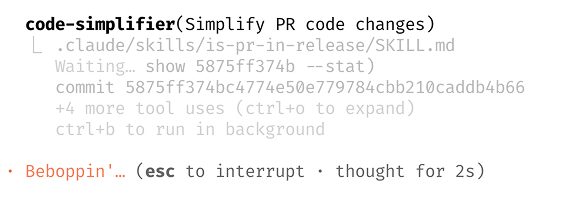
We just open sourced the code-simplifier agent we use on the Claude Code team.
Try it: claude plugin install code-simplifier
Or from within a session:
/plugin marketplace update claude-plugins-official
/plugin install code-simplifier
Ask Claude to use the code simplifier agent at the end of a long coding session, or to clean up complex PRs. Let us know what you think!
I'm Boris and I created Claude Code. Lots of people have asked how I use Claude Code, so I wanted to show off my setup a bit.
My setup might be surprisingly vanilla! Claude Code works great out of the box, so I personally don't customize it much. There is no one correct way to use Claude Code: we intentionally build it in a way that you can use it, customize it, and hack it however you like. Each person on the Claude Code team uses it very differently.
So, here goes.
Nice Nano Banana Pro prompt for weather app:
CITY=Prague,Czechia
Present a clear, 45° top-down isometric miniature 3D cartoon scene of [CITY], featuring its most iconic landmarks and architectural elements. Use soft, refined textures with realistic PBR materials and gentle, lifelike lighting and shadows. Integrate the current weather conditions directly into the city environment to create an immersive atmospheric mood.
Use a clean, minimalistic composition with a soft, solid-colored background.
At the top-center, place the title “[CITY]” in large bold text, a prominent weather icon beneath it, then the date (small text) and temperature (medium text).
All text must be centered with consistent spacing, and may subtly overlap the tops of the buildings.
Square 1080x1080 dimension.
Introducing Claude Opus 4.5: the best model in the world for coding, agents, and computer use.
Opus 4.5 is a step forward in what AI systems can do, and a preview of larger changes to how work gets done.
story behind "why netflix built https://t.co/YDCurkt2BM" is brilliant.
so, netflix had a massive fight with ISPs around 2014-2016. ISPs were slowing down netflix on purpose. they wanted more money from netflix
customers got bad streaming. but ISPs just blamed netflix.
netflix had to pay comcast, verizon, at&t and time warner for direct connections to their networks.
but in 2016, they launched fast dot com, clever part - It's not testing your general internet speed. It's testing your speed to netflix's servers specifically. so when someone complained about buffering, netflix could say "run fast dot com." If it's slow, the ISP is the bottleneck.
suddenly millions of people had a tool to prove their ISP was the problem
ISPs couldn't hide anymore.
netflix positioned themselves as the transparent good guys fighting for customers while ISPs looked like greedy monopolies
they solved a pr problem and a customer service problem with one simple website
I guess, that's how you win a corporate war


![PavolRusnak's tweet photo. Nice Nano Banana Pro prompt for weather app:
CITY=Prague,Czechia
Present a clear, 45° top-down isometric miniature 3D cartoon scene of [CITY], featuring its most iconic landmarks and architectural elements. Use soft, refined textures with realistic PBR materials and gentle, lifelike lighting and shadows. Integrate the current weather conditions directly into the city environment to create an immersive atmospheric mood.
Use a clean, minimalistic composition with a soft, solid-colored background.
At the top-center, place the title “[CITY]” in large bold text, a prominent weather icon beneath it, then the date (small text) and temperature (medium text).
All text must be centered with consistent spacing, and may subtly overlap the tops of the buildings.
Square 1080x1080 dimension.](https://pbs.twimg.com/media/G7BAWoxWUAEQQPh.jpg)
![PavolRusnak's tweet photo. Nice Nano Banana Pro prompt for weather app:
CITY=Prague,Czechia
Present a clear, 45° top-down isometric miniature 3D cartoon scene of [CITY], featuring its most iconic landmarks and architectural elements. Use soft, refined textures with realistic PBR materials and gentle, lifelike lighting and shadows. Integrate the current weather conditions directly into the city environment to create an immersive atmospheric mood.
Use a clean, minimalistic composition with a soft, solid-colored background.
At the top-center, place the title “[CITY]” in large bold text, a prominent weather icon beneath it, then the date (small text) and temperature (medium text).
All text must be centered with consistent spacing, and may subtly overlap the tops of the buildings.
Square 1080x1080 dimension.](https://pbs.twimg.com/media/G7BAWouWAAELND9.jpg)
![PavolRusnak's tweet photo. Nice Nano Banana Pro prompt for weather app:
CITY=Prague,Czechia
Present a clear, 45° top-down isometric miniature 3D cartoon scene of [CITY], featuring its most iconic landmarks and architectural elements. Use soft, refined textures with realistic PBR materials and gentle, lifelike lighting and shadows. Integrate the current weather conditions directly into the city environment to create an immersive atmospheric mood.
Use a clean, minimalistic composition with a soft, solid-colored background.
At the top-center, place the title “[CITY]” in large bold text, a prominent weather icon beneath it, then the date (small text) and temperature (medium text).
All text must be centered with consistent spacing, and may subtly overlap the tops of the buildings.
Square 1080x1080 dimension.](https://pbs.twimg.com/media/G7BAWouWAAAck_S.jpg)







![PavolRusnak's tweet photo. Nice Nano Banana Pro prompt for weather app:
CITY=Prague,Czechia
Present a clear, 45° top-down isometric miniature 3D cartoon scene of [CITY], featuring its most iconic landmarks and architectural elements. Use soft, refined textures with realistic PBR materials and gentle, lifelike lighting and shadows. Integrate the current weather conditions directly into the city environment to create an immersive atmospheric mood.
Use a clean, minimalistic composition with a soft, solid-colored background.
At the top-center, place the title “[CITY]” in large bold text, a prominent weather icon beneath it, then the date (small text) and temperature (medium text).
All text must be centered with consistent spacing, and may subtly overlap the tops of the buildings.
Square 1080x1080 dimension.](https://pbs.twimg.com/media/G7BAWoxWcAADD6m.jpg)