How to Learn API Development
Here's a structured guide:
1 - API Fundamentals
Understanding what APIs are, exploring different types (REST, SOAP, GraphQL, gRPC), and distinguishing between APIs and SDKs.
2 - API Request/Response
HTTP methods, response codes, and headers that form the backbone of API communication.
3 - Authentication and Security
Authentication mechanisms including JWT, OAuth 2.0, API keys, and basic auth, plus essential security strategies to protect your APIs.
4 - API Design and Development
RESTful API principles such as stateless design, resource-based URLs, versioning, and pagination. Master documentation tools like OpenAPI, Postman, and Swagger.
5 - API Testing
Testing tools and techniques using Postman, cURL, SoapUI, and other essential testing frameworks.
6 - API Deployment and Integration
Consuming APIs across different programming languages (JavaScript, Python, Java), integrating third-party APIs like Google Maps and Stripe, and working with API gateways such as AWS API Gateway, Kong, and Apigee.
--
We just launched the all-in-one tech interview prep platform, covering coding, system design, OOD, and machine learning.
Launch sale: 50% off. Check it out: https://t.co/UOVWx00SOE
Coding isn't all about learning.
It's about solving.
Make sure you're building and shipping ⏳.
Being comfortable with encountering problems is where the biggest flex is.
MERN stack junior devs get confused when asked :
What is Express.js, and why do developers use it instead of Node.js alone?
Express.js is a web framework built on top of Node.js that makes it easier to build web servers and APIs.
While Node.js allows you to handle HTTP requests, doing everything manually (like routes, parsing data, etc.) is tedious.
Express provides simple functions to do those things faster.
Example:
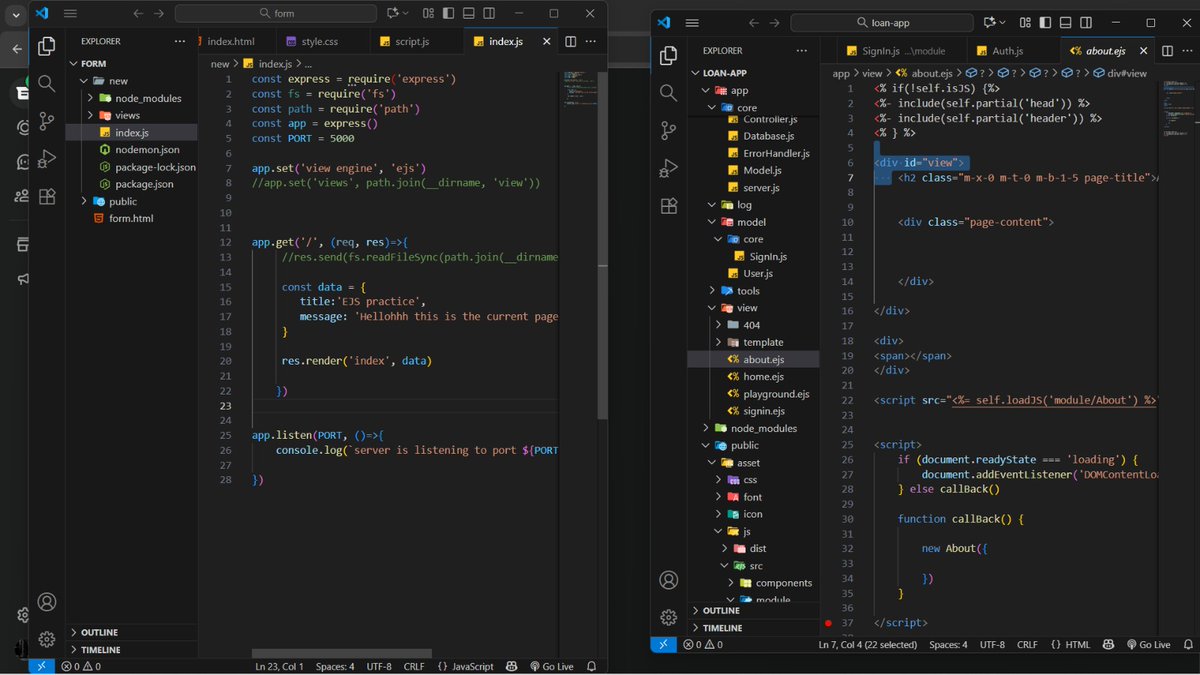
const express = require('express');
const app = express();
app.get('/', (req, res) => {
res.send('Welcome to Express!');
});
app.listen(3000, () => console.log('Server running on port 3000'));
Explanation:
express() creates the server.
app.get() defines a route for GET requests to /.
res.send() sends the response.
app.listen() starts the server on port 3000.
When asked to explain :
Say that Express provides middleware support, routing, and better error handling out of the box ,
the same reasons it’s the “Spring Boot of Node.js”.
Many developers, especially beginners, often get confused between Next.js and Nest.js because their names sound similar.
But they are completely different frameworks used for different purposes.
Let’s understand this:
What is Next.js
Next.js is a frontend framework built on top of React.js. It is used to build the part of a website or app that users see and interact with.
It helps developers create fast, SEO-friendly websites and web apps. It supports features like server-side rendering, static site generation, and routing out of the box.
In short, you use Next.js to build the user interface and pages of your website.
Example:
Building a company website or blog
What is Nest.js
Nest.js is a backend framework built on top of Node.js. It is used to build the part of the application that runs on the server and handles data, authentication, and business logic.
It is written in TypeScript and is known for its structured, modular approach. It helps developers build scalable and maintainable APIs and microservices.
In short, you use Nest.js to build the backend logic and APIs that connect with databases or send data to the frontend.
Examples:
Building an API for your app
Handling user login and signup
Managing database operations
Can They Work Together
Yes, many developers use both together. You can build your frontend using Next.js and your backend using Nest.js. They both work great together, especially because both use TypeScript.
Now , can you tell me the difference between Nestjs and Expressjs ?
Becoming a dev in 2025 isn’t about degrees, it’s about this
→ Stop chasing 10 tutorials, build 1 real project
→ Learn fundamentals: JS, HTTP, Git, APIs
→ Understand how systems actually work, not just how to use them
→ Use AI tools to accelerate building, not replace it
→ Contribute to open source : it teaches real collaboration
→ Build in public, get feedback, improve
2025 is the year of smart devs, not just coders. 💻
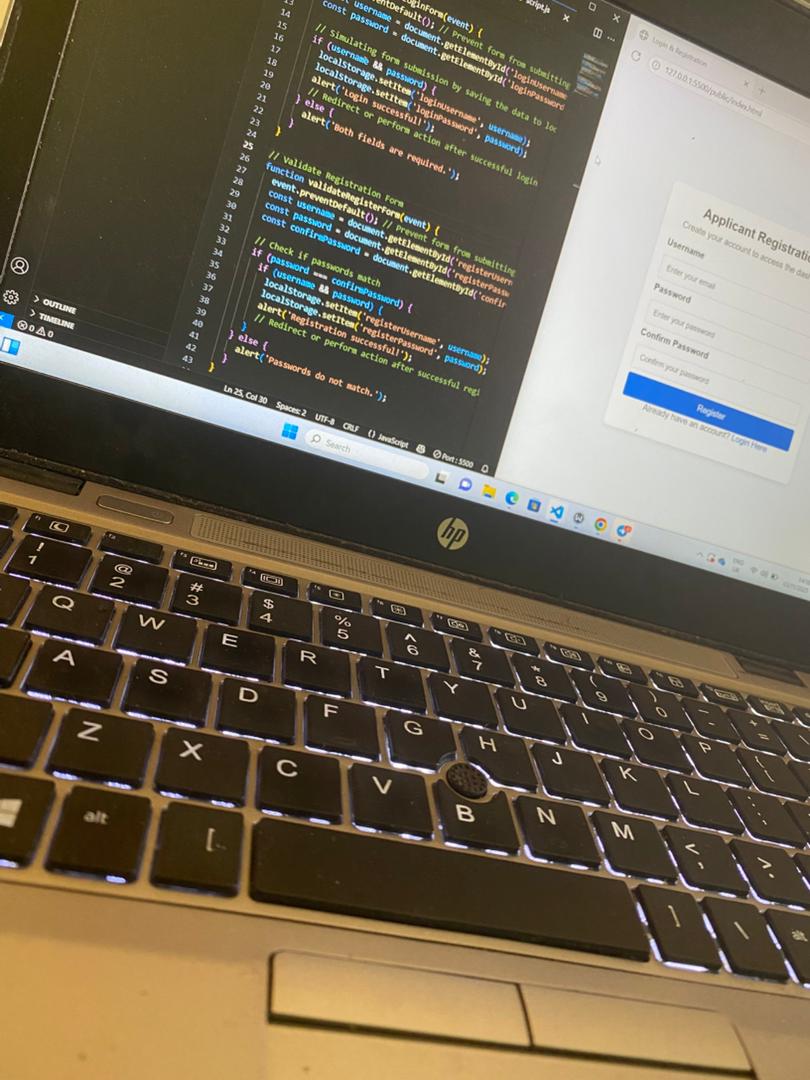
Collected a contract earlier this month, and I’m building it with pure Vanilla JavaScript and Bootstrap—no frameworks needed. A solid developer can work with any tools as long as they understand how the system works. Frontend phase completed ✅🔨.
How CI/CD pipelines work
(explained in 2 mins or less):
A CI/CD pipeline is an automated workflow that facilitates continuous integration (CI) and continuous delivery or deployment (CD) by managing code building, testing, and release processes.
It integrates the various stages of the software development lifecycle (SDLC) into a seamless, repeatable process.
These stages include source code management, automated testing, artifact creation, and deployment orchestration.
Continuous ‘delivery’ and ‘deployment’ are sometimes used synonymously.
But there is a clear and important distinction between the two.
Delivery is about ensuring the software can be released at any time.
It requires manual intervention to deploy to production.
Deployment, on the other hand, does the release through automated workflows.
Learn more here: https://t.co/pPPVI1DEfC
--
👋 PS: Want our Architecture Patterns Playbook for free?
Join our system design newsletter with 25,000+ software engineers: https://t.co/cDQzYT03Pt
--
🔖 Save this for later, repost it to help others learn system design.
🙋🏻♀️ Follow Nikki Siapno, turn on notifications 🔔
Don’t overthink backend.
• Learn HTTP → how the web talks
• Learn Databases → how data lives
• Learn Caching → how apps get fast
• Learn Auth → how users stay safe
• Learn APIs → how systems connect
• Learn Background Jobs → how work happens async
• Learn Logging & Monitoring → how to debug production
• Learn Testing & CI/CD → how to ship confidently
You don’t need every framework.
Just master the fundamentals that power every backend. ⚙️
What's happening behind the scenes?
How is that happening?
Infact why is that even happening?
Henry Ford said- Thinking is the hardest thing there is, which is probably so few are engaged in it.
This write-up isn't for everyone!