i love writing. i never let agents write for me. whether it's docs, or tweets, or shitposts, or even prompts (okay maybe that one's harder as agents manage other agents)
there's a simple reason for that: i still strongly believe that writing is thinking. it's a skill i hope to never give up. it's also important to me that whatever i say is always authentic, mistakes and all. my favorite posts are the ones that i just full send without any editing
i suspect it also helps with prompting. being able to clearly express what i want, and knowing the vocabulary i need to be able to direct my agents does seem to make for more effective usage of agents. in the same way that engineers have an advantage when we prompt agents to write code, because we are intimately familiar with the words that make up the discipline
knowing the right word incantations to get an agent to produce a desired goal almost feels like spellcasting. as models get more capable, and that input box looks more and more like a magic box that can output anything, words become the interface between you and the genie
there may come a time when we give up the keyboard in exchange for brain-computer interfaces. but until then, i'm writing every word.
convergence to the mean
when everyone looks at everyone else to decide what to make, we eventually stop making anything of our own.
we copy what works. borrow the language, the aesthetic, the features. we call it learning from the market, following best practices, staying competitive. together, everything starts to feel familiar. polished, interchangeable. nothing wrong. nothing alive.
the mean isn’t necessarily bad. it’s where everything lands when we remove the reasons for it to be different.
numbers are easier to compare than feelings, so we make things that produce numbers. we study what gets attention, then shape ourselves around it. eventually the feedback stops informing the work and starts authoring it. we’re no longer asking what we want to say. we’re asking what will be rewarded for saying.
ai makes this loop frictionless. it can draw from more references than we could see in a lifetime. but access to every perspective isn’t the same as having one. it hasn’t lived a particular life that makes one detail unbearable and another beautiful. when we ask it to choose for us without bringing any intention of our own, we get something plausible, easy to approve.
then we ship it, measure it, copy it, and feed it back into the next round. a tidal wave of mid.
this changes not just the work, but the people making it.
we describe ourselves in categories platforms can distribute and markets understand. designer. founder. creator. pick a niche. build a brand. be consistent. the parts that don’t fit become inconvenient, even when those contradictions might produce our most interesting work. we become easier to classify and harder to tell apart.
i think we need to approach making things more like artists.
an artist develops a perspective through the work. making, noticing, choosing, failing, returning. learning what matters even when nobody else cares. craft gives that perspective a form precise enough for someone else to experience.
the life outside the work matters too. the places you’ve lived, the people you’ve loved, the things you’re embarrassed to care about. these aren’t distractions from having something to say. they’re how you come to have something to say.
we understand this with music, paintings, photographs, movies. we expect a person to be present in the choices. we want to experience something we wouldn’t have encountered without them.
software can do this too.
a piece of software expresses beliefs about how life should feel. what deserves your attention. what you should be free to change. whether a task should feel like paperwork or play. even a small interaction can carry someone’s care, humor, or curiosity.
but we rarely talk about software as a medium. we talk about it as an industry. markets to capture, workflows to optimize, competitors to catch up with. we add a feature because someone else has it, without asking whether it belongs. products accumulate the same parts and lose what made them worth choosing.
underneath the branding, it’s all the same thing.
artists learn from others too. the question is whether you’re absorbing those influences into a point of view, or using them to avoid developing one.
what are you trying to let someone feel, understand, or do? why this particular shape? what have you noticed that the existing tools don’t seem to notice?
those questions don’t have answers you can borrow from a competitor’s roadmap.
if we can make almost anything, deciding what deserves to exist becomes more important, not less. speed gives us more chances to exercise judgment. it doesn’t remove the responsibility.
i don’t want a world where every person becomes a more efficient distributor of the same ideas. i want people to use these tools to go further into what they actually care about. to make things specific enough that we can feel someone behind them.
what is the point of everyone being able to make something, if we all end up making the same thing?
@GarimaDhar Hausla (Agency, the willingness to do the right thing even though its hard and painful), indhan (capital and energy), and ontology (clear rep of your business and its processes in appropriate data and action models that can be accessed programmatically)?
Some thoughts on Harvey:
1) Harvey was initially known for having a mediocre product and a lot of people in the legal tech industry predicted that it would fail.
2) But, it's revenue has grown each time that I have gotten info, last time it was at about $100m in revenue, which justifies a unicorn valuation.
3) Harvey charges a sticker price of $120k/seat/yr and a real price of $5k/seat/yr. LexisNexis and Westlaw are about $80k/seat/yr.
4) This makes Harvey reasonably affordable. Compared to ChatGPT Pro, it's about 5x the cost, which is a lot but probably not that unreasonable with legal-specific enterprise features added on.
5) Alexander Doria elsewhere says that he thinks that synthetic data + RL will cause companies like Harvey to fail.
6) This is incorrect, companies like Harvey are going to be much more technically nimble than both their traditional competitors and customers (e.g. Lexis and Thompson / Big law)
7) And, Harvey will have legal specific features that OpenAI will not; in fact, Harvey will probably just benefit from the labs making better models
9) It's real value is going to be in knowing what workflows to automate, understanding how these should be represented to users, figuring out the difficult parts and helping firms work around them
10) This isn't a full endorsement of Harvey - I think it's workforce has grown much too quickly (at least, 50 to 150 in a couple of months) and I know the team is disorganized
11) But, I think that AI people often discount the value of connecting a product to a market, which in practice is often more complicated than expected
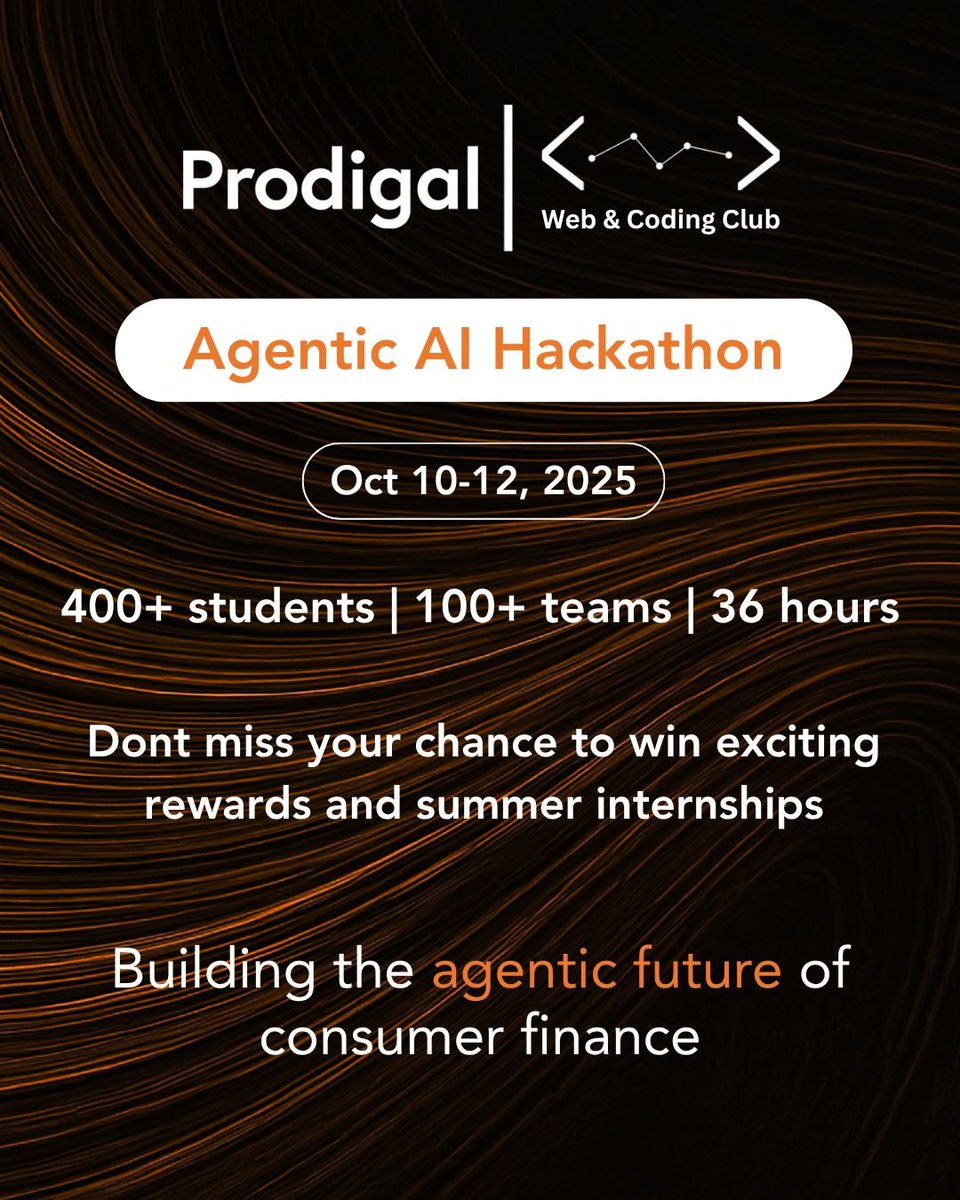
Happy to see such a protocol come up and hope traditional PSPs adopt and adapt. We @prodigaltech have had to take the (rather painful) process of integrating payment processors, and then create Tools to make them agent-native.
Hoping to see such protocols capture consumer finance usecases as well, and not just e-commerce.
Announcing Agent Payments Protocol (AP2), an open, shared protocol that provides a common language for secure, compliant transactions between agents and merchants.
AP2 can be used as an extension of the A2A protocol and MCP. Learn how it works ↓ https://t.co/RBFzpU2qUI
@GarimaDhar Reminded me of the of an essay of @paulg ‘How to Do Great Work’, a great read which also has his opinion that some of the best solutions come up when not tackling the problem head-first.
early on pre-jobs, an algo/calculus class is a great example lol
https://t.co/9CsMPvat4o