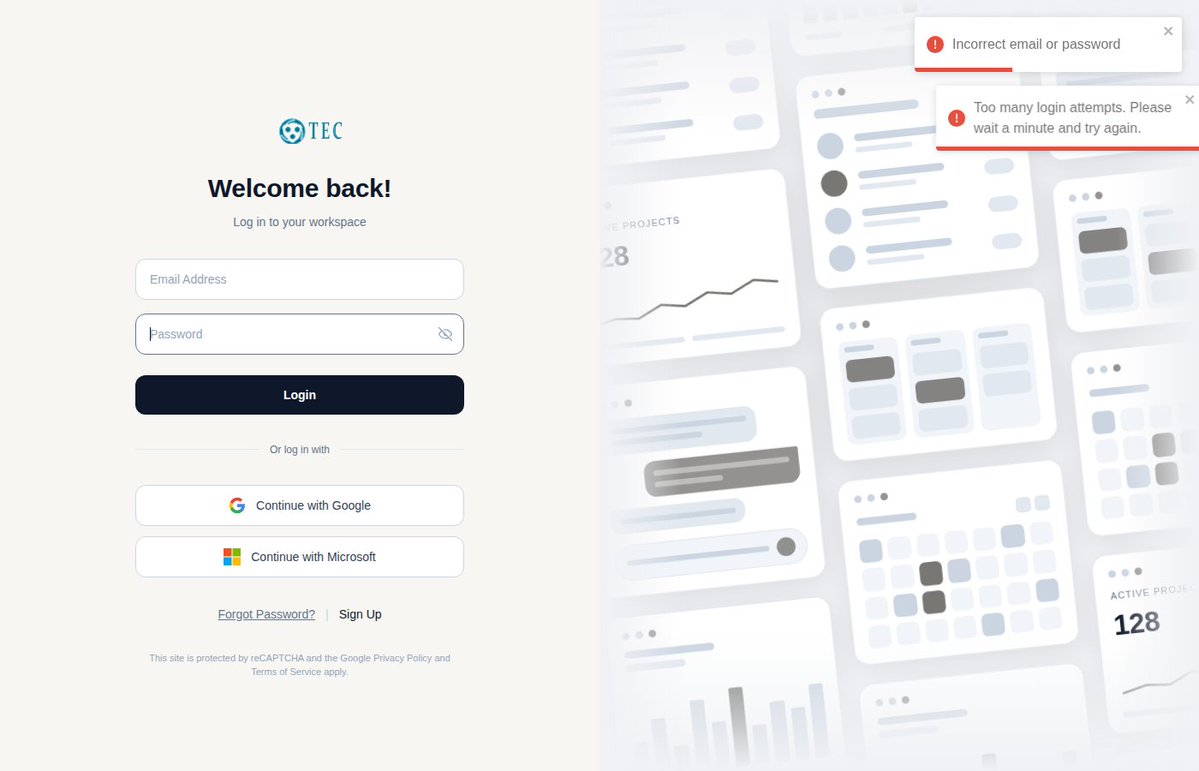
My login endpoint had no rate limiting at all. 10 rapid failed logins, 10 plain 401s, no 429, no lockout, nothing. Anyone could hammer passwords all day. 🧵
Fixed with in-flight request dedup in the shared HTTP layer: identical GETs that overlap share one network request; nothing cached after it settles.
Dashboard: 45 requests → 12. Board: a 218 KB payload fetched 4x → 1x.
#buildinpublic#indiehackers#SaaS#webdev
My app felt slow after login; the dashboard took ~10s to fill in. I assumed the API was slow. It wasn't. The page was firing the same requests 2–3x over before it even asked for data.
Two culprits.
First, the app shell refetched its bootstrap data every time the org object changed, and each fetch replaced the object, so it refired in waves.
Second, a notification poller that never cleared its interval; a new 10s poller stacked on every org change.
Caught my own product lying today. The offline fallback in my resume matcher was inventing numbers: "reduced API latency by 42%", "99.98% uptime", for bullets that stated no metrics at all.
#buildinpublic#indiehackers#SaaS#webdev
Pinned it with tests that name the old invented values and fail if any of them ever come back. If your product writes for users, check what it writes when the AI is off, the fallback is where honesty goes to die.
#buildinpublic#indiehackers#SaaS#webdev
The fix: the fallback now only rephrases what you actually wrote, and where a metric belongs, it leaves a "[add your metric]" placeholder instead of inventing one. Your numbers, your claims; the AI does the wording, not the facts.
The backend (FastAPI, hybrid score: 60% semantic + 40% keyword).
Next up: a standalone ATS checker, then a resume builder with templates. One product at a time, in public. #buildinpublic#indiehackers#SaaS#webdev
Started a second build alongside my project management tool: an AI resume matcher.
Paste your resume + a job description, get a match score, what's missing, and AI suggestions to close the gap.
First slice is in: a Next.js frontend, landing, login, and a matcher workspace with a score dial, streamed AI feedback, and a PDF report, plus a one-command Docker stack (Postgres + pgvector, Redis, API, worker).
My real-time sockets kept dying every few seconds: 'Timeout reading from 127.0.0.1:6379'. But Redis was fine. redis-cli answered PONG instantly. So why was the app convinced Redis was down? 🧵
Fixed in three small PRs: visuals first, then the picker wiring, then the data wiring.
Now the table shows rows and the count pill works. Lesson I keep re-learning: verify rendered data, not console silence.
#buildinpublic#indiehackers#SaaS#webdev
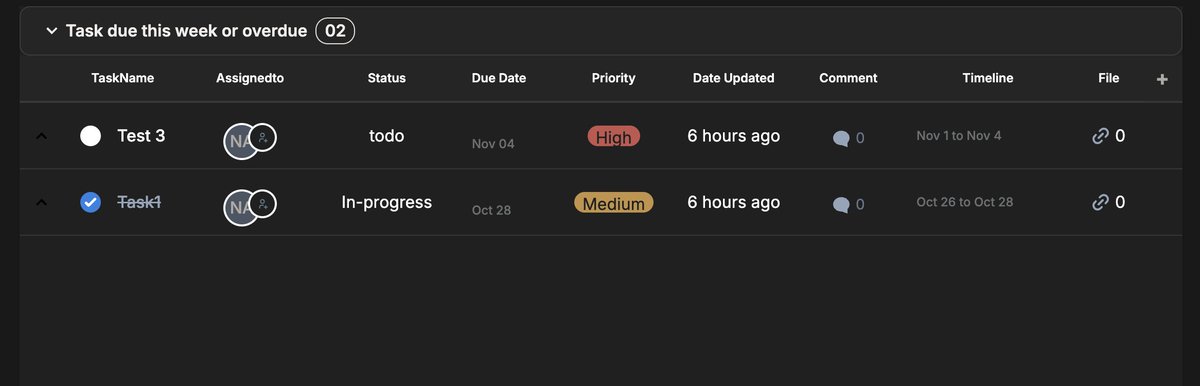
My dashboard had a "due this week" table that looked fine in screenshots but never showed a single row. And its column picker did nothing when you toggled columns. Three bugs, one component. 🧵
The component threw away the rows its parent had already computed, filtered a prop no parent passes, and checked membership against a hardcoded empty list. The picker state was real; the table just never read it.
Spent today fixing board drag-and-drop; three bugs stacked on each other. Columns sliding during card drags, cards vanishing for seconds after a drop, and duplicates on rapid drops. 🧵
Same day, small polish: removed a dead dashboard button, added a real Add button to the task form (it used to only save on close, with no button), and capped the workspace activity feed so it stops stretching the page.
#buildinpublic#indiehackers#SaaS#webdev
Found a bug that made assigned work invisible. My dashboard said a task was assigned to a team member, but it showed up for nobody, not on their dashboard, not in reports. The counting code was reading a column the app never writes. 🧵
The fix: assignment lives in one JSON field that can hold several people per task. I re-keyed every count, dashboard, report, workspace to that field, so a task now shows for everyone on it. One shared helper, so the surfaces can't drift apart again
Shipped a Reports page for the PMS today: task overview, per-project progress, and workload by assignee.
Started as a dead template link, then a static page. Now it shows real numbers from your projects, what's done, what's overdue, and who's carrying the load. #buildinpublic