SUMMER Horizon2020 project; an initiative that seeks to know more about the mesopelagic community, as well as the opportunities and risks with its exploitation
While protecting the mysterious #mesopelagic oceanic zone is critical, #microbial communities that live here could be sustainably exploited for new #pharmaceuticals@CORDIS_EU Full article 👇https://t.co/IfLgkSS2N5
🎣⚠ Capturar peces que viven a más de 200 metros de profundidad puede tener consecuencias climáticas.
⬆⬇🐟Las migraciones diarias de las especies mesopelágicas transportan, al año, aproximadamente 5.000 millones de toneladas de equivalentes de CO2.
https://t.co/55YVIpRF1b
💰Assessment of management and ecosystem services: Commercial fishing simulations indicate that the benefits of mesopelagic fish products do not outweigh the costs in climate regulation and biodiversity. The estimated average social cost is 19€ per ton of mesopelagic fish caught
👩🔬 High-value products: targeted microbial bioprospecting in the mesopelagic zone presents a promising and sustainable avenue, highlighting its microbial and chemical diversity for potential pharmaceutical advancements.
Delighted to share 'Liquid Strata', an art-science collaboration about marine snow, with oceanographer @jOceanSan that took the form of an installation at the @FundacioMies pavilion in Barcelona during this years @SonarFestival with a sound intervention by Daphne Xanthopoulou.
There are different ways to study carbon transport from the surface through the mesopelagic zone. But did you know cameras are becoming a popular and efficient method to study this phenomenon? 🧐📹
https://t.co/F3UKitSYHt
#summerh2020#mesopelagiczone#carbonflux
New preprint by the team, led by
@claver_cristina and part of @SUMMERH2020,
where we examine the "Global distribution patterns of siphonophores across horizontal and vertical oceanic gradients" by reanalyzing the zooplankton metabarcoding data from the Malaspina expedition.
👀How can different mesopelagic fish species coexist when they have the same diet? 🍽️
Researchers from La Rochelle University and Ifremer have recently published a new paper answering this question. Check it out in this weeks blogpost! 🧐👇
https://t.co/3ALmTbbWNl
#summerh2020
This approach prioritizes the health of marine ecosystems, ensuring that fishing practices do not harm other marine life or the habitat they depend on.🐙🐟
📸AI generated image (DALL E 3)
What is green fishing? 🍃🎣
Green fishing is all about making the fishery fleet more sustainable. It involves tackling the challenges of overfishing, reducing the environmental impact of fishing activities, and promoting the use of eco-friendly gear and methods. 🚢
#RControl
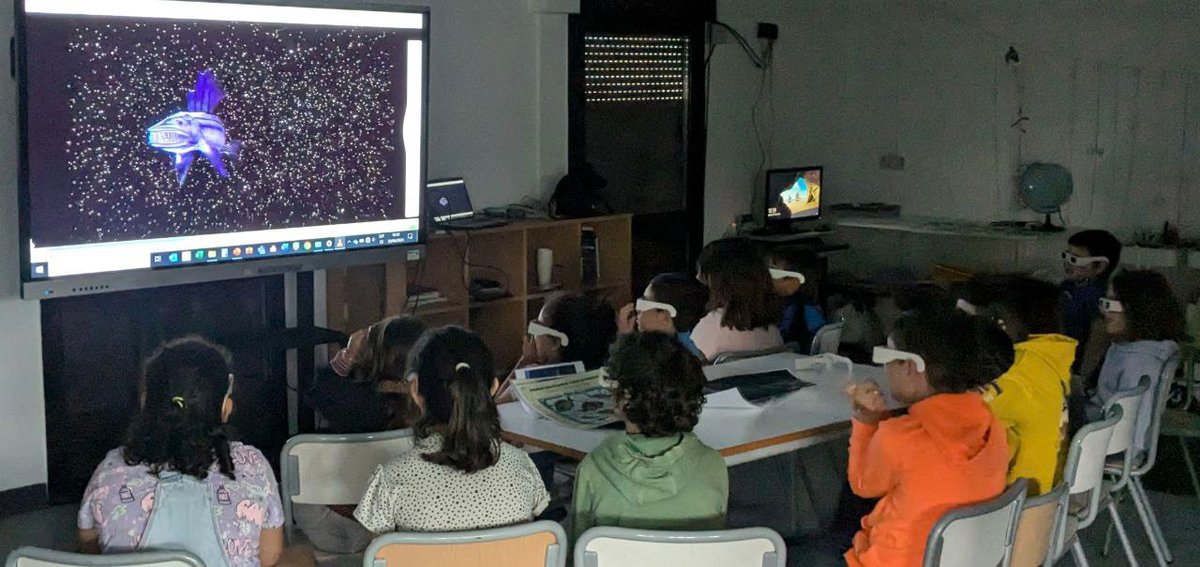
Before summer vacation, two children schools in Biscay (Spain) got to explore the mysterious ocean twilight zone. This was made possible through the initiative of two AZTI researchers, with material gathered through the SUMMER project. ☀️🌊🪸
https://t.co/P5oCmZC6KB
#summerh2020
👉 This installation creatively and experimentally transforms scientific data, transporting visitors to the deep sea where the sonic and visual heartbeat of the unknown mesopelagic ecosystem resonates. 👀🐙
🤩 In an innovative crossover between art and science, Entangled Others Studio and Daphne Xanthopoulou, together with oceanographer Joan Llort, have presented "Liquid Strata". #marinesnow#mesopelagiczone
https://t.co/BAF1pLB9I9