The Indonesian Journal of Cardiology is proud to announce that our journal has been accepted for indexing in Scopus.
Articles from our journal are now discoverable in the Scopus database. This achievement shows our ongoing commitment to high standards in scientific publishing and dissemination of advances in cardiology to a wider audience.
We extend our gratitude to all contributors who have supported this milestone 🎉
🚨 SER MÉDICO PUEDE ENVEJECERTE 6 VECES MÁS RÁPIDO
Durante la residencia:
• −143 pares de bases en telómeros en 1 año
• ≈6x más envejecimiento celular del normal
• Más horas trabajadas = más acortamiento
💡 No es solo burnout: es daño biológico
After 15 years, Indonesia’s rare Rafflesia bloomed, the world’s largest parasitic flower that smells like rotting meat, has no leaves, and lasts just 5 to 7 days.
A New Playbook for Safer Sports in Indonesia ⛹️♂️
How can Indonesia protect its athletes from sudden cardiac death while keeping screenings practical and affordable? This new editorial in the Indonesian Journal of Cardiology proposes a scalable cardiac preparticipation screening model for Pekan Olahraga Nasional (PON, National Sports Week) that combines personal and family history, physical exam, and ECG, aligned with international and WHO guidance yet tailored to real-world Indonesian settings.
DOI: https://t.co/CzmkHaEyl8
#SportsCardiology #Athletes #HealthScreening #SuddenCardiacDeath
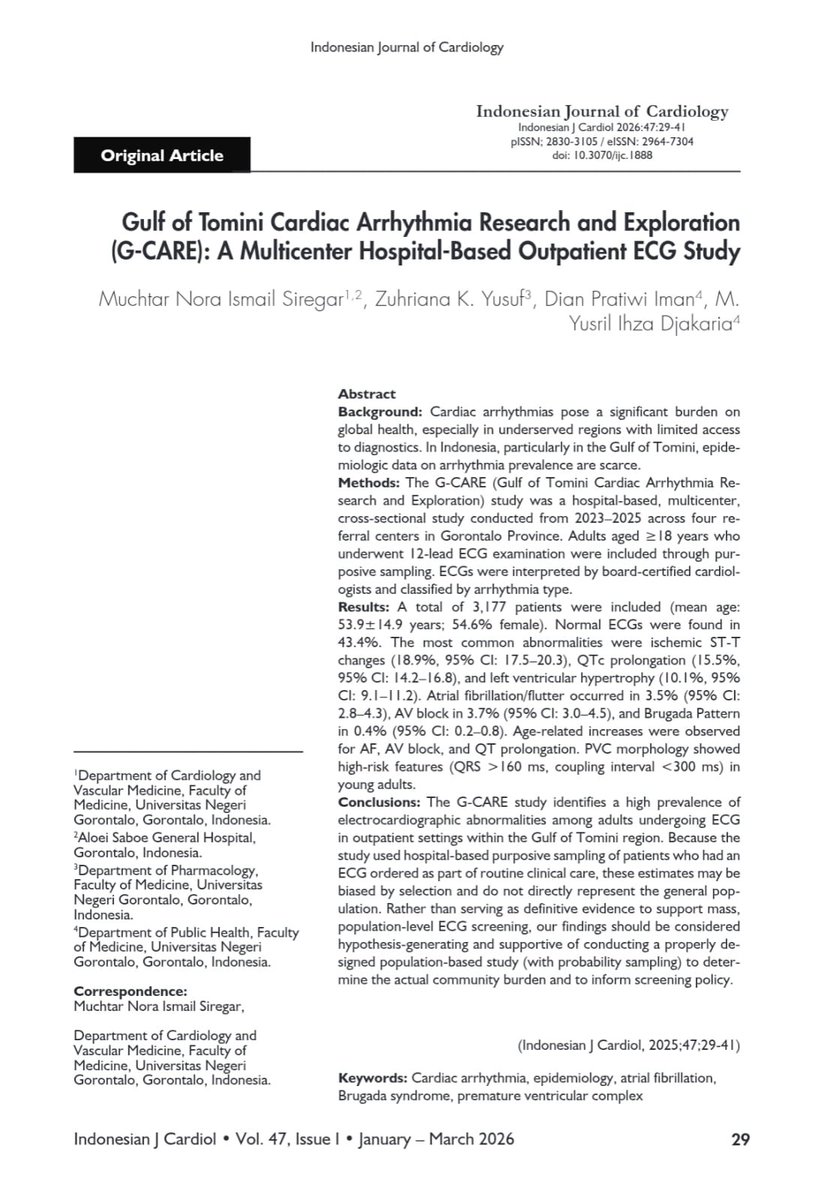
G-CARE: Putting Eastern Indonesia’s Arrhythmias on the Map 🩺
This multicenter outpatient ECG study from the Gulf of Tomini region reveals a high burden of electrocardiographic abnormalities among adults, addressing a major data gap in an underserved, predominantly Gorontaloan population and laying the groundwork for region-specific screening, referral pathways, and investment in arrhythmia care.
DOI: https://t.co/qD0DT6fdCy
#Arrhythmia #Epidemiology #Cardiology #BrugadaSyndrome
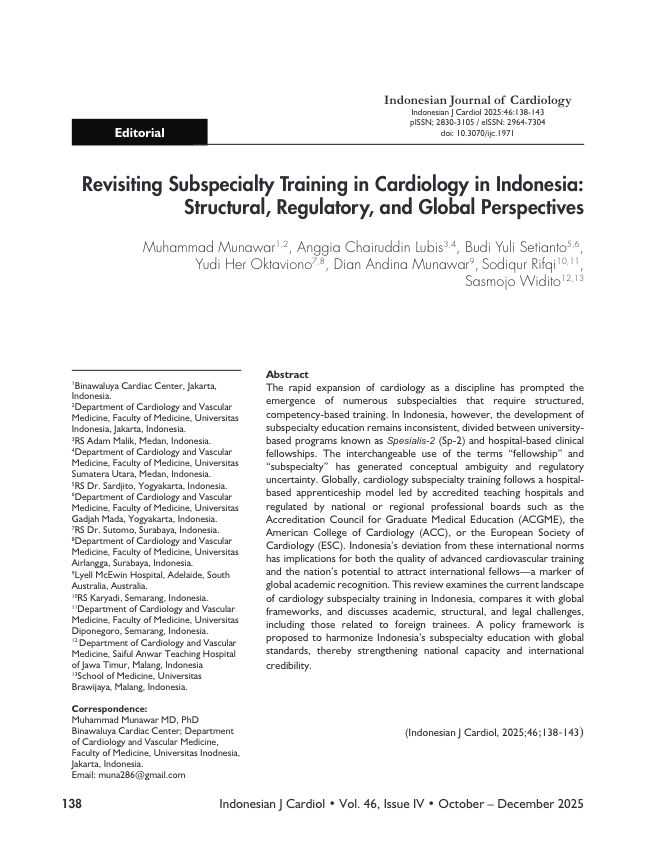
Training Tomorrow’s Cardiologists for a Global Stage 🫀🌏
This editorial reviews how cardiology subspecialty training in Indonesia has evolved into a mix of academic Sp-2 programs and clinical fellowship tracks, creating structural and regulatory ambiguity around what counts as a “fellowship” versus a “subspecialty.” By comparing local pathways with competency-based models and accreditation frameworks used in regions such as Europe, Australia, and North America, the authors call for clearer national standards that align with global norms while strengthening Indonesia’s capacity to train advanced cardiovascular specialists.
🔗 DOI: https://t.co/94L7R2pYxn
#CardiologyTraining #Subspecialty #MedicalEducation #Indonesia #GlobalCardiology
Novak Djokovic: “My kids don't have cell phones and won’t until they’re mature enough. They complain everyone at school has one except us. When everyone follows the herd, conformity is expected. But it doesn’t have to be that way. That’s where we differ.”
https://t.co/vNZ7xueTcV
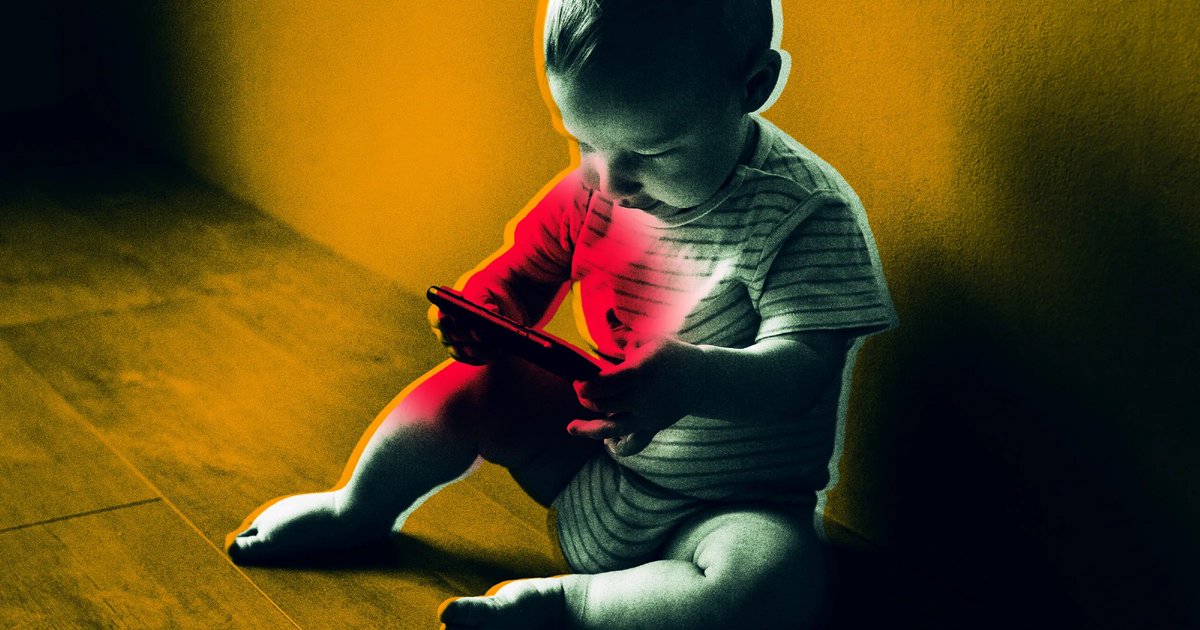
🚨🇺🇸 NEW STUDY REVEALS: THE SMARTPHONE CHILDHOOD EXPERIMENT IS OFFICIALLY BACKFIRING
A massive, NIH-backed study just dropped a quiet bomb on modern parenting:
Kids who get smartphones by age 12 face higher risks of depression, poor sleep, and obesity.
Not because of what they do on the phone - just owning one was enough.
Researchers followed 10,000+ adolescents nationwide. Median age of first phone? 11.
And the pattern was brutal: the younger the phone, the worse the health outcomes one year later.
We’re talking increased depressive symptoms, less sleep, higher obesity rates, chronic fatigue, ...
And this held true even when kids had other screens like tablets. The phone itself was the tipping point.
Lead author Dr. Ran Barzilay said the wild part is they weren’t tracking apps or doomscrolling.
They asked one question: does having your own smartphone this young affect your health?
Answer: yes - and not in a small way.
So what's going on?
Phones aren’t just screens - they’re 24/7 social comparison machines, excellent sleep wreckers, attention grabbers and stress amplifiers, ...
They are basically dopamine slot machines wrapped in Gorilla Glass.
You can lock down apps, but you can’t lock down adolescence.
Researchers now want to study kids who got phones even earlier - under age 10 - to see who’s most vulnerable and how to protect them.
Because let’s be real: 95% of teens already have smartphones.
This is no longer a question of if - it’s how do we keep them from cracking under the weight of constant connection?
This is far from a moral panic. It’s the data finally catching up to what every exhausted parent already suspected:
Childhood wasn’t built for push notifications.
Source: CBS, Futurism
🚨🇺🇸 NEW STUDY REVEALS: THE SMARTPHONE CHILDHOOD EXPERIMENT IS OFFICIALLY BACKFIRING
A massive, NIH-backed study just dropped a quiet bomb on modern parenting:
Kids who get smartphones by age 12 face higher risks of depression, poor sleep, and obesity.
Not because of what they do on the phone - just owning one was enough.
Researchers followed 10,000+ adolescents nationwide. Median age of first phone? 11.
And the pattern was brutal: the younger the phone, the worse the health outcomes one year later.
We’re talking increased depressive symptoms, less sleep, higher obesity rates, chronic fatigue, ...
And this held true even when kids had other screens like tablets. The phone itself was the tipping point.
Lead author Dr. Ran Barzilay said the wild part is they weren’t tracking apps or doomscrolling.
They asked one question: does having your own smartphone this young affect your health?
Answer: yes - and not in a small way.
So what's going on?
Phones aren’t just screens - they’re 24/7 social comparison machines, excellent sleep wreckers, attention grabbers and stress amplifiers, ...
They are basically dopamine slot machines wrapped in Gorilla Glass.
You can lock down apps, but you can’t lock down adolescence.
Researchers now want to study kids who got phones even earlier - under age 10 - to see who’s most vulnerable and how to protect them.
Because let’s be real: 95% of teens already have smartphones.
This is no longer a question of if - it’s how do we keep them from cracking under the weight of constant connection?
This is far from a moral panic. It’s the data finally catching up to what every exhausted parent already suspected:
Childhood wasn’t built for push notifications.
Source: CBS, Futurism
Thanks #TCT2025 for the wonderful experience of learning. This was my 1st time attending TCT and did not regret for this long-way-trip event. love the Imaging&Training and Master Case. Learn the OptimaPCI