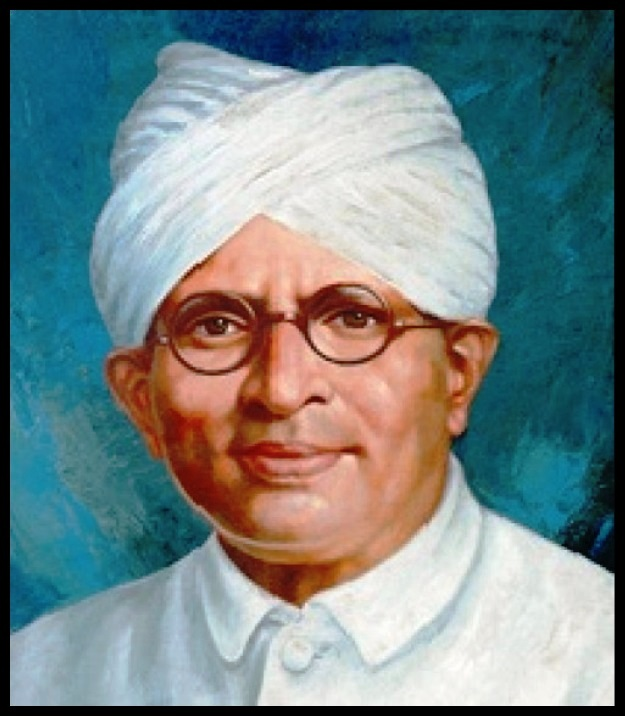
In 1919, 1 man bought a Ghost Ship & challenged the entire British Navy. They tried to bankrupt him with a Zero-Price war, but he won by turning a ferry ticket into a vote for Freedom. From building India’s 1st aircraft factory in secret to carving railway tunnels through impassable mountains, he was the Industrial Guerilla who taught a colony how to fly, sail, & drive. Discover the man who made Made in India a threat to the Empire.
He is the man who looked at the British "No Entry" signs across Indian industry & decided to build a sledgehammer.
After WWI, the British shipping giant BI (British India Steam Navigation) had a total monopoly on Indian waters. No Indian was allowed to own a large-scale shipping line. On 5th Apr 1919, just days before the Jallianwala Bagh massacre, an Indian man, with no background in shipping, Walchand Hirachand Doshi spotted a ship called the SS Loyalty in Bombay harbor. It was a hospital ship being sold after WWI. W/o waiting for a license, he bought it & launched the SS Loyalty, the 1st ship of the Scindia Steam Navigation Company.
The British tried to sink him financially. They started a Price War, dropping ticket prices to almost zero to bankrupt Walchand. Walchand did not blink. He appealed to Indian pride. He told the public: "Even if their tickets are free, if you travel with them, you travel in chains." Indians chose to pay for Walchand's tickets. He broke the 100 yr British naval monopoly. This is why 5th April is still celebrated as National Maritime Day.
The British govt in India had a strict policy: "India will produce raw materials; Britain will produce machines." They flatly refused to give a license for an Indian car factory. Walchand realized he could not wait for permission. He went to the USA & met Walter Chrysler.
He told Chrysler, I want to build an Indian car for Indian roads. Chrysler was impressed by his grit. Together, they bypassed British red tape to set up Premier Automobiles (the birthplace of the legendary Padmini/Fiat). He proved that an Indian could build an engine, not just a bullock cart.
During WWII, the British were desperate for aircraft maintenance in the East but did not want Indians to know the secrets of aviation. Walchand did not ask the British. In Oct 1939, Walchand was returning from the United States (where he had gone to explore setting up a car factory, including talks with Chrysler).
On a Pan Am Clipper flight from San Francisco to Hong Kong, he had a chance meeting with American industrialist William D. Pawley (president of Intercontinent Corporation and involved in aircraft manufacturing for China). Pawley was on his way to China to support aircraft production there (for the Chinese government amid the war with Japan).
During the flight, Walchand discussed his ambitions with Pawley, who shared insights from his China operations. This conversation sparked the idea for an aircraft factory in India. With the help of Maharaja of Mysore, he set up Hindustan Aircraft Ltd. (now HAL) in Bangalore in 1940. When the British realized what he had done, they were furious but had to nationalize it because they needed the planes for the war effort.
Every time we see a Tejas/a Sukhoi take off today, remember that the runway was laid by Walchand’s defiance in 1940.
Walchand’s company, Hindustan Construction Company (HCC), was responsible for the Bhor Ghat & Thull Ghat railway tunnels. British engineers said the Sahyadri mountains were too tough for Indian contractors. They wanted to give the contracts to London firms. Walchand took the contract, used indigenous techniques, & completed the tunnels ahead of schedule & at a lower cost. He proved that Indian Civil Engineering could move mountains.. literally.
Despite being 1 of the richest men in India, Walchand was a symbol of the Swadeshi spirit. He would walk into boardrooms with British Lords & present his papers in Marathi/Gujarati if he felt they were being condescending. His agenda was clear: "I do not want to be a rich man in a poor country; I want to be a productive man in a rich country.
Walchand Hirachand was the Architect of Infrastructure. If Tata built the Steel, Walchand built the Speed.... the ships, the cars, & the planes. He was the 1st Indian to understand that true independence is the ability to move our own people on our own machines.
He was the man who turned "Made in India" from a dream into a Turbine. He did not just compete with the British; he made them irrelevant in their own specialized fields.
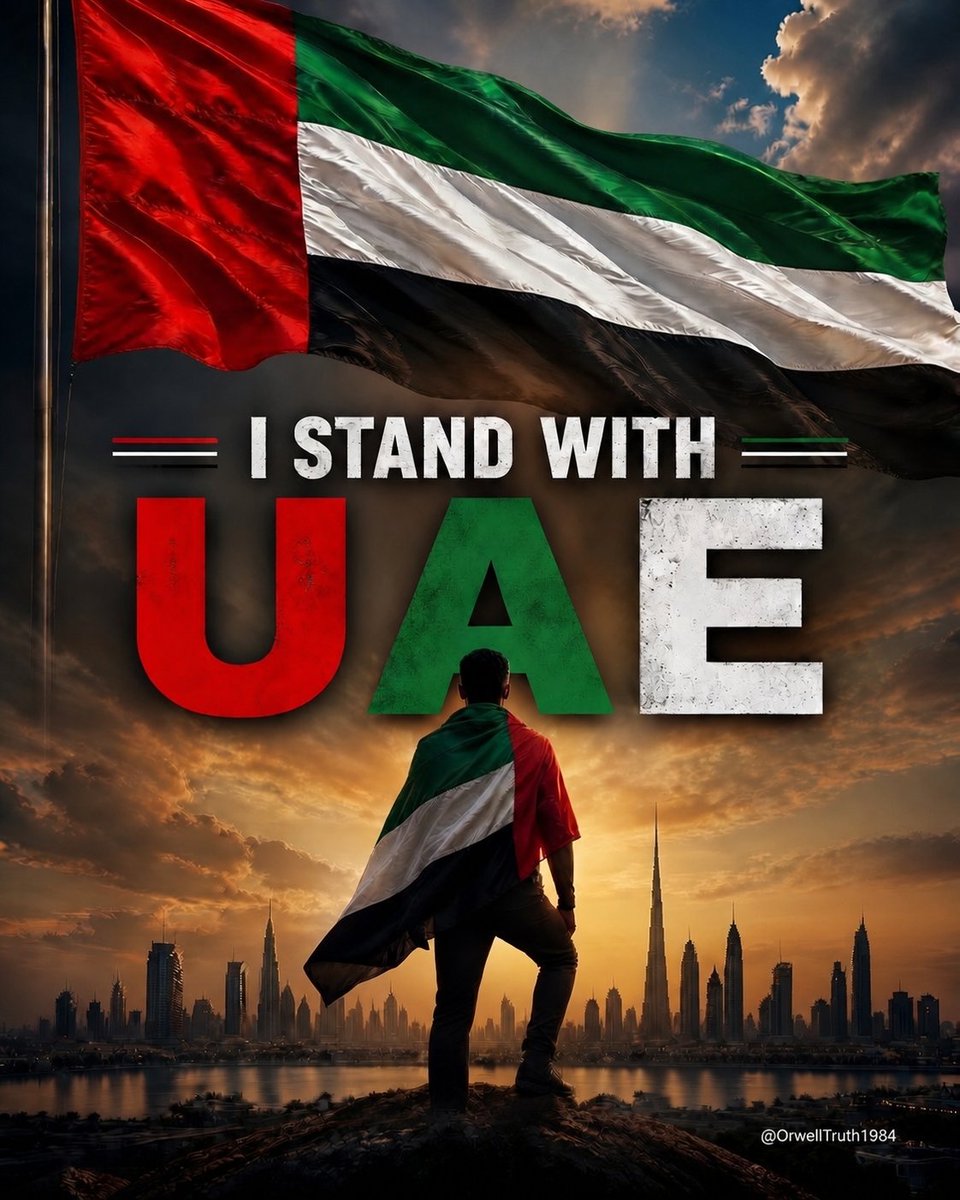
If you stand with the UAE- REPOST now. Share the picture.Stand against the Islamic regime in Iran. Stand with humanity. Stand with civilization against darkness, against backwardness. Choose your side. Silence is not neutral.
@amitsurg Hellow … pls do not give a wrong picture … WE live in Dubai and everything is normal … yes the country is going through some challenging time but mind you Dubai is never empty roads … we are still sailing though our traffics 😄
JOURNALISM'S DYING BREATH EXPOSED LIVE! 🔥
Indian Express Editor-in-Chief Raj Kamal Jha just dropped a TRUTH BOMB at the Ramnath Goenka Awards.
In a searing 6-minute Masterclass, Jha didn’t just Critique — He GRILLED the Corpse Of Indian Journalism.
• He Exposed How "Your 6 Can Be My 9" Fake-news Chaos Has Replaced Truth.
• He called out Billionaire Puff-pieces, 6-second Reels, Screenshot-of-screenshot Warriors, and TV anchors who "Bend Every Day… But Suddenly Stand Up One Night."
• He Reminded Everyone: Real Journalism is Stories the Powerful DON’T want you to know — like Parents Fighting For A Child’s Dignified Death or Married Women Blacklisted by World's Richest Company.
• He slammed the Certificates Politicians hand out while Playing Editor, and Journalists Playing Politician.
• And He Ended With Orwell-level Fire: "The freedom to say two and two make four… and the courage to say six can NEVER be nine."
6 Minutes. No Filter. Pure Dynamite.
#GodiMedia #PMModi #NayeUPKiUdaan
*Sanju Samson*: "
When people talk about my journey, they usually start with stadiums.
*For me, it always begins with a bus.*
I was eleven. My kit bag felt heavier than me. *I would leave home in Vizhinjam before the sun came up, change two buses, and reach the Medical College ground by 6 in the morning. Some days I was sleepy. Some days I was sore. But I don’t remember ever wanting to skip it* .
After practice, I would bathe under a small tap at the corner of the ground. No dressing room. Just cold water, a towel in my bag, and a quick change into my school uniform. Then I’d walk to catch another bus to St Joseph’s. School, homework, and then back again for evening nets.
That was my life. Every day
I didn’t think of it as a sacrifice. I just thought — this is what it takes.
*My grandfather was a fisherman. Watching him, I understood something early. You can’t control the sea. You can only control how prepared you are when you go out. Some days you come back with nothing. But you still wake up the next morning and go again. That stayed with me* .
There were phases when I felt close to my dream. And phases when I felt very far from it. Being dropped. Sitting out. Hearing opinions. Smiling outside but questioning yourself inside.
I won’t lie, it hurts. I’m human.
*But every time I feel that doubt, I go back in my mind to that small tap at the ground. To the buses. To my parents adjusting their lives around my practice. I remind myself that this journey was never built on comfort. It was built on consistency* .
When I play in Thiruvananthapuram and hear the crowd shout my name, it feels personal. They didn’t just see me succeed. They saw me grow. They saw the process.
I am still that boy from Vizhinjam. I still love batting the same way. I still get nervous. I still want to prove myself. The only difference is the stage.
*The fight hasn’t stopped. It probably never will* .
*Because for me, cricket was never about fame* .
*It was about a dream I chose , and keep choosing : every single day* . "
*~ Sanju Samson*
You see your creed as a gateway to heaven, I see my country as the ground where all heavens meet. My national identity doesn’t stand against your religion, it stands for your right to have it.. 🇦🇪
Adding to that, she successfully delivered the project despite the global disruption caused by the COVID19 pandemic even while she was in the final months of her pregnancy.👏🏻 a SALUTE to Her excellency
His Highness Sheikh Mohammed bin Zayed :
I personally hope that our residents in the UAE
We make them feel that this is their second homeland
We can't compensate them in their first homeland ، But this is their second home
- That's why we found residents standing with the UAE at this time as if they were their country 🇦🇪
@FT How do you find ur news which is not real ? 🙄 only people who are on visit are going back … we are all safe and sound and living our routine life 🙏 pls get ur facts right
Residents stand united with their Emirati brothers against anyone who dares to harm the UAE 🇦🇪 Thank you to all our brothers and sisters living in the UAE for your sincere support, kind words, and unwavering trust in the country and its leadership — you’ve truly proven that you are family, and your honorable stance will never be forgotten by any Emirati.
As a practising lawyer,Jinnah did read all the newspapers of his day. In his early days he was keen on theatre. He served as an assistant in politics to G K Gokhale. He was a Khoja Muslim, of the non-observant type, who initially represented the Muslim identity without bringing in the overtly religious element.
On the religious front, he was outmanoeuvred by Gandhi who got the Ali brothers to dominate the stage at the Muslim league conference. He probably would have remained as an overachieving Indian lawyer who practiced in London, but for the Muslim feudals of the time, calling him back in the 1930s. Thereafter it was the lawyers instinct to win that took over and he ended up creating a country with nothing more than his brain and his typewriter.
@KhamisMalhosani bang on… this thin line which people fail to understand…Extremism in any faith is terror… faith has been existing since centuries 👍 Proud of UAE in calling spade a spade.
In every religion, there are extremists who distort its values.
Groups like ISIS or the Muslim Brotherhood do not represent Islam, just as the Ku Klux Klan does not represent Christianity.
Extremism is the problem, not faith.