things i've planned to finish this month
> stitch up all commands with the terminal interface
> build an team of mini sub agents and one orchestrator
> long task breaker
and hopefully publishing the first version to npm
Quite overwhelmed with hundreds of responses, will be sharing it to random dozen peeps for review and once relevant changes and fixes made would be deploying it for public access
Although this is going to be a completely free thing I would still like to ensure it's not like some other vibe coded basic platform that already exists.
Hence I would appreciate to give few of you guys beta access to this for quality feedback so that we can make necessary improvements before I make this live for general public.
People who are interested in getting beta access please kindly reply in dm.
reproducing X's fan-out problem in code from the DDIA book chapter 1
concepts covered:
> push
> pull
> merge
> scalability
> load balancing
had a lot of fun understanding the concepts and implementing them in code
An year ago I grew my account from 0 to 1,000 followers
in just a month nd made this video to help everyone out in doing the same
Crazy how this video still holds value even after this long , man i should do the video content on Maths now.
I accidentally started
My Deep Learning Journey
because of a Geometric Question
back in March I wasn't into ML / DL, until I encountered this question
This single problem completely shifted my perspective and led me straight into Geometric Deep Learning.
Here is how the Math works, and why it matters.
1) The Simple Part : Rotations ( R alpha )
a point at angle θ (say 20°) and you want to rotate it counterclockwise by alpha (say 30°), what do you do?
You just add them: 20° + 30° = 50°
Mathematically rotation operation is just
θ + alpha
Simple, right? But reflections are where standard textbook explanations usually gatekeep the beauty of the problem. If you read the formal notation ten times, it still feels abstract.
Let's break it down from first principles instead.
2) The Elegant Part: Reflections (F alpha)
When the problem says F alpha, it simply means our mirror is sitting at an exact angle of alpha.
Let’s use a real example: say the mirror angle alpha is 50°, and your current point sits at an angle theta of 20°.
How far off are you from the mirror?
50° - 20° = 30°
You are standing at 20°, and to reach the mirror at 50°, you have to walk a "gap" of 30° forward. Because it’s a reflection, that exact same gap is bounced to the other side of the mirror.
So, you take the mirror's position (50°) and add that reflected gap (30°) to it:
New Angle = 50° + 30° = 80°
Let's look at the universal algebra behind what we just did:
Gap = alpha - theta
New Angle = alpha + Gap
New Angle = alpha + (alpha - θ) = 2 alpha - θ
The absolute beauty of this? It works universally. If your point is ahead of the mirror (θ > alpha), the gap naturally becomes a negative signed displacement, and
The algebra automatically takes you backward to the correct spot. Zero case checking required.
Why was this formula for reflections ( 2 alpha - θ )
What I'm about to say now might feel a bit surprising to y'all but
Reflections is what makes Rotations happens !
Basically a rotation is just Reflection but how?
Part (b) of this question helps us in understanding this fact,
Let's dive deep into it
Nd yea This is one of the PYQs of CMI ug Entrance
now here's a new concept
3) Composition of Reflections
You must've heard about composition of functions but what in the world is composition of functions on Reflections?
Let's analyse
it works exactly the way you'd expect it to
F alpha o F 0
So execute F 0 first as per our formula which we derived earlier
Here
alpha is 0
so
2 alpha -θ
hence
F 0 = -θ
Now take this as input nd convey it to F alpha
Our input angle is now (-θ)
Let's feed this directly into our universal reflection formula: 2(alpha) - (input angle)
New Angle = 2 alpha - (-θ)
New Angle = θ + 2 alpha
Look at that final result carefully.
We started with a point at an initial angle of theta
After applying two reflections back to back, we landed at
θ + 2alpha
What operation just adds a fixed angle to your starting position?
A rotation !
Hence we proved how Rotations are just reflections in disguise
But how did this lead me to Geometric Deep Learning?
While playing around with this math across different coordinate systems, I noticed a Strong pattern
You can define almost any complex geometric movement using just a few baseline reflections.
Think of these reflections as seed rules
I realized that if you bake these fundamental seed rules directly into a system, it doesn't need to memorize every single possible variation of a shape from scratch. It can automatically generate and predict endless possibilities because it inherently understands the underlying laws of the space it's in
I researched further nd realised that all of it leads to Geometric Deep Learning nd that's when I Decided, I'll be studying all the Underlying Maths required for it, nd Obv to even touch GDL, I must study Core DL First
Since Mid June I've been Studying DL with Maths First Approach to someday be able to make an impact in Frontier GDL
Wanted to do this since a very long time
Introducing - Bangalore Paper Club
A series of offline research gatherings, under The Research Room India.
We're hosting the first edition this Thursday at Araku Indiranagar. Come over! and bring people with you.
---
Obviously inspired by the YC Paper club, the idea is to meet researchers in real life, present papers, discuss interesting problem statements and work together on some of them. We'll be doing presentations, recording them and putting them on YouTube.
I started "The Research Room India" community a while ago and it hit 500+ members recently. It's nice to see people interacting with each other over deep tech, taking feedback and also providing commentary to others. I met some really smart people through that, some of them joined my team at Conscious Engines as well.
It was natural that we had to take the next step which is to bring such people together offline.
Research as a topic is usually perceived as boring, too technical or nerdy. It may not be fully true.
The idea is to add a little bit of glamour to research so atleast more people pick it up and find it interesting, hosting it Araku, one of the hottest venues in Bangalore is a step towards that direction haha.
Link to the Luma event in the comment
Fell in Love
with Reflections nd Rotational definition of co ordinate spaces
Guess who's back, got a lot of stuff to share nd talk about !
From my internship experience as a Data Analyst to the Maths grind, grinded 10 years CMI Maths Subjective Pyqs nd much more !
We're so backkk
Gonna share it all !! Stay Tuned !!
I just released an all-in-one tool that lets you extract textures from any perspective, turn them into seamless textures, and use them on your 3D models.
#gamedev#indiedev#gamedevtools#itchio#indiegame
I reverse engineered Qualcomm's NPU compiler to find undocumented behaviour that affects every edge AI deployment.
Things nobody knew:
1. The compiler silently downgrades the precision of your model weights without telling you
2. Memory placement uses HiGHS which is an LP solver (not heuristics)
3. The same model on two different chips with identical reported VTCM can have 33x difference in DDR traffic
4. There's an undocumented internal simulator called Hextimate pricing ops without the hardware
Every NPU vendor be it Qualcomm, MediaTek or Apple NEVER tells you how to make the most use of their hardware.
I was very close to rage quitting before I finally lost all hope and thought of reverse engineering to understand how NPUs are handled.
Read the full write-up below:
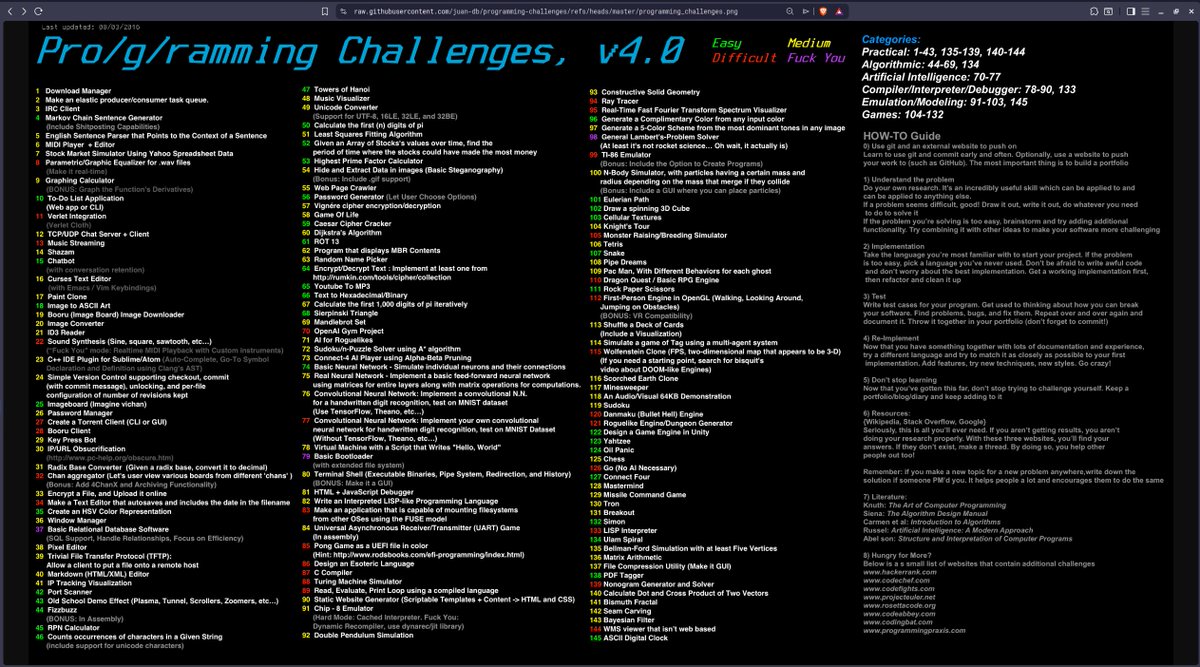
Since it'll be THAT time of the year where I'll be bombarded with "I am a new student, what do I do" questions, here is something for y'all to refer -
"https://t.co/b1vjPfhm0U"
Shoutout to @datavorous_ for this btw