Den wichtigsten Satz gestern auf dem FDP-Parteitag sagte Martin Hagen, der neue Generalsekretär: „Mir ist lieber, wir begeistern die 20 bis 25 Prozent, die sich in Deutschland vorstellen können, die FDP zu wählen, als dass wir versuchen, es den anderen 75 bis 80 Prozent irgendwie recht zu machen, die uns am Ende sowieso doof finden.“ https://t.co/ixGYamdQmb
I can't believe how fun building a company is right now is.
The weird part is it doesn't feel like work anymore. New AI models/tools/repos keep coming out making the impossible possible.
My ONLY anxiety is making sure I don't waste this precious moment and keeping up with the updates of all the new tools/AI models.
AI is creating the greatest platform shift of all time.
And, I've learned to never let a good platform shift go to waste.
I was living in Silicon Valley around for the mobile era. I remember the feeling of "you can just build an app and put it in the store and people find it."
That lasted maybe 4 years before the gold rush ended and distribution got hard.
I'm getting that same feeling right now but bigger. The difference is I'm older, I know what a window looks like, and I know they close.
I love building right now. Maybe you do too. Trying not to take it for granted. I'm excited for Monday. Can't wait.
My partners and I are up at midnight most nights now sending each other screenshots saying "look what this can do." Nobody asks anyone to do this. We just can't stop. Something drops, someone builds something with it in 2 hours, and the group chat goes off. It feels like we're getting away with something.
Some of the greatest companies of the next decade will be started in 2026. I'm sure of it. And it'll be fun.
I feel like a kid again. Genuinely giddy.
Deutschland taumelt völlig unwissend in den wirtschaftlichen Niedergang. Selbst in meinem engsten Umfeld fehlt oft jedes Bewusstsein für die harten wirtschaftlichen Fakten.
Viele sind völlig geschockt, wenn man ihnen die explodierenden Sozialkosten, den Wegfall industrieller Wertschöpfung, die Verlagerung von Produktion, den Stellenabbau, die immer weiter steigende Staatsquote, den China-Speed oder die Tech-Dominanz der Amerikaner erklärt.
Dabei ist das alles seit Jahren alles sichtbar und bekannt. Das Land verliert seine wirtschaftliche Substanz, aber große Teile der Gesellschaft merken es wirklich erst, wenn es zu spät ist.
Wenn ich zum Beispiel in großer Runde erkläre, dass wir in Deutschland inzwischen fast jeden Tag irgendwo ein Industriewerk verlieren, herrscht plötzlich Stille. „Oh, das wusste ich nicht. Ist das wirklich so? Wow.“
Schon allein deswegen hat der öffentlich-rechtliche Rundfunk, der eigentlich den Auftrag hat, hier zu informieren, völlig versagt.
Es gibt aber auch ein totales Desinteresse an der deutschen Wirtschaft und ihren Problemen im überwiegenden Teil der deutschen Bevölkerung.
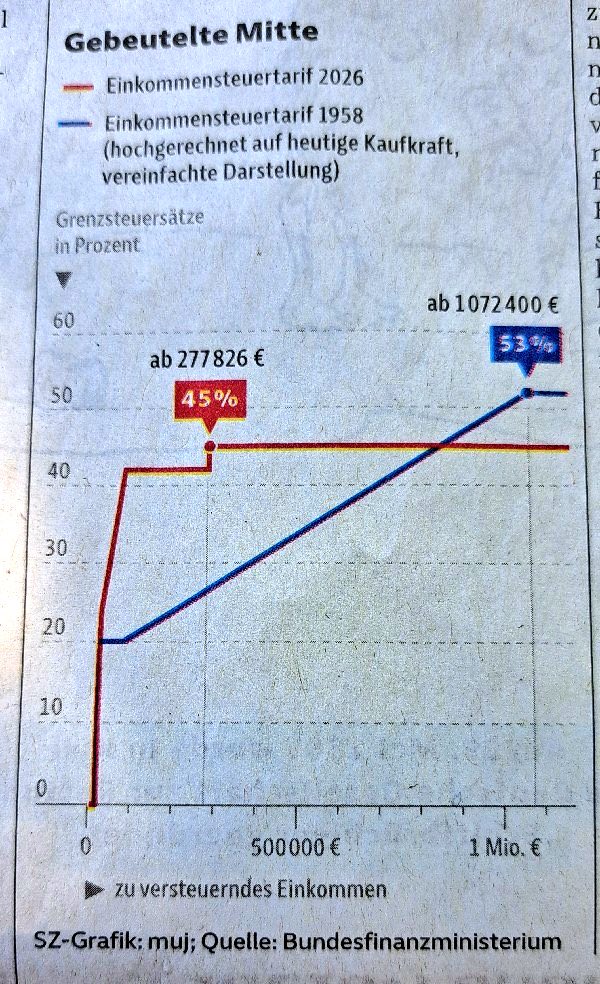
Diese Grafik zeigt wie der gierige Staat unsere Mittelschicht zerstört hat. In den Jahren des deutschen Wirtschaftswunders bezahlten gut verdienende Arbeitnehmer einen Steuersatz von etwa 25 %.
Familien konnten sich Häuser leisten. Ein Einkommen genügte. Das Fundament für eine stabile Gesellschaft wurde gelegt. Der Spitzensteuersatz in Höhe von 53 % griff inflationsbereinigt erst ab 1.072.000 €.
Heute kennt das Steuersystem keine Mittelschicht mehr. Wenn Du eine guten Job hast, kommt sofort der Staat und verlangt 42 %. Vermögensaufbau wird unmöglich. Das eigene Haus wird zum fernen Traum.
Linke Politik hat ein Steuersystem erschaffen, das die Bürger knechtet. Es ist hochgradig ungerecht.
Anthropic just shipped "dynamic workflows" and it's a much bigger deal than the Opus 4.8 release IMO
here's what it actually means for your work:
before, Claude worked like one person doing one task at a time.
> you ask
> it does the thing
> you check it
> you ask for the next thing.
helpful, but it's still one worker and you're the manager watching over it
dynamic workflows flips that. you describe a big goal, and Claude becomes the manager.
it writes the plan, spins up hundreds of mini-Claudes working at the same time, has them check and challenge each other's work, and hands you back one finished result
think of it like building a house
before, you'd hired one handyman. you give him one task at a time, you watch him work, and if you want a whole house you're personally managing every nail
now you've hired a full general contractor.
you say "build the house, here's the inspection it has to pass," you approve the blueprint, and you leave.
he brings in a whole crew working at once, runs inspectors who tear apart anything that's off, and you come back to a finished house that already passed inspection
here's what that unlocks. the jobs that used to be too big to hand to AI:
• move your entire app from one programming language to another while you sleep. someone just did exactly this on a massive project (750,000 lines of code) in 11 days with 99.8% of the tests still passing. that used to take a team months
• run a full security sweep across your whole product at once, finding the weak spots and double-checking each one is real before it tells you
• point it at an old, messy project nobody understands anymore and have it map out and explain the entire thing
the wow factor is the scale + the walk-away.
you kick off something that would've taken weeks, go to sleep, and it's still running and checking itself.
if it gets interrupted, it picks up right where it left off. you're running a full on project now, not babysitting a little chatbot anymore
you wanna reach for this when a task is:
> too big to do in one shot
> made of lots of independent pieces that can run at the same time
> clear about what "done" means (like "all the tests pass")
if it's small or fuzzy, a normal session is better and way cheaper.
fair warning, this gobbles way more tokens than a regular session, so save it for the big jobs
tldr: you used to hand Claude a task. now you hand it a project
Excited to share our most powerful new Claude Code feature: dynamic workflows!
Mention "workflow" in a prompt and Claude will dynamically create an orchestration plan that it strictly follows, allowing you to confidently trust that every stage happens in the right order even across 100s of agents.
this codex prompt is literally the best thing ever
if you are building react apps and want the cleanest possible code
simply run "/goal run npx react-doctor@latest and fix issues until you get a score of 100. do it properly without taking any shortcuts" in codex
thank me later
Everyone's bottleneck in voice AI is the same: retrieval. The agent thinks, network round-trips to a vector DB, and the magic dies.
Moss runs search at sub-10ms (no hop). Open source. This is the layer voice agents were missing. Build on it June 6-7 at the YC office.
Introducing Lynk, a brand new way to interact with your favorite harnesses on the go.
Compatible with OpenClaw, Hermes, Codex, and local edge models.
Fully featured client allowing you to easily and quickly switch between your favorite agents.
Lynk has been my absolute favorite way to kick off tasks on the go, completely replacing Telegram.
Only available as a beta on Android at present, but iOS version is in development.
Works via local network or Tailscale.
Features:
- Create and continue threads with your favorite harness
- OpenClaw, Hermes, Codex, and local models
- Android Phone control
- Realtime voice agent
- Speech-to-text transcription
- Codex Pets + live notifications
- Draw over screen quick access chat overlay
- Open Source software
Join the beta in the comments.
💡Recent insight: gaslighting @claudeai seems to improve code quality >90% of the time.
“You overengineered this, there is a simpler way”
“There is a smaller delta that buys us most of the benefits”
“There is a more elegant way”
“This is not architecturally coherent”
…before I even read its code. 😆
An ex-Google engineer in Bangalore built the photo app Google does not want you to install.
It's called Ente.
The free, open-source, end-to-end encrypted backup for every photo and video on your phone.
Same auto-backup. Same albums. Same face recognition. The face recognition runs on your phone, not on Google's servers.
Google Photos vs iCloud Photos vs Ente:
- Price: Google One 2TB $119.88 a year → iCloud+ 2TB $119.88 a year → Ente self-host free
- Encryption: Google reads your photos → Apple reads your photos → No one can read your photos
- AI training: Yes, by default → Apple has tried scanning twice → No, ever
- Audited: No, closed source → No, closed source → Yes, three times
- Backup copies: One Google datacenter → One Apple datacenter → Three copies, including a fallout shelter 25 meters under Paris
No Google account. No Apple ID. No company can read your memories.
How private is it? Mathematical.
→ Source code public. Server code public.
→ Audited by Cure53, Symbolic Software, and Fallible.
→ Built on libsodium, the same library Signal uses.
→ Even Ente cannot read your photos.
26,810 stars. AGPL-3.0. Pushed today.
One honest note: self-host is free. The paid cloud is how the team eats. No "Pro" tier hiding inside.
Vishnu Mohandas worked at Google. He saw what Google does with photos. He quit in February 2020, moved home to Bangalore, and built Ente. No VC. No team. No fundraise.
Google capped free storage at 15GB in June 2021, then charged you $9.99 a month to back up your own kid's photos.
This is what photo storage should have been before Google made it about ads.
(Link in the comments)
🚨 Batteriespeicher sind kein Heilsversprechen. Sie sind ein Werkzeug.
Wer daraus eine Komplettlösung macht, verkauft Storytelling und Nebelkerzen.
Ich fange bei der simpelsten Physik an.
1 kW über 1 Stunde sind 1 kWh.
Punkt.
Genau an diesem Punkt scheitert der Großteil der öffentlichen Debatte, weil Leistung und Energie dauernd vermischt werden, bis jede Größenordnung verschwimmt.
Nehmen wir Dortmund.
Rund 1,913 TWh Strombedarf pro Jahr bedeuten im Mittel etwa 218 MW Dauerlast.
Ab da wird es konkret.
Eine Stunde Dortmund heißt 218 MWh.
Vier Stunden heißen 874 MWh.
Ein Tag heißt 5,24 GWh.
Drei Tage heißen 15,72 GWh.
Sieben Tage heißen 36,69 GWh.
Das ist keine Meinung.
Das ist einfache Rechnung.
Jetzt die Kostenseite.
Für Utility-Batteriesysteme liegt die realistische Bandbreite grob bei 160 bis 300 Euro pro kWh.
Damit landest du bei Dortmund ungefähr hier:
24 Stunden
0,84 bis 1,57 Milliarden Euro
72 Stunden
2,52 bis 4,72 Milliarden Euro
7 Tage
5,87 bis 11,01 Milliarden Euro
Und genau hier beginnt der Realitätskontakt.
Sobald aus Stundenlogik Mehrtageslogik wird, explodiert die Kapitalbindung.
Jetzt zur Materialseite.
Plausible LFP-Intensitäten je kWh liegen etwa bei:
0,12 bis 0,18 kg Lithium
1,4 bis 1,8 kg Graphit
0,5 bis 0,8 kg Kupfer
Für einen 7-Tage-Speicher in Dortmund bedeutet das:
4.403 bis 6.604 Tonnen Lithium
51.363 bis 66.038 Tonnen Graphit
18.344 bis 29.350 Tonnen Kupfer
Das ist die Stelle, an der viele plötzlich ausweichen.
Weil hier sichtbar wird, dass wir nicht über Marketingfolien reden, sondern über Rohstofftempo, Lieferkettenmacht und Industriephysik.
Im Verhältnis zur globalen Jahresförderung liegt Graphit in diesem einen Stadtszenario bereits im hohen einstelligen Prozentbereich.
Für eine Stadt.
Für ein Szenario.
Und parallel läuft das Smart-City-Skript.
PV auf jedem Dach.
Speicher in jedem Keller.
Megapacks an jeder Trafostation.
KI regelt Lasten.
E-Autos puffern alles weg.
Klingt slick.
Klingt modern.
Klingt steuerbar.
Das Problem: Es wird so getan, als seien Tageswerkzeuge automatisch Wochenwerkzeuge.
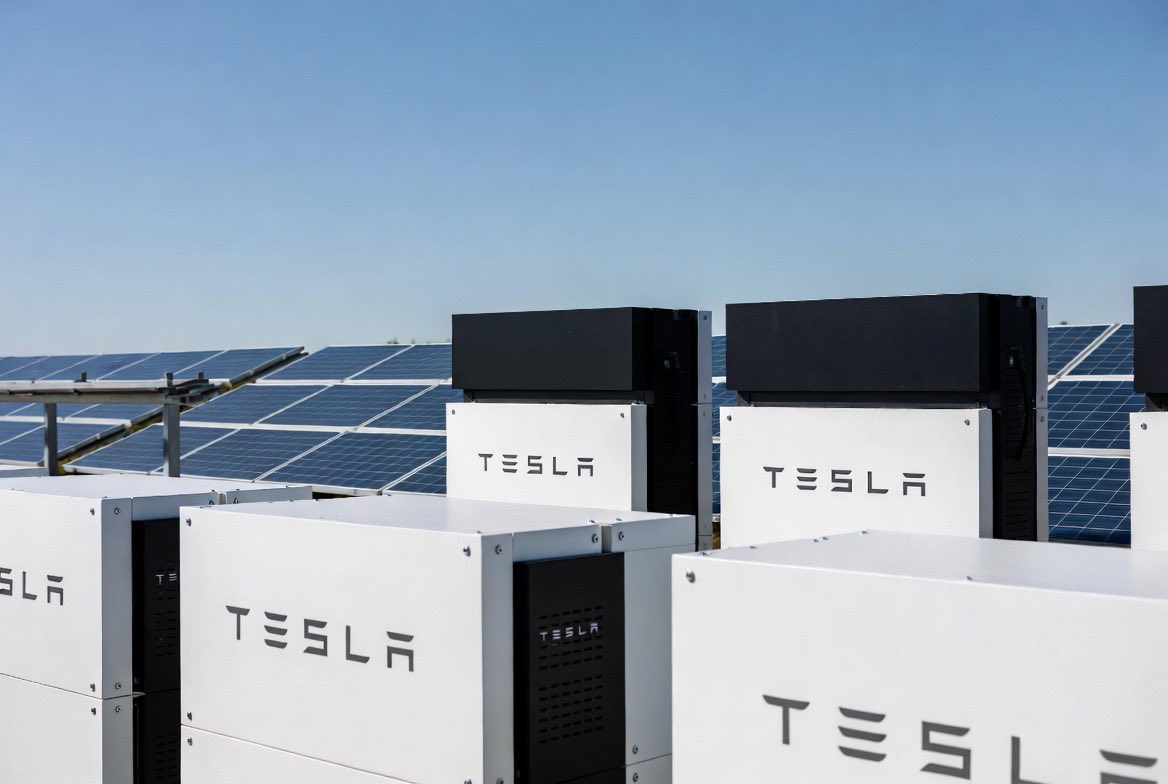
Nehmen wir Tesla als typisches Beispiel dieser Erzählung.
Powerwall
13,5 kWh nutzbar
Für eine Stunde Dortmund brauchst du rechnerisch rund 16.176 Powerwalls.
Für einen Tag rund 388.229.
Für eine Woche über 2,7 Millionen.
Megapack
rund 3,9 MWh je Einheit
Für eine Stunde Dortmund etwa 56 Stück.
Für einen Tag etwa 1.344 Stück.
Für sieben Tage etwa 9.407 Stück.
Auch das ist keine Polemik.
Das ist Stückliste.
Jetzt zum Platzbedarf.
Beim 7-Tage-Szenario in Dortmund liegst du für die geschätzte Speicher-Site bei rund 0,60 km² Fläche.
Nur Speicherlogik.
Standortpolitik, Netzanschlüsse, Brandschutz, Genehmigungstiefe, Betriebssicherheit kommen danach.
Jetzt zu den Autobatterien in der Smart City.
Ja, EV-Batterien sind ein echter Flexibilitätshebel.
Ja, Vehicle-to-Grid kann im Tagesverlauf helfen.
Ja, das ist sinnvoll.
Aber hör auf, daraus ein Zaubertrick zu machen.
Mit einer typischen EV-Batterie um 65 kWh und real abrufbaren 10 bis 30 Prozent pro Tag brauchst du für eine einzige Stunde Dortmund in einer 20-Prozent-Annahme bereits über 16.000 gleichzeitig verfügbare EVs.
Für einen ganzen Tag wächst diese Logik in Dimensionen, die nur mit hoher EV-Dichte, hoher Teilnahmequote, stabiler Anschlussbereitschaft und disziplinierter Ladekoordination halbwegs tragfähig werden.
Heißt auf Deutsch:
EVs helfen.
Heimspeicher helfen.
Megapacks helfen.
Aber sie lösen unterschiedliche Probleme auf unterschiedlichen Zeitskalen.
Die eigentliche Lüge der Energiewende ist nicht Batterie.
Die Lüge ist die absichtliche Maßstabsverschiebung.
Aus Intraday wird Systemadäquanz gemacht.
Aus Peak-Shaving wird Versorgungssicherheit gemacht.
Aus Technik wird Ideologie.
(1/2)
you can create a sticky navbar that morphs when you scroll with pure CSS, no JS or animation libraries required
𝚑𝚎𝚊𝚍𝚎𝚛 {
𝚌𝚘𝚗𝚝𝚊𝚒𝚗𝚎𝚛-𝚝𝚢𝚙𝚎: 𝚜𝚌𝚛𝚘𝚕𝚕-𝚜𝚝𝚊𝚝𝚎;
𝚙𝚘𝚜𝚒𝚝𝚒𝚘𝚗: 𝚜𝚝𝚒𝚌𝚔𝚢;
𝚝𝚘𝚙: 𝟶;
}
@𝚌𝚘𝚗𝚝𝚊𝚒𝚗𝚎𝚛 𝚜𝚌𝚛𝚘𝚕𝚕-𝚜𝚝𝚊𝚝𝚎(𝚜𝚝𝚞𝚌𝚔: 𝚝𝚘𝚙) {
.𝚗𝚊𝚟-𝚋𝚊𝚛 {
𝚖𝚊𝚡-𝚠𝚒𝚍𝚝𝚑: 𝟻𝟼𝚛𝚎𝚖;
𝚋𝚘𝚛𝚍𝚎𝚛-𝚛𝚊𝚍𝚒𝚞𝚜: 𝟶.𝟽𝟻𝚛𝚎𝚖;
𝚋𝚊𝚌𝚔𝚐𝚛𝚘𝚞𝚗𝚍: 𝚛𝚐𝚋(𝟸𝟻𝟻 𝟸𝟻𝟻 𝟸𝟻𝟻 / 𝟶.𝟿𝟸);
}
}
the browser now knows when a sticky element is stuck, all triggered by one container query
available only in chromium browsers only, no firefox or safari which is a shame
Introducing Impeccable 3.5, the best way to design in production: iterate on real UI with your AI agent, in the codebase you actually ship.
Turns out many popular design skills, including Impeccable and Anthropic's frontend-design, weren't actually very good at...design (the workflow was valuable, but the output didn't magically make LLMs like GPT great designers). We measured it across thousands of generations: 74% of pages used the cream AI-default background, 76% reached for extreme letter-spacing, 90%+ failed the contrast floor.
So we started fixing slop systematically, specific to each model. The skill now compiles rules for the exact defects each model makes, instead of shipping one generic file to everyone. The biggest jump is in GPT-5.5 and Codex.
Also new:
◆ It now knows the difference between a new project and an existing one. Existing codebase, it reads your design system and preserves your identity. Greenfield, it seeds a fresh palette from 129 hand-curated anchors so every cold start doesn't drift to the same safe colors.
◆ Live Mode is now in beta, and works at two scales. Type a direction into the new Steer bar, or speak it, and the agent reads the whole page and edits it in place. Or pick a single element, steer it with a sub-command, live-edit any copy, and accept the variant straight back to source. Insert mode scaffolds brand-new elements between the ones already there. Recovery survives HMR, hidden heroes, and dev-tool overlays.
◆ A rebuilt anti-pattern detector. Torn off jsdom and onto a real CSS cascade resolver: roughly 20x faster, dependency-free, and now small enough to run inline inside the skill, not just the CLI and extension. 14 new rules, 41 total.
◆ The skill keeps itself current, checking once a day and offering to update. Plus /impeccable init and a bare /impeccable that reads your repo and tells you the next move.
Free, open source. Claude Code, Codex, Cursor, and more.
https://t.co/Q5dmE5wB7X