Award-winning author of historical fiction with a dash of sci-fi. My blog, Yankee Doodle Spies, profiles the people, places & things of the Revolutionary War.
Rev War Tales
March to the Cold Hollow
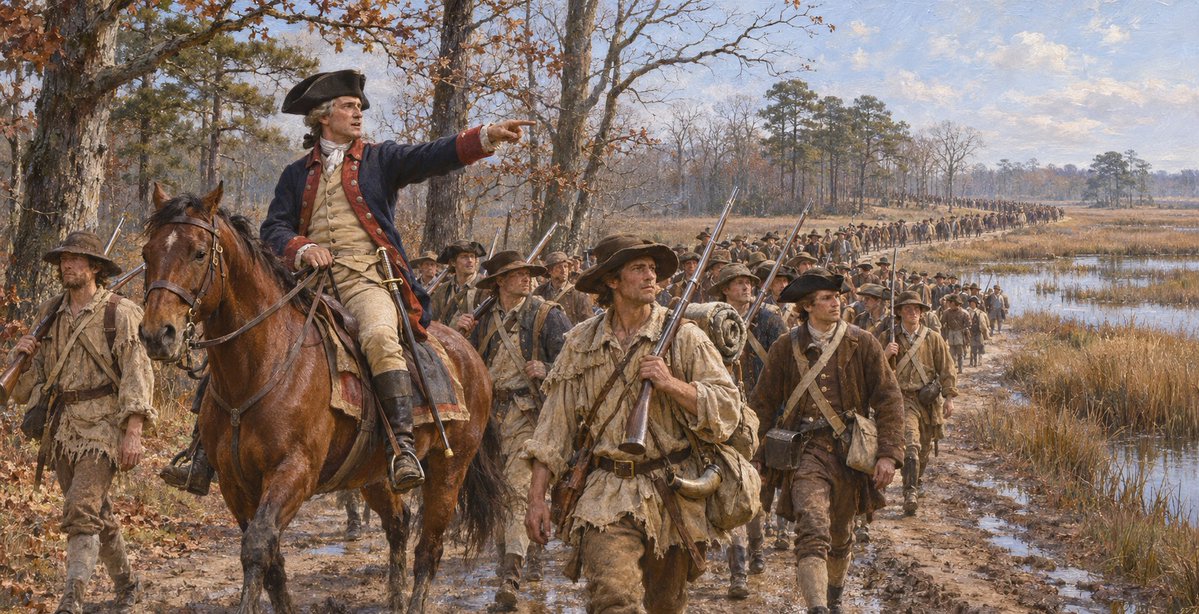
26 November 1779, West Point, New York. The Maryland Brigade, under Major General Baron Johann de Kalb, began a grueling six-day march south toward the army’s winter encampment at Jockey Hollow near Morristown, New Jersey. De Kalb described the country as barren, the roads poor, the weather foul, and the cold bitter. The men pushed through rain, mud, and early snow with scant provisions. Exhaustion and exposure claimed lives along the way. When the brigade finally reached the wooded hills of Jockey Hollow, the soldiers faced the hardest winter of the war, building crude huts as shortages of food, clothing, and blankets deepened their suffering. #RevWar #History #AmRev #RevWarTales
Rev War Tales
Howe’s Fleet in Philly
26 November 1777, Philadelphia. With Forts Mifflin and Mercer abandoned earlier in the month, the Delaware River defenses that had blocked the British were finally cleared. Admiral Richard Howe, having brought his squadron around from the Chesapeake after landing the army, now moved warships and transports up the river. The fleet, which had carried General William Howe’s army from New York in July, delivered long-awaited food, ammunition, and equipment to the forces occupying the rebel capital. The arrival secured the British hold on Philadelphia for the winter, though it came too late to alter the strategic consequences of Burgoyne’s surrender at Saratoga. #RevWar #History #AmRev #RevWarTales
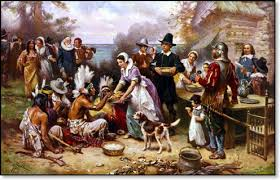
For those who missed yesterday's Vintage Yankee Doodle Spies post for Thanksgiving, here's a special redux of my Classic Yankee Doodle Spies post on the origins of the holiday in America:
https://t.co/aDnZcddyhO
Rev War Tales
Sad Return for Randolph
26 November 1776, Williamsburg, Virginia. The body of Peyton Randolph, late president of the Continental Congress and longtime Speaker of the Virginia House of Burgesses, arrived for re-interment at his alma mater, the College of William and Mary. Randolph had died of a stroke on 22 October 1775 while dining in Philadelphia, where he represented Virginia. His remains were first buried there, then returned a year later by his nephew Edmund Randolph. On this day, the coffin was conveyed in a hearse to the college chapel, attended by Freemasons, both houses of the Assembly, and the people of the city. Six gentlemen of the House of Delegates carried the body into the family vault in the Wren Chapel, where Randolph rests to this day. #RevWar #History #AmRev #RevWarTales
Rev War Tales
Evacuation Day
25 November 1783, New York City. After seven years of occupation, the last British troops under Sir Guy Carleton marched to their ships and sailed from the harbor. In the preceding months, roughly thirty thousand Loyalists—white refugees and Black Loyalists who had sought freedom under the Crown—had departed for Nova Scotia and other British territories. At one o’clock, a cannon signaled that the city was clear. General George Washington and Governor George Clinton then rode at the head of the Continental Army in a triumphal procession down the Bowery and Broadway to the Battery. Crowds cheered the weather-beaten troops as the American flag was raised over Fort George, marking the end of British rule in the city Washington had lost in 1776. #RevWar #History #AmRev #RevWarTales
Rev War Tales
Toward Great Bridge
25 November 1775, Virginia. Colonel William Woodford of the 2nd Virginia Regiment, with several hundred militia and minutemen, was ordered to Suffolk to protect military stores and to check the movements of Royal Governor Lord Dunmore. Dunmore, reinforced by British regulars of the 14th Regiment, Loyalists, and men of his newly raised Ethiopian Regiment, had already seized Norfolk and was fortifying the approaches. Upon learning of Woodford’s advance, Dunmore dispatched troops to the Great Bridge, the key crossing of the southern branch of the Elizabeth River. There, the two forces would soon face each other across the narrow causeway and bridge, setting the stage for Virginia’s first major battle of the war. #RevWar #History #AmRev #RevWarTales
Rev War Tales
Marque This
25 November 1775, Philadelphia. The Continental Congress adopted resolutions authorizing the seizure of British warships and supply vessels and establishing rules for prize money distribution. Captures made by vessels fitted out at private expense were to belong entirely to the owners; those made by colonial or continental vessels were divided between the captors and the government. The same resolutions recommended creating admiralty courts to adjudicate prizes. Though initially limited to enemy warships and military stores, the measure opened the door to privateering. Over the course of the war, American privateers received roughly 1,700 letters of marque and are credited with capturing between 1,600 and 2,300 British vessels. Total permanent losses to British shipping from all sources reached approximately 2,000–2,400 ships. Direct prize values taken by Americans are most often estimated at £7–£10 million. These losses drove up insurance rates, forced the use of convoys, and imposed significant economic pressure on British merchants and Parliament. #RevWar #History #AmRev #RevWarTales
This vintage Yankee Doodle Spies Blog post was the first homage to the origins of the Thanksgiving celebration in the new nation:
A Yankee Doodle Thanksgiving!
https://t.co/KKYJbevoKN
Rev War Tales
Birth of Culper Junior
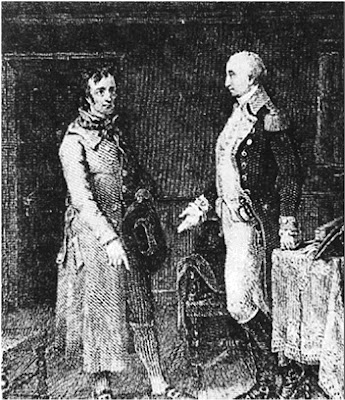
25 November 1753, Oyster Bay, New York. Robert Townsend (1800s sketch below) , later known as Samuel Culper, Jr., or simply 723, was born into a merchant family. During the British occupation of New York City, he served as a key member of the Culper Spy Ring, using his business as cover to gather intelligence. Major Benjamin Tallmadge served as the ring’s principal link to General Washington. Townsend insisted that his true name never be revealed, even to the commander-in-chief. He carried the secret to his grave in 1838. Not until 1930 did Long Island historian Morton Pennypacker match the handwriting of Culper Junior with Townsend’s own letters and account books, finally identifying the spy. #RevWar #History #AmRev #RevWarTales
Rev War Tales
Death of a Loyal Chieftain
24 November 1807, Burlington, Ontario. Mohawk Chief Thayendanegea, known to the British as Joseph Brant, died at his home near Burlington Bay. Educated at Eleazar Wheelock’s school, a Freemason, and a skilled diplomat, Brant led many of the Iroquois into an alliance with Britain during the Revolutionary War. He saw the Crown as the last barrier against colonial settlers pressing ever deeper into Haudenosaunee lands. After the war, he spent decades in Upper Canada fighting for secure title to the Grand River grant. His final recorded words asked others to “have pity on the poor Indians.” He was later reburied beside the Mohawk Chapel in Brantford. #RevWar #History #AmRev #RevWarTales
Rev War Tales
Private’s Corporal Punishment
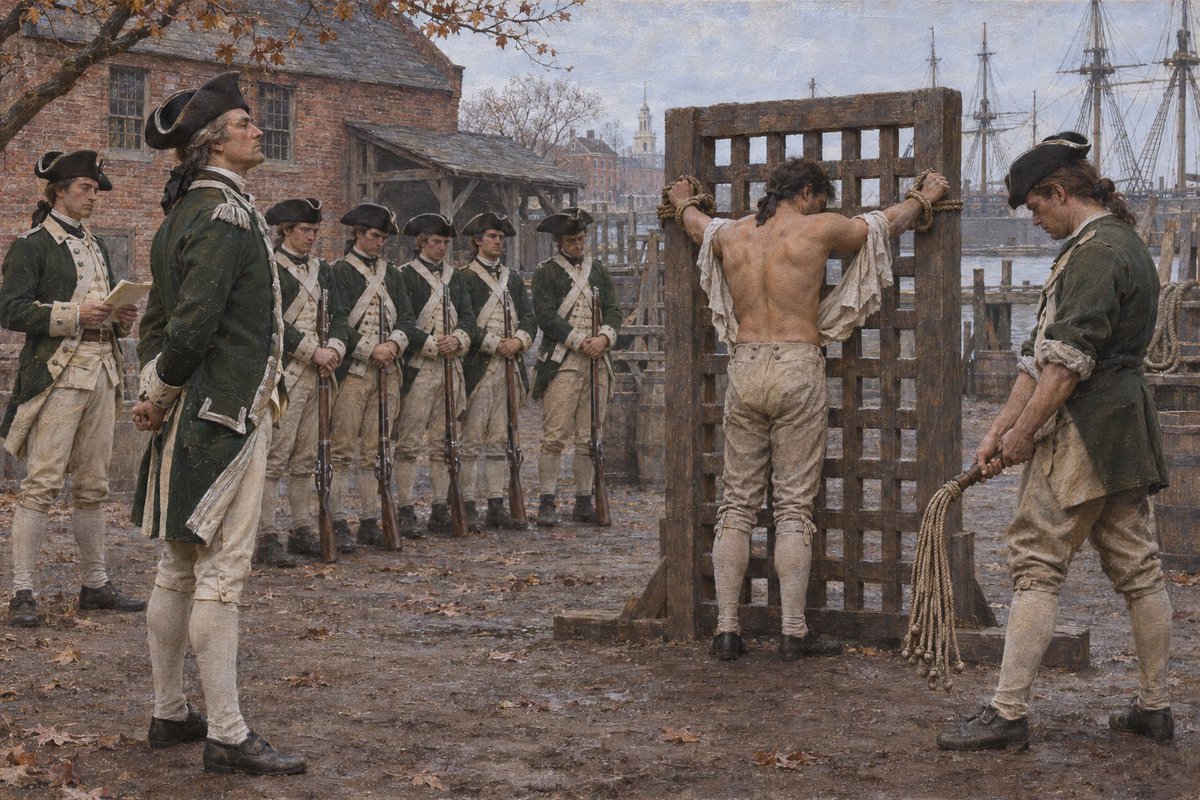
24 November 1776, Philadelphia, Pennsylvania. Continental Marine Private Henry Hassan turned himself in after deserting his post. Brought before a court-martial, he was found guilty of desertion and of abandoning his duty. The court sentenced him to fifty lashes for desertion and an additional twenty-one lashes for leaving his post. In the early months of the Continental Marines, when the service was still taking shape and discipline was enforced with the lash, Hassan’s case illustrated the harsh measures used to hold men to their enlistments. The sentence was carried out as ordered, a stark reminder of the cost of desertion in the infant navy. #RevWar #History #AmRev #RevWarTales
Great way to celebrate America 250! #RevWar Action & Intrigue at its best! Follow General George Washington's intelligence war against the British in these great Revolutionary War novels, available on Amazon and at other fine booksellers. https://t.co/8JMavfTgHz
Rev War Tales Prequel
Sticking a Fork in the Forks of the Ohio
24–25 November 1758, Fort Duquesne (Pittsburgh). As General John Forbes’s army closed on the Forks of the Ohio, the French garrison, short on men and supplies, blew up their magazines and set Fort Duquesne ablaze on the night of the 24th before withdrawing downriver. At first light the next morning, young Colonel George Washington led the Virginia Regiment’s advance into the still-smoking ruins. Only chimneys and fragments of the works remained standing at the confluence of the Monongahela and Allegheny. The British raised their flag over the ashes, and the site was soon renamed Fort Pitt. For Washington, who had first seen the place as a youthful envoy and later survived Braddock’s disaster nearby, the occupation marked the close of a long and bitter chapter. #RevWar #History #AmRev #RevWarTales
Rev War Tales
Raid on Fort St. George
23 November 1780, Long Island, New York. Before dawn, Major Benjamin Tallmadge led about eighty dismounted dragoons of the 2nd Continental Light Dragoons against the newly completed Loyalist stockade of Fort St. George at the Manor of St. George. Approaching in silence, the Americans struck from three sides, cut through the abatis and stockade, and overwhelmed the garrison of about fifty men in less than ten minutes. They captured fifty-four prisoners (including officers), killed or mortally wounded seven defenders, and destroyed the works. On the return march, Tallmadge detached a party that burned more than three hundred tons of hay collected at Coram for the British army’s horses. Only one American was wounded. Tallmadge is a recurring historical character in the acclaimed historical novel series Yankee Doodle Spies. #RevWar #History #AmRev #RevWarTales
Rev War Tales
Repudiation Day
23 November 1765, Frederick County, Maryland. The twelve justices of the Frederick County Court became the first official body in the colonies to defy Parliament’s Stamp Act. Declaring that no legal notice of the act had reached them and that no stamped paper existed in the province, they ordered all court business to proceed as usual and ruled that proceedings without stamps would be “valid and effectual.” In the streets of Frederick Town, the people celebrated the blow to the hated tax. They hanged a stamp agent in effigy, staged a mock funeral for the Stamp Act, and buried a copy of the statute in a symbolic grave. The bold local action, later known as Repudiation Day, marked an early, organized resistance to taxation without representation. #RevWar #History #AmRev #RevWarTales