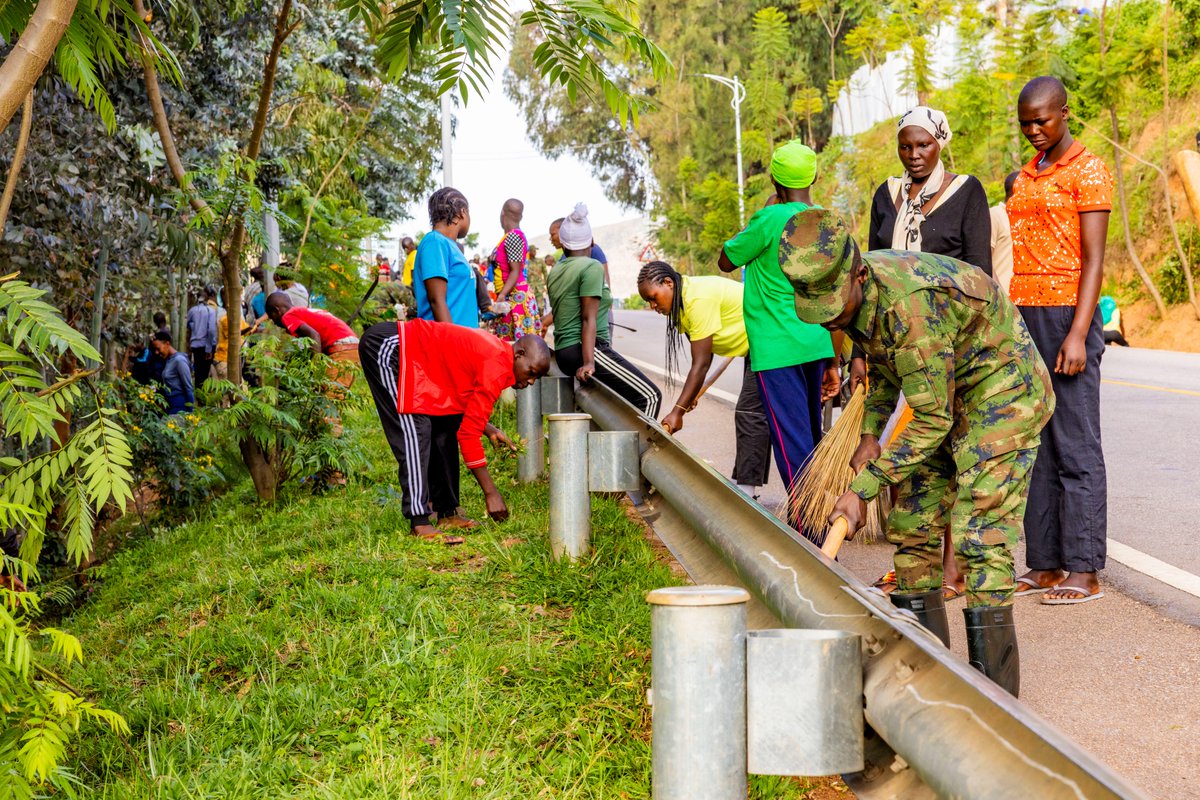
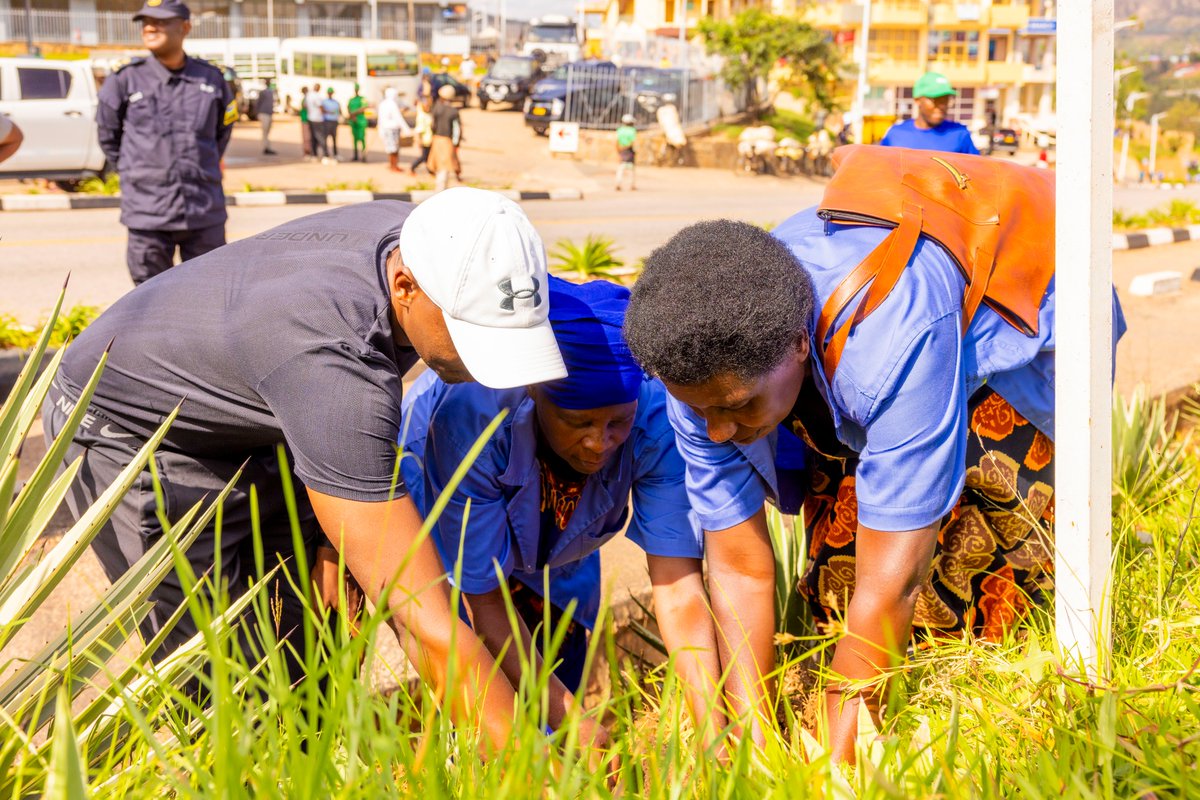
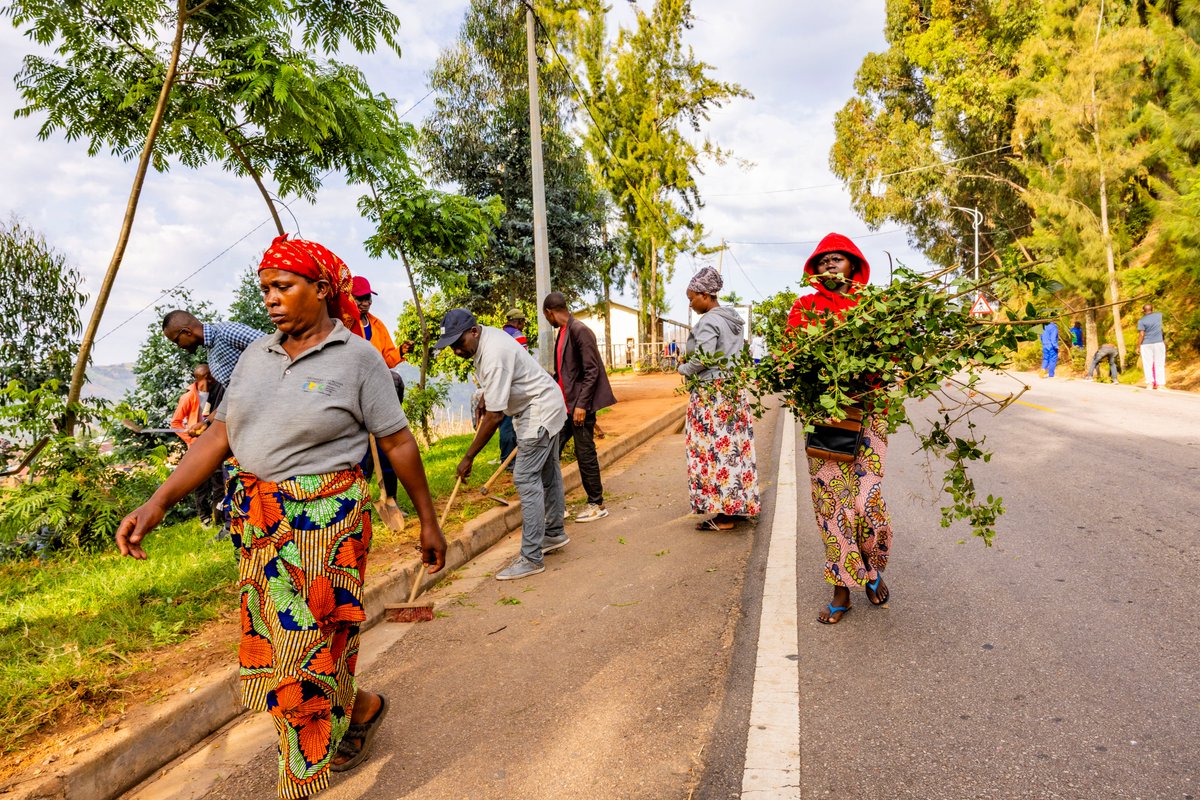
Over 12,000 people gathered with us for a shared commitment to remember, learn, and carry the responsibility of rebuilding our nation.
#Kwibuka32#OurPast26
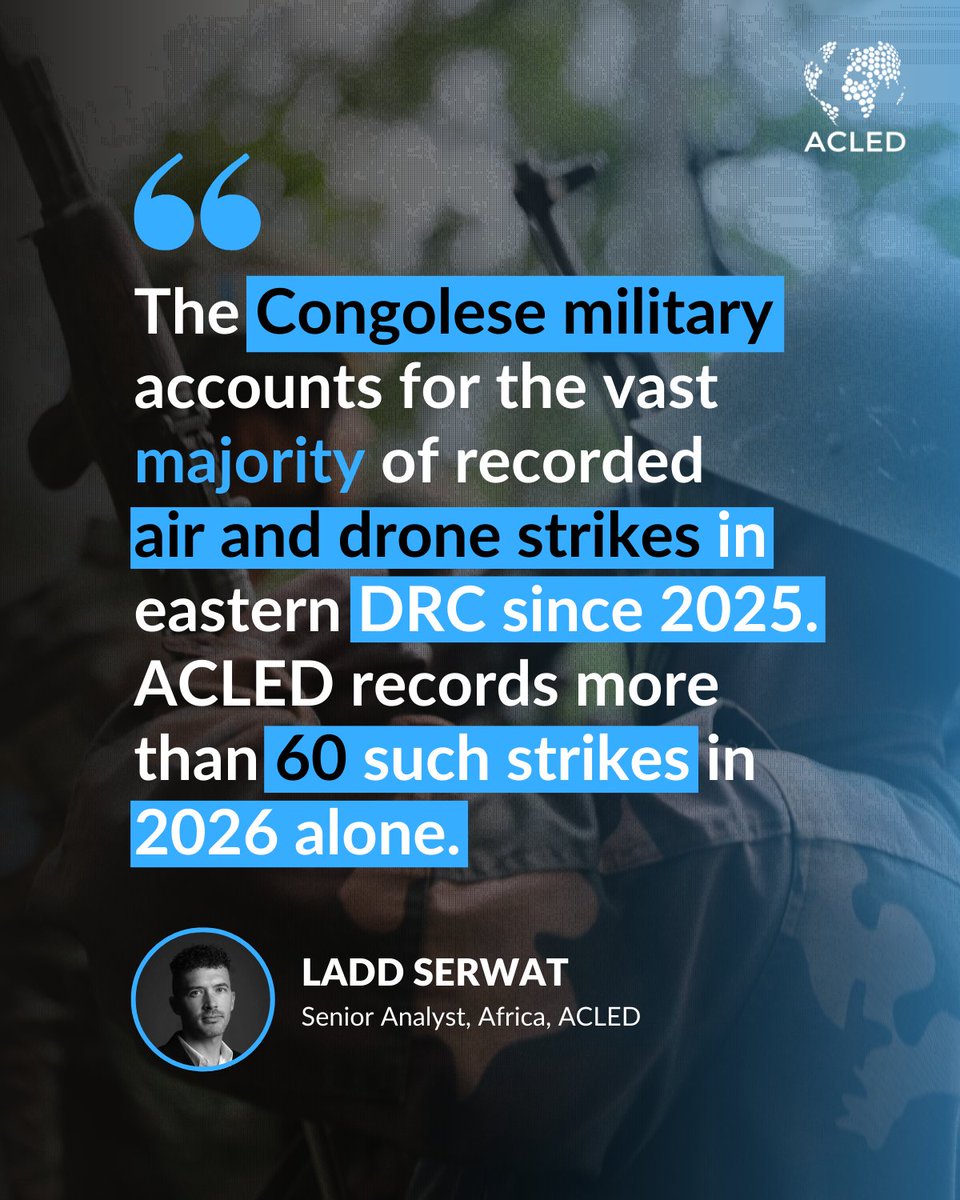
A surge in aerial warfare is reshaping the conflict in the #DRC. The Congolese military (FARDC) has intensified aerial operations against M23, including a 24 Feb drone strike that killed M23 military spokesperson Willy Ngoma & several senior rebel leaders. https://t.co/hDTJybPGUM
Drone strikes in #Goma killed several civilians, including a French humanitarian worker — but who launched it? While the drone or missile type and launch point remain unclear, ACLED data points to likely involvement by the Congolese armed forces (FARDC). 🔎https://t.co/OVU8UnPG9n
#RDC Plusieurs milliers d’habitants de #Goma sont descendus dans les rues ce jeudi matin. La marche, initiée par la Société Civile Plurielle, fait suite au bombardement par drone survenu mercredi. Ils dénoncent les frappes de Kinshasa qui touchent des zones civiles peuplées.
Since the 1999 Lusaka Peace Accords, more than 10 peace agreements on the DRC conflict have collapsed because of the DRC itself. Let’s walk through it 🧵
🔹 In Nairobi, M23 was barred from dialogue between the DRC Government and other armed groups because it was labeled “foreign.”
🔹 In December 2023, President Tshisekedi expelled the EAC Regional Force after it had secured over 80% of M23-controlled areas. The problem? It wasn’t “offensive enough.”
🔹 In December 2024 in Luanda, the peace process between Rwanda and the DRC collapsed after Kinshasa refused to engage in dialogue with AFC/M23.
🔹 A few months later in Doha, dialogue with the same actors was suddenly acceptable. Interesting…🤨
🔹 In 2025, after intense diplomatic efforts, the Washington and Doha agreements were signed. Yet key commitments were not implemented and bombardments continued, including against Banyamulenge civilians.
🔹 Since the June 2025 Peace Agreement, attacks on villages in North and South Kivu have persisted under the pretext of fighting M23.
🔹 In South Kivu, Banyamulenge communities have been pushed into remote areas with severely restricted access to markets, schools, grazing land and healthcare.
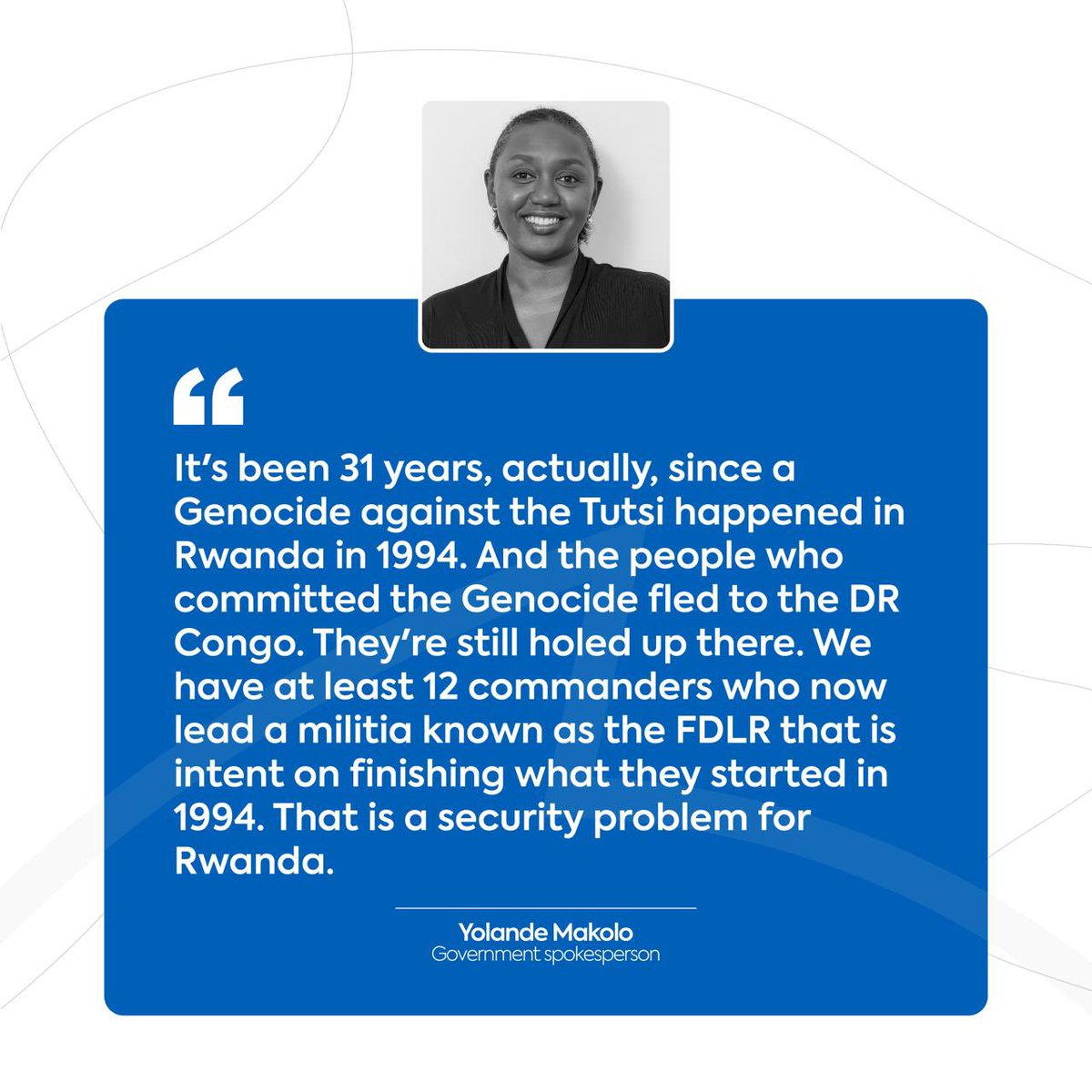
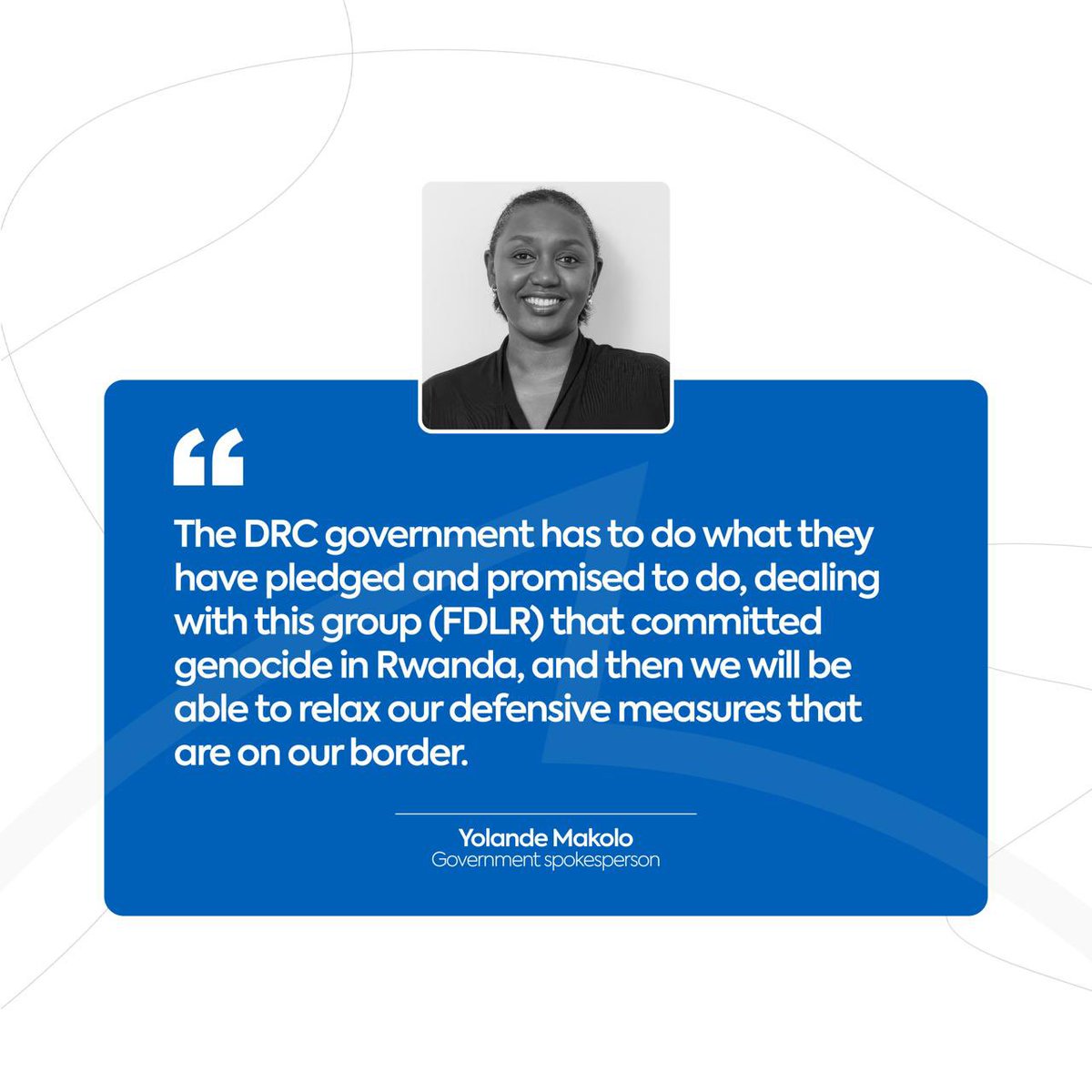
Meanwhile, the existential threat posed to Rwanda by the Kinshasa-backed FDLR has not diminished.
During the fall of Goma in January 2026, FARDC/FDLR elements attacked Rwanda, leaving 16 people dead and 161 civilians injured.
International reports continue to document integration, financing and logistical support, alongside a coalition that includes FARDC, Burundian forces, mercenaries, FDLR, Wazalendo and other militias.
So here’s the bottom line: peace is possible with political will and good faith.
Protecting Rwandans is the JOB of the RDF.
Any serious analysis of this region has to honestly assess the role of DRC Gov/FARDC and those backing them too.
The DRC ambassador's assertion exemplifies how DRC politics portray "progress" as the undermining of Rwanda. Rather than genuine advancements for its own citizens. Contrast this with President Kagame's focus on transformative initiatives like the NBA collaboration, as well as Basketball Africa League (BAL), which has boosted youth development, economic growth, and regional unity in Rwanda since its inception in 2021.
In the DRC, purported "achievements" frequently revolve around anti-Rwanda rhetoric, which serves as a distraction from their own deep-seated corruption, genocidal militia dependencies, and failure to deliver basic services to citizens.
While President Tshisekedi's administration has amplified accusations against Rwanda to rally nationalist support, especially during elections, this has come at the cost of tangible progress: the eastern DRC remains mired in violence, with over 23 million facing food insecurity as of early 2026, largely due to unaddressed militia threats rather than external aggression.
This blame-shifting allows DRC leaders to avoid accountability for their economic mismanagement, such as their own plundering of mineral resources that could fund infrastructure, while portraying Rwanda's stability and growth as a threat.
Peace and prosperity are choices. DRC leaders keep choosing their pockets over their people, crooning endless anti-Rwanda lullabies to keep citizens numb to the real threats: hunger, displacement, and FDLR terror. With or without mentioning Rwanda, the suffering continues: because Kinshasa prefers conflict narratives to actual reform.
The 20th Umushyikirano takes place today and tomorrow at the Kigali Convention Center.
#Umushyikirano will assess key achievements under the 2nd National Strategy for Transformation (NST2) and set the direction for Rwanda’s continued development.
Follow live: https://t.co/rdh9qRndgl
Peace needs more than silence!
Watch: Burundi's president asked about collaborating with FDLR, responds, "The enemy of my enemy is my friend."
History is not past; it's a warning.
Link to my articles, in bio.
Injustice anywhere is a threat to justice everywhere!
This is the real poison: state-tolerated hatred that costs lives, while the world looks away. And when victims resist, they’re condemned: not the ideology that put them in danger.
Watch closely. History is repeating itself.
Rwanda, igitangaza
Is Rwanda killing, or is Rwanda killing it?
I believe the people’s praises are the waters our enemies drown in.
President Kagame often says we must be "igitangaza" for the entire world to be so fixated on our people and our politics. "Igitangaza" is difficult to translate. It means "miracle," but also something rare, wondrous, and unsettling to those who don’t understand it.
He also says, “sinzi ko hari abaturage baruta abacu.”
“I don’t know if there are any citizens better than ours.”
Anti-Rwanda propaganda would have the world believe we are a people strangled under one man. That narrative conveniently erases our own choice: the role of citizens in building a Rwanda so present in global conversations, despite being so geographically small it’s often hard to locate on a map.
In English, you say “good night.”
In Kinyarwanda, we say urote Imana, may you dream of God.
That's God dreams.
Those of us known as the “Kagame generation” live in peace. As my father says, “ntakiruta amahoro n’umutekano.”
Nothing is greater than peace and security.
This was their dream for us.
Our parents had the audacity to dream, and to fight. Dreams powerful enough to turn Clark Kent into a man. Umugabo. Dreams that make women wonder and boys turn a spider’s bite into a superpower.
Intore ntiganya, ishaka ibisubizo.
A true warrior does not complain, he seeks solutions.
Western “experts” once wrote Rwanda off as a failed state. And yet, Rwanda works.
Their miscalculations persist. Their models fail. Their science finds an anomaly. Unable to understand us, they tell each other stories, lullabies that help them sleep at night. While they do, we live in the Rwanda our parents dreamed of.
Generational trauma, or generational triumph? It depends on where you choose to stand.
Is Rwanda’s story one of violence, pain, and famine?
Or one of perseverance, persistence, and hunger?
Not hunger for food, but hunger for tomorrow. Our parents’ tomorrow. And all of our todays.
Hunger feeds us what food never could.
Fasting teaches us what we can live without.
Rwanda lives with or without the world’s permission.
Rwanda lives with or without its recognition.
The love the world never gave us
is a love we never needed, after all.
So let them hurl their insults. Let them publish their “expert” narratives, on who we are, where we’re from, when we’re supposed to fall.
We are the written word.
Our people’s lives speak for themselves.
#RwandaWorks
Non seulement le gouvernement de la RDC propage constamment des mensonges, mais le président exige même que d'autres, comme ce diplomate, mentent pour lui. Les accords de Washington comptent deux signataires : le Rwanda comme la RDC sont tenus de les respecter. Si ce représentant comprend la situation comme « les excuses du Rwanda… », alors il n'a ni amour ni respect pour les Congolais ni pour les Rwandais, et l'Afrique se porte mieux sans lui. Tant mieux qu'il parte.
Enough with the lies. DRC cannot be the ceasefire monitor when you are in reality violating the ceasefire and have no intention of respecting the Washington Accords the DRC just signed. #PoisonMuyaya
M. l'Ambassadeur, je n'ai justement répondu que sur le fond du sujet, en produisant des éléments essentiels de cette crise que @clement_molin a, volontairement ou non, oubliés. Si le jeune étudiant peut avoir l'excuse de la jeunesse (il m'a d'ailleurs semblé avoir la volonté d'apprendre plus sur cette crise), cela n'est certainement pas votre cas.
Quant aux trois (3) observations que vous avez faites, je vais également y répondre sur le fond:
1) L'AFC/M23 n'est l'"instrument" de personne. C'est un mouvement congolais, qui notamment défend une communauté congolaise rwandophone, qui a été historiquement marginalisée et persécutée depuis l'indépendance du Congo.
Je rappelle au passage que cette marginalisation puise son origine dans le traçage artificiel des frontières par trois pouvoirs coloniaux (Belgique pour le Congo, Allemagne pour le Rwanda, et Royaume-Uni pour l'Ouganda), réunis en mai 1910 à Bruxelles.
Je rappelle également que la persécution des Congolais Tutsi a été aggravée en juillet 1994 par l'arrivée des génocidaires rwandais ex-FAR/Interahamwe, soutenus par l'Etat français, qui les a installés à l'est du Zaïre sans les désarmer.
2) Vous évoquez le "pillage" des ressources naturelles du Congo par le Rwanda. Ceci est une récitation médiatique simpliste qui ne correspond pas à la réalité.
Premièrement, le Rwanda a énormément de ressources naturelles, y compris les minerais critiques que sont les 3T (étain, tantale et tungstène), étant assis sur la même roche géologique que la RDC, en témoignent les cartes géologiques coloniales.
Deuxièmement, l'exploitation des ressources naturelles du Congo se fait principalement par les sociétés occidentales et asiatiques. À cet égard, vous ne verrez aucune société rwandaise dans le top 100 des sociétés qui exploitent les minerais du Congo, dans un contexte de guerre.
Troisièmement, l'est de la RDC est géographiquement plus proche du Rwanda que de Kinshasa. Que notre pays serve de transit (comme d'ailleurs l'Ouganda, le Burundi et la Tanzanie) à des minerais qui continuent leur chemin vers la Belgique, la France, le Moyen Orient, l'Asie et l'Amérique du Nord ou ailleurs, ceci est un fait économique indéniable. Mais il serait cynique que les bénéficiaires de ces opérations se mettent maintenant à critiquer les pays-transit.
Quatrièmement, je vous invite à vous intéresser au vrai pillage des ressources naturelles du Congo, qui se déroule au Haut-Katanga, et qui fait d'ailleurs l'objet d'une procédure judiciaire en Belgique. Si j'ai bien suivi les articles d'Africa Intelligence et de la Libre Belgique, la puissante famille qui est impliquée dans ce scandale de deux milliards de dollars annuels fait partie de l'axe Kinshasa-Bruxelles, qui n'a rien à voir avec le Rwanda.
3) Vous avez enfin parlé de "l'entrée" de notre armée en RDC. Je voudrais ici vous indiquer que les mesures défensives que le Rwanda a déployées dans za zone frontalière sont destinées, non pas à soutenir l'AFC/M23, qui n'en a d'ailleurs pas besoin, mais à se défendre contre les attaques régulières des génocidaires FDLR, soutenus par Kinshasa, et qui sont le résultat direct de l'opération Turquoise, qui a protégé les génocidaires ex-FAR/Interahamwe, conduits et installés, avec toutes leurs armes, par l'armée française à l'est du Zaïre.
Mais je ne vous apprend rien car votre position à l'époque au Ministère de la défense vous a certainement permis de suivre en temps réel les décisions indignes prises par le gouvernement français sur cette opération.
Voil��!
“This conflict has lasted for thirty years. We have seen countless mediation efforts, but none succeeded in resolving the underlying issues. President Trump introduced a new and effective dynamism, that created the space for breakthroughs. His approach is even-handed, never taking sides. More importantly, President Trump’s approach is pragmatic. The process has not become an end in itself.
It is up to us, in Africa, working with our partners, to consolidate and expand this peace. There will be ups and downs on the road ahead, there is no doubt about it. Rwanda will not be found wanting. I assure you of that. Our only objective is, and has always been, for our country to be safe and secure, after having endured so much tragedy. We now only want to look forward, in confident expectation of a prosperous and stable future.” President Kagame | Signing Ceremony of the Washington Accord for Peace and Prosperity.
Government Spokesperson @YolandeMakolo spoke to @NEWSMAX about Rwanda–DRC relations and the significance of the Washington Accords to be signed today at the White House, a milestone for long-term peace, security, and economic opportunity for our region.