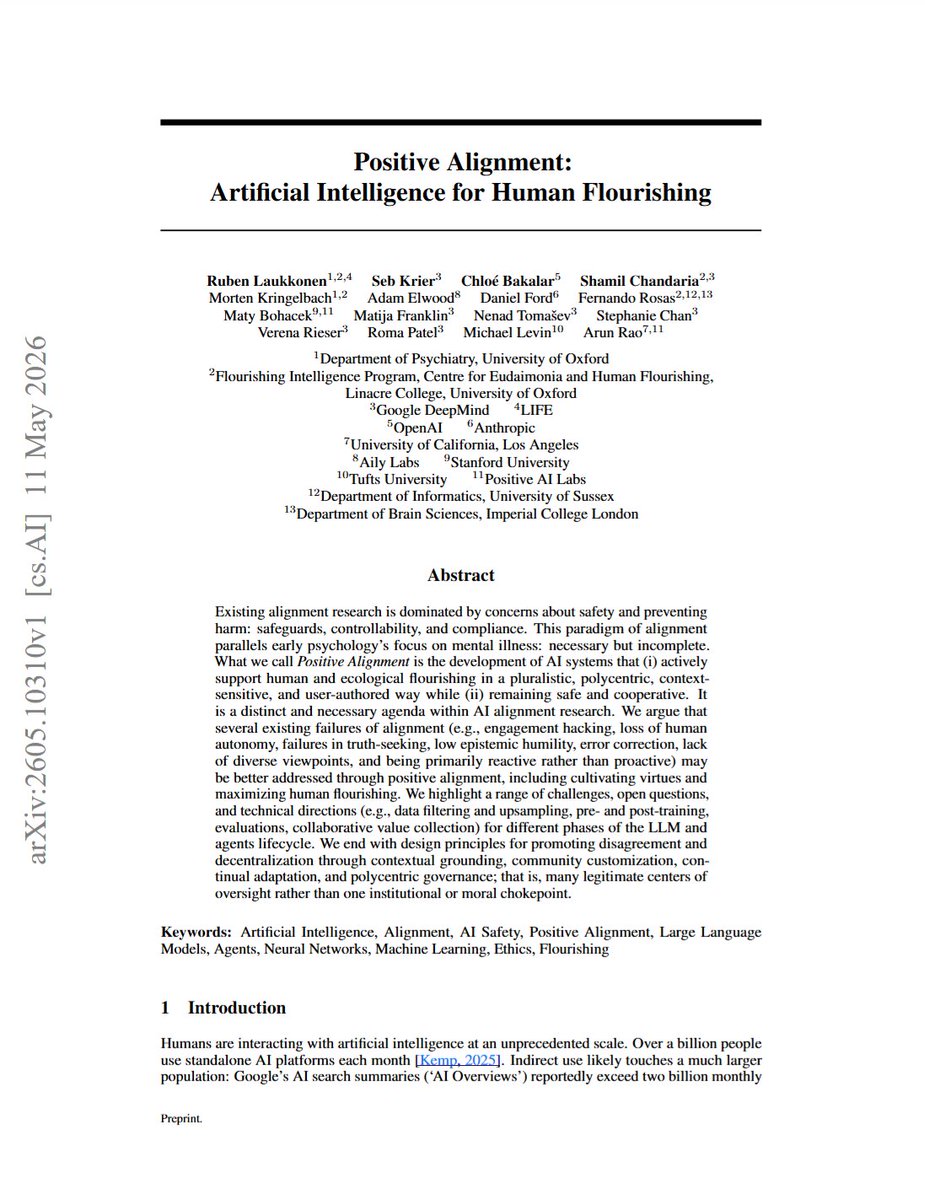
If anyone builds it, everyone thrives. Over the past decade, a lot of important work on AI alignment has focused on avoiding harm. But freedom from harm isn't the same as freedom to flourish.
In this paper, we introduce 'Positive Alignment'. A positively aligned agent is one that helps us navigate our own value trade-offs, builds our resilience, and acts as a scaffold for human flourishing. Doing this without slipping into top-down, technocratic paternalism is the great design challenge of our time.
We think a lot more research is now needed to explore this frontier: how do we align models that actively help us thrive?
Amazing work by @RubenLaukkonen, @drmichaellevin, @weballergy, @verena_rieser, @AdamCElwood, @996roma, @FranklinMatija, @shamilch, @_fernando_rosas, @scychan_brains, @matybohacek, @sudoraohacker, and others.
https://t.co/YNL0cZqYD9
last gen’s successful consumer founders (pinterest, snap, insta, etc.) weren’t on the bleeding edge of tech, they were on the bleeding edge of culture and human experience.
most of consumer ai today is still more interested in the tech than the culture. in the fullness of time, i don't think they'll survive.
I met Nick Land a few weeks ago. He mentioned that many people in his circles were anti-LLMs. Someone asked why he thought so many people were. His answer was better than anything so short I thought of:
“People like to exist critically with respect to something.”
This I think accurately characterizes a lot of people whose outputs and inputs primarily consist of “discourse” about rather than direct contact with the reality at hand. Existing critically with respect to something makes it easy to seem cool, sophisticated, above something, hard-to-impress and therefore worth trying to impress, especially to others who also don’t have contact with the phenomena itself.
And for that reason I think it’s cheap. And to someone who has an inside view of what is being discussed, it’s always so transparent and boring and compressible.
I’m far more impressed by someone who is capable of loving something and showing others why it’s beautiful or good. Doesn’t have to be LLMs, but anything at all.
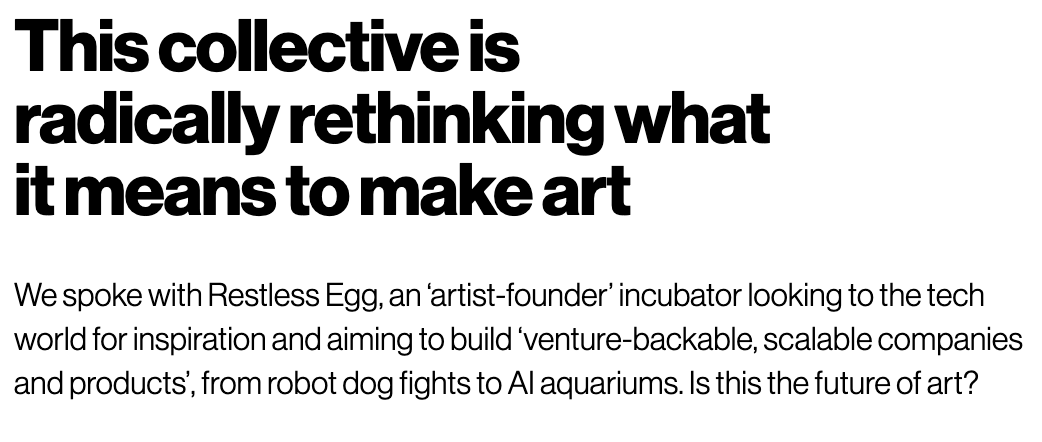
“If artists really are going to describe our radical times, it might require a radical rethinking of art itself”
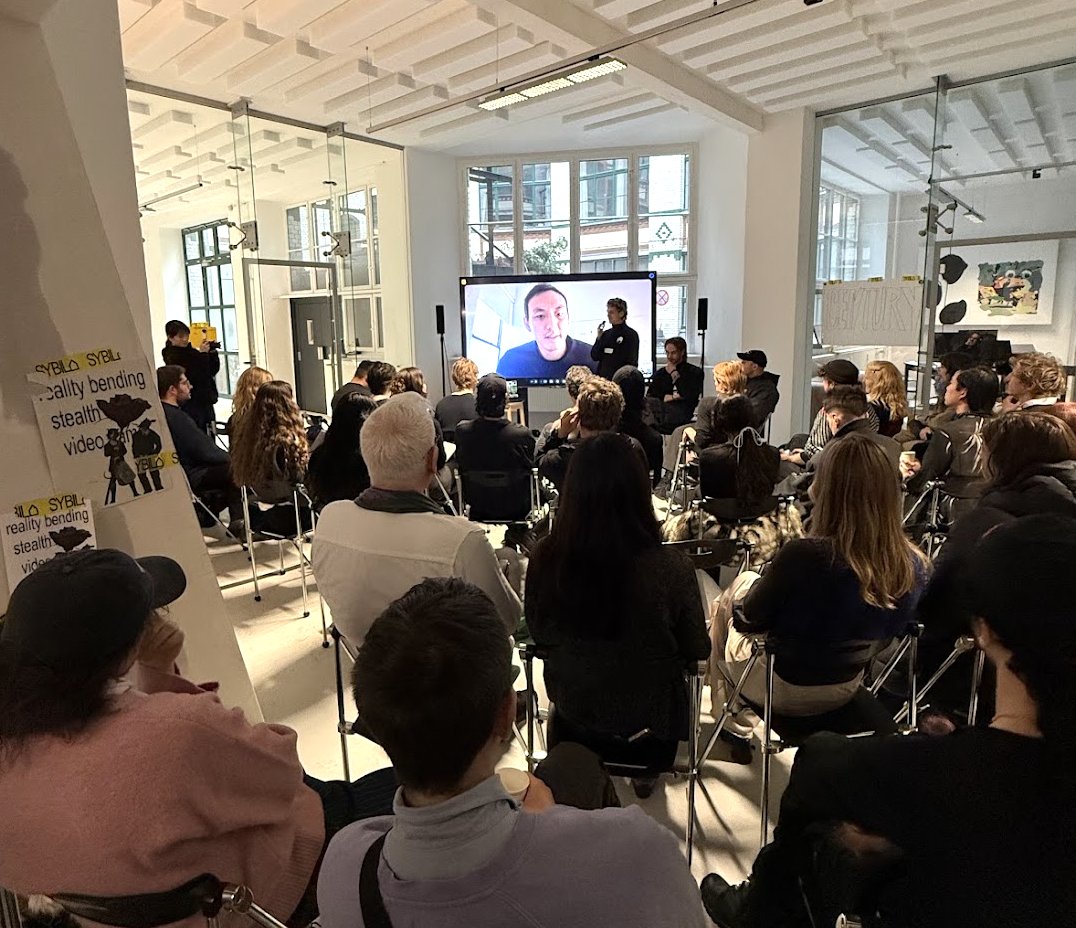
Restless Egg’s Berlin salon is now featured in @dazed :
https://t.co/NTlmEBHNBE
People leaving regular companies: Time for a change! Excited for my next chapter!
People leaving AI companies: I have gazed into the endless night and there are shapes out there. We must be kind to one another. I am moving on to study philosophy.
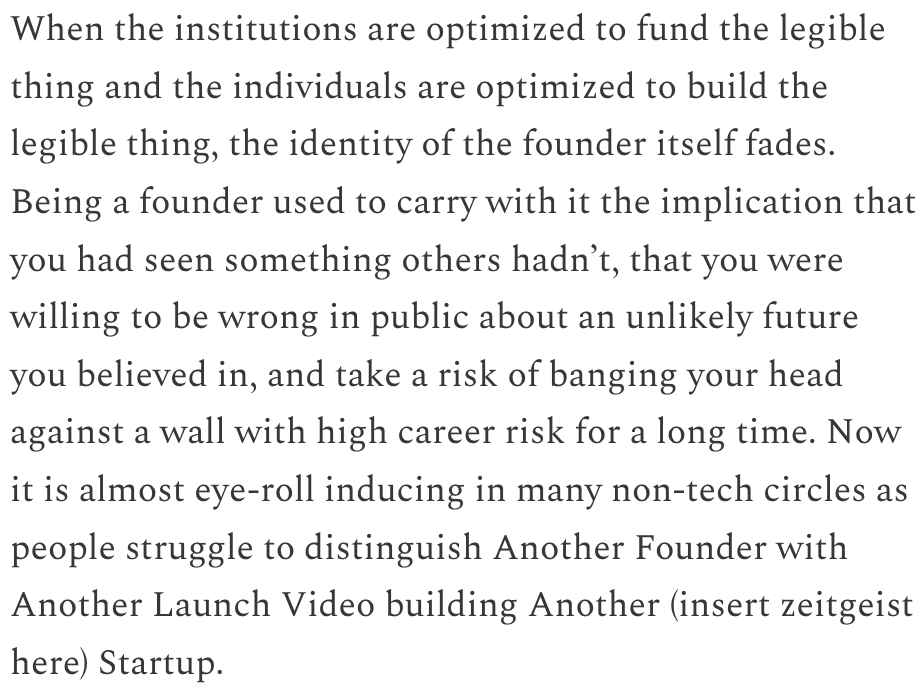
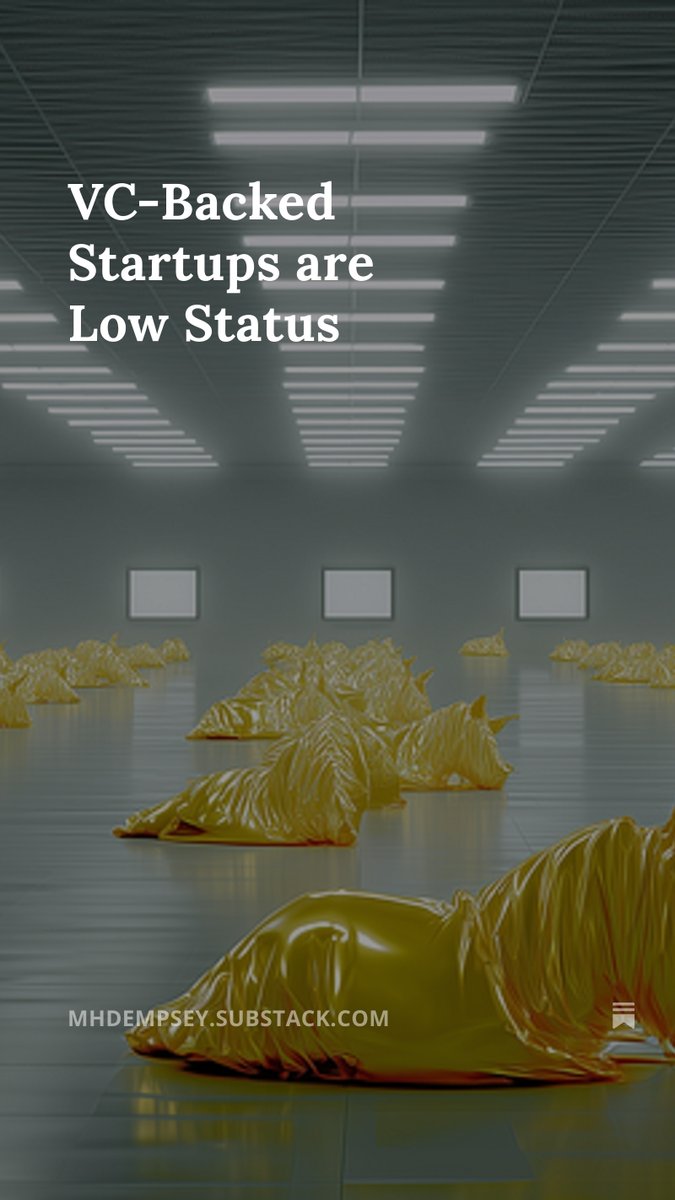
(New Essay) VC-Backed Startups are Low Status
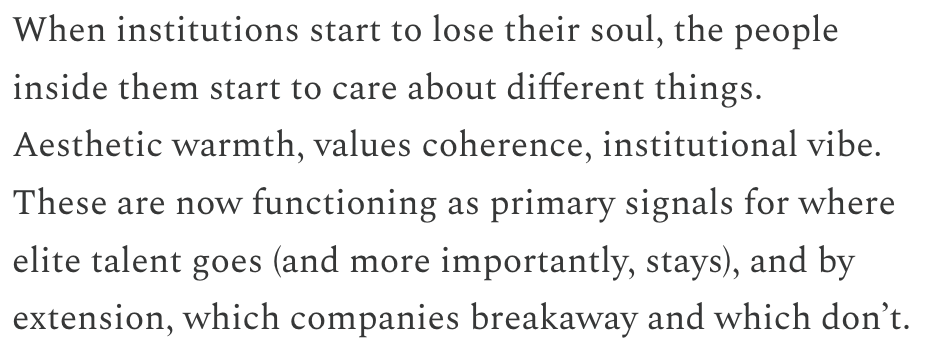
The traditional VC-backed startup path is becoming low status in the same way investment banking did. An aesthetic collapse across institutions, ideas, and founders paired with the world's tiring of tech has recently accelerated this shift.
Some thoughts on the cascade, the generational divide, Anthropic vs. OpenAI, what comes next, and more.
"art has not ceased to affect us; it's just that the process we call art is happening elsewhere, in areas that might be called by other names"; Brian Eno x Kevin Kelly
@Restless_Egg artist-founder get together
struck by how singular & special this felt; take notice
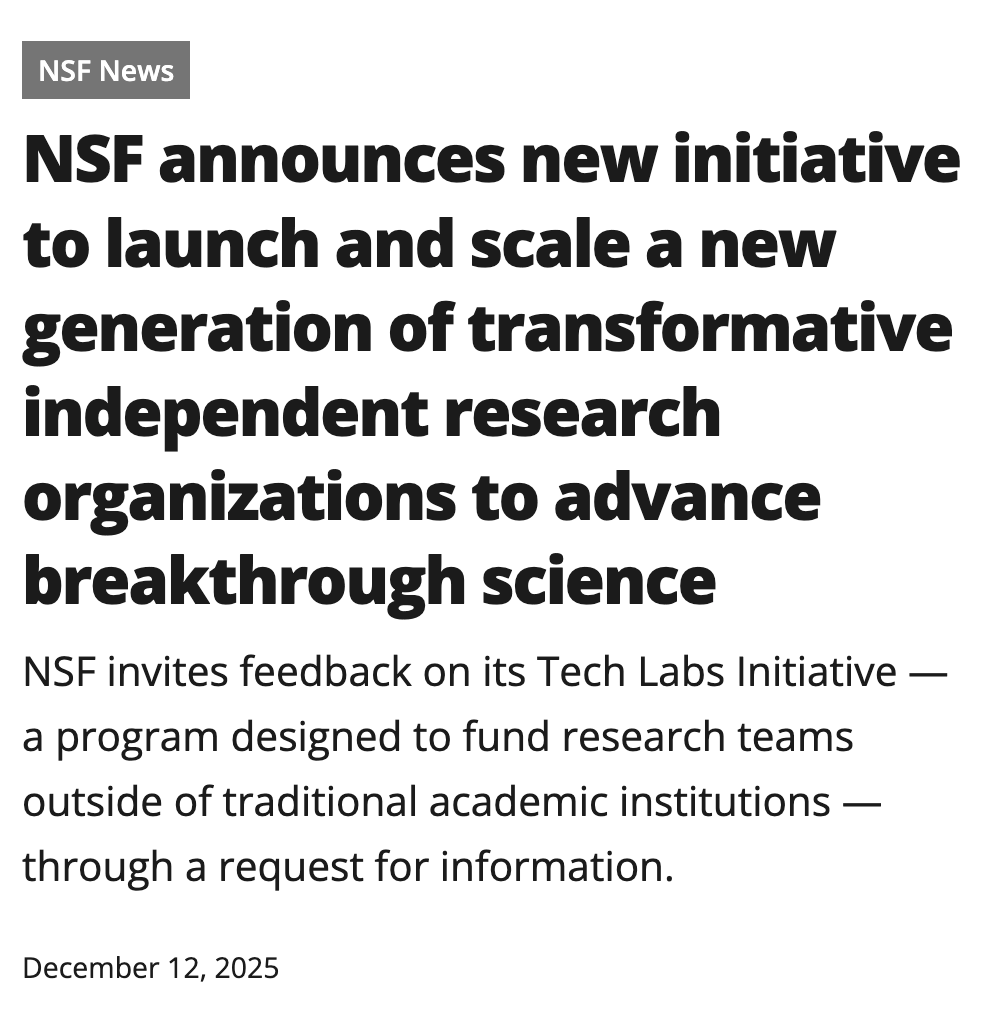
NSF is launching one of the most ambitious experiments in federal science funding in 75 years.
The program is called Tech Labs, and the goal is to invest ~$1 billion to seed new institutions of science and technology for the 21st century.
Instead of funding projects, the NSF will fund teams. I’m in the @WSJ today with a piece on why this matters (gift link): https://t.co/xteQ3NgWVC
Here’s the basic case:
1) Most federal science funding takes the form of small, incremental, project-based grants to individual scientists at universities.
2) The typical NSF grant is ~$250k/year to a professor with a couple of grad students and modest equipment over a few years. This is a perfectly reasonable way to fund some science, but it's not the only way.
3) A healthy portfolio needs more than one instrument. Project-based grants are like bonds: low-risk, steady, safe. But no one trying to maximize long-run returns would put 70% of their portfolio in bonds.
4) Yet that's basically what our civilian science funding portfolio looks like. Around 3/4ths of NSF and NIH grant funding is project-based.
5) Tech Labs is NSF's attempt to diversify that portfolio. The Tech Labs program is aiming for:
- $10-50 million/year awards per team
- 5+ year commitments
- Measuring impact through advancement up the Tech Readiness Level scale rather than papers published
- Up to ~$1 billion for the program
- Supporting research orgs outside traditional university structures
6) Scientific production looks very different than it did when the NSF launched 75 years ago. The lone genius at the chalkboard can only do so much. Frontier science + tech today is increasingly team-based, interdisciplinary, and infrastructure-intensive.
7) The team behind AlphaFold just won the Nobel Prize in Chemistry. It came from DeepMind, an AI lab with sustained institutional funding and full-time research teams. It would be near-impossible to fund this kind of work on a 3-year academic grant.
8) Same pattern at the @arcinstitute (8-year appointments, cross-cutting technical support teams) and @HHMIJanelia (massive infrastructure investments to map the complete fly brain). Ambitious science increasingly needs core institutional support, not a series of project grants stapled together.
9) Similarly, Focused Research Organizations (@Convergent_FROs) have showcased a new model supporting teams with concrete missions and predefined milestones to unlock new funding.
10) There’s a whole ecosystem of philanthropically-supported centers doing amazing research, like the Institute for Protein Design, the Allen Institute, the Flatiron Institute, the Whitehead Institute, the Wyss Institute, the Broad — the list goes on.
11) But philanthropy can’t reshape American science alone. The federal government spends close to $200 billion each year on research and development, an order of magnitude more than even the largest foundations.
12) If we want to change how science gets done at scale, federal funding has to evolve. And the NSF and NIH don’t have dedicated funding mechanisms to support or seed these sorts of organizations.
13) Earlier this year, I started working on a related framework called “X-Labs” that built on all this exciting institutional experimentation that’s been happening within the private and philanthropic sectors. It’s time for the federal government to step into the arena: https://t.co/0iVLobqQeA
14) Traditional university grants are still important for training the next generation of scientists and for certain kinds of curiosity-driven work. But after 75 years of putting nearly everything into one model, we should try something different.
15) And key program details are still being developed! You can reply to the Request for Information with suggestions or feedback on how to design this program here: https://t.co/R6MNo0ZfN1
16) Science is supposed to be about experimentation. Science funding should be too.
Are you working on questions like these and interested in building a company / product to communicate and be in conversation with others about what you have learned?
We'd love to hear from you!
Curious about what Restless Egg is, what we are doing or why we are doing it? We answer these questions and many more! Have a listen:
https://t.co/Sdb1i3aESG
Restless Egg is offering $50k to be part of a 6-month 10-person cohort of artist-founders building tech products that emerge from their creative experimentation.
Apply and build the productive technological intervention you have been aspiring to: https://t.co/fpmLGqtpBG