Screening is increasingly impractical with massively parallel DNA pool construction, followed by assembly. Current screening relies on rejecting very limited target sequences from known pathogens. Likely worth it, but do realize the extreme limits.
Preventing bad actors from creating synthetic versions of dead plagues is a good thing, but doing it while also disarming our ability to control real biothreats like screwworm and natural pandemic respiratory viruses is pretty much the definition of biosecurity theater
(1/2) I signed, this is important work - but we need to be really careful to not get distracted from the bigger problem of rapidly decentralizing capabilities to create / deploy biothreats. Detection, identification, response - globally and persistent/pervasive - should be the top priority.
DNA synth will be distributed, it won’t be centralized in a way that can be effective with this approach. Desktop, at home, new synthesis tech coming, etc. Not to mention we can’t regulate China, etc. and this is a globally distributed technology.
This kind of legislation is sort of like telling people not to write viruses on all their home computers or, worse, if they do we will monitor them all to see what they type (which people would get around of course). Important now, not practical in medium/long run.
Necessary to reduce some risk, not nearly sufficient… nor where our top priorities should be.
Only practical thing is to make detection and response work great, global, and fast.
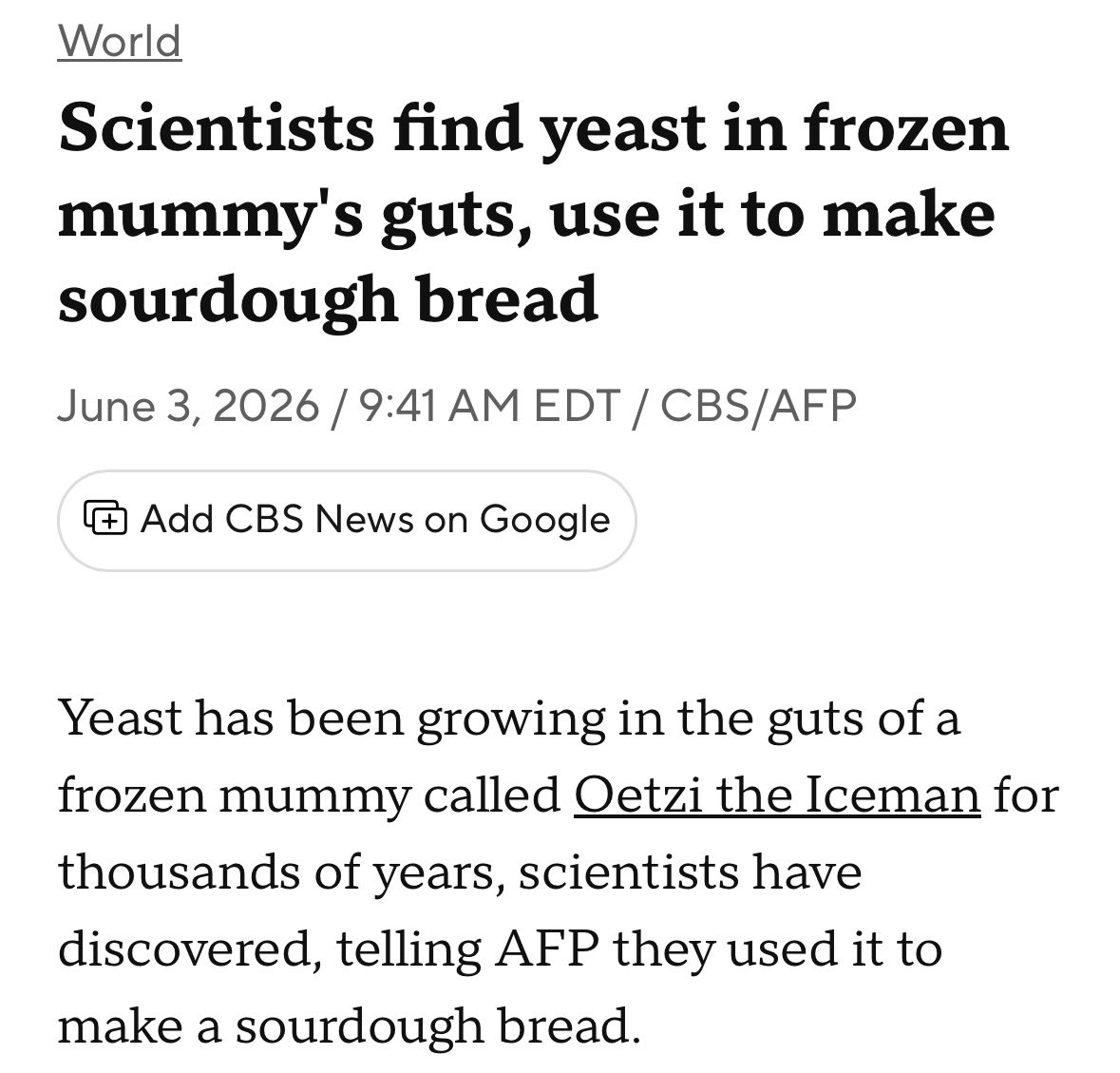
I appreciate that my friends know me well enough to send me this article about scientists making sourdough with cold-adapted yeast found inside a 5000 year old corpse, makes me feel seen
"If you’re a biologist and you’ve never tried solving a problem that absolutely needs to ship next week, I recommend it. It is a thrilling change of pace."