Developing a strategy simulation exploring how narratives, institutions, and crises interact as coordination systems.
Seeking experienced UI/UX, simulation, civic tech, or research collaborators interested in systemic modeling.
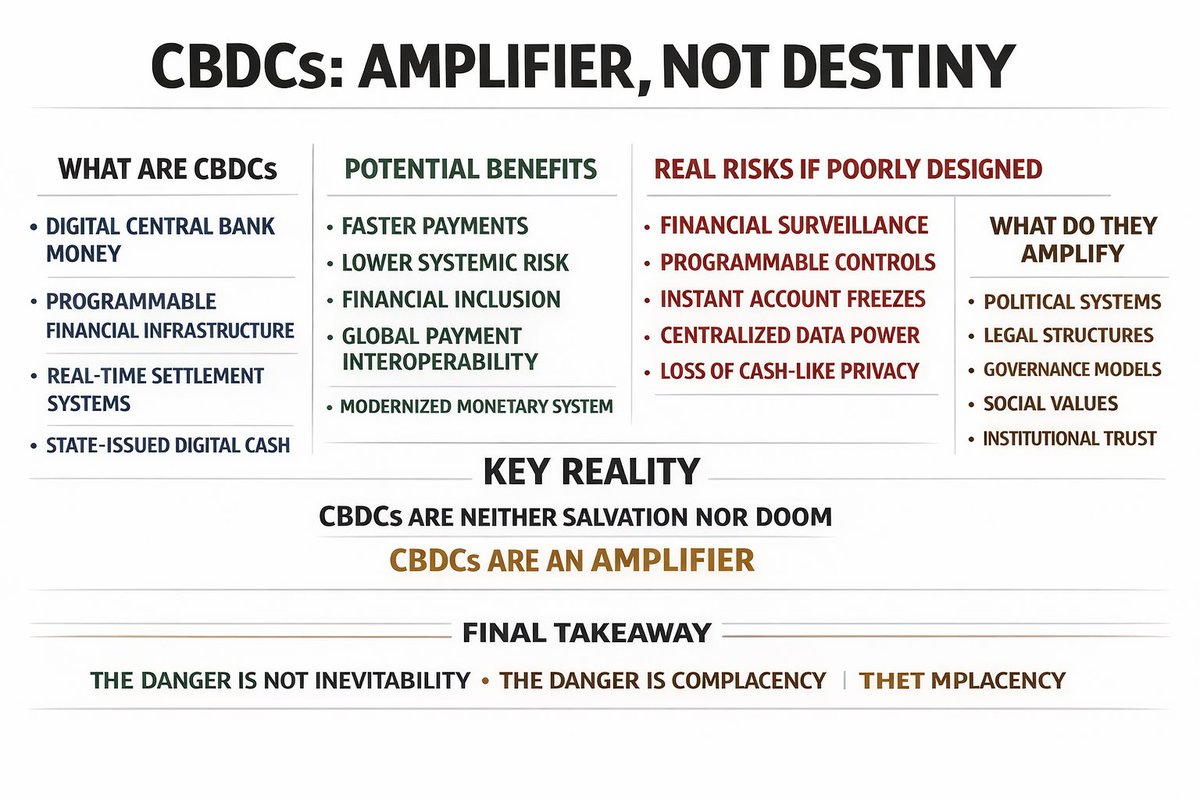
Central Bank Digital Currencies (CBDCs), if poorly designed or abused, could enable unprecedented financial surveillance & control over citizens. CBDCs are neither salvation nor doom. They are an amplifier. They amplify whatever political, legal, & moral framework already exists
Financial structures like trusts, insurance, and foundations are coordination tools, not just finance. They preserve continuity, isolate risk, and maintain liquidity so that systems survive individual failures without breaking down.
I stopped asking “who profits.”
I started asking “what cannot fail.”
Systems thinking is not exciting. It is stable.
Real analysis watches constraints, pressure and coordination. Not headlines, personalities or guarantees.
Health policy is economic infrastructure.
The invariant:
Primary care and access expand productivity, stabilize labor markets, and manage fiscal risk. Health systems are being redesigned as growth engines, not welfare programs.
https://t.co/ILyIwH6BDe
Stablecoins don’t remove intermediaries; they relocate power. Movement is decentralized, but control sits at liquidity, issuers, and fiat on/off-ramps. The real leverage isn’t the token or chain; it’s who controls entry, exit, and liquidity.
Activity is falling, and hiring is shrinking, but wages remain high, and expectations are improving. That’s not a collapse, it’s margin compression in a tight labor market.
The invariant:
A late-cycle cooling phase, not a recession spiral.
https://t.co/71GYxRF18H
Card payments aren’t just money moving; they’re real-time risk decisions. Issuers, networks, gateways, and acquirers share roles, but true power lies with whoever controls authorization logic, routing, and data, because that determines margin.
Human capital isn’t built mainly in schools. Homes, neighborhoods, and job quality shape lifelong skills. The hidden issue isn’t education spending alone, but fragmented systems that fail to support continuous learning and productivity growth.
https://t.co/A0WnfuWPca
Global growth looks stable, but the hidden shift is divergence. Advanced economies stabilize while developing ones lag with less policy space and slower job creation. The real story isn’t growth levels, it’s widening structural gaps.
https://t.co/QGu9K0Osyh
China’s challenge isn’t growth speed, it’s growth structure. Households save because safety nets are weak, keeping consumption low and exports dominant. The real shift is redistributing income and risk toward consumers to rebalance the economy.
https://t.co/Bz2LUtt9pE
H.8 shows where credit is flowing. Total assets remain stable, but funds shift between loans, deposits, and funding.
Hidden signal:
Credit is moving toward financial intermediaries, not just households or businesses.
https://t.co/DGDUZMay7j
Development banks aren’t just financing projects; they’re steering industrial direction. EIB’s Spain strategy shows how capital is used to align energy, tech, housing, and security into one coordinated growth model, not isolated investments.
https://t.co/7FZrdoqqz2
The true challenge isn't rooted in differing ideologies or varying aid amounts, but rather in whether institutions have the ability to turn challenges into meaningful changes and improvements in their structures.
https://t.co/VtFklkYj6F
BTC is entering a dense stress zone where positioning imbalances suggest seller exhaustion, making range formation more likely than immediate expansion.
https://t.co/VSOV2NTC9m
BTC sees second straight double-digit weekly drop, but a rare cluster of extreme outliers points to a high-probability bottom. With indicators at depths of 2018, 2020 and 2022 lows, we brace for stagnant consolidation in the $60k–$75k range.
https://t.co/2HB62kZKYS
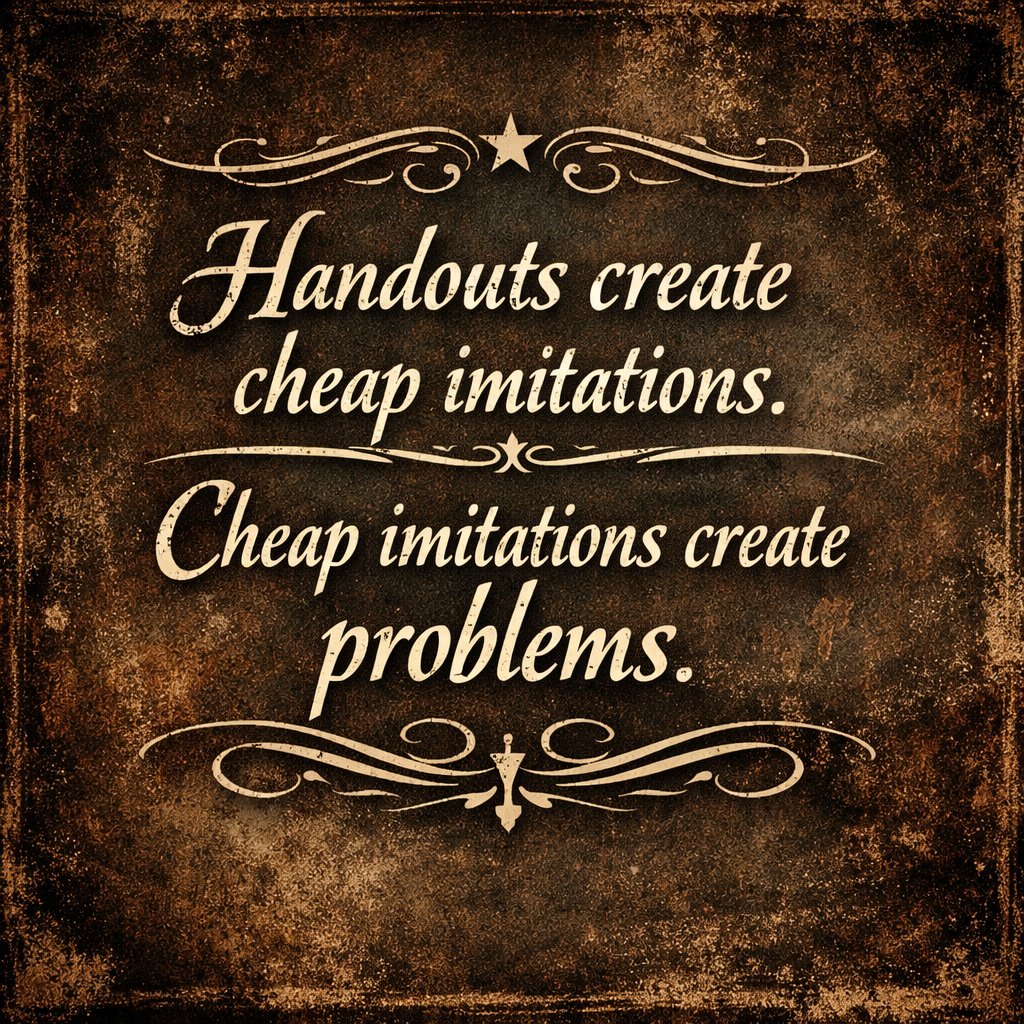
MY MOTTO:
Intelligence isn’t speed or shortcuts, it’s what survives disciplined error removal. Systems that become recipes stop creating thinkers. Real competence is built through struggle, not imitation or handouts.
Energy innovation is a shift toward strategic control of infrastructure. The real signal is coordination between policy, capital, and engineering, shaping future competitiveness and energy security.
https://t.co/G9YNBWjobb
https://t.co/QFBJjKU8iJ
https://t.co/YqUi1Nm3Fh
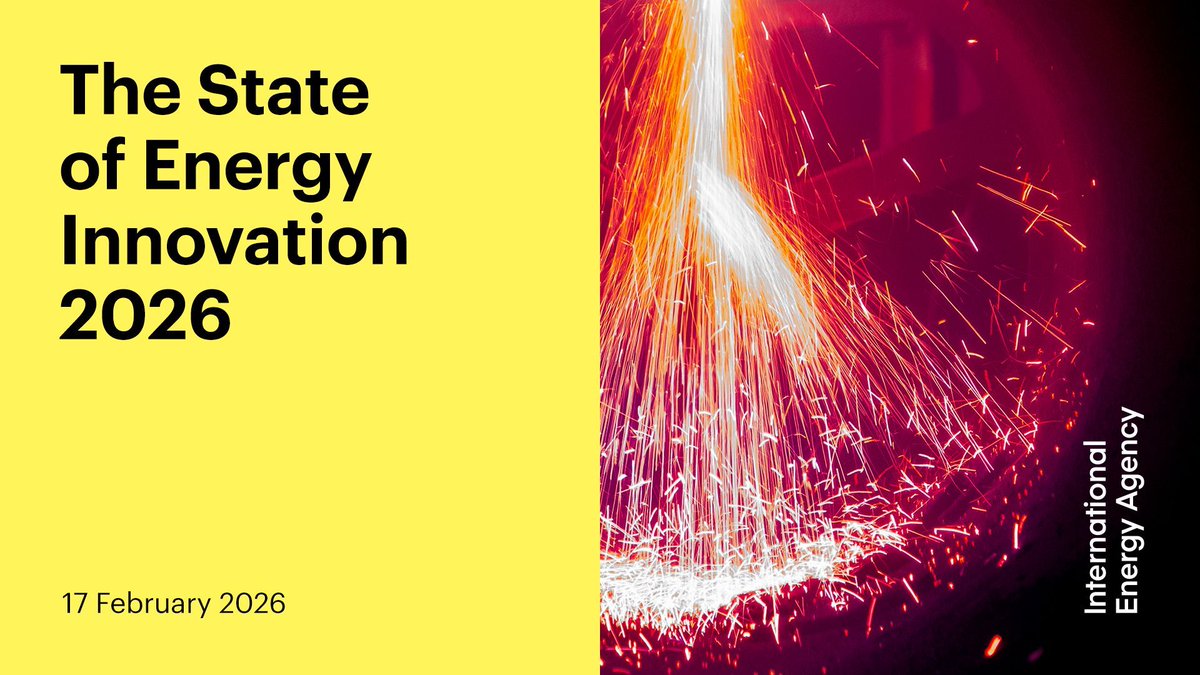
Energy innovation is entering a new phase shaped by energy security – with batteries dominating the patent landscape.
On the eve of the 2026 IEA Energy Innovation Forum, our new report examines 150+ technology breakthroughs from the past year. More → https://t.co/u5kbtFVpwE
Progress isn’t guaranteed by optimism alone, it emerges when societies align resources, technology, and coordination capacity. The real question isn’t whether plenty is possible, but whether systems can scale fast enough to deliver it.
https://t.co/lw0NUgtyqa
SA bubble check:
@JSE_Group CAPE ~12 (near median), P/E ~15 (slightly elevated).
National house prices flat in real terms. No systemic bubble, but Cape Town shows localized pressure.
Elevated, not extreme.