@SeanDOlfc I'm spamming a bit with this post, but it explains well that the G/A sect is somewhat problematic for fully understanding the essence of player recruitment⤵️
𝙒𝙝𝙮 𝘽𝙖𝙧𝙘𝙤𝙡𝙖 𝙖𝙣𝙙 𝙝𝙤𝙬 𝙙𝙤𝙚𝙨 𝙞𝙩 𝙧𝙚𝙡𝙖𝙩𝙚 𝙩𝙤 𝙇𝙞𝙫𝙚𝙧𝙥𝙤𝙤𝙡, 𝙄𝙧𝙖𝙤𝙡𝙖, 𝙖𝙣𝙙 𝙋𝙖𝙧𝙞𝙨𝙞𝙖𝙣 𝙞𝙙𝙚𝙣𝙩𝙞𝙩𝙮?
It’s about continuing what Liverpool started to build — wanting to transplant the Parisian model based on collective movement, positional flexibility, and a full understanding of space. Perhaps in this case, it’s not an exaggeration, as the archetype of the player aligns with the football preferred by Iraola.
Such a winger understands when to defend, when to attack, when to enter the defender's space, when to drop deeper, and when to help the team maintain the right structure after losing the ball. It’s not just about sporting quality, but about knowledge, experience, and the ability to interpret situations on the pitch.
Barcola knows the specifics of a game based on the movement of the entire team. Versatility alone is not enough. The ability to play in several positions has no value if the player cannot utilize it for the benefit of the team. When a winger moves inside, they must understand not only where to move but, more importantly, when and why that movement is necessary.
Versatility is not about being everywhere. It’s about the ability to perform the right action at the right moment — where the team needs it most.
In football, there is much talk about rotations from the perspective of creating gaps, free space, and destabilizing the opponent's block. However, it is less often analyzed whether these same movements disrupt the defensive structure prepared for the moment of losing the ball.
A winger must properly read the behaviors of midfielders and full-backs, synchronize with their intentions, and understand when to press, attack space, secure, support, withdraw, or defend.
Kvaratskhelia said, 'We must defend like defenders.' This statement captures the demands of the modern offensive player well. They must know when to switch their mentality from attacking to defending. Only then do they unleash the full potential of the full-backs, who can attack with greater calm and confidence, knowing that after losing the ball, the team structure will remain stable.
It is this ability to instantly switch intentions that allows for the transition from defense to attack. In modern systems inspired by the idea of total football, every player must find themselves in different roles on the pitch — regardless of whether they were developed as an offensive or defensive player.
This is the direction Enrique spoke of when he emphasized the need to have a group of players capable of playing in multiple functions. Barcola already understands this model well enough that he can become one of the faces of this process — a player who not only benefits from this philosophy but also helps build awareness within the entire group around the goal Liverpool is aiming for
𝙒𝙝𝙮 𝘽𝙖𝙧𝙘𝙤𝙡𝙖 𝙖𝙣𝙙 𝙝𝙤𝙬 𝙙𝙤𝙚𝙨 𝙞𝙩 𝙧𝙚𝙡𝙖𝙩𝙚 𝙩𝙤 𝙇𝙞𝙫𝙚𝙧𝙥𝙤𝙤𝙡, 𝙄𝙧𝙖𝙤𝙡𝙖, 𝙖𝙣𝙙 𝙋𝙖𝙧𝙞𝙨𝙞𝙖𝙣 𝙞𝙙𝙚𝙣𝙩𝙞𝙩𝙮?
It’s about continuing what Liverpool started to build — wanting to transplant the Parisian model based on collective movement, positional flexibility, and a full understanding of space. Perhaps in this case, it’s not an exaggeration, as the archetype of the player aligns with the football preferred by Iraola.
Such a winger understands when to defend, when to attack, when to enter the defender's space, when to drop deeper, and when to help the team maintain the right structure after losing the ball. It’s not just about sporting quality, but about knowledge, experience, and the ability to interpret situations on the pitch.
Barcola knows the specifics of a game based on the movement of the entire team. Versatility alone is not enough. The ability to play in several positions has no value if the player cannot utilize it for the benefit of the team. When a winger moves inside, they must understand not only where to move but, more importantly, when and why that movement is necessary.
Versatility is not about being everywhere. It’s about the ability to perform the right action at the right moment — where the team needs it most.
In football, there is much talk about rotations from the perspective of creating gaps, free space, and destabilizing the opponent's block. However, it is less often analyzed whether these same movements disrupt the defensive structure prepared for the moment of losing the ball.
A winger must properly read the behaviors of midfielders and full-backs, synchronize with their intentions, and understand when to press, attack space, secure, support, withdraw, or defend.
Kvaratskhelia said, 'We must defend like defenders.' This statement captures the demands of the modern offensive player well. They must know when to switch their mentality from attacking to defending. Only then do they unleash the full potential of the full-backs, who can attack with greater calm and confidence, knowing that after losing the ball, the team structure will remain stable.
It is this ability to instantly switch intentions that allows for the transition from defense to attack. In modern systems inspired by the idea of total football, every player must find themselves in different roles on the pitch — regardless of whether they were developed as an offensive or defensive player.
This is the direction Enrique spoke of when he emphasized the need to have a group of players capable of playing in multiple functions. Barcola already understands this model well enough that he can become one of the faces of this process — a player who not only benefits from this philosophy but also helps build awareness within the entire group around the goal Liverpool is aiming for
𝘼𝙡𝙚𝙭 𝙎𝙘𝙤𝙩𝙩 𝙖𝙣𝙙 𝘾𝙪𝙧𝙩𝙞𝙨 𝙅𝙤𝙣𝙚𝙨 are similarly functioning players on the pitch. Their manners and ball culture are alike, connected by their impeccable spatial awareness, which, combined with spatial intelligence, influences their perceptions of objects in the future while assessing the volume of threat in a given space due to their understanding of ball reception characteristics. They enjoy dropping low to collect the ball, relieving defenders in the build-up from the back, while simultaneously enticing pressure to then break or bypass it "over" the structure. They attract opponents and create space behind them; clearly, blocks aim to be compact and tight, so the shape follows the first player to avoid gaps between the lines. This is when they begin to initiate a kind of false transitions in the game, throwing balls behind defenders or to isolated attackers in large spaces. They bypass circulation/progression by using a second player, opting for direct means of play, quickly transitioning to the third offensive phase. In the second post, I will share a video illustrating their resilience under pressure; they have no problem entering tight areas that perfectly disrupt the shape of the block, creating tension. The technical-preparatory layer, such as comfortable (directional) receiving, opens up the possibility for further play without losing momentum, which prevents the opponent's block from maintaining coherence. They understand the values of game tempo, knowing when to hit the pause and when to step on the gas and accelerate. All of this is thanks to their good interpretation of the circumstances around their own axis, which limits unnecessary losses that expose them to danger, while also creating an energy-saving mode to avoid overexerting their teammates and engaging them in moments that promise potential threats. Both are not the fastest or the strongest, but reactive agility is a quick response to stimuli (neuro-motor component) that influences the proper body positioning to protect the ball. Proactivity is as valuable as an athletic body shape. 𝘼𝙡𝙚𝙭 𝙎𝙘𝙤𝙩𝙩 𝙖𝙣𝙙 𝘾𝙪𝙧𝙩𝙞𝙨 𝙅𝙤𝙣𝙚𝙨 are similar prototypes, and 𝙄𝙧𝙖𝙤𝙡𝙖 can assign CJ a significant role with an impact that will surprise many fans
𝘼𝙡𝙚𝙭 𝙎𝙘𝙤𝙩𝙩 𝙖𝙣𝙙 𝘾𝙪𝙧𝙩𝙞𝙨 𝙅𝙤𝙣𝙚𝙨 are similarly functioning players on the pitch. Their manners and ball culture are alike, connected by their impeccable spatial awareness, which, combined with spatial intelligence, influences their perceptions of objects in the future while assessing the volume of threat in a given space due to their understanding of ball reception characteristics. They enjoy dropping low to collect the ball, relieving defenders in the build-up from the back, while simultaneously enticing pressure to then break or bypass it "over" the structure. They attract opponents and create space behind them; clearly, blocks aim to be compact and tight, so the shape follows the first player to avoid gaps between the lines. This is when they begin to initiate a kind of false transitions in the game, throwing balls behind defenders or to isolated attackers in large spaces. They bypass circulation/progression by using a second player, opting for direct means of play, quickly transitioning to the third offensive phase. In the second post, I will share a video illustrating their resilience under pressure; they have no problem entering tight areas that perfectly disrupt the shape of the block, creating tension. The technical-preparatory layer, such as comfortable (directional) receiving, opens up the possibility for further play without losing momentum, which prevents the opponent's block from maintaining coherence. They understand the values of game tempo, knowing when to hit the pause and when to step on the gas and accelerate. All of this is thanks to their good interpretation of the circumstances around their own axis, which limits unnecessary losses that expose them to danger, while also creating an energy-saving mode to avoid overexerting their teammates and engaging them in moments that promise potential threats. Both are not the fastest or the strongest, but reactive agility is a quick response to stimuli (neuro-motor component) that influences the proper body positioning to protect the ball. Proactivity is as valuable as an athletic body shape. 𝘼𝙡𝙚𝙭 𝙎𝙘𝙤𝙩𝙩 𝙖𝙣𝙙 𝘾𝙪𝙧𝙩𝙞𝙨 𝙅𝙤𝙣𝙚𝙨 are similar prototypes, and 𝙄𝙧𝙖𝙤𝙡𝙖 can assign CJ a significant role with an impact that will surprise many fans
𝘾𝙝𝙚𝙢𝙖́ 𝘼𝙣𝙙𝙧𝙚́𝙨 exhibits quite similar traits to 𝙍𝙤𝙙𝙧𝙞. There is no coincidence here when looking at the nation from which he comes; the Spanish model of play has been nurturing its youngest decision-makers according to the same principles and rules for many years. Their culture of play is based on game analysis; this idea particularly shapes players, not physicality, not athletics, and not intensity (a relative concept as it is a consequence of fluidity). Observe -> interpret -> decide -> act (the OODA model); this direction requires players to constantly think, process information, and make quick decisions in real-time. It shapes a complete calmness in moments of intense pressure when a critical decision must be made that will determine the fate of a given sequence of play. Modern pressing today does not primarily focus on ball recovery (a collective goal); regaining the ball is already a consequence of intermediate behaviors - objectives that lead to ball nourishment. One of them is to close the flow of the ball by dismantling the organized structure; the pressing team wants to corner the ball carrier so that their range of possibilities is reduced to zero or maximally limited. And here, perceptual-decision-making abilities are the greatest and most important trait; the ball (player) must find an outlet for the ball like water eroding rock wanting to escape to the surface (the metaphor seems apt). Movement from pressure shifts the shape of the pressure deeper, creating the illusion of a well-executed task; this triggers a strong leap that transforms from a game with the intention of closing options -> into the process of ball recovery; naturally, relational distances become distorted, gaps arise that the player exploits. All of this is a consequence of work, thinking, and intuition that is shaped based on previous experiences. Moreover, it affects the tearing apart of the entire shape of the opposing team, dividing it into two and creating plenty of space between the lines. Small things but wise things create painful consequences for the opponent 1/2
𝙒𝙝𝙮 𝘽𝙖𝙧𝙘𝙤𝙡𝙖 𝙖𝙣𝙙 𝙝𝙤𝙬 𝙙𝙤𝙚𝙨 𝙞𝙩 𝙧𝙚𝙡𝙖𝙩𝙚 𝙩𝙤 𝙇𝙞𝙫𝙚𝙧𝙥𝙤𝙤𝙡, 𝙄𝙧𝙖𝙤𝙡𝙖, 𝙖𝙣𝙙 𝙋𝙖𝙧𝙞𝙨𝙞𝙖𝙣 𝙞𝙙𝙚𝙣𝙩𝙞𝙩𝙮?
It’s about continuing what Liverpool started to build — wanting to transplant the Parisian model based on collective movement, positional flexibility, and a full understanding of space. Perhaps in this case, it’s not an exaggeration, as the archetype of the player aligns with the football preferred by Iraola.
Such a winger understands when to defend, when to attack, when to enter the defender's space, when to drop deeper, and when to help the team maintain the right structure after losing the ball. It’s not just about sporting quality, but about knowledge, experience, and the ability to interpret situations on the pitch.
Barcola knows the specifics of a game based on the movement of the entire team. Versatility alone is not enough. The ability to play in several positions has no value if the player cannot utilize it for the benefit of the team. When a winger moves inside, they must understand not only where to move but, more importantly, when and why that movement is necessary.
Versatility is not about being everywhere. It’s about the ability to perform the right action at the right moment — where the team needs it most.
In football, there is much talk about rotations from the perspective of creating gaps, free space, and destabilizing the opponent's block. However, it is less often analyzed whether these same movements disrupt the defensive structure prepared for the moment of losing the ball.
A winger must properly read the behaviors of midfielders and full-backs, synchronize with their intentions, and understand when to press, attack space, secure, support, withdraw, or defend.
Kvaratskhelia said, 'We must defend like defenders.' This statement captures the demands of the modern offensive player well. They must know when to switch their mentality from attacking to defending. Only then do they unleash the full potential of the full-backs, who can attack with greater calm and confidence, knowing that after losing the ball, the team structure will remain stable.
It is this ability to instantly switch intentions that allows for the transition from defense to attack. In modern systems inspired by the idea of total football, every player must find themselves in different roles on the pitch — regardless of whether they were developed as an offensive or defensive player.
This is the direction Enrique spoke of when he emphasized the need to have a group of players capable of playing in multiple functions. Barcola already understands this model well enough that he can become one of the faces of this process — a player who not only benefits from this philosophy but also helps build awareness within the entire group around the goal Liverpool is aiming for
𝙒𝙝𝙮 𝘽𝙖𝙧𝙘𝙤𝙡𝙖 𝙖𝙣𝙙 𝙝𝙤𝙬 𝙙𝙤𝙚𝙨 𝙞𝙩 𝙧𝙚𝙡𝙖𝙩𝙚 𝙩𝙤 𝙇𝙞𝙫𝙚𝙧��𝙤𝙤𝙡, 𝙄𝙧𝙖𝙤𝙡𝙖, 𝙖𝙣𝙙 𝙋𝙖𝙧𝙞𝙨𝙞𝙖𝙣 𝙞𝙙𝙚𝙣𝙩𝙞𝙩𝙮?
It’s about continuing what Liverpool started to build — wanting to transplant the Parisian model based on collective movement, positional flexibility, and a full understanding of space. Perhaps in this case, it’s not an exaggeration, as the archetype of the player aligns with the football preferred by Iraola.
Such a winger understands when to defend, when to attack, when to enter the defender's space, when to drop deeper, and when to help the team maintain the right structure after losing the ball. It’s not just about sporting quality, but about knowledge, experience, and the ability to interpret situations on the pitch.
Barcola knows the specifics of a game based on the movement of the entire team. Versatility alone is not enough. The ability to play in several positions has no value if the player cannot utilize it for the benefit of the team. When a winger moves inside, they must understand not only where to move but, more importantly, when and why that movement is necessary.
Versatility is not about being everywhere. It’s about the ability to perform the right action at the right moment — where the team needs it most.
In football, there is much talk about rotations from the perspective of creating gaps, free space, and destabilizing the opponent's block. However, it is less often analyzed whether these same movements disrupt the defensive structure prepared for the moment of losing the ball.
A winger must properly read the behaviors of midfielders and full-backs, synchronize with their intentions, and understand when to press, attack space, secure, support, withdraw, or defend.
Kvaratskhelia said, 'We must defend like defenders.' This statement captures the demands of the modern offensive player well. They must know when to switch their mentality from attacking to defending. Only then do they unleash the full potential of the full-backs, who can attack with greater calm and confidence, knowing that after losing the ball, the team structure will remain stable.
It is this ability to instantly switch intentions that allows for the transition from defense to attack. In modern systems inspired by the idea of total football, every player must find themselves in different roles on the pitch — regardless of whether they were developed as an offensive or defensive player.
This is the direction Enrique spoke of when he emphasized the need to have a group of players capable of playing in multiple functions. Barcola already understands this model well enough that he can become one of the faces of this process — a player who not only benefits from this philosophy but also helps build awareness within the entire group around the goal Liverpool is aiming for
@ConnorHolden00 The role of 6/8 is largely about moments like these. They ensure smooth ball circulation and provide passing options that help progress the ball into advanced areas
@billycarpy I’m not sure it’s worth pursuing this line of thinking, but I still think it would be good to balance it with someone whose lead leg is their left
I often see Iraola’s model analysed through the lens of fixed positions — LW, RW, CAM and so on. However, this perspective overlooks the main idea behind his football: it is built primarily on relationships rather than positional attachment.
There is no abstract attachment to territory or fixed occupation of zones. Players are not valuable because they simply occupy a specific area of the pitch. Space is a tool used to create advantages, not an objective in itself. The main reference point is the ball and the relationships around it — how players interact to create temporal, numerical and qualitative advantages.
Iraola’s players do not rely on rare individual traits that are difficult to find. His model is based on communication, interpretation, movement and autonomy in decision-making. The important question is not where a player comes from positionally, but what behaviours and qualities they can bring to the structure.
This is why recruitment should focus more on profiles than positions. Instead of asking whether a player is a winger, attacking midfielder or forward, we should analyse whether they can create advantages, understand spaces, react quickly after losing the ball, interpret situations and contribute to collective movements.
If Iraola wants, he can field six or seven attack-minded players because the balance of the team does not come primarily from maintaining a fixed ratio between offensive and defensive profiles. It comes from collective organisation: pressing, counter-pressing, distances between players, and coordinated reactions. His teams do not simply wait for opponents to make positional mistakes — they actively create those mistakes through intensity, movement and structure.
However, this does not mean that every elite attacking profile would automatically fit Iraola’s football. A player like Olise or Neymar would only be suitable if they were able to adapt their qualities to the demands of the system. Individual talent alone is not enough. The player must provide intensity, tactical responsibility, adaptability and the ability to contribute to collective actions without the ball.
Iraola’s idea is trainable because the roles and behaviours within the model are clearly defined. The system does not exist to accommodate players; rather, players must adapt to the requirements of the football. The focus should therefore not be on positions, but on profiles — the traits that allow players to be useful, functional and compatible with the structure
I can’t retweet from my main account for obvious reasons so i’ll just reiterate it:
you can absolutely take pre season performances more seriously than ever before because of this new hyper-coaching era. As shown with Brentford, Sunderland, Arsenal & Utd last yr.
@peter_kamaras74 Did the wingers move into the half-spaces while the No. 9 dropped deep? That was something he often did at Bologna, using long balls to exploit the space
@TotalAnalysis I read that analysis a couple of weeks ago, the threat volume was impressive and despite all that, there is still plenty of room for growth and improvement. An exciting player
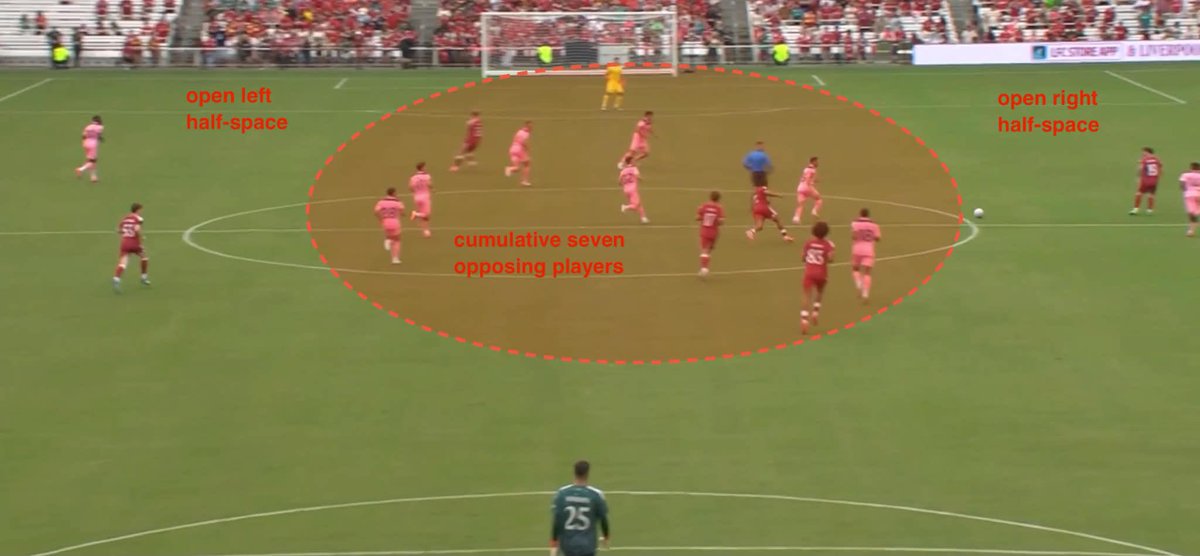
For some time now, I’ve been exploring the laws of physics in football (not literally), relating them to movements and counter-movements. I’m interested in how opposing directions (or forces) can influence the game’s dynamism, fluidity, and the disruption of defensive blocks. I’m not sure whether this theory holds up or if it’s just a bit of a crazy idea (after all, as Bielsa says, football loves the crazy ones), but Pep Guardiola once described football as a hypnotic element. If we manage its movement (direction) properly—which will always be one of the four reference points in the defensive phase—we can create confusion within the opponent’s structure.
Notice how Sunderland’s players (numbers 1, 2, and 4) adjust their body orientation as the ball moves in a certain direction. With the right interpretation (Rio, in this case), those subtle movements can repeatedly manipulate the opponent, creating confusion and opening new passing lanes. This enables diagonal play, opens up space, and frees players to become passing options for the ball carrier. At one moment, we have seven players condensed into the same area.
I suspected Iraola was working with this kind of movement management, but I wanted to wait for the first match before saying so. It may be a misguided theory, but I think it’s worth considering and discussing.
What do you think, football thinkers? @MeiaArmador__@Jon_Mackenzie@FathalliMo@FathalliMo@Ruxiiii4@rajsinghchohan@danieIscouting
Andoni Iraola took charge of his first game for Liverpool this weekend. A 4-2 win vs Sunderland in Nashville meant the new Boss kicked off his Liverpool tenure with a win. As expected, we saw a squad consisting of some youthful faces, returning loanees and familiar names take the field to build fitness and cohesion, and set the wheels in motion for a new tactical approach. Everyone familiar with Iraola knows that his Bournemouth team were vertical and direct on the ball and relentless off it, and even in game one we are already seeing some similarities on display. In this thread we will have a look at Liverpool's on and off the ball structure, what worked and what didn’t. 1/
I often see Iraola’s model analysed through the lens of fixed positions — LW, RW, CAM and so on. However, this perspective overlooks the main idea behind his football: it is built primarily on relationships rather than positional attachment.
There is no abstract attachment to territory or fixed occupation of zones. Players are not valuable because they simply occupy a specific area of the pitch. Space is a tool used to create advantages, not an objective in itself. The main reference point is the ball and the relationships around it — how players interact to create temporal, numerical and qualitative advantages.
Iraola’s players do not rely on rare individual traits that are difficult to find. His model is based on communication, interpretation, movement and autonomy in decision-making. The important question is not where a player comes from positionally, but what behaviours and qualities they can bring to the structure.
This is why recruitment should focus more on profiles than positions. Instead of asking whether a player is a winger, attacking midfielder or forward, we should analyse whether they can create advantages, understand spaces, react quickly after losing the ball, interpret situations and contribute to collective movements.
If Iraola wants, he can field six or seven attack-minded players because the balance of the team does not come primarily from maintaining a fixed ratio between offensive and defensive profiles. It comes from collective organisation: pressing, counter-pressing, distances between players, and coordinated reactions. His teams do not simply wait for opponents to make positional mistakes — they actively create those mistakes through intensity, movement and structure.
However, this does not mean that every elite attacking profile would automatically fit Iraola’s football. A player like Olise or Neymar would only be suitable if they were able to adapt their qualities to the demands of the system. Individual talent alone is not enough. The player must provide intensity, tactical responsibility, adaptability and the ability to contribute to collective actions without the ball.
Iraola’s idea is trainable because the roles and behaviours within the model are clearly defined. The system does not exist to accommodate players; rather, players must adapt to the requirements of the football. The focus should therefore not be on positions, but on profiles — the traits that allow players to be useful, functional and compatible with the structure
Iraola said "everyone says you need to add a bit of control. Okay, we are working on this" in his Anfield Wrap interview. I think he knows he can't turn up with a front 4 of two wingers and Wirtz + Isak. There's not enough stability there against decent sides.