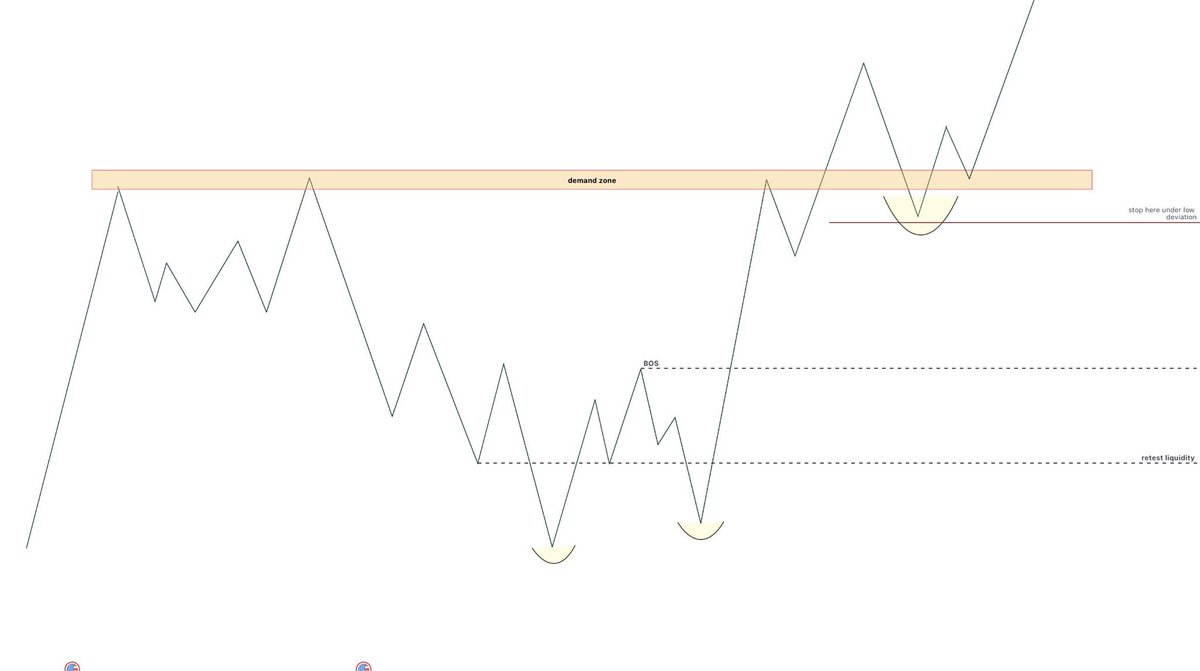
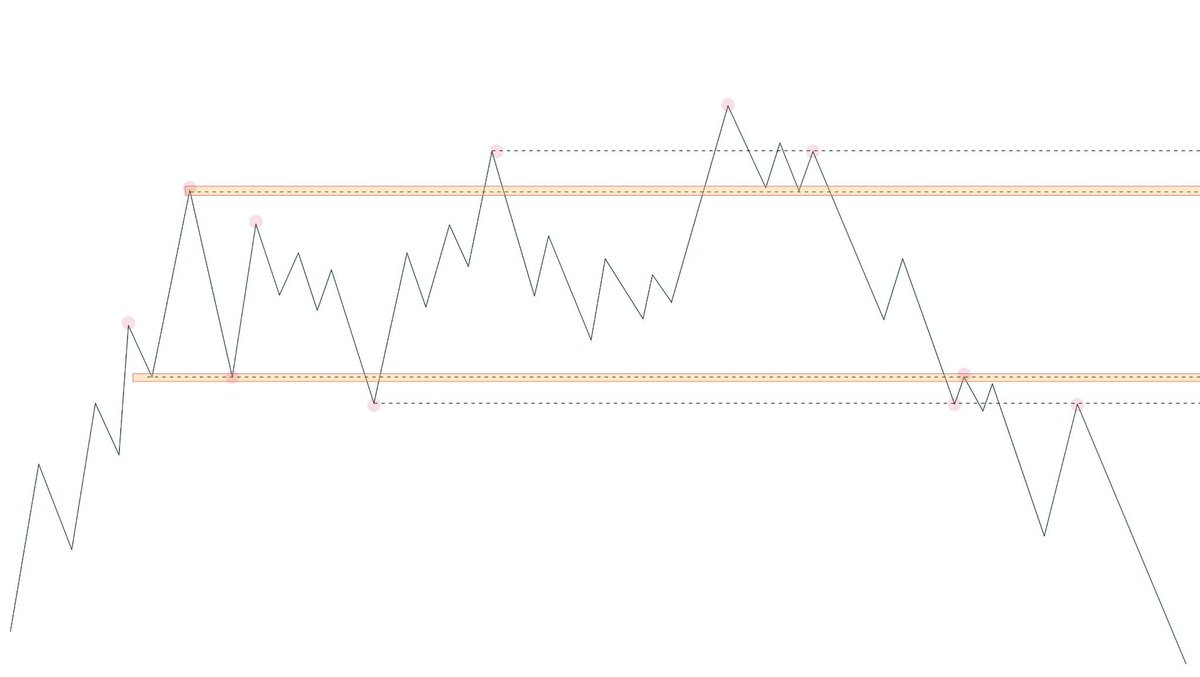
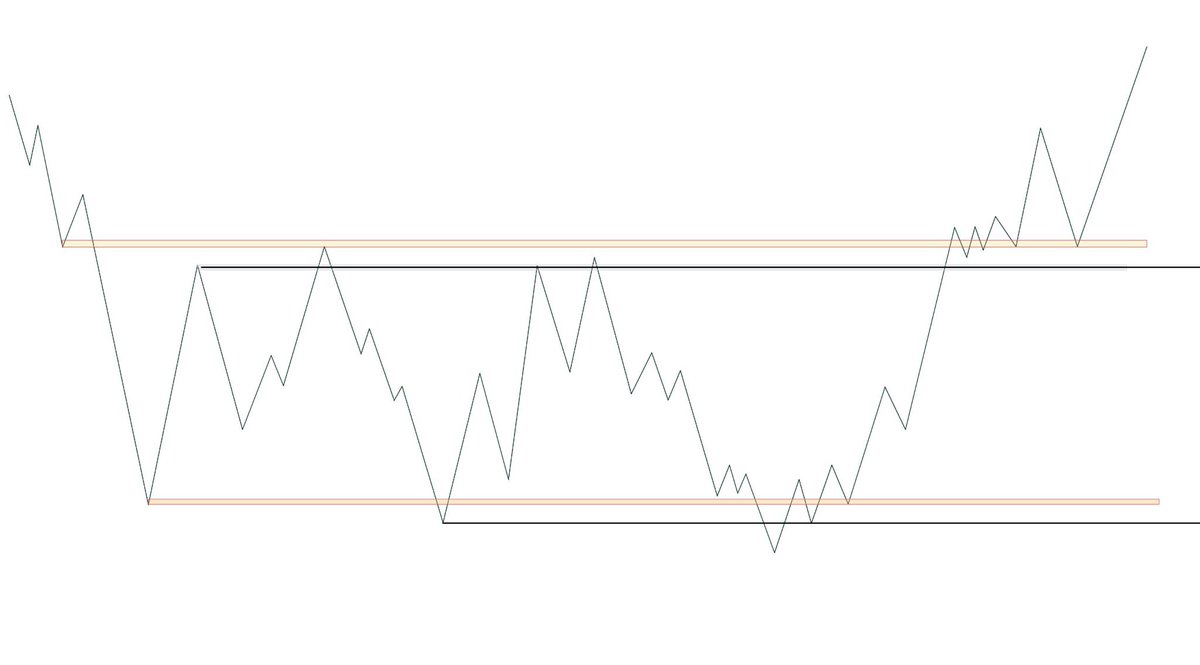
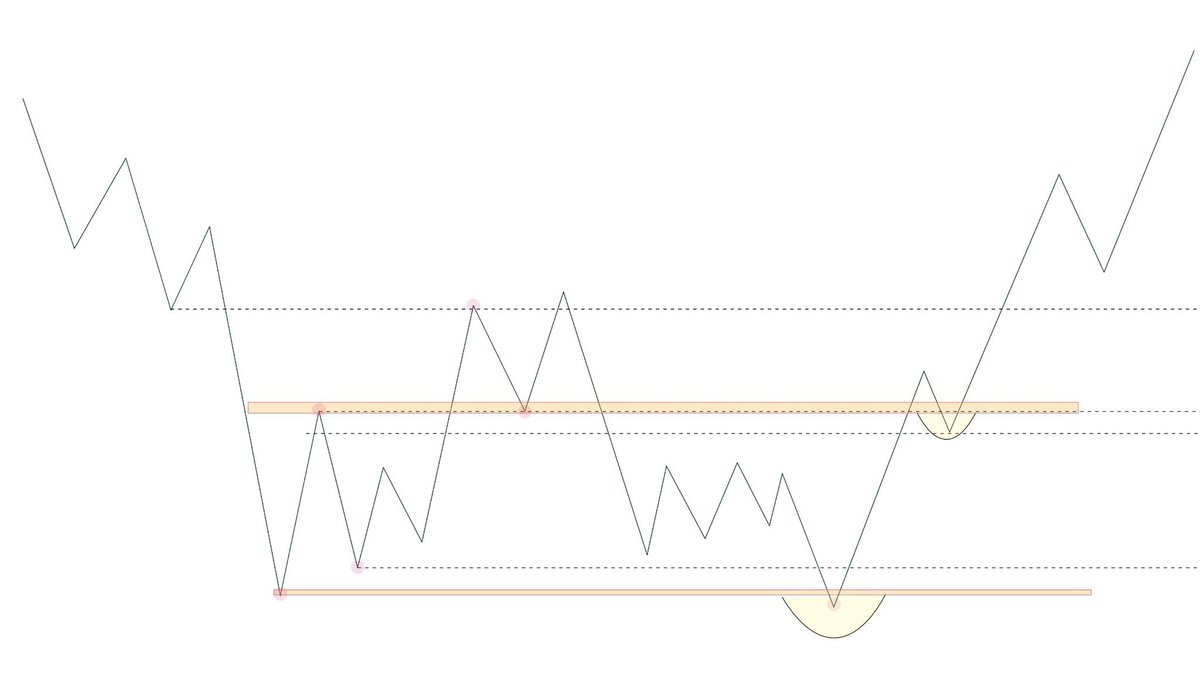
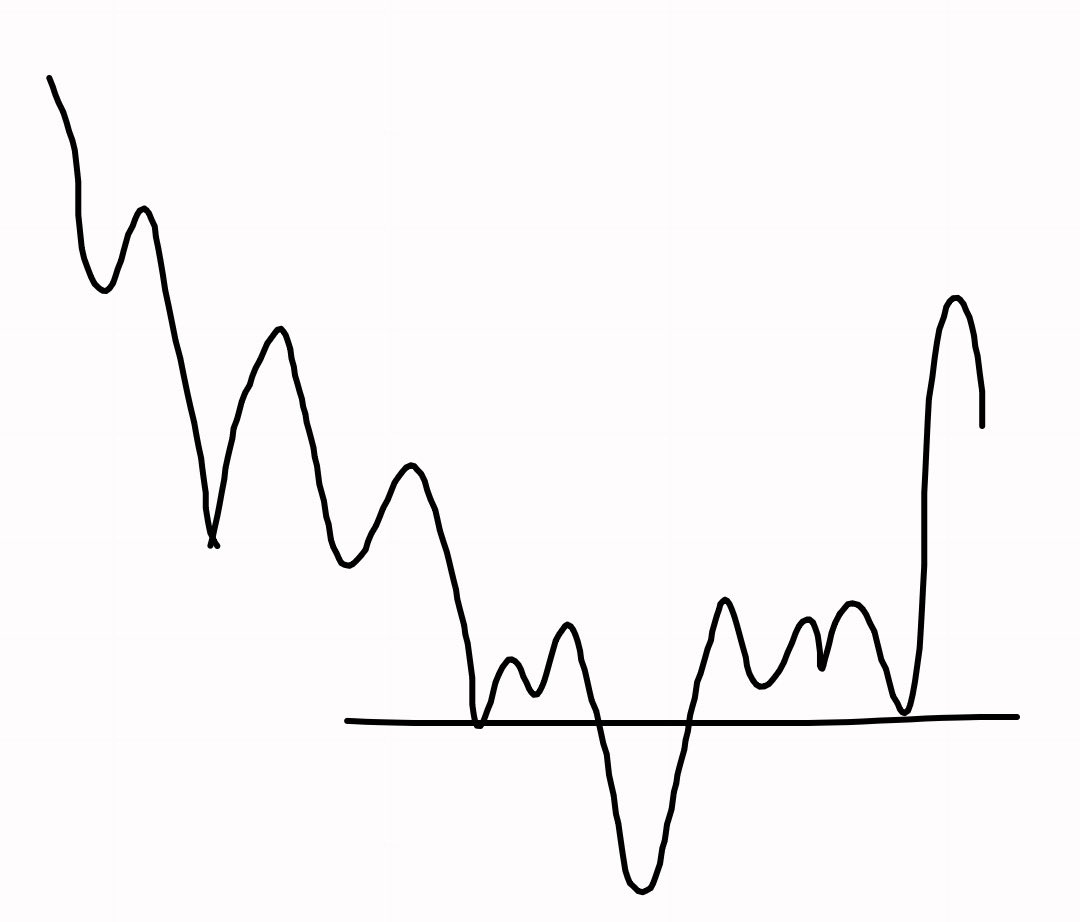
Support and resistance levels are among the simplest yet most misunderstood concepts in technical analysis. The longer a price zone holds over time, the greater its practical significance tends to be. The difference between an inexperienced trader and an experienced one lies in their approach: the former seeks the perfect level, whilst the latter observes how the market reacts within a zone of interest.
Liquidity sweeps, deviations, reclaims and structural confirmations are often the elements that allow us to distinguish a simple reaction from a high-probability opportunity.
Ultimately, support and resistance levels are not used to predict the future, but to identify areas where it is worth paying closer attention and waiting for the market to reveal its intentions.
Study these slides and they will be useful to you
A retweet would be helpful
Many people wipe out their portfolios not because the market is ‘impossible’, but because they go into trading with the wrong mindset: high exposure, a rush to make money, misused leverage and zero patience.
Real trading is completely different from what you’re often shown online.
It’s not about trading every day.
It’s not about making 20 trades.
It’s not about chasing the perfect pump.
It’s not about getting rich in a week.
Real trading is, above all, about knowing how to wait, protecting your capital and understanding when to do nothing.
Most people lose because they try to rush a process that requires experience, discipline and emotional control. They increase position sizes, chase the price, enter without a trigger, move their stops, and then when the market makes a normal move, they get wiped out.
The problem isn’t just the wrong direction.
The problem is the wrong exposure.
You might even have a good market idea, but if you enter too heavily, too early or with too much leverage, the market won’t forgive you.
Trading doesn’t reward those in a hurry.
It rewards those who survive long enough to learn.
You’re missing the point of this job! Out here, it’s not about how much you can make.
In this line of work, what really makes the difference is something else: the ability to protect yourself when things go wrong.
It’s not the person who makes the biggest profit who wins, but the one who manages to limit losses, stay in the game and build over time.
Because profits come and go, but it’s how you manage losses that decides whether you stay in the market or get out.
In a nutshell:
it’s not a race to see who makes the most money, but who makes the best mistakes.
Note that h1 and h2 are focused on finding setups like this
They are the only profitable strategy for quick scalps
GN 🫵🏻 (long or short setup is the same )
Retweet this post 👌🏻
You need to start looking at the market in a more ‘streamlined’ way, without overcomplicating things: the point isn’t to try and catch every single move, but to understand when the price breaks out of the range and how it reacts.
When you see a deviation – that is, the price temporarily breaking above or below the range – it isn’t immediately a signal to chase. It’s a piece of information. It’s telling you that there’s a demand for liquidity out there.
If that deviation is then repeated (double deviation), everything changes: it means that level has been tested several times and the market is clearly showing where it wants to react. That is the real confirmation.
At that point, you shouldn’t enter at random, but wait for the price to return and start forming a clearer structure. That’s when it makes sense to switch to a shorter timeframe and look for a more precise entry, without forcing it. (Rarely test it first if you want to do so with a small position size)
This way of reading the market always applies, whether you’re looking for a long or a short. The concept doesn’t change, only the direction: above, you work from a bearish perspective; below, from a bullish perspective.
In practice, stop chasing the price and start working on these extremes: that’s where the market becomes much clearer and gives you simple invalidations.
Many people have a completely wrong perception of what 'altseason' means.
To clarify the situation professionally:
1. The altcoin market is saturated and hyper-competitive.
We are no longer in 2021/2023, when the supply of new tokens was limited and every narrative attracted capital. Today, hundreds of tokens are launched every week: this fragments liquidity flows and prevents large-scale directional movements.
Too many assets, too little capital.
2. 99% of altcoins have no fundamental value.
They generate no utility, have no real adoption, and the only incentive for the market is short-term speculation.
They are not investments, they are tactical tools.
3. Liquidity is not flowing into high-risk assets.
Altcoins only start a cycle when institutional capital enters the market and seeks higher returns. This is not happening:
👉🏻there is no monetary expansion (no active QE from the Fed),
👉🏻rates are still restrictive,
👉🏻global liquidity prefers assets with greater credibility and capitalisation.
For this reason, capital is concentrated on BTC and ETH, not on the long tail of the market.
4. Crypto Twitter has changed and made information less efficient.
Today's environment is dominated by spam, hype, and accounts that generate nothing but noise. The environment is less focused on research and much more on emotional speculation and FOMO.
Less quality content means more impulsive decisions... and more losses.
5. Don't fall in love with tickers.
The correct approach is not loyalty to the coin, but risk management.
Objective: extract value, not become unwitting promoters of a project.
6. A true altseason requires favourable macro conditions.
Altcoins only pump when:
BTC consolidates after making new highs,
liquidity begins to shift towards risk, there is an expansionary monetary environment (incoming liquidity).
Until this happens, micro-caps remain illiquid and irrelevant.
An altseason is not born out of hope or hype.
It only arises when new liquidity enters the system and capital begins to move down the risk curve.
Until then, BTC and ETH remain the gravitational centre of the market.
In the markets, bearish phases (look altcoins )are almost always slow and heavy. The price falls slowly, rebounds just enough to give hope, then resumes its decline. It is a continuous attrition: those who are in see their stops being triggered, lose confidence and begin to doubt their decisions.
However, when most have given up, after losses or emotional capitulation, the market changes pace. A few coverings or a few decisive purchases are enough to trigger sudden and rapid rises. These are the movements that surprise you just when you no longer have the energy to believe in them.
It is the classic market paradox: the downturn consumes time and patience, and the upturn consumes space in an instant.
It is a simple dynamic: when everyone has already sold, it does not take much to restart the price.
Knowing how this sequence works helps you not to act impulsively:
during the downturn, you protect your capital; during the upturn, you think rationally, you do not chase the market.🤝👌
Ok the aim is to explain clearly how the crypto market works today and share my objective view.
I am not speaking from personal convictions or narrative, but by analysing data, cash flows and the behaviour of market players. I want to provide a realistic and up-to-date interpretation of how the sector has evolved, so that everyone can understand the dynamics that drive it today and make informed decisions.
Institutional investors have changed the crypto market and they have also changed the altcoin cycle.
In previous years, the market was driven almost entirely by retail investors: impulsive movements, strong euphoria, predictable cycles (Bitcoin first ,after ETH and then altseason ). Today, this is no longer the case.
With the entry of institutional investors, ETF,funds and quantitative desks, liquidity is no longer spread across the entire market... it is concentrated on asset classes with the best risk/return profile and regulation,
and above all, it follows structured flows, not emotions.
Bitcoin and Ethereum have become institutional assets: managed through ETF
Here, the cycle is no longer 'speculative' but driven by capital flows. Altcoins are the ones that have felt the impact of institutional investors entering the market the most. In the past, after the halving, all you had to do was wait and an 'altseason' would almost automatically arrive. Today, it no longer works that way.
Capital is no longer distributed everywhere: institutional investors choose carefully where to put their liquidity. They only enter projects with a strong narrative, sufficient liquidity and solid tokenomics. Everything else is ignored.
Low-capitalisation altcoins become hunting grounds: they are easier to manipulate, attract liquidations and create extreme movements without continuity. Especially today, with over 26 million tokens and low-quality projects in circulation, selection has become crucial. Supply is virtually infinite, while liquidity is not. In such a saturated environment, institutional capital has no interest in distributing resources across assets lacking fundamentals: it focuses only on those that offer liquidity, structure and sustainability over time.
Large exchanges (@coinbase@binance) have the power to influence price movements through liquidity management, order flow and visibility of user positions. In this context, the entire crypto market is exposed to dynamics that often do not reflect real supply and demand, but rather the operational choices of the largest players.
The truth is simple: when those who control liquidity decide to move the price, everyone else suffers.
And in these situations, the victims are almost always the same: small investors and less experienced traders, who react emotionally to artificially created movements.
Personally, this does not change my approach: I am a trader, I follow the price, not emotions, and it affects me little! But I feel sorry for the new and less experienced! Until the sector reaches greater maturity and transparency, we must accept a reality: it is not those who try to predict the movement who win, but those who understand who is generating it and with what interests.
And that is precisely the point: recognising manipulation and knowing how to read it on the chart, with experience and discipline, means not suffering from it but using it to your advantage.
Weak vs strong structure bullish
Weak vs strong structure bearish
This simple graph is worth more than a thousand lessons
Retweet this simple and best educational contents
I'll show you how real traders think and how they work... their trading patterns vary based on the trading sessions and, above all, on market conditions.
In difficult market conditions, I have much lower targets and much lower stop losses (for example, a profit target of 5-8k in 24 hours, a maximum loss of 3-4k in 24 hours).
In favorable market conditions and easy sessions, we set broader targets of 20-25k daily and a maximum loss of 5-10k.
This is how a trader works. I usually never exceed my loss limits. If they're hit, I stop trading and move on to the next day.