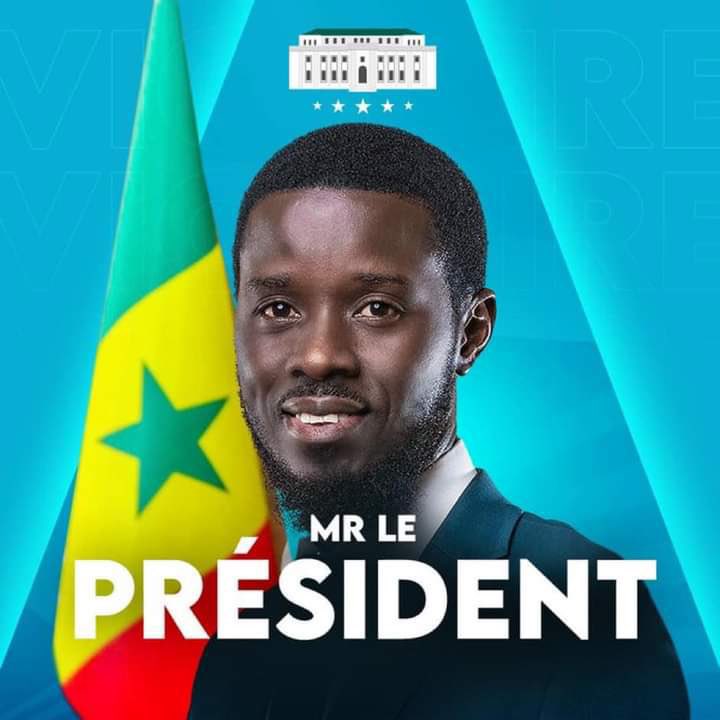
44-year-old Bassirou Diomaye Faye has been elected as the President of Senegal.
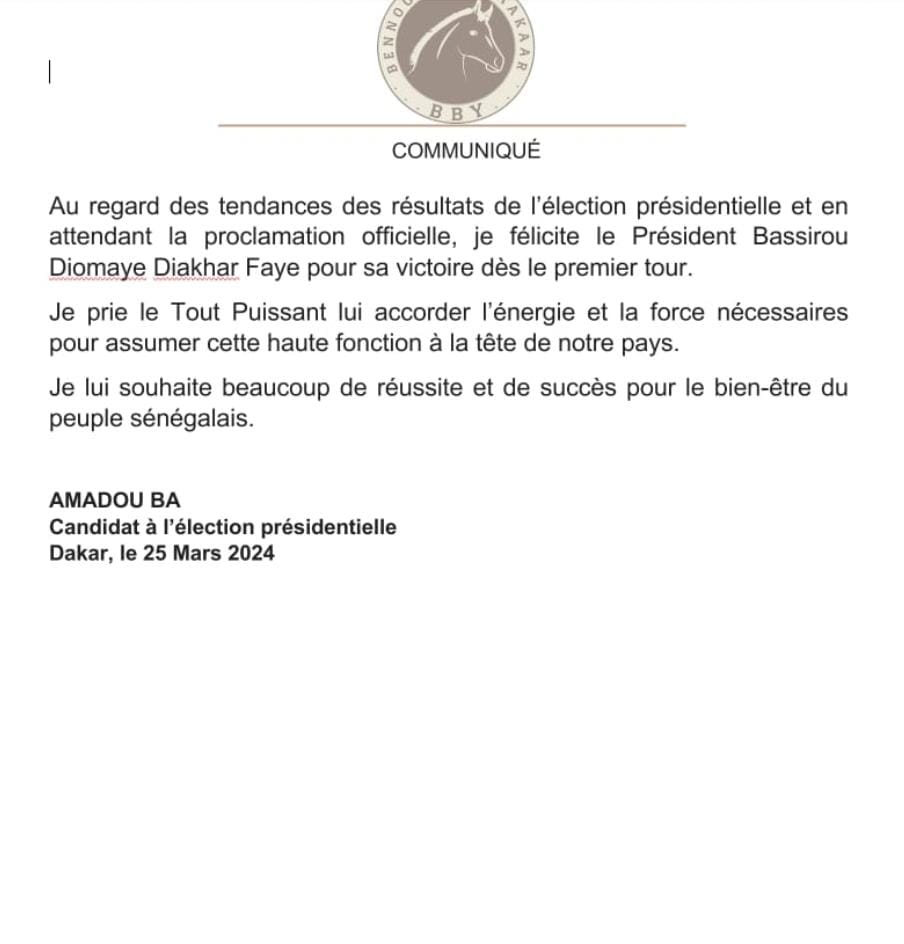
His opponent, Amadou Ba has called to congratulate him. Amadou is the candidate of the ruling party, APR.
Months ago, outgoing President Macky Sall tried to amend the Constitution for a third term.
🟡Why is Mthuli Ncube’s “wealth tax” a bad idea?
Of all the problematic announcements made during Mthuli Ncube’s Budget Presentation on Thursday, the wealth tax is arguably the most unsound. The Minister proposes to impose a 1% annual tax on all owners of a house worth US$100,000 or more on the grounds that they have more income.
This means that the owner of a US$300,000 home would pay US$3000 in wealth tax annually.
The very premise of the tax is fundamentally flawed. In Zimbabwe, not all home owners have an income.
A pensioner under 70 receiving a US$30 pension can own a home.
A divorced, unemployed person can own a home they attained through a divorce settlement.
A child can own a home bought for them by their parents.
An unemployed 19 year old can own a home they inherited.
A retrenched person can own a home they bought when they were once employed.
A person can own a home but have lost all their savings or business under one of the three big economic crashes experienced since 2008.
Taxing these people for simply sitting in their homes and breathing is an injustice and offends the constitutional
principle that the tax burden should be shared fairly. There is no doubt that a “wealth tax” of this nature in a distorted economy like Zimbabwe could never be administered fairly.
Pensioners, non-income earning home owners and other poorly paid citizens who managed to purchase homes when the economy fared better decades ago persons cannot be described as “wealthy”.
Imposing a blanket tax on home owners would result in the illegal double taxation on persons who already pay rates and property taxes on their homes, which rates they can in most instances barely afford. What justification is there for taxing persons twice for water, local clinics and basic services?
Additionally, a wealth tax is difficult, expensive and inefficient to administer. In an economy like Zimbabwe, the immediate question that arises is - who would carry out the valuations, with what money and using which formula. The avenues for distortion and corruption would be boundless.
Imposing this ill thought out wealth tax will encourage tax evasion and has the potential to drive away property investors if imposed. Persons with the means will opt to buy in Johannesburg or South Africa where the tax burden is less burdensome and one can get more bang for their buck.
Property is one of the few reliable stores of value in Zimbabwe’s broken economy where savings are not safe in financial institutions due to unsound and inconsistent economic policies. The proposed wealth tax will discourage property investment.
Moreover, by taking a fraction of people’s wealth each year, the tax reduces the return to investing and discourages saving. This can reduce growth because investing and capital accumulation are critical to innovation.
One can already see that, if imposed, such a tax will distort behavior in a way that is harmful to economic growth and national prosperity.
To put the matter to bed, a person who invests in 10 low cost houses valued at US$98,000 each will avoid the tax while a divorced, self-employed single mother who was awarded a basic home in Waterfalls upon her divorce will be taxed for being “wealthy.”
The entire Budget is an anti-people mess. Pro-growth policies make sense, by making everyone better off.
Tax gimmicks don’t.
The Governor of Zimbabwe’s central bank, Dr John Mangudya is the first Zimbabwean public official to accept that Zimbabwe has totally failed to attract Foreign Direct Investment.
Dr Mangudya said that Zimbabwe has resorted to overtaxing its citizens because it has failed to attract foreign investment, or even succeed to borrow loans from international financial institutions.
Zimbabwe owes over US$17 billion to international financial institutions alone.
The irony of Dr Mangudya saying this with a Land Cruiser worth over US$100,000 paid for my the taxpayer behind him is self evident.
Zimbabwean government officials live the lifestyles of Hollywood royalty driving sports cars and SUVs and living in mansions whilst public hospitals don’t have basic things like paracetamol.
Foreign Investors are scared to come and invest in Zimbabwe because of captured State institutions including the judiciary, massive corruption, failed economic policies, policy inconsistency and failure to respect property rights.
Zimbabweans journalists have been harassed, arrested and jailed in the last fours years for exposing State corruption which includes looting of public funds and plunder of the country’s natural resources.