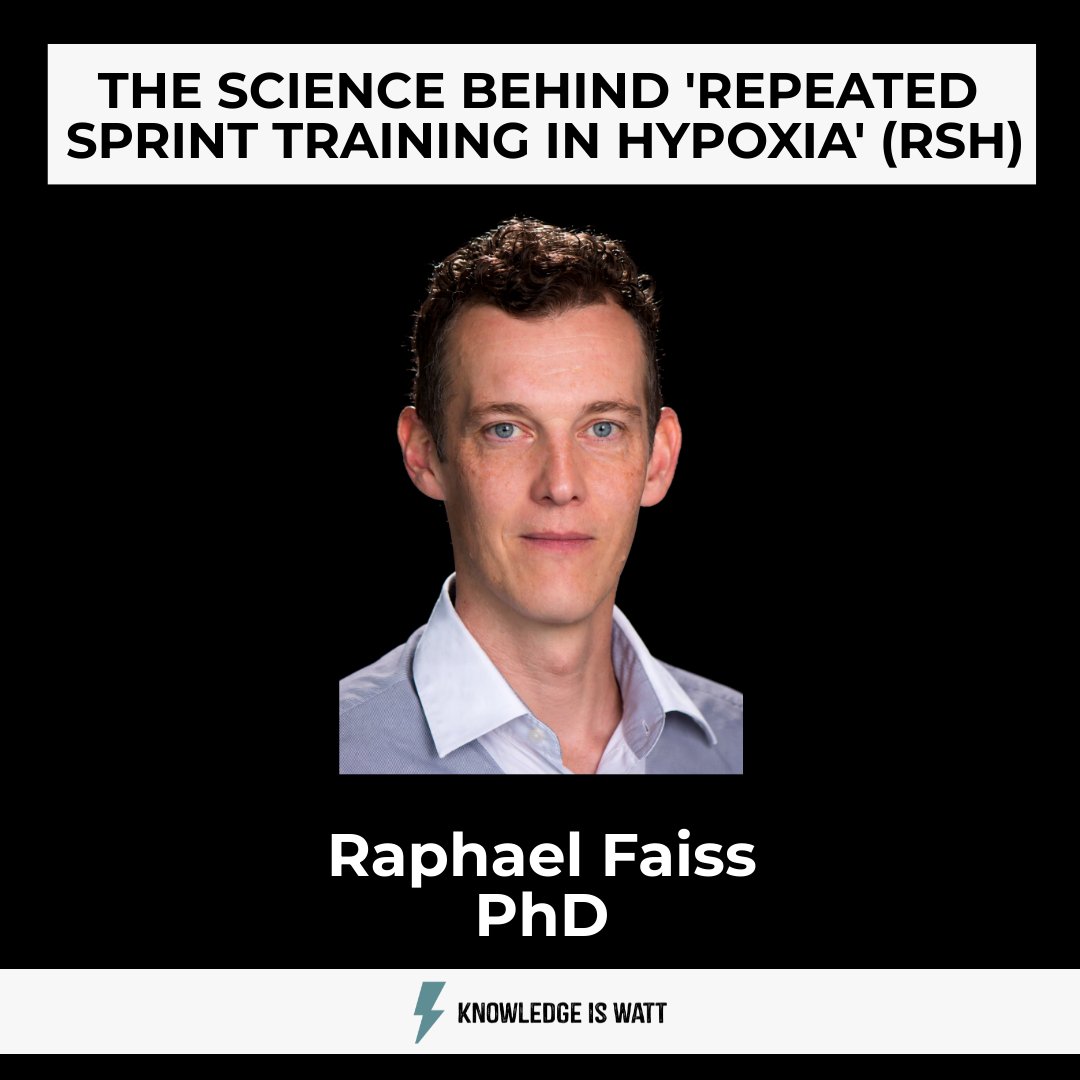
133rd KIW Research Note is Out!
Dr Raphaël Faiss @wattsnow explains:
1) What is RSH
2) The Relative Performance Gains
3) The Physiological Rationales
👇
https://t.co/AlOU7AAq3r
Pleased to share a new book chapter on Respiratory–cardiovascular interactions. Honored to work with Tym Zera and Julian Paton on this project reviewing classic work, modern advances and clinical relevance. https://t.co/QPuwN3jmUs
New in @ExpPhysiol by colleagues from @EnvPhysLabIJS
The effect of artificial gravity on the outcome of a two-week resistance vibration exercise programme: BRAVE study
https://t.co/0zq5O5wy9a
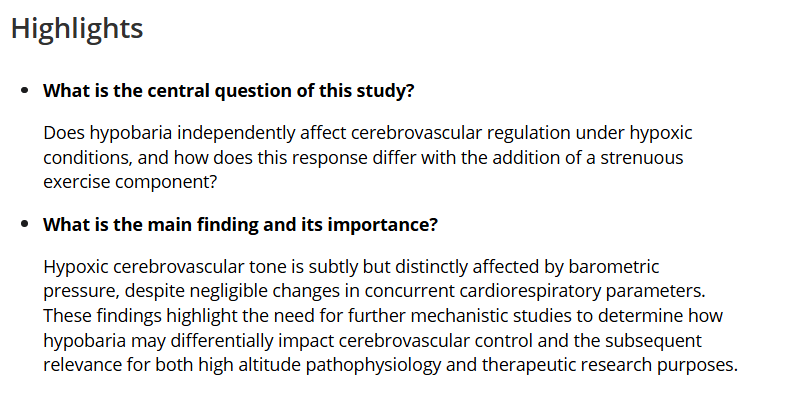
Great to start the week with a publication from our @EuracMEMed team, adding a cerebral context to the ongoing #normobaric vs #hypobaric#hypoxia debate, all data collected in our very own @terraXcube 🚵♂️⛰️ https://t.co/6G4YueczVv
Running Blue: Can an acute bout of blueberries boost post-exercise-induced benefits to brain oxygenation and cognitive function? The RunBlue study registered at #ISRCTN by @AlexT_Friend @SamLucas_PhD @UBSportExR
https://t.co/BjQagpxs9A
#clinicaltrials
A special thank you must go to Dr. Christoph Siebenmann, Dr. Peter Rasmussen @Justin_lawley and @hannesgatterer for all their support in publishing! #teamworkmakesthedreamwork
Recent insights into mechanisms of hypoxia‐induced vasodilatation in the human brain - Carr - The Journal of Physiology - Wiley Online Library https://t.co/9tFSYRypVi
Excited to share our new research in @CircRes assessing secondary brain hypoxia in post-cardiac arrest patients. @Mypster2 @UBCDoM @ubc_anes@UBC
Brain Hypoxia Is Associated With Neuroglial Injury in Humans Post-Cardiac Arrest
https://t.co/B0NWaqIwa5
🧵 1/
Take a look at our latest publication on the computational modelling of osmotherapy after cerebral oedema! A novel brain porous circulation model is proposed to study osmotherapy and to optimize patient-specific therapeutic strategies. https://t.co/QkdC8Qg1hi