Space Weather Physicist. Forecasting aurora, GPS, HF radio & radiation issues during solar storms. On TV: @HISTORY, @weatherchannel, @PopSci, @NASA, @techreview
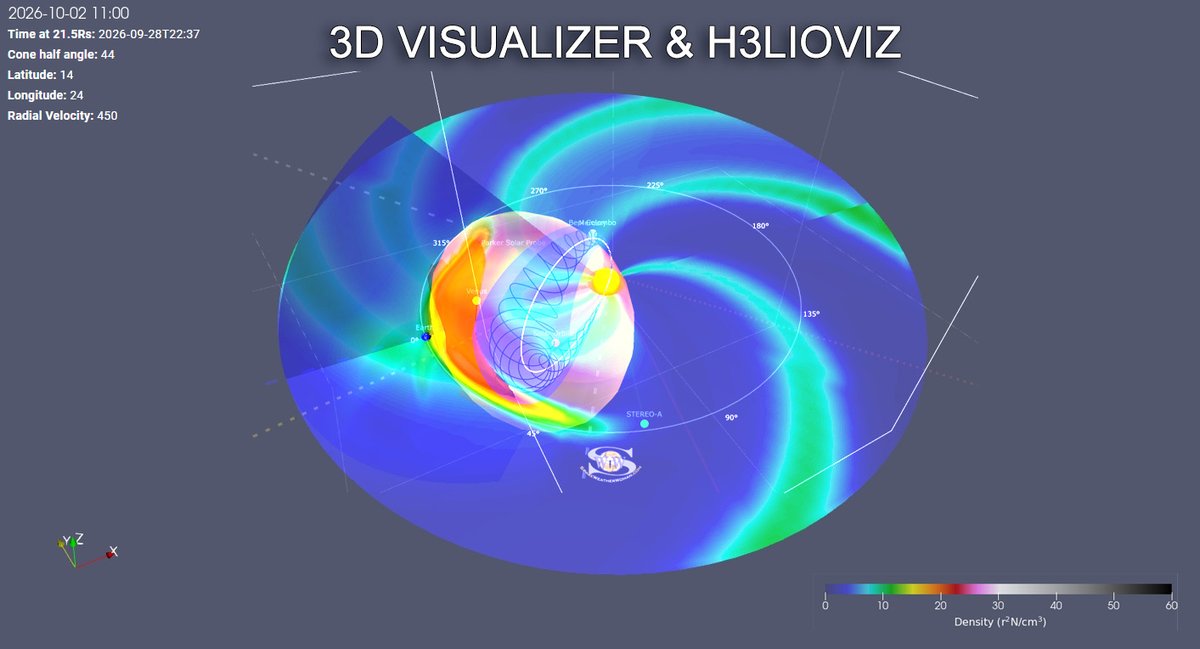
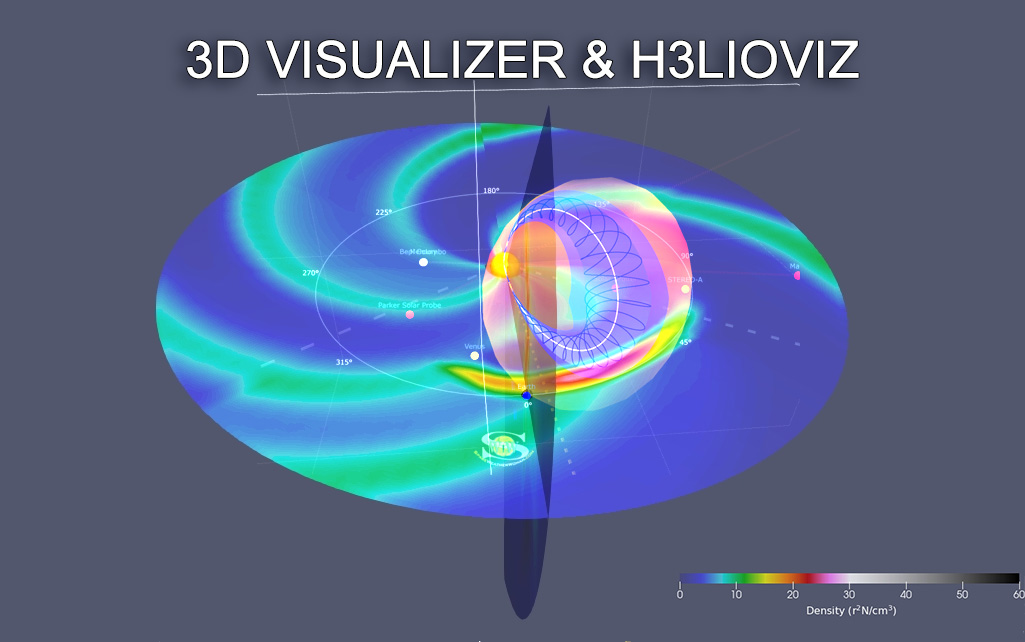
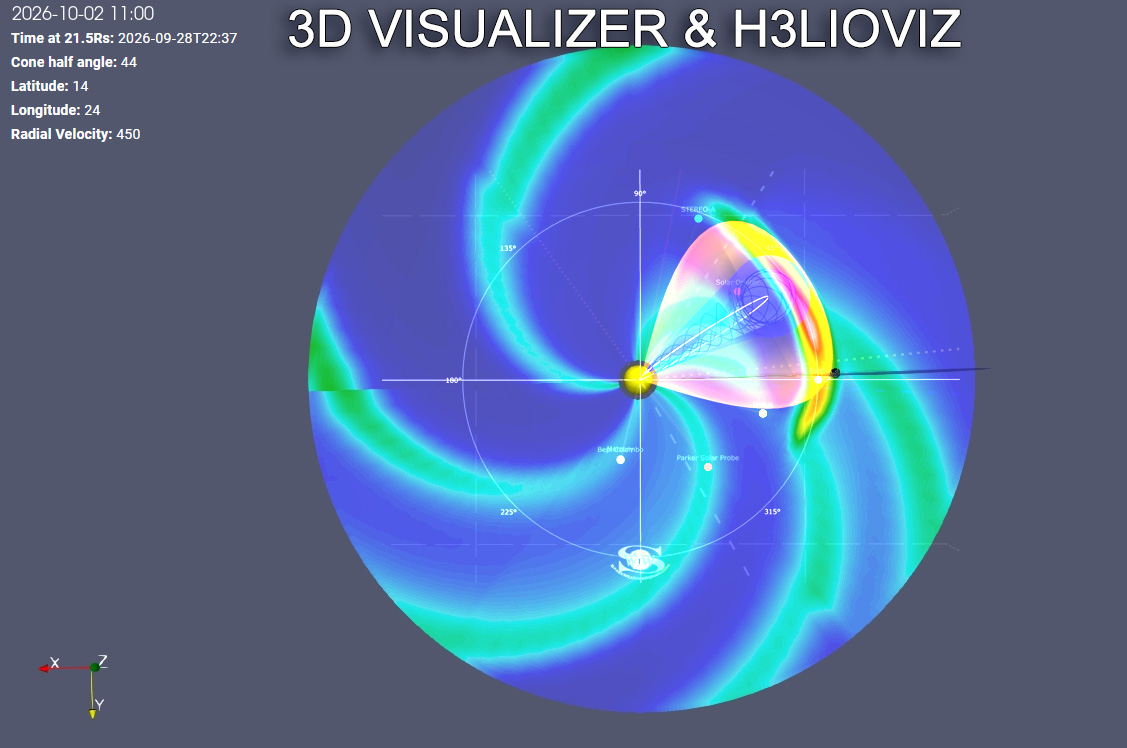
A partially Earth-directed solar storm comes! Although the storm launched west of Earth, we may get a glancing blow late October 1. Using NASA's model solution I ran my flux rope 3D Visualizer to see how much of a side swipe the storm could give us. We'll likely miss the solar slinky core, but the envelope of the storm could hit us. Images show H3lioviz 3D projection of the NOAA model run with my visualizer. Check out the flux rope 3D animation https://t.co/irGPR50L6n (takes a minute to load)
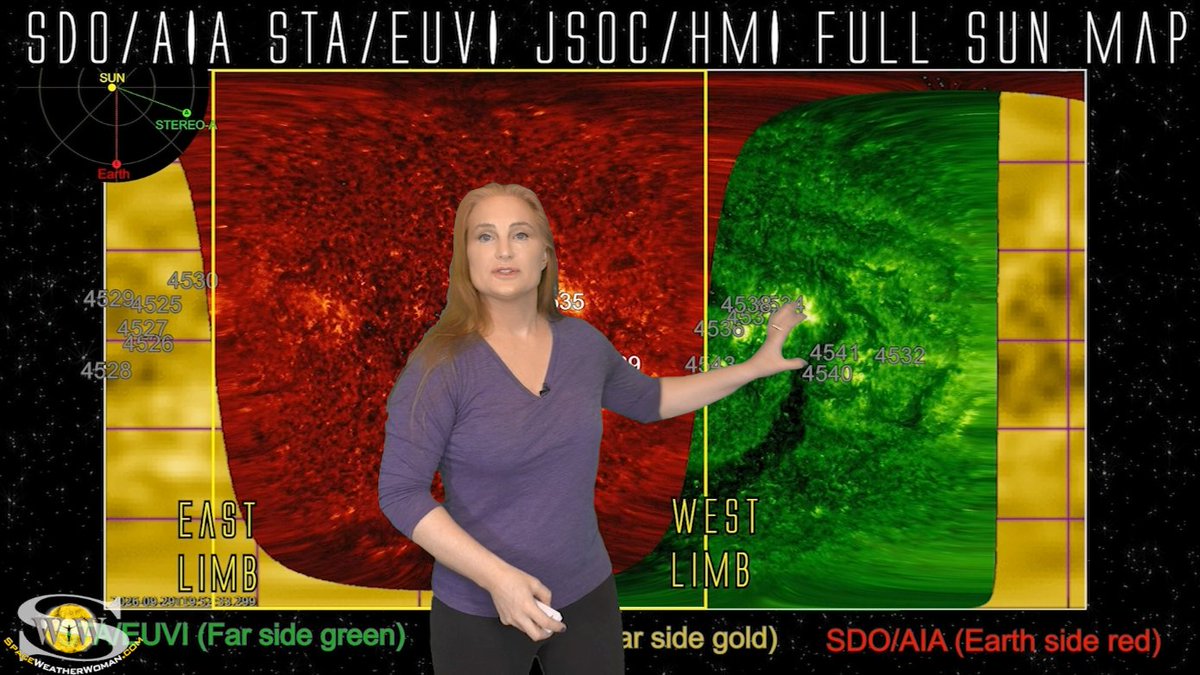
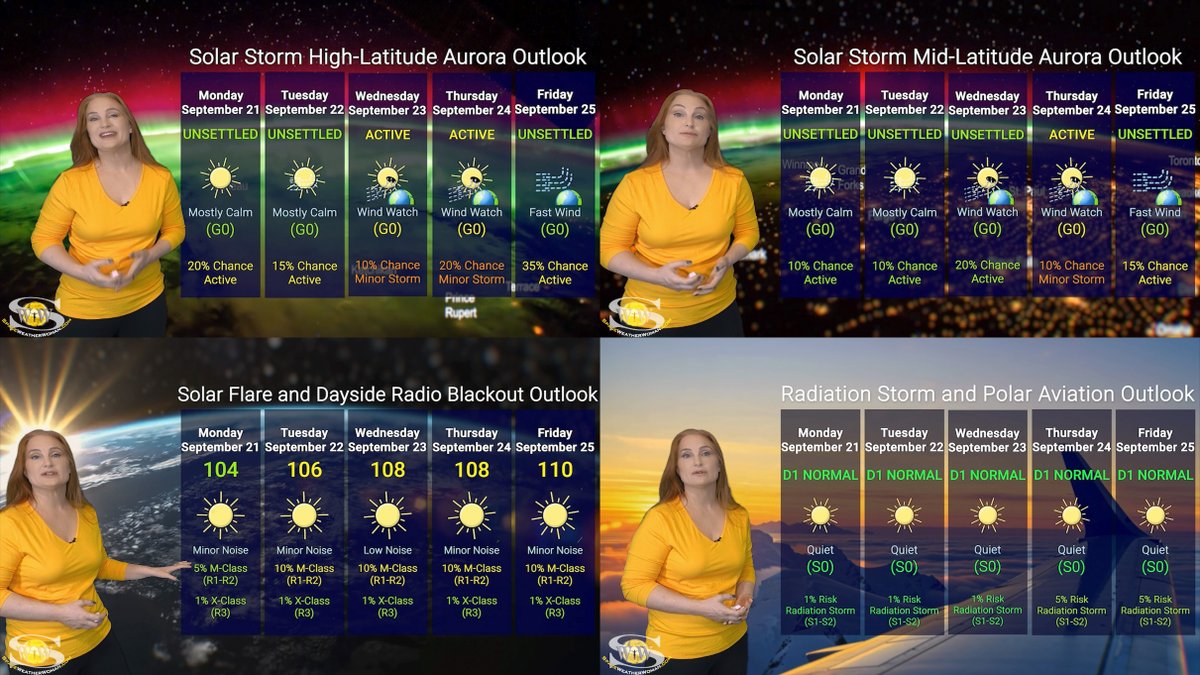
The new #SpaceWeatherWoman forecast is up! Learn the details of the coming solar storm side swipe, see when we last saw a heart-shaped coronal hole, and take a 3D tour with the solar storm visualizer to discover what aurora chances are this week. A large cluster of regions is also rotating back into view & that should make radio amateurs smile: https://t.co/zEOn3vSbjd (no paywall + graphics)
@orionlensguy Cycle 25 has been more active, but not nearly as much as we hoped. It still lagged in some metrics, although we are ahead of schedule in terms of reaching solar minimum. @swmcintosh is the expert when it comes to what this means for the ramp up of Cycle 26!
Wow, fun CME survey. Not only is the solar cycle effect visible with events falling off a cliff in 2019, but you can see when the NASA Artemis era Moon to Mars (M2M) office began more comprehensive cataloging of minor eruptions alongside the larger ones in Cycle 25. The number of eruptions captured in the DONKI database just explodes starting around 2022. The number of events even exceeds the maximum of Cycle 24!
@TamithaSkov Made this for the long view of what you forecast week to week: every CME NASA catalogued since 2016, replayed where it launched, with launches per month against the sunspot curve. The quiet years hug the equator. https://t.co/7HoTUbYqB1
LMAO. These shots give a whole new meaning to the phrase "active region." But considering it's an all-sky camera, scientists might prefer to call this particular manifestation an "auroral bug-storm!"
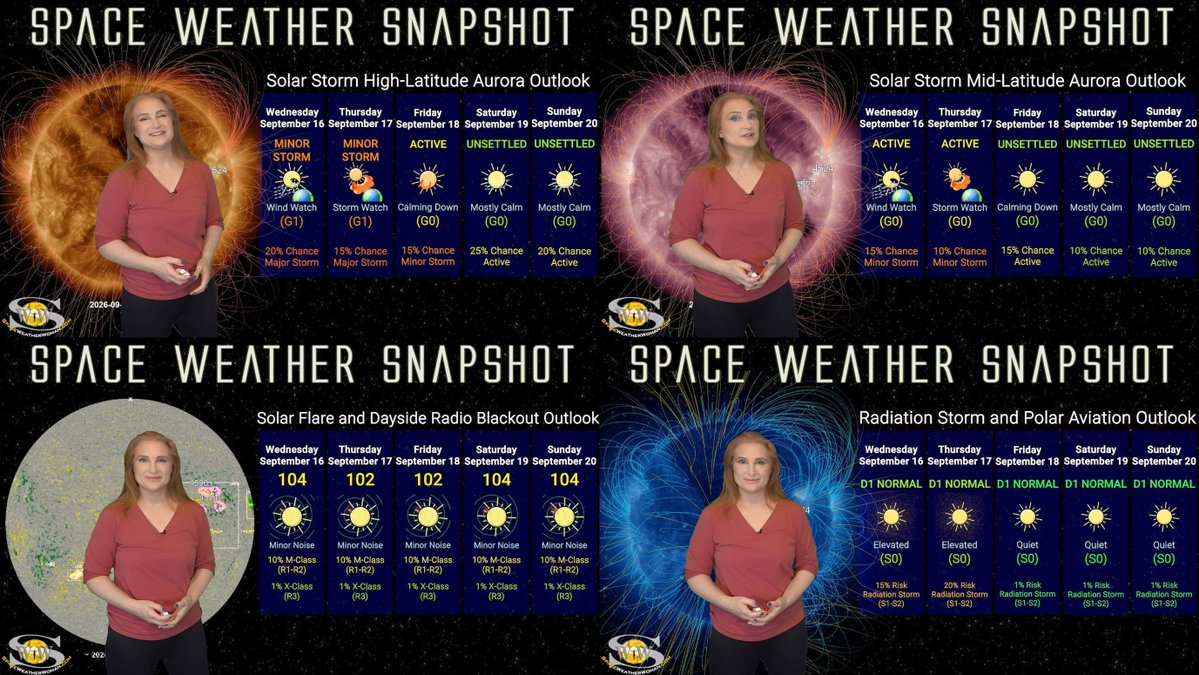
The new #SpaceWeatherWoman forecast is up! Learn why the recent solar storms and fast wind have been unpredictable, watch how a radiation storm got delayed in transit, see what impacts these events have had over the past few days, and why the storming is likely not over yet: https://t.co/9yU7lx6T1P (no paywall + blog and graphics)
@w9awx I have created some infographics on the GEOCHRON for both DRAP and ROTI, but I have yet to create an instructive video. That is on my short list of things to get done!
@ThmbLeatherneck Your insight is excellent! The magnetic field is the dominant player here. It guides and can even block or trap energetic particles accessing certain magnetically closed regions. In some cases we call such regions "magnetic bottles". There is a lot of structure to the solar wind!
Our Sun shows how deep into the declining phase we are by flirting with the notion of a spotless day, but it doesnt last long! Fast wind comes, flare activity is ramping up, and the promise for more solar storming is rotating into view. Learn the details of the sun's latest activity and what it means for aurora chasers, aviators, and radio operators: https://t.co/asNsunyGQS (no paywall + graphics & blog)
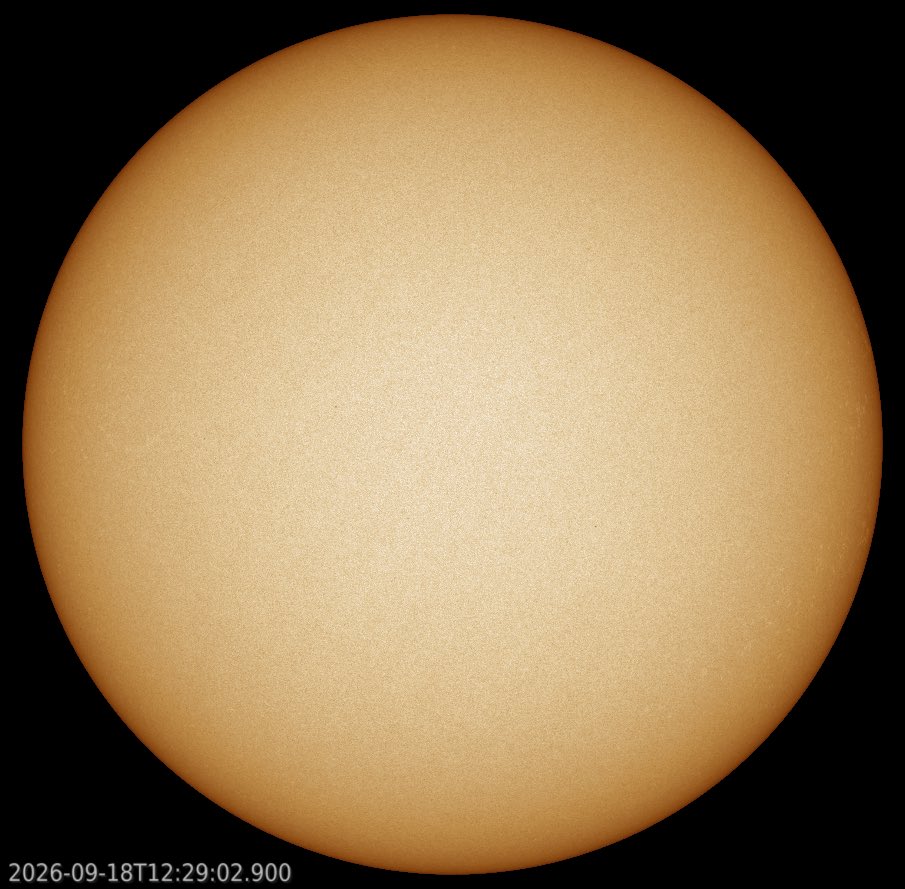
The Sun is NAKED, spending at least a few hours today without a single sunspot. This has only happened a couple of times since 2021, but will become more common in the next few years (although further strong activity in this period is still likely). This is bad timing, because…
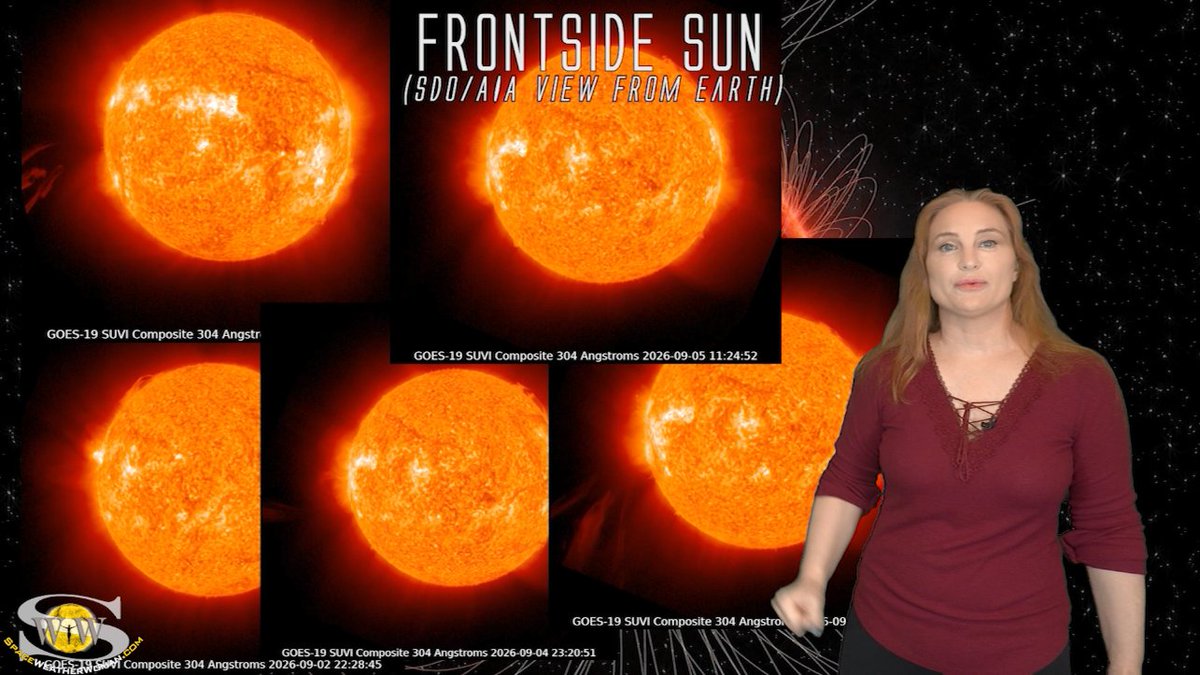
Our Sun has sent us a wave front of solar storms along with some fast wind that are hitting Earth now. Learn the details of these events, see what more there is to come, and why so many are being launched from sunspots that seem to have low flare potential. Radio amateurs and GPS users should expect signal degradation through September 12. Aurora chasers at high latitudes should get good shows and even chasers at mid-latitudes should enjoy sporadic shows with the dark moon: https://t.co/tsSqRV4oE7 (no paywall + blog & graphics)
There are no less than 7 solar storm launches in this single ENLIL model run! This may be a record for NOAA. Although none of the storms are a direct hit, along with the fast wind starting Sep 7, they could bring a bumpy ride! Im working on a new detailed video forecast now.
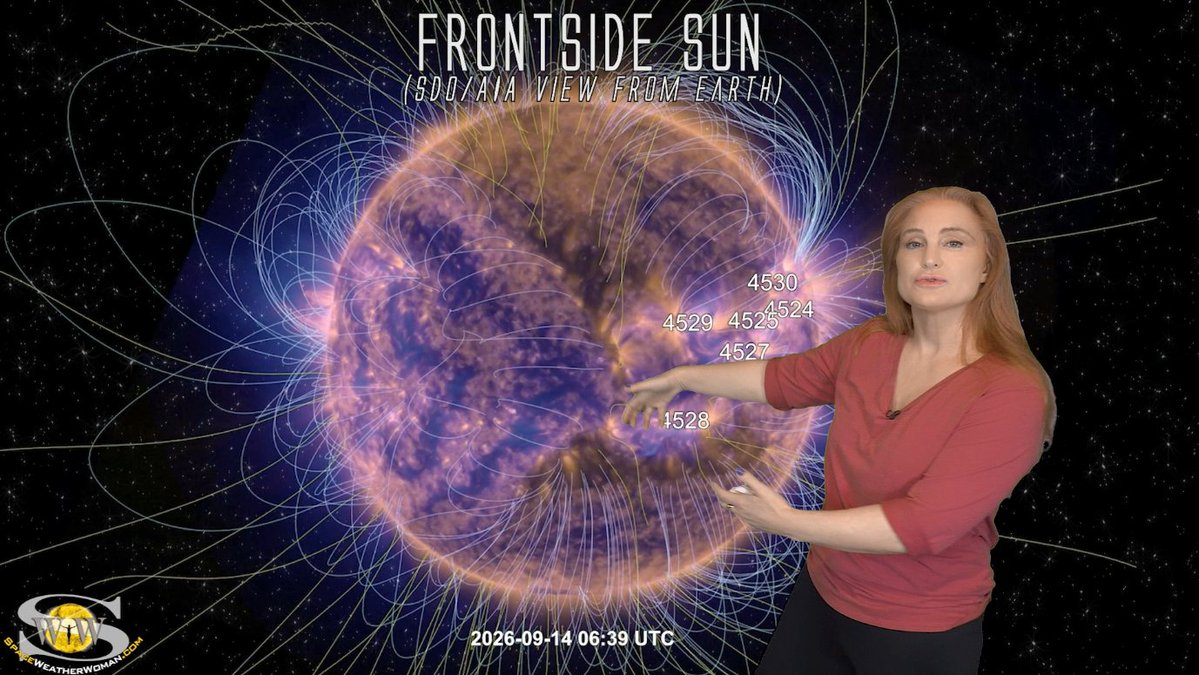
@JimWindweather Yes, the high energies are rolling off a bit, but the continued flaring, storm launches, and additional shockwaves are causing the low energy particles to rise again. Region 4524 just joined the party!
Check out how fast the radiation storm rose, especially the higher energies (100 MeV). They reached the S1-level easily 30 minutes before the low energies did. Now that is a hard spectrum! This means the blast wave created by the eruption was extremely strong and fast, despite the flare being weak (only an M1-flare). This is why we cannot judge the strength of radiation storms or solar storm launches by the intensity of a solar flare!
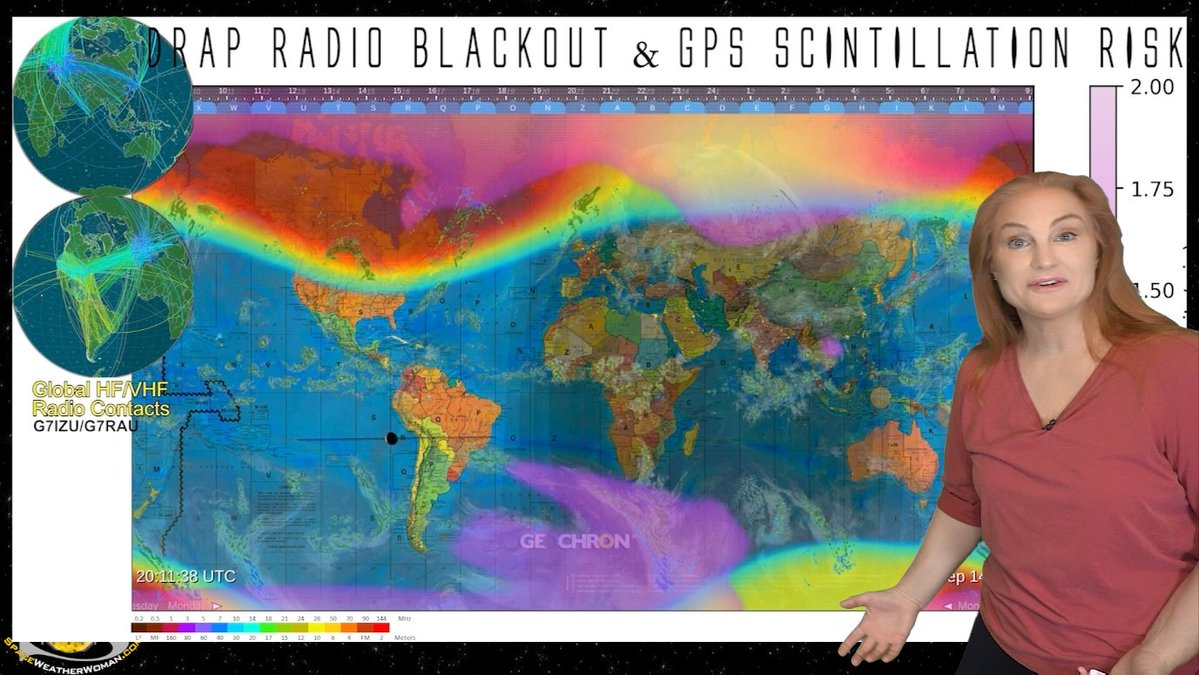
Conditions at Earth have lit up like a Christmas tree! The GEOCHRON shows how the polar cap absorption event at the poles due to the radiation storm continues to grow more intense. Along with continued solar flares, this is causing ROTI turbulence zones (purple splotches) to increase. GPS users and airline pilots at high latitudes should remain vigilant as signal degradation is very possible now.