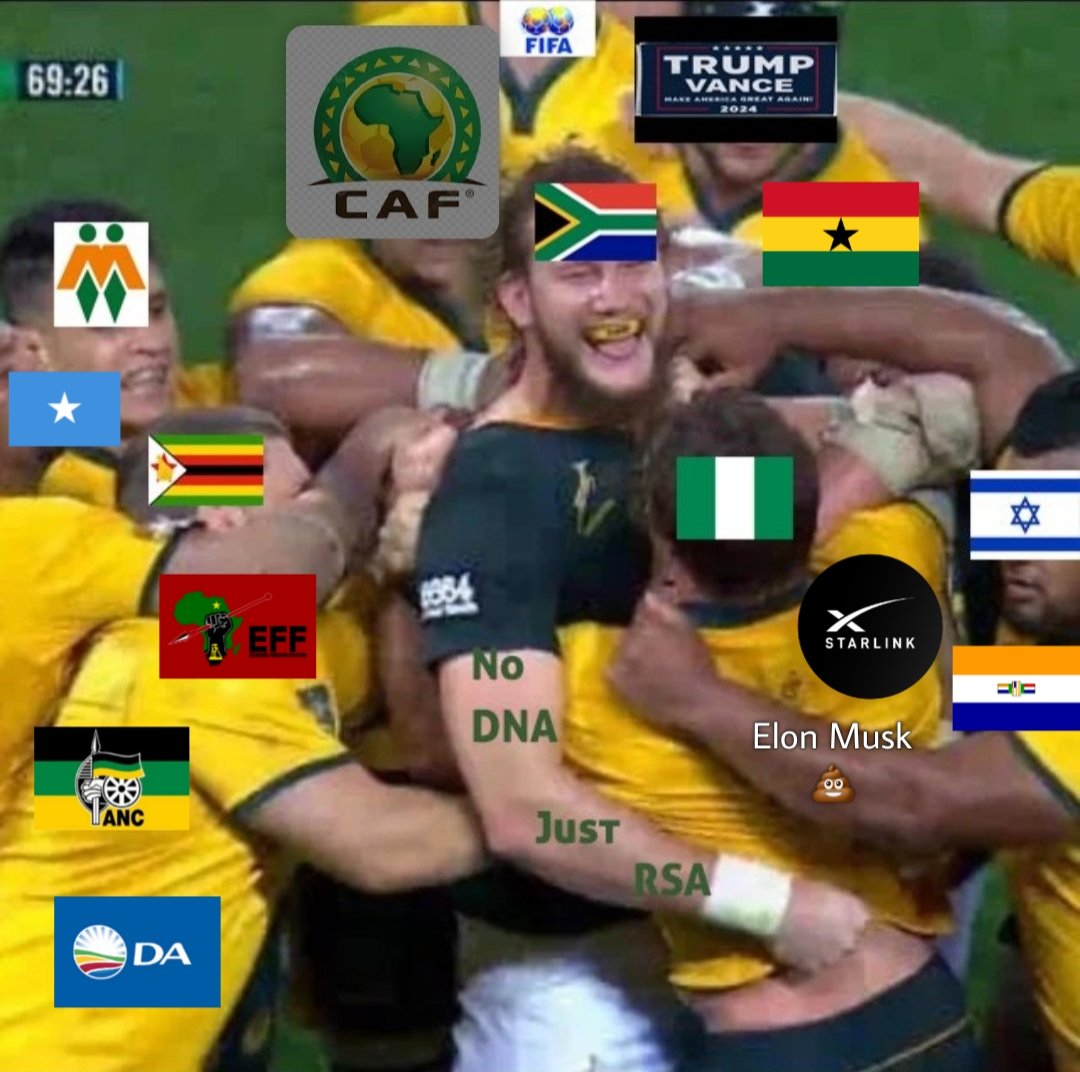
If you ever wonder why so many Ghanaians in South Africa want to return home, this is part of the reason, and I speak from experience.
Many arrive after being promised good salaries and commissions by salon owners and other employers. The first few weeks often seem fine, but when it’s time to get paid, the reality can be very different from what was promised.
By then, many have exhausted their savings, their return tickets have expired, and some don’t know how to regularize their stay. Without proper documentation, they live in fear and avoid drawing attention to themselves.
The real issue is exploitation. Some workers spend months trying to repay debts to employers who financed their travel, leaving them trapped in difficult situations.
I was lucky enough to have received information about permit applications. So I have legal documentation to stay in South Africa. But many others do not.
This is why so many people are now looking for a way back home.
@Zone345689@KwekuOA I am with you that apart from the undercutting, they sell fake goods and all the other stuff too, because I've seen it. But what he says in his posts are still valid. Like he is coming in good faith with an analysis and a solution that I actually think is worth giving time to
I do not know why some of you argue so passionately about things you have never taken the time to read about.
If you are South African and you read widely, you would know that there are people in Israel and its state who are openly advocating for the breakup of South Africa along ethnic and regional lines. They want the Western Cape to become independent. They want KwaZulu-Natal to become its own country. They want the return of Bantustans. They want South Africa fragmented into smaller states.
This is not something that people are making up. It has been published in the Israeli media, as shown below. I have posted the link to the article so that you can read it for yourselves and understand what is being discussed.
Too many people comment from a position of ignorance because they have chosen not to read. We know what is going on. We know that there are individuals and groups pushing particular agendas regarding South Africa’s future. You cannot pretend these discussions are not taking place when the articles are there for everyone to read.
If you remain unaware of these debates, it is not because the information is hidden. It is because you have chosen not to read it.
Grant Gochin’s controversial article in The Times of Israel’s argued that South Africa should be peacefully broken up into several independent states based on ethnic, cultural, and regional identities.
He contends that the current South African state has become unsustainable due to corruption, poor governance and economic stagnation under ANC rule. They identify legitimate concerns and then use those concerns to advance their own agenda, knowing that many people do not read or research.
That is how manipulation works. You take a real problem, amplify it, distort it, and redirect public anger towards a desired target.
Drawing comparisons with the breakup of Yugoslavia and the independence of South Sudan, he argues that large multi-ethnic states created by colonial powers are inherently unstable and that smaller, more cohesive nations are better placed to achieve prosperity and accountable government.
He proposes referendum-based independence for groups such as the Zulu, Xhosa, Tswana, Sotho, Venda, and Tsonga peoples, as well as for the Western Cape. Gochin argues that self-determination is a recognised principle of international law and points to growing international support for Palestinian statehood as evidence that the global community increasingly accepts sovereignty claims based on the wishes of distinct peoples.
His central argument is that South Africa’s problems cannot be solved through reform alone and that peaceful fragmentation offers a more sustainable future than preserving what he views as an increasingly dysfunctional state.
The article does not advocate political change within South Africa’s existing borders but instead calls for the country to cease to exist in its present form and be replaced by multiple sovereign states.
The fact that xenophobia and Afrophobia have been brewing for a long time does not answer the question. Critical thinking should tell you that when your enemies are circling around you, they look for weaknesses they can exploit.
They identified immigration as one of the issues capable of creating division, instability, and chaos in South Africa, and they are exploiting it. Instead of addressing the problem rationally and through the rule of law, emotions are being inflamed, communities are being turned against one another, and tensions are being amplified.
No serious strategist ignores existing fault lines in a society. They look for them, exploit them, and use them to weaken their target from within. That is why it is important to ask not only why xenophobia and Afrophobia exist, but also who benefits from them, who is amplifying them, and why they are being amplified at this particular moment.
We are not making up these things. Read the full article in The Times of Israel via this link; https://t.co/vbgWcxVYi6
HERE WE GO! Hemos enviado un fax al @FCBarcelona_es con nuestra oferta de traspaso: 4 entradas para el concierto de Bad Bunny de mañana, una suscripción anual al ABC y una bolsa de pipas. Esperamos ansiosos la respuesta para preparar el ‘announce’.
@naa_akorfaaaaaa Lmfao then you quote the comment on the quoted tweet, and literally still ignore her admitting she was committing a crime in SA. Wo deɛ bɔne yɛ wo fɛ, afei wopɛ sɛ yɛn nso yɛgyina mu wati. You'll speak about a 100 things around this but refuse to acknowledge that 1 fact
@naa_akorfaaaaaa U quote my comment but ignore the content of it. This lady literally admits from her own mouth that she didn't have the documentation to be doing what she was doing in SA. A literal crime. But you completely ignore that and sidestep it, to just further push that we hate Africans