“What you see in Gaza is Palantir’s tools being used to support everything involved in the execution of a target in modern warfare.”
— Former Palantir employee Juan Sebatsián Pinto on the tech firm’s role in Israel’s genocide in Gaza.
Full report ▶️ https://t.co/vNf6g8Sm4L
Produced by Ella Willis and @TariqNafi.
Israel is systematically destroying the old city of Gaza, with its ancient buildings, mosques, churches, hamams, libraries, archives, archaeological sites, and family homes that go back centuries. Gaza, like Jerusalem, Damascus, and other Levantine cities, bears witness to our region’s history, richness, and continuity. Gaza, especially its old city, is not just a bridge to the past; it is a testament to how the people of this land lived for centuries, how their identity and culture transformed over time, and how they preserved their heritage while adapting to an ever-changing world around them—a world they themselves helped shape and change many times. By destroying the old city of Gaza, Israel is making it clear that, months from now, Gaza will have no past, no present, and no future. If this isn’t genocide, what is?
The targeted killings of Hossam Shabat and Mohammed Mansour this past week brought the number of media workers killed by Israel since October 7 to at least 232.
@TariqNafi reports.
This is Hossam’s team, and we are sharing his final message :
“If you’re reading this, it means I have been killed—most likely targeted—by the Israeli occupation forces. When this all began, I was only 21 years old—a college student with dreams like anyone else. For past 18 months, I have dedicated every moment of my life to my people. I documented the horrors in northern Gaza minute by minute, determined to show the world the truth they tried to bury. I slept on pavements, in schools, in tents—anywhere I could. Each day was a battle for survival. I endured hunger for months, yet I never left my people’s side.
By God, I fulfilled my duty as a journalist. I risked everything to report the truth, and now, I am finally at rest—something I haven’t known in the past 18 months . I did all this because I believe in the Palestinian cause. I believe this land is ours, and it has been the highest honor of my life to die defending it and serving its people.
I ask you now: do not stop speaking about Gaza. Do not let the world look away. Keep fighting, keep telling our stories—until Palestine is free.”
— For the last time, Hossam Shabat, from northern Gaza.
Hossam Shabat filed this article just hours before he was killed by the Israeli military. There needs to be justice for him and the more than 200 Palestinian journalists killed in Gaza. We will not forget.
Read Hossam's last dispatch:
https://t.co/RrIagYxWsD
Israeli journalists have revealed the military’s candid admission about its intent in the northern Gaza Strip - and the Israeli Army is now trying to walk it back.
@TariqNafi reports.
What needs to be understood about the unprecedented number of doctors, nurses, and medical and ambulance staff Israel is killing in the Gaza Strip and Lebanon is that they are increasingly being deliberately targeted and assassinated rather than being killed as a result of indiscriminate bombing.
Rules of warfare, such as the inviolability of hospitals, that have survived intact throughout human history, and whose violation was previously roundly condemned, are today being systematically dismantled by Israel. More accurately, they are today being systematically dismantled on account of the active support and passive acquiescence with respect to Israel's crimes by its Western sponsors and allies (including most recently, and all too loudly and proudly, by the German Green Party).
The laws of war are being sacrificed one after the other on the altar of Israeli impunity. Those who delude themselves into believing the consequences will be limited to dead Arabs destroyed Arab institutions are playing with fire. A law, norm, or value once eliminated no longer exists, for anybody.
The circumstances of the killing of Hamas leader Yahya Sinwar undermines many of the talking points we’ve heard from Israeli officials and news outlets over the past year.
@meenakshirv and @TariqNafi break down what happened and how the media are responding.
Featuring @MouinRabbani
The massacres are more than just bloodshed—they are the weight Israel presses down upon Gaza and the rest of Palestine. This weight comes in many forms: deprivation that crushes the spirit, psychological torment that twists the mind, physical torture that breaks the body, and the systematic obliteration of homes, lives, and hopes. But when a rogue state, backed by your government's commits these atrocities, be sure that the poison will not stay contained; it will seep back into the soil of lands that endorsed it and cheered it on, as the fascist cheer on the haunting of immigrants and all those who look different in the streets of the UK. In time, the horror you export will return, wearing a different face but born of the same logics, and same bloody cloth.
I see debates in the US about one-issue voters, those who claim they'll cast their ballot based solely on the ongoing genocidal war in Gaza. But how foolish it is to think that Gaza is just a 'singular issue', confined to some distant land. Gaza is not merely a point on the map; it’s about the kind of world we choose to inhabit, the values we want to uphold, the future we dare to imagine. It’s about an empire that is growing old, weary, and anxious, trying to cling to its fading power. Gaza speaks to the heart of imperial decline, where the violence inflicted abroad foreshadows the unrest and disillusionment waiting to unfold at home. This is not a distant crisis—it’s a mirror reflecting the deepest cracks in the foundation of many societies in its race to the bottom.
Gaza is about what happens when we allow the machinery of destruction to grind on unchecked, believing, in our arrogance, that its gears won’t one day turn against us. It’s a moment of truth, a line drawn in the sand where morality stands on trial, but still manages to lose. And for those wavering between the various faces of empire, know this: the difference is not in the moral substance but in the style of oppression. It’s the difference between the obscene, unapologetic embrace of Trump and the more polished, closed-room embrace of the Democrats. The choice between whether you want to keep the scandal "closed", and whether its out in the open.
Honestly, here in Palestine, we couldn't care less whether it’s Harris or Trump in power. The bombs will keep falling, the oppression won’t stop, and the Israelis will continue their campaign, cheered on by the big bear that supplies them with bombs crafted in the industrial heartland of America. Limbs will still be shattered, young women will still be dragged away in the night, and the relentless desire to crush us will persist after Zionism lost its grasp over reality ten months ago.
Someone in Gaza said:
“We are a fortunate generation, we get to film our life as it is taken from us in high resolution”
Read beyond the sarcasm, to the truth, and to the painful reality that every image you see from Gaza, every voice, every video is an insistence on hope that justice will happen.
Since she came to power two years ago, Italian Prime Minister Giorgia Meloni has been accused of turning the nation’s public broadcaster - RAI - into a ‘mouthpiece.’
Francesco Palese and two anonymous RAI News journalists spoke with us about what’s really going on at RAI and the implications for media freedom in Italy.
Watch the full report ⤵️
https://t.co/Qh4Ww7Gz0I
Imagine this was Russian intelligence forces threatening Ukrainian journalists. It would be all over the news and they would be rightly hailed as heroic, but the killing and targeting of Palestinians, including journalists, is normalized because they are dehumanized.
Journalists at Italy’s Rai staged a strike this past week, accusing Prime Minister Giorgia Meloni’s right-wing government of stifling free speech at the public broadcaster.
@TariqNafi reports on Prime Minister Giorgia Meloni’s “suffocating control” over Rai.
In any conversation with recently released prisoners from the West Bank, the conversation inevitably drifts to the horrific conditions that Israel has imposed on Palestinian prisoners. The deprivation of food and medicine, the routine beatings, the isolation of individual prisoners, the overcrowded cells, and the severed lines of communication with the outside world—all unfold in their stories. The rhythm of the conversations are fast, a need to speak and utter the drastic conditions, to make sense of the non-sensible and the horrific.
However, a heavy silence descends as some begin to speak of the sounds of their fellow prisoners from Gaza. The prison not only segregates by bars and walls but also divides by geography, by unseen yet palpably strict borders within its confines (Gazan there, West Bankers here). Those from Gaza are forced into degradation, made to bark, their screams of pain from being shackled and beaten piercing the thick air, compelled to sing Israel's national anthem, to shout "Am Yisrael Hai" in a mockery of their agony and identity. Sound becomes the solitary channel through which prisoners from diverse geographies perceive each other's existence, not through words exchanged after years of enforced separation between Gaza and the West Bank, but through the harrowing echoes of torture's heavy breaths.
The released prisoners from the West Bank descend into silence—a wounded, weighty, and shamed silence, burdened by the knowledge that their suffering, though severe, paled in comparison to that of their fellow prisoners from Gaza, leaving them traumatized by both their own experiences and the agony they could only hear. A trauma that is not traumatic enough.
We can scarcely fathom what Dr. Adnan Al-Bursh, a healer, a devoted doctor and surgeon—a man who steadfastly refused to abandon his patients—endured until his body could withstand no more. Alongside his fellow doctors in Gaza, he epitomized a profound dedication to his role and to his society, embodying the very essence of commitment in the face of unimaginable adversity, a doctor that we will remember through one sound only, the sound of his joy of saving another soul.
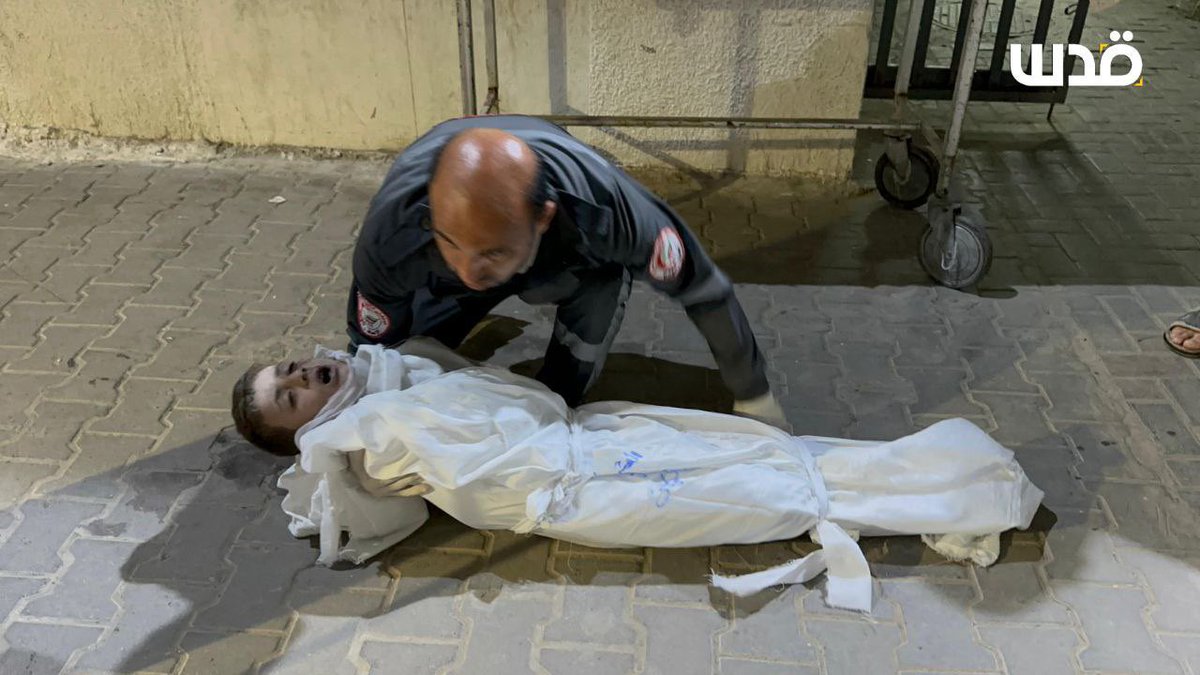
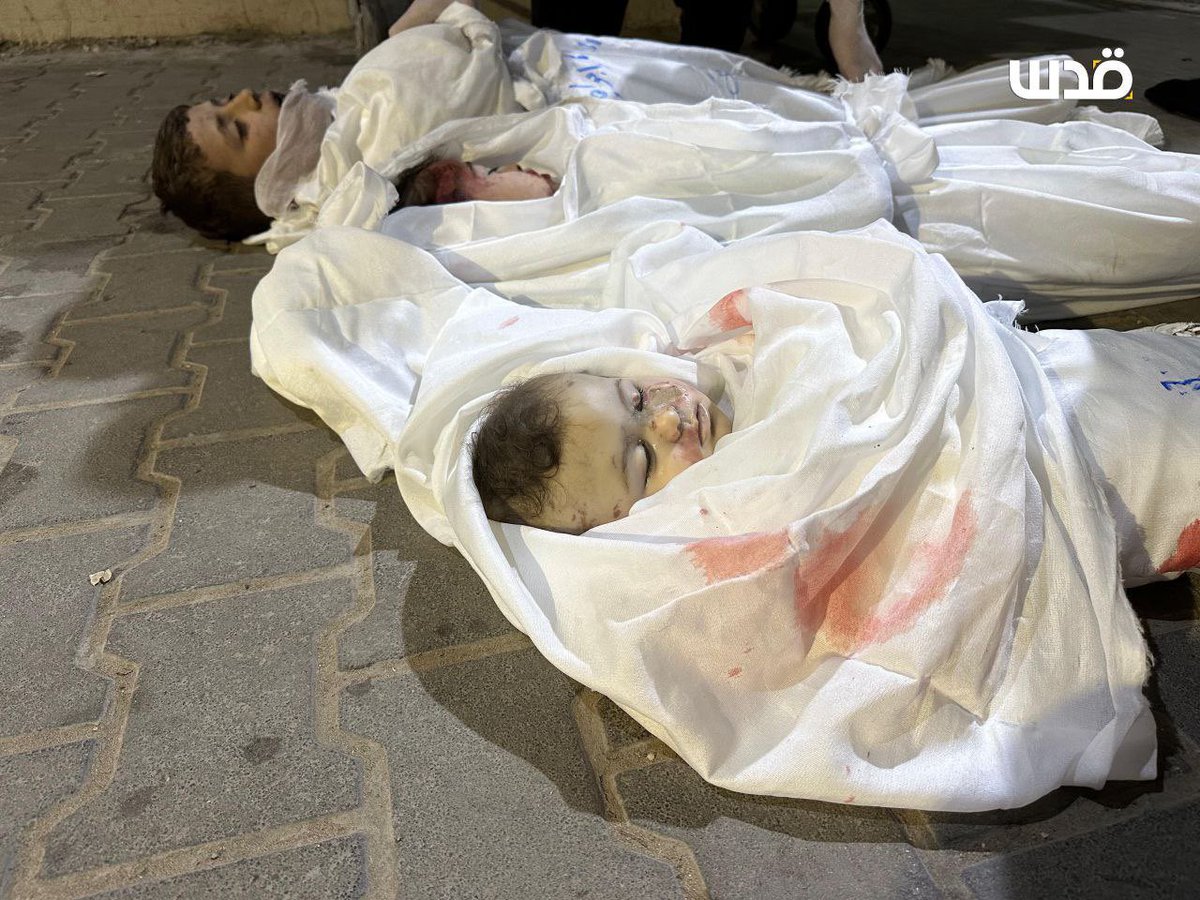
As this night passes, most of us will likely end up having dinner, going out, or staying home to watch TV and chill before going to bed, and we will wake up fine and healthy the next day. But for a family in Rafah, in Gaza, for those who survived and remain alive, tonight has been a nightmare. These people have lost beautiful children, innocent angels whose little bodies were crushed by bombs financed by your tax dollars. Tomorrow will be a long day for them as they bury their dead and continue trying to survive. The passage of time in Gaza differs from most places on earth. Here, every family, every person, could potentially be killed, burned, incinerated, crushed under rubble, or lose someone they love in such ways. This genocide continues, and Israel will continue killing us until it is stopped.
في كل مرة أسير في شوارع غزة تجتاحني الرغبة بالبكاء على ما حالت إليه المدينة.
رائحة دم الشهداء تفوح في كل حي، الركام يمتد على مدى النظر في كل اتجاه، القمامة تكوّمت لحدّ يمنع استمرار الحياة الطبيعية، ملامح الناس لا يبدو عليها سوى العجز.
#غزة أصبحت غير صالحة للحياة.
“People are amazed by what we are producing as Palestinians. They’re amazed that there are Palestinians speaking English. They’re amazed that Palestinians are good editors. But yeah, we are here. We exist.”
– @Hind_Gaza
Watch the full report ⏩ https://t.co/DbFfp3ODbk
“You go to the top of a building - they’ll target you. You go somewhere else - they’ll target you.”
– Al Jazeera’s @AnasAlSharif0 on reporting under Israeli bombardment.
Watch our full report on the journalists inside the genocide in Gaza ⤵️
https://t.co/POyOWbEEym