In the @quantifiedself community we've been thinking about how many more people could benefit from seeking answers to their personal questions about esp. health using empirical methods. @agaricus lays it out and explains what we want to get done👇#digitalhealth
When Russia finally cracks and offers to negotiate, expect a flood of Western politicians to pressure Ukraine into a bad deal.
We need to call out this political cowardice before it ruins a historic chance to defeat Russian imperialism.
The structural foundations of the Russian war machine are cracking under immense pressure. Russia's overall situation is deteriorating, and while the endgame might take a while, Moscow will eventually be forced to look for a diplomatic way out. They will try to look reasonable by offering small compromises.
This is where the danger peaks. Our Western governments are heavily populated by leaders who will panic and see this as an opportunity to wash their hands of the conflict. Out of sheer cowardice, they will try to bully Ukraine into accepting whatever deal Russia puts on the table.
We must state clearly that Ukraine cannot accept this betrayal. The power to decide when to make a deal belongs strictly to the Ukrainian people, not to anxious Western politicians. The few brave governments in our alliance must stand up to the cowards and ensure Ukraine has the backing to stay the course.
The ultimate goal cannot be a temporary ceasefire. Russian imperialism will remain a direct threat to the entire continent for as long as we tolerate its existence. To make Europe safe, we must use this exact opportunity to defeat it completely. This is a time for strength, not capitulation
Acting PM Mette Frederiksen: Important discussion with @ZelenskyyUA on European security. Critical steps forward these days with adoption of €90 billion 🇪🇺 loan for 🇺🇦 and more sanctions on Russia
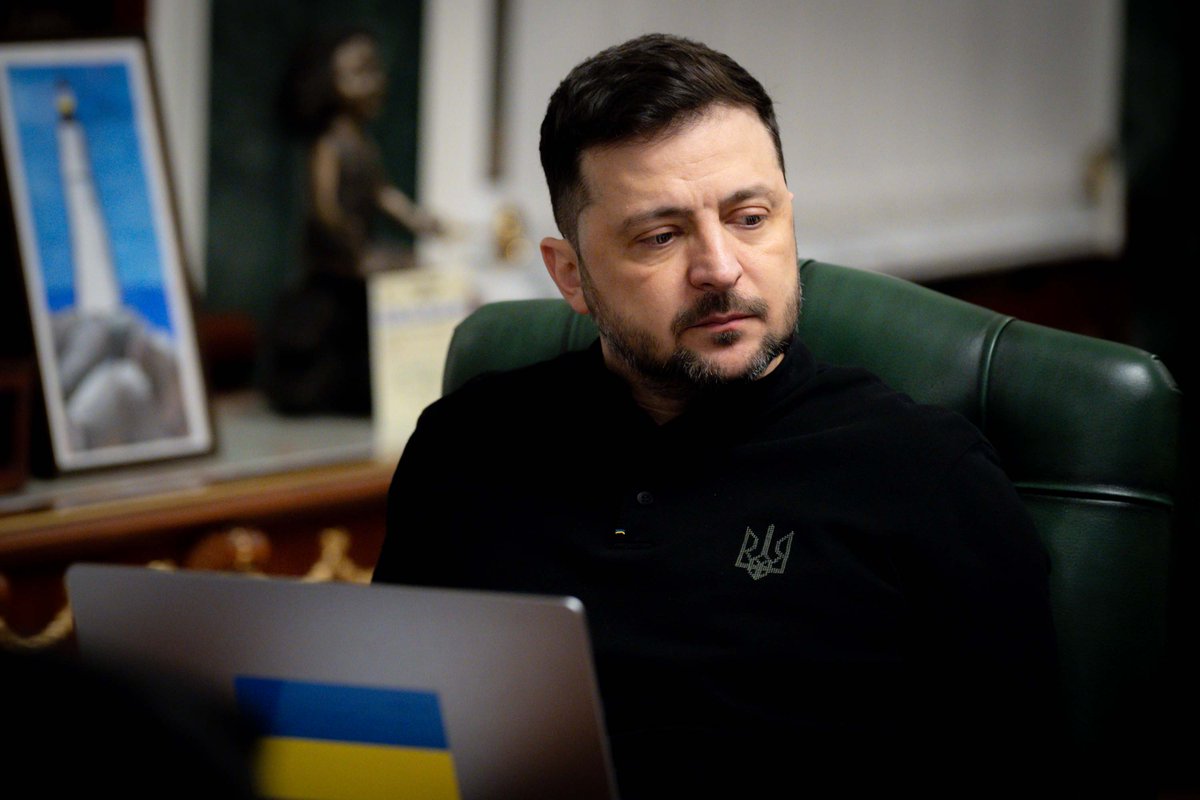
I met with Prime Minister of Denmark Mette Frederiksen @Statsmin and thanked her for the consistently high level of support for Ukraine and for all the defense packages. The decision to unblock the financial support package for Ukraine, as well as the 20th package of sanctions against Russia, is also important. Thank you for this support.
First and foremost, we discussed deepening joint defense production, particularly in the priority area of drones.
We also had a separate discussion on Ukraine’s cooperation with the European Union. We are determined to move as quickly as possible toward full membership in the European Union and expect all negotiating clusters to be opened in the near future.
The Nordic and Baltic countries are a major driving force of support for our people. Representatives from all these countries were with us yesterday in Kyiv, on the fourth anniversary of the beginning of Russia’s full-scale invasion. Over all these years, NB8 has been standing with us through annual assistance programmes and various forms of defence, energy, political, and humanitarian support. They are one of the strongest partners and true friends of Ukraine.
Thank you for your support through concrete assistance packages that enable us to protect lives and strengthen our energy resilience. This includes more than $1.5 billion in military assistance from Sweden, $1.2 billion from Norway for joint drone production, contributions to PURL from Norway, Sweden, Latvia, and Estonia, weapons and investments through SAFE from Lithuania, and energy support from Finland, Denmark, and Iceland.
Every such contribution makes all of us in Europe stronger. Energy packages help our people endure, while defense packages help us hold Moscow’s feet to the fire, because only real pressure will help end this war with dignity. We deeply value the commitment of each NB8 country and this sincere support for our people.
As always, a substantive meeting with Prime Minister Mette Frederiksen of Denmark @Statsmin.
I spoke about our diplomatic efforts to achieve a reliable peace, and we discussed all current issues related to our country’s European integration.
I am grateful to Mette and Denmark for supporting the decision to allocate €90 billion to Ukraine for 2026–2027 during Denmark’s Presidency of the Council of the European Union. We expect these funds to start working for our collective security as soon as possible.
If Putin wants peace he can just get out of Ukraine. If Europe wants peace, we can just tell Putin to get out of Ukraine. Neither of these things are currently happening, and nothing good will happen until one of them does. For sure.
I’m genuinely shaken to my core by how the Trump administration is ABSOLUTELY FINE with the fact that, right in the middle of yet another round of “peace talks,” literally while delegations are sitting across from each other discussing “compromise,” Russia is launching devastating missile strikes on heating and electricity in Ukrainian cities, leaving millions of people in a humanitarian catastrophe in the middle of a freezing winter.
And there isn’t the slightest objection, condemnation, or demand to stop. Nothing. Nobody appears bothered by these mass war crimes unfolding live.
Nothing, except regular Trump outbreaks in claiming that “Zelensky doesn’t want peace.”
And it’s easy to see why: they think that every Ukrainian apartment block demolished by a Russian missile in the middle of the night, along with the people inside it, helps them “pressure Zelensky into a deal.”
It’s astonishing. Down to the darkest depths of moral collapse. I genuinely can't wrap my head around how things could end up this way in this regard.
We prefer science to conspiracy theories, rule of law to rule of force, dialogue to threats.
Nous préférons la science au complotisme, l’État de droit à la loi du plus fort, le dialogue aux menaces.
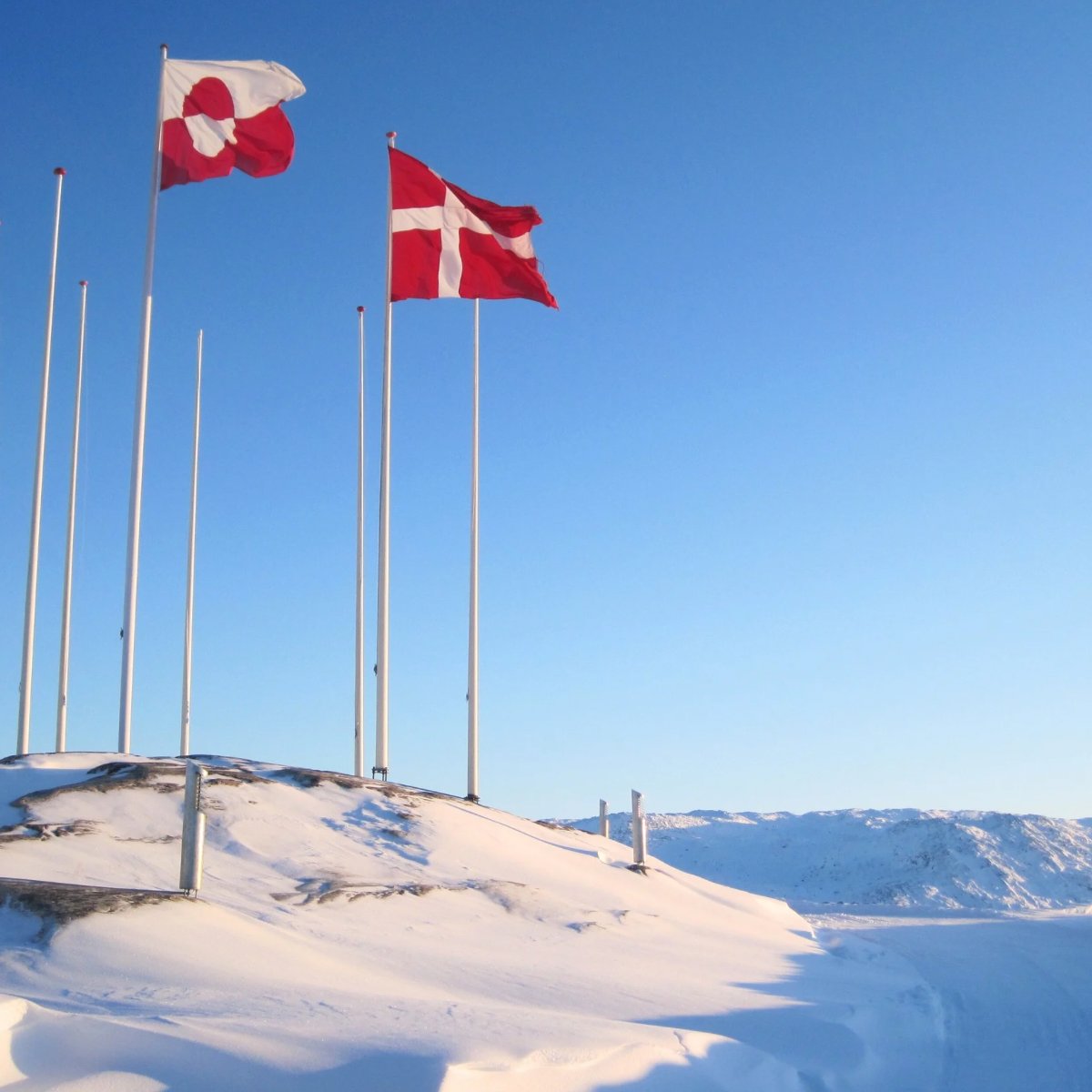
There’s been a lot of talk about 🇩🇰🇬🇱 lately.
So let’s clarify a few things:
👉 Denmark takes Arctic security very seriously. In 2025 alone, 🇩🇰 has committed $13.7 bn to strengthen Arctic capabilities & operations.
👉Greenland's status as a part of the Kingdom of 🇩🇰 is not in doubt, but internationally recognized. This includes by 🇺🇸 on numerous occasions.
👉The US has had the option to establish additional military bases and increase its military presence in 🇬🇱 since 1951 & that option remains open today.
These are not opinions. They are facts, grounded in 225 years of our enduring partnership, shared history & agreements between 🇬🇱🇩🇰 & 🇺🇸
It's New Year, so time to look back and forward. These are 10 things I think we need to recognise in 2026. It’s a response to what I think are profoundly damaging mistaken assumptions I’ve heard and read from practitioners, journalists, and analysts in 2025. Warning: very long🧵
Russia’s claim that Ukraine recently targeted key government sites in Russia is a deliberate distraction. Moscow aims to derail real progress towards peace by Ukraine and its Western partners.
No one should accept unfounded claims from the aggressor who has indiscriminately targeted Ukraine’s infrastructure and civilians since the start of the war.
On “negotiations.” It is important to finally call things by their proper names.
What russia calls a “peace process” is in fact a separate special operation against the West. Its goal is not to end the war, but to force the United States and Europe to pressure Ukraine, while russia continues fighting and preparing for a new phase.
russia has never conducted negotiations as a means of achieving peace. Not in 2014, not in Minsk, not in Istanbul. In every case, “negotiations” were either a way to buy time, a way to legalize what had been seized, or a way to shift responsibility away from itself. For the kremlin, negotiations are not an alternative to war, but another tool of it.
And this is not a “putin invention.” russia’s imperial logic has been documented since the 18th century. The so-called “Testament of Peter I” — a programmatic text of russian expansion — explicitly defined war as the only normal state of the empire. It clearly states: keep the population in a state of continuous war, allow rest only to rebuild the army and finances, use peace to prepare for war, and war to impose peace on one’s own terms.
Poland is addressed as a separate point in this “testament.” Not as a neighbor or partner, but as a state that must be systematically undermined from within. To support constant unrest, bribe elites, influence elections, introduce troops “temporarily,” and, when conditions allow, leave them there permanently. If other European states interfere, they are to be appeased by partially dismembering Poland — only to reclaim those concessions later. This is not metaphor or interpretation; it is a direct imperial instruction.
Thus, from the standpoint of russian imperial doctrine, Poland was never regarded as a sovereign state. It was seen as a space for manipulation, division, and control. That is why today’s kremlin hostility toward Poland — threats, information attacks, and talk of a “Polish threat” — is not emotional or reactive to modern Polish policy. It is a continuation of the same logic.
It is also telling that specific points of this “testament” directly concern Northern Europe and the Baltic region. russia was instructed to systematically provoke Sweden, push it toward war in order to obtain a formal pretext for territorial seizures. The Baltic direction was defined as strategic: access to the Baltic Sea not as defense, but as a mandatory condition for imperial growth. Peace in this region was viewed exclusively as a pause between wars.
The Baltic states and Sweden were never neutral in russian imperial thinking. They were always spaces of future pressure or war. That is why today’s russian military activity in the Baltic Sea, threats toward the Baltic states, and demonstrative actions near Sweden and Finland are not a “reaction to NATO,” but the continuation of a centuries-old behavioral model.
Germany was also explicitly named in the “testament” as a key object of constant interference — as the closest and most important state in Europe. The logic was simple: prevent Germany from becoming an independent center of power, constantly draw it into Europe’s internal conflicts, manipulate elites, and use economic and political ties for control. Today this logic remains unchanged: reliance on dependency, fear of escalation, “special relationships,” and the desire to preserve comfort at any cost. For the kremlin, a weak, hesitant Germany is strategically more valuable than any tank.
The only thing putin has effectively changed in this old “testament” is that he has clearly designated the United Kingdom as his strategic enemy. Where continental Europe was once the main object of imperial maneuvering, today London has become, in russian rhetoric and actions, the symbol of a force the kremlin considers fundamentally hostile — because of its support for Ukraine, its role in European security, and its refusal to trade peace for other people’s territories. That is why russia is waging a separate hybrid war against Britain — informational, subversive, and diplomatic.
Ukraine, in this scheme, is not even the primary addressee. All signals of “readiness for peace” are aimed at the West. The logic is simple: to show that russia is supposedly constructive, and that the war continues only because of Kyiv’s “unconstructive position.” This is a classic information operation shifting blame from the aggressor to the victim.
The key goal of this campaign is to force the West itself to pressure Ukraine — not to negotiate with russia, but to break Kyiv through “realism,” “fatigue,” and fear of escalation. All of this is happening in parallel with the buildup of military potential, including in the northwestern direction.
While the West talks about negotiations, russia is preparing not for peace, but for a prolonged war and the possible expansion of the conflict. This is how a state behaves when it dreams not of compromise, but of restoring an empire — with war as the norm and peace as a pause.
Ukraine is only one stage. If aggression is rewarded here, the war will move on — to where russian imperial doctrine has been looking for centuries. Ukraine’s capitulation under the guise of peace will not bring security to Europe. It will only bring the war closer to the Baltic Sea and make it inevitable.
Any pressure on Ukraine and its leadership from the West means only one thing: russia is successfully continuing its special operation — political and informational. Any Western country or politician who speaks of a “faster peace” at the cost of territorial losses, limitations on sovereignty, or imposed conditions on Ukraine is not acting as a mediator, but as an instrument of this operation. Such a “peace” does not stop the war — it only legalizes aggression and prepares the next one.
I spoke with Prime Minister of Denmark Mette Frederiksen @Statsmin. We discussed the negotiation process in great detail and I briefed the Prime Minister on key aspects of our negotiating position.
We are working constructively with the United States and believe it is crucial to maintain this level of cooperation – constructive engagement strengthens our arguments. We are moving toward achieving results and putting a true end to the bloodshed. Russia must see that the responsibility for thwarting peace efforts and prolonging the war will be solely on Moscow, and accordingly, the world’s response will be tough.
I thanked Denmark for its support, which is a truly significant contribution to not only Ukraine’s but all of Europe’s defense. I thanked Denmark for its EU Presidency, and in six months of Denmark's chairmanship, very significant steps were made, including the decision on a €90 billion financial security guarantee for Ukraine.
Europe grows stronger with each step we take together. We agreed to continue working closely, and it will be truly valuable — to advance toward really putting security guarantees into action, both in our bilateral work with the United States, as well as with our partners across Europe. Thank you, Mette!
I have reviewed the article “The Bear in the Baltics: Reassessing the Russian Threat in Estonia,” published by the European Council on Foreign Relations. Its authors, Jennifer Kavanagh and Jeremy Shapiro, conclude that Russia is currently incapable of carrying out a successful armed attack against Estonia and that the level of threat is exaggerated.
This is precisely where the core problem of this analysis begins.
The entire argument is built on theoretical models, force-balance calculations, and deterrence concepts, while completely ignoring the decisive factor of modern warfare: accumulated combat experience under real battlefield conditions.
Today, only two states in the world possess actual experience in conducting high-intensity interstate war — Ukraine and Russia. All others, including Estonia and the vast majority of NATO members, rely on exercises, staff simulations, and doctrinal assumptions that have not been tested in full-scale combat.
Estonia, despite its high level of preparation, lacks practical experience in:
•conducting operations under conditions of sustained enemy artillery dominance and high fire density;
•operating forces in an environment of persistent surveillance and strike capability enabled by tactical and operational-level UAVs;
•maintaining logistics and command-and-control resilience under systematic fire strikes against rear infrastructure;
•executing defensive operations and maneuver while continuously absorbing losses, degradation of units, and uninterrupted fire pressure;
•adapting tactics, force organization, and command systems in real time, rather than after a completed training cycle.
This is not a criticism of the Estonian Defence Forces. It is a statement of fact: combat experience cannot be substituted by doctrines, exercises, or alliance membership.
A separate and particularly dangerous error in the article is the emphasis on Russia’s “exhaustion” through personnel losses.
Russia is structurally insensitive to human losses as a constraint on warfare. Its military-political system is historically designed to:
•sustain mass mobilization;
•accept extremely high casualties as permissible;
•substitute quality with quantity through forced rotation and replacement.
Those who treat manpower losses as a decisive deterrent factor for Russia project Western assumptions onto an adversary to whom they do not apply — and this is precisely how wars are lost.
The greatest damage done by this article is that it fosters a false sense of strategic confidence. It reassures decision-makers that Russia is “not ready,” “not capable,” or “will not dare.” This same logic underpinned strategic failures in both 2014 and 2022.
The most dangerous assumption made by the authors is that war is the outcome of a rational cost-benefit calculation. In reality, Russia wages war according to a logic of political inevitability, imperial revisionism, and a willingness to accept virtually any cost.
Russia will attack — this is not a question of capability, but of timing and conditions.
And the longer European decision-making centers rely on such reassuring, detached analyses, the more severe the shock will be when reality disproves them.
Dear Mette, I want to praise @eu2025dk for the remarkable work done over the last six months.
Support to Ukraine. Our energy independence from Russia. Defence. Migration. Simplification.
You delivered on all these files.
Thank you for your leadership and commitment, @Statsmin.
I am grateful to all leaders of the European Union for the European Council’s decision on €90 billion in financial support for Ukraine in 2026–2027. This is significant support that truly strengthens our resilience. It is important that Russian assets remain immobilized and that Ukraine has received a financial security guarantee for the coming years. Thank you for the result and for unity. Together, we are defending the future of our continent.
@EUCouncil@eucopresident@vonderleyen
Det her er den helt forkerte vej at gå. Vi skal tværtimod sikre dansk støtte på højt niveau - og lige nu står den til at falde. Kun Putin vinder på forslag, der sår tvivl om opbakningen til Ukraine. Næste uges møde i forligskredsen bliver interessant.
https://t.co/UsgJeWySw1
The EU just decided to indefinitely immobilise Russian assets.
This ensures that up to €210 billion in Russian funds stay on EU soil, unless Russia fully pays reparations to Ukraine for the damage it has caused.
We keep increasing the pressure on Russia until it takes negotiations seriously.
Next week’s European Council will be crucial to secure Ukraine’s financial needs for the coming years.
Today, I am in the Kupyansk sector, with our warriors who are getting the job done for Ukraine here.
The Russians kept going on about Kupyansk – the reality speaks for itself. I visited our troops and congratulated them. Thank you to each and every warrior! I am proud of you! And I thank all of our Land Forces – today is your day!