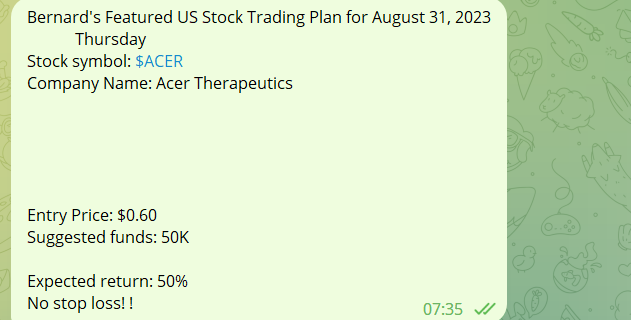
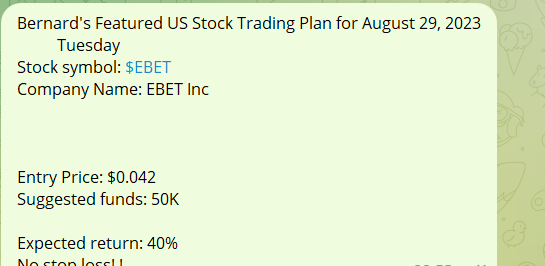
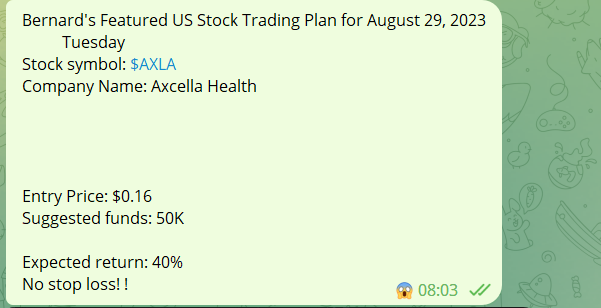
$HRYU Congratulations to the fans who participated in this trading plan for getting 70% of the profits. Follow me to get the next free transaction
$AAPL $TSLA $MSFT $FFIE $MULN $HLBZ $AMC $GME $TRKA $GTII $XELA $PBTS $NKLA $BBBY $HYMC $GOLD $DWAC $RIVN $SPY $SPX $SPCE $BBAI $MARA
How many people have left $AVTX and those who are still holding on?
Does anyone think yesterday's drop was a wash?
$AMC $BBIG $GME $TRKA $MULN $SPCE $PBLA $CEI $GTII $TTOO $AAPL $NVDA $AMZN $TSLA $ETAO $EUDA $PRST $FUBO $APLT $CYTO $SPY $SONN $SPOT $VERU $AGFY $ABVC $CYCC $AWIN
Apple: The darkest hour is coming?
$AMC $DRUG $BBBYQ $ABVC $CYCC $SPCE $PBLA $CEI $GTII $TTOO $AAPL $NVDA $AMZN $TSLA $GMDA $NFLX $DKNG $SAI $ETAO $EUDA $PRST $FUBO $APLT $CYTO $SPY $SONN $SPOT $VERU $AGFY $XELA $BBIG $GME $TRKA $MULN
On September 6, 2023, the European Union confirmed six tech giants to be bound by the Digital Markets Act. The six so-called "gatekeepers" are Google, Amazon, Apple (NASDAQ: AAPL), ByteDance, META, and Microsoft.
The big tech companies, known as "gatekeepers," provide 22 key online services that will comply with the new law, the EU said. The landmark regulation aims to rein in the power of dominant platform companies by promoting fairer, more competitive and transparent core digital services such as search, social media, advertising, app stores and operating systems.
1
Potential impact on Apple's services business
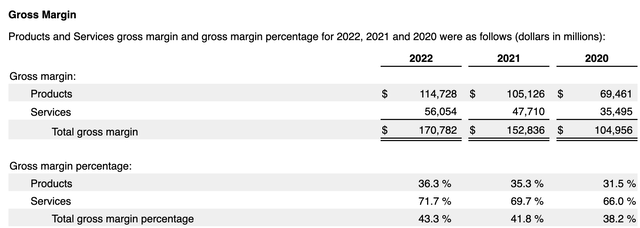
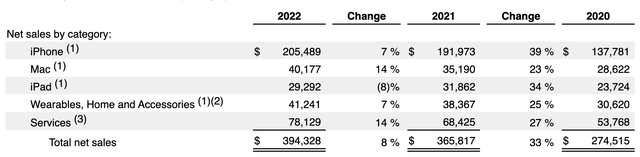
Apple services net sales accounted for 20% of total revenue. Services net sales include sales of corporate advertising, AppleCare, cloud, digital content, payments and other services.
But from a profitability perspective, services revenue, which accounts for 33% of gross profit, will grow 20% in 2022, well above the 11% of its product sales.
In the second quarter of 2023, as product sales decline, the proportion of service revenue will further increase. The ratio of service revenue to total revenue increased to 26%, and the ratio of service gross profit margin to total revenue increased to 38%.
While the data is a bit outdated, we can still gain insights from this source. Based on the estimated service revenue breakdown, the law's impact covers nearly all service revenue areas:
The Digital Marketplace Act is expected to have broad implications for Apple's services business - the App Store could be forced to allow more competition and change its revenue-sharing model, reducing commissions; Apple Music and iCloud could face growing competition and Pricing pressure; licensing revenue could fall as Apple has to offer fairer terms; third-party subscriptions on iOS get more freedom to operate, which could change the revenue-sharing agreement with Apple. Overall, DMA may open up closed ecosystems, create a more level playing field, and force Apple to give up some advantages and lucrative business practices, thereby reducing Apple's control and profitability in its services.
2
Valuation
Apple stock has historically had a PEG ratio below 2. It is now trading at 2.78x, which is considered high.
It is currently facing challenges in product sales growth due to the challenging environment. From a geographical perspective, the United States accounted for 43% of total revenue, and Europe accounted for 24%.
Slower product sales growth is already weighing on Apple stock, as its high PEG ratio is underpinned by a 15% rise in services revenue in the second quarter of 2023, the sole growth driver.
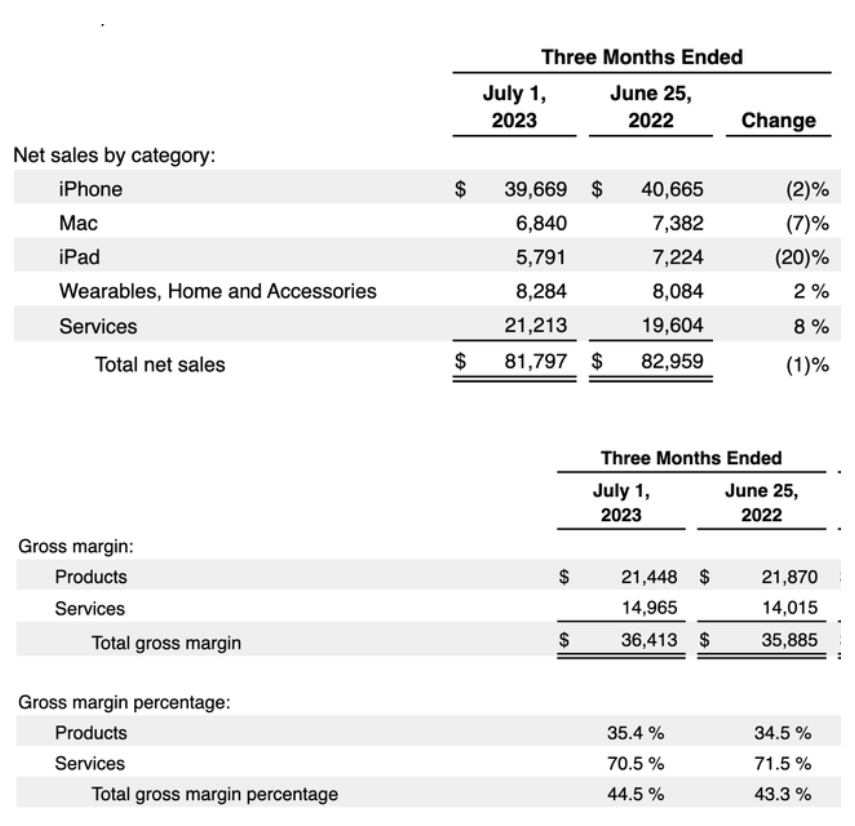
Its services gross margin decreased in the third quarter of 2023 compared to the third quarter of 2022, mainly due to higher service costs. This suggests that Apple's bargaining power over developers is declining, although still very strong. The new law is likely to further put more pressure on Apple's gross margin.
While Apple has employed many defensive strategies such as cost cutting and share buybacks to defend its profits, its operating cost optimization defenses are being breached. Its operating income declined despite lower selling, general and administrative expenses in the quarter. This suggests that its cost efforts are not enough to protect its profits.
Also, its share buyback capacity appears to have plateaued, as it has used 93% of its free cash flow to drive share buybacks. The chart below shows that its diluted outstanding share reduction has shrunk from 7% in 2019 to 2.5% over the past 12 months.
The reasons are clear: (1) Its free cash flow, largely generated by operations, is slowing due to weak product sales, and could come under greater pressure due to the impact on services revenue. (2) As the stock price rises, its stock repurchase strategy becomes more and more difficult to execute.
3
Conclusion
While Apple has a strong brand and a loyal customer base, its risks have grown. Apple's product divisions, including iPhone sales, and its services divisions, such as the App Store, are facing growing challenges. On the product side, trends such as high inflation and a potential recession are hampering consumer demand, especially in key markets such as the US and Europe.
The services business could face pressure from the Digital Marketplace Act, which would force Apple to open up its closed ecosystem.
It's too cold at the heights, and Tesla's "hidden worries" are hard to solve
$AMC $DRUG $ABVC $CYCC $SPCE $PBLA $CEI $GTII $TTOO $AAPL $NVDA $AMZN $TSLA $GMDA $NFLX $DKNG $SAI $ETAO $EUDA $PRST $FUBO $APLT $CYTO $SPY $SONN $SPOT $VERU $AGFY $XELA $BBIG $GME $TRKA $MULN
1
Outline
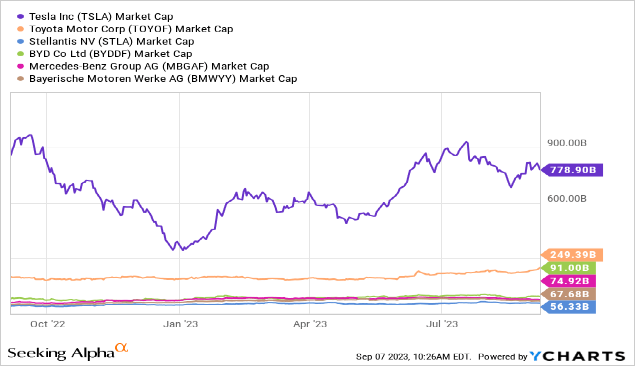
In 2023, Tesla Inc. (NASDAQ: TSLA) stock price can be described as a roller coaster ride. Year-to-date, it's up a staggering 130%, outperforming the S&P 500's modest 17% gain. Even more surprising, Tesla's stock has soared from a 52-week low of around $101 to over $250, giving it a mind-boggling $800 billion market cap. But as an investor, you must now think: How much more can Tesla rise?
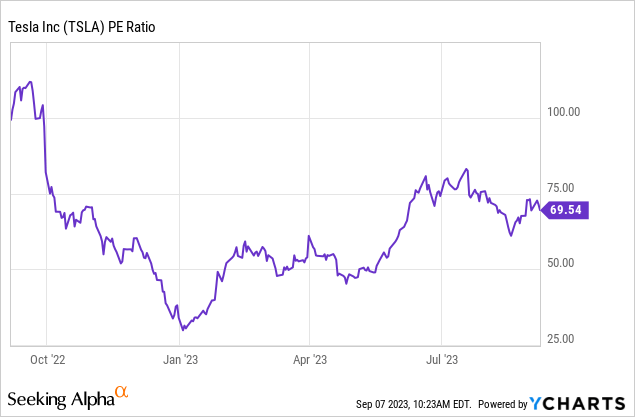
Currently, Tesla's stock valuation has reached dizzying heights. Its forward price-to-earnings ratio has risen to 70 times, a sharp surge from its starting point of around 30 times at the beginning of the year.
In addition, Tesla's market capitalization of nearly $800 billion is more than three times that of Toyota Motor, the world's largest automaker, and far more than all existing automakers in the world.
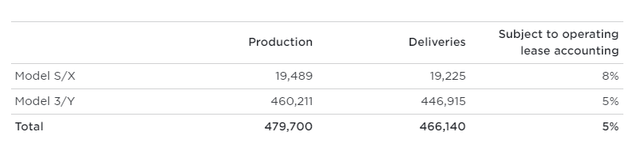
In the second quarter of this year, Tesla showed no signs of slowing down, delivering a staggering 466,140 vehicles, an increase of 83% year-over-year. Not only did the impressive figure beat analysts' forecasts, but it represented the company's biggest deliveries in nearly two years. In addition, Tesla's global deliveries jumped 83% in the second quarter, thanks in large part to deep price cuts and deep discounts.
Tesla also unveiled a promising partnership with General Motors that will give drivers access to 12,000 Tesla Superchargers via adapters starting next year. The breakthrough follows a similar partnership with Ford Motor.
While these developments look encouraging, looming headwinds cannot be ignored.
2
Price cuts and margins deteriorating
Despite Tesla's continued growth, margin concerns in 2023 could offset the profit gains from higher deliveries. The only time this margin challenge seems plausible is if Tesla captures the lion's share of industry profits, echoing Apple's dominance in mobile phones. However, the path to dominance remains narrow.
Tesla's price cuts have played a central role in Tesla's ability to keep up with its growth ambitions. Still, they ate into the company's once-impressive margins, largely wiping out the extra gains in net income. These margins have been declining steadily since the second quarter of 2022, falling below 20% in 2023. In the second quarter of 2023, Tesla reported profit margins of just 9.6%, largely due to steep price cuts across all models and markets.
Tesla attributes these discounts to lower demand amid an uncertain economic environment, but I would also point to other challenges, including supply chain disruptions and growing competition.
Tesla's position in the market has been controversial. While it's essentially an automaker, its valuation today puts it more in the league of tech giants like Apple, Nvidia and Microsoft. However, the recent decline in margins underscores its de facto automaker status, in my view. Tesla cars are such vehicles. Now, Tesla also faces typical automaker challenges, including cyclical fluctuations and competition from upstarts such as BYD Corp.
To gain some insight into Tesla's valuation, let's dig into the company's financials using discounted cash flow (DCF) analysis, which evaluates the stock's potential against fundamental metrics.
In 2022, Tesla's total revenue will be about $81 billion, and its operating profit margin will be as high as 19%. This translates to earnings before interest and taxes (EBIT) of approximately $15 billion.
It is worth noting that this calculation uses a non-GAAP approach and treats research and development (R&D) expenses as an investment amortized over a 5-year period, rather than as an operating cost. Therefore, this approach results in a higher non-GAAP operating margin compared to Tesla's actual operating margin of 17% at the end of 2022.
In a DCF analysis, a company's free cash flow (FCFF) is calculated by subtracting reinvestment (adjusted for taxes) from the EBIT figure. These reinvestments are estimated using the sold capital ratio over a 10-year period and are based on the reinvestment rate (g/ROC) during a period of steady growth.
Beginning in 2023, revenue is projected to grow a steady 24%, before gradually declining to about $420 billion by fiscal 2032. This revenue forecast equates to about 33 percent of the global EV market, with sales exceeding $1 trillion by 2032.
Given the expected competitive pressure from peers such as BYD and other EV makers, this assumption could be very optimistic. However, for the sake of analysis, this paper deliberately adopts optimistic assumptions, proving that even in an optimistic scenario, there is no reasonable upside for Tesla’s stock price.
Regarding operating margin, as mentioned above, R&D adjustments are included, which typically adds an additional 200-300 basis points (bps) to margin. Overall, an optimistic scenario is basically assumed where Tesla actually manages to recover and maintain its past superior margins. For fiscal 2023, operating margin is approximately 15%, including R&D adjustments.
It's worth noting, though, that this estimate is likely to be significantly higher than the actual operating margin for the full year, which is expected to be around 10%. Judging by Tesla’s reported operating margin of 9.6% at the end of the second quarter of 2023, this is significantly lower than the approximately 11.5% in the first quarter of 2023.
With these optimistic assumptions, coupled with an implied terminal growth rate of 3% and a discount rate of 8%, the total equity value comes to approximately $580 billion. This takes into account the value of Tesla's options or warrants. To get a clearer picture of equity value, after adjusting for these options or warrants, the fair value is estimated to be around $450 billion. That would imply a fair share price of about $180, down about 30% from Tesla's current share price of about $250.
It should be emphasized that these assumptions are very optimistic. So, it's clear that Tesla is significantly overvalued as of today, and those numbers don't line up with the company's current share price. Current valuations are insane, and buying stocks at current valuations carries enormous risk.
3
Conclusion
In the whirlwind world of Tesla, where the stock price has soared to dizzying heights, and while Tesla has undoubtedly made significant progress, with record-breaking deliveries and promising partnerships, dark clouds are looming. One of the most critical factors is the decline in Tesla's operating margin, a stark reminder that it is, at heart, an automaker challenged by pricing pressures, supply chain disruptions, and increased competition.
All businesses are growing strongly. Is Amazon’s highlight moment coming?
$AMZN
$AMC $DRUG $BBBYQ $ABVC $CYCC $SPCE $PBLA $CEI $GTII $TTOO $AAPL $NVDA $TSLA $GMDA $NFLX $DKNG $SAI $ETAO $EUDA $PRST $FUBO $APLT $CYTO $SPY $SONN $SPOT $VERU $AGFY $XELA $QQQ $SQQQ $TQQQ
While Amazon (NASDAQ: AMZN) continues to see success in all aspects of its business, including Amazon and retail e-commerce, and technological innovation, the stock price has yet to fully reflect these achievements. If you compare Amazon's stock performance to that of other technology companies, it has performed relatively poorly in recent years.
This article will delve into this. Under this optimistic scenario, retail revenue growth is expected to accelerate to 10%. This acceleration is driven by rapid adoption in emerging product categories and gross margins as high as 40%.
The increase in margins was attributed to higher Amazon logistics utilization and higher Amazon Prime pricing, resulting in significant incremental profit streams.
Analysts remain confident in Amazon stock's prospects based on two key factors:
Amazon Recovery: Amazon Web Services is expected to rebound strongly in the second half of 2023, boosting Amazon's overall performance.
Retail Margin Expansion: Amazon's core retail business is expected to improve profitability through margin expansion.
Regarding Amazon Web Services, this estimate suggests growth is accelerating faster than expected. This acceleration is tied to enterprises once again rapidly transitioning to cloud-based solutions.
Even with the more positive outlook, it's worth noting that I attribute only some of the potential gains to higher valuation multiples compared to software and software-as-a-service (SAAS) companies.
This approach may still be considered conservative, as Amazon is likely to command a more favorable valuation multiple given its growth prospects and market position.
Monthly non-store retail sales data, released ahead of schedule for June, revealed surprising trends in the e-commerce space. If we look at the data for the most recent quarter - e-commerce sales surged an impressive 9.9% year-over-year in June, a clear acceleration from May's 9.3% and 5.3% year-over-year growth.
Year-over-year growth was observed in April. In contrast, overall retail sales remained relatively stagnant in June, rising a modest 0.6% year-on-year after rising 2.3% year-on-year in May.
It must be acknowledged, however, that Amazon's official guidance for second-quarter revenue ranges from $127 billion to $133 billion, which is slightly lower than the consensus of $132 billion.
Notably, Amazon didn't provide a specific breakdown of its North American sales in its overall revenue guidance.
In the second quarter, Amazon posted an impressive 12% year-over-year growth, beating Wall Street expectations for 10% year-over-year growth.
This growth is attributed to customers adopting new workloads and a gradual reduction in optimization efforts. This sets the stage for a potential resurgence in Amazon's growth.
Since Amazon recently announced the launch of Amazon Bedrock and multiple generative AI services and capabilities, Amazon may be on the verge of a major increase in cloud demand driven by generative AI (GenAI), which could open up new avenues for growth.
Notably, cost optimization efforts in North American retail improved significantly, up 473 basis points year-over-year. The improvement was reflected in North American operating margins, which hit 3.9%, well ahead of Wall Street expectations of 1.8%.
Management said further margin improvement is on the way and continuing into 2024.
Advertising remains a strong growth driver for Amazon, providing a highly profitable revenue stream.
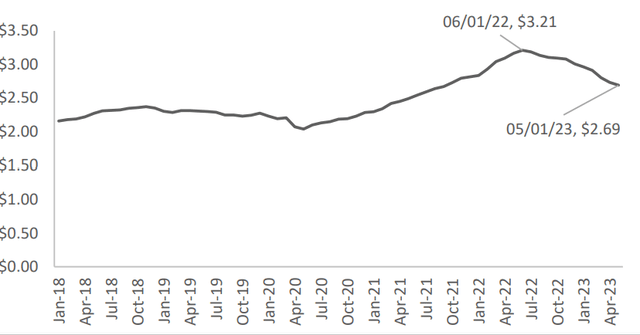
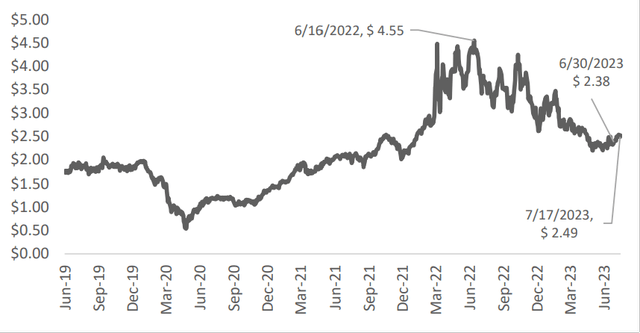
Amazon's retail profits are expected to benefit from continued declines in fuel prices throughout the year. Notably, diesel wholesale prices fell sharply by about 50% year-on-year in June, a significant departure from the record highs reached in mid-2022.
While prices have increased slightly by 3.5% since the company's Q1 2023 guidance, the overall trend has been a consistent downward trend since the beginning of the year.
For context, ultra-low sulfur diesel fuel was $2.38 per gallon in June. While this figure is still higher than the 2019 average of $1.90, it is significantly lower than the higher levels observed in mid-2022, which were almost double.
As the year progresses, favorable developments in fuel prices are expected to contribute positively to Amazon's retail profits.
Van revenue per mile, including fuel costs, has fallen significantly this year. The 15% year-over-year decline in May follows a 12% year-on-year decline in April and an 8% year-on-year decline in March.
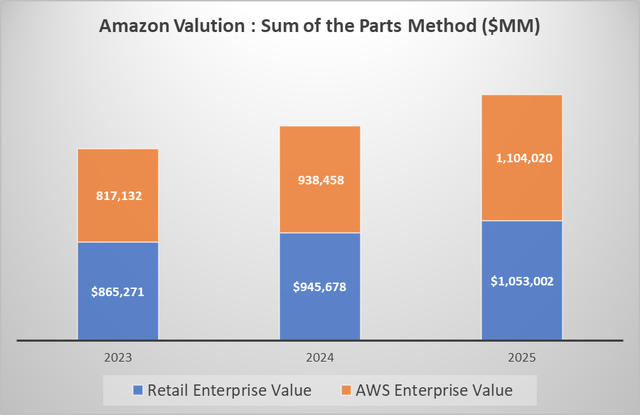
Taking into account the above factors, the bulls have a price target of $173 per share, representing a potential upside of 25%. This bullish outlook is rooted in expectations for Amazon's accelerating revenue growth and the retail business's EV/GP (enterprise value to gross profit) multiple of 5x.
The valuation methodology uses a "sum of the parts" approach, taking into account two core areas: retail and Amazon Web Services.
Retail segment: Use 5 times retail gross profit. This valuation is reasonable given that retail Softline stock currently trades at 2.8 times projected 2025 gross profits. Amazon's retail business is expected to exceed this growth rate.
Amazon Web Services Segmentation: For Amazon Web Services, this approach takes into account the expected short-term revenue growth slowdown and uncertainty surrounding normalized long-term growth. In addition, there is limited room for profit margin expansion in the short term.
Amazon retail is expected to expand regionalization initiatives, reduce long-distance freight costs and lower diesel prices. These factors are expected to drive higher retail margins throughout the year. In addition, Amazon Web Services will also rebound strongly in the second half of 2023, boosting Amazon's overall performance.
Nvidia supports, this "AI computing power scalper" has a 4-year valuation of 56 billion
$AMC $DRUG $BBBYQ $ABVC $CYCC $SPCE $PBLA $CEI $GTII $TTOO $AAPL $NVDA $AMZN $TSLA $NFLX $DKNG $SAI $ETAO $EUDA $PRST $FUBO $SPY $SONN $SPOT $VERU $AGFY $XELA $BBIG $GME $TRKA $MULN
What is the biggest shackle restricting the development of AI artificial intelligence? As in a few years ago, the answer could have been varied. But at the moment when large models are prevalent, there is only one answer to this question - not enough computing power!
Or, in other words, Nvidia's dedicated AI computing chips are not enough.
Whoever controls Nvidia's AI chips controls the future of AI.
Now, there is such a company that has tens of thousands of Nvidia’s AI “computing cards” in its hands, and its customers include OpenAI, Microsoft and many other AI giants.
As an "AI computing power scalper", this company named CoreWeave has achieved a company valuation of 8 billion US dollars in 4 years. In addition to obtaining the exclusive investment from Nvidia, CoreWeave also secured US$2.3 billion in debt financing from top institutions such as Blackstone and Coatue, using the Nvidia chips in its hands as collateral.
Nothing can stop CoreWeave's crazy expansion. How did it handle Nvidia, from a cryptocurrency "mining" company, to an AI "computing power infrastructure" giant?
1
From "mining card" to "counting card"
The start-up team of CoreWeave consists of three people, namely Michael Intrator, Brian Venturo and Brannin McBee. The three initially worked in the financial field and have run hedge funds and family offices.
When they were still managing the fund in New York, the cryptocurrency mining boom had not subsided. At first, it was just to earn extra income. They bought the first GPU, and then bought more and more. The desks on Wall Street were full of GPUs.
“In 2016, we bought our first GPU, plugged it in, put it on the pool table in our lower Manhattan office overlooking the East River, and mined the first block on the Ethereum network. ’” CoreWeave CEO Michael Intrator recalled in a 2021 blog post.
Soon, in 2017, they officially turned their side business into a company, initially with a cryptocurrency-related name before renaming it to CoreWeave. When they chose to bid farewell to Wall Street, they moved the GPU hardware into a garage just like Silicon Valley bigwigs like to start a business in a garage. However, this garage is not in Silicon Valley on the west coast, but in the suburbs of New Jersey on the east coast. man's grandfather.
In the past decade, GPU has been an important engine for the boom in cryptocurrency and artificial intelligence technology. At the end of 2018, CoreWeave became one of the largest Ethereum miners in North America, holding more than 50,000 GPUs, accounting for more than 1% of the Ethereum network.
During this period, several people also began to understand other companies' desire for GPU resources. They also recognize that there is no durable competitive advantage in the cryptocurrency space because the market is highly competitive and highly dependent on electricity prices.
When cryptocurrency prices plummeted in 2018 and 2019, they decided to diversify into other areas that were more stable but also GPU-intensive. They focus on the three major areas of artificial intelligence, media entertainment, and life sciences, and since 2019, they have focused on purchasing enterprise-level GPU chipsets, building dedicated cloud infrastructure, and adjusting their business around Nvidia's chips.
As the new business is on the right track, the Ethereum mining business is gradually being marginalized. The decision to transform proved to be correct and fortunate. None of the founders expected the upcoming wave of AI. CoreWeave gradually expanded from a small office to data centers across the country to meet the ever-expanding AI market demand.
According to one of the founders, in 2022, CoreWeave's revenue will be about US$30 million, and it is expected to exceed US$500 million in 2023, an increase of more than 10 times, and has signed contracts of nearly US$2 billion. This year announced a $1.6 billion investment in data centers in Texas, and plans to expand to 14 data centers by the end of the year.
2
AI "grid"
Just a few years after CoreWeave was established, GPUs for AI have become one of the most valuable assets in the world. Just like Elon Musk and others ridiculed, it is now harder to buy GPUs than to buy medicines. As generative AI ignites the market, demand for GPUs has skyrocketed, and CoreWeave is well-positioned to provide AI companies with the resources they need.
As a cloud service provider, CoreWeave provides high-performance computing resource rental services, mainly for customers who need a lot of computing power. The model is infrastructure as a service, and GPUs are rented by the hour. Customers only need to pay according to the usage time and the amount of computing resources. Fees, large customers and customized facilities, the banner is "35 times faster than traditional cloud providers, 80% lower cost, 50% lower latency". The company focuses on high-performance computing services, unlike general cloud service providers that also provide storage, network and other services.
Last year, just as Stable Diffusion and Midjourney were released, CoreWeave execs bought a lot of Nvidia's latest chips. Later, seeing the release of ChatGPT, they realized that such an investment was far from enough. These people needed not just thousands of GPUs, but millions.
They describe what CoreWeave is trying to do as "building the electricity grid for the AI marketplace," and argue that "if these things aren't built, then AI won't scale."
Brannin McBee, CoreWeave's chief strategy officer, said in a podcast that at the end of last year, all the hyperscale computing companies combined, including Amazon, Google, Microsoft, and Oracle, including CoreWeave, provided a total of about 500,000 GPU, by the end of this year, maybe close to 1 million.
In terms of industry growth rate and profit margin, he believes that the demand of the AI market can be dismantled into two stages: training models and performing reasoning tasks. At present, there is a shortage of chips in the training stage, and the reasoning stage will be the main growth point of future demand. And that's where the real need is.
For a model of an AI company, after exiting the training phase, within the first two years of the product launch, at least one million GPUs are needed for inference execution in the commercialization phase, but the global AI infrastructure is not enough to meet this demand. It will be a long-term challenge, and it will take at least another two years before the GPU supply shortage is likely to start to ease.
Today, most of the hot money pouring into AI has to go to cloud computing. In June, CNBC reported that Microsoft "has agreed to spend potentially billions of dollars over the next several years on startup CoreWeave's cloud computing infrastructure." Star AI startups like Inflection AI, which recently raised $1.3 billion in funding to build massive GPU clusters, are also CoreWeave of choice.
3
Hold Nvidia tight
In April of this year, CoreWeave completed a $221 million Series B round of financing, with investors including chipmaker Nvidia, former GitHub CEO Nat Friedman and former Apple executive Daniel Gross. A month later, the company announced an additional $200 million in funding, bringing the round’s total to $421 million.
In August, CoreWeave secured another $2.3 billion in debt financing by pledging the highly sought-after Nvidia H100 as collateral. The funds will be used to acquire more chips and build more data centers.
According to the latest news from Bloomberg, CoreWeave is currently preparing to sell a 10% stake, and its company valuation has reached a maximum of $8 billion.
Nvidia founder Huang Renxun said in the company's performance conference call this year: "You will see a large number of new GPU specialized cloud service providers" "One of the famous ones is CoreWeave, and they have done a very good job."
CoreWeave's relationship with Nvidia has already begun in 2020, when the company announced that it would join the Nvidia Partner Network's cloud service provider program, with the main purpose of bringing GPU acceleration to the cloud. At the 2023 Siggraph Computer Graphics Conference not long ago, Huang Renxun appeared, and each booth of CoreWeave deliberately marked "powered by NVIDIA" in small print.
Including Huang Renxun, Nvidia executives did not hesitate to endorse CoreWeave.
NVIDIA Global Director of Business Development, Cloud and Strategic Partners called CoreWeave "the first elite computing cloud solution provider in the NVIDIA partner network. They provide customers with a wide range of computing options, from A100 to A40, in an unprecedented scale, and deliver world-class results in artificial intelligence, machine learning, visual effects, and more. Nvidia is proud of CoreWeave.” Another Nvidia executive positioned it as “the highest performing, most energy efficient computing platform".
Such praise is also related to Nvidia's own interests. Nvidia needs to ensure that their computing end users can access their computing resources at scale in the highest performance manner, just as customers want to get them as soon as new generations of chips are released. This also makes them not hesitate to promote the cooperation with CoreWeave, and there is no harm in developing one more loyal "downline".
CoreWeave is building to meet Nvidia's standards and requirements, operating at scale, and launching a new generation of chips within months of their release, rather than the quarters that traditional hyperscale computing companies may take. This gives CoreWeave high access within Nvidia.
Brannin McBee said, "As a business, this has earned us trust in the eyes of Nvidia, because they know that our infrastructure will be delivered to customers faster than any other company in the market, and it will be delivered in the highest performance configuration."
4
Hardcore Silicon Valley Giants
However, how does CoreWeave handle itself in the face of competition from Silicon Valley giants?
Looking at the industry as a whole, CoreWeave's competitors in AI infrastructure operations include technology giants such as Microsoft, Google and Amazon.
At the end of August, Google Cloud CEO Thomas Kurian said at the annual Next conference that more than 50% of AI startups in the industry and more than 70% of generative AI unicorns are customers of Google Cloud.
How can a start-up company valued at $8 billion avoid being crushed by a bunch of trillion-dollar giants? The immediate answer lies in: the flexibility and business focus of small companies themselves, as well as the sensitive strategic landscape among technology companies.
CoreWeave executives like to draw an analogy: "General Motors can make an electric car, but that doesn't mean it becomes a Tesla." AI, they argue, presents challenges that traditional cloud platforms can't handle, allowing startups to compete in Incumbents face an advantage as they are forced to adapt.
Silicon Valley giants such as Amazon, Google, and Microsoft are like aircraft carriers, and each time they adjust their direction, they need more time and space. In its view, they need time to adapt to the new way of building AI infrastructure, and it usually takes a while after the latest chips are released to provide access at scale. Now people are paying more attention to building supercomputers, which require highly coordinated tasks between these computers, with higher data throughput, and the main resources of the giants are not used here.
“When these three giants built their cloud services, they were serving the hundreds of thousands, if not millions, of their so-called general-purpose use cases in their user base, where there might be only a fraction of that capacity dedicated to GPU computing. said Brian Venturo, Chief Technology Officer of CoreWeave.
CoreWeave believes its flexibility and specialization allow it to stand out in the field of AI infrastructure, competitive in terms of performance and cost-effectiveness, and better suited for AI applications. CoreWeave has only two hundred employees and more customers than employees, but they have reached an agreement with Inflection AI and even OpenAI supporter Microsoft to provide custom systems and chips with more configurations than servers equipped for general computing. efficient.
Currently in terms of scale, CoreWeave claims to have more than 45,000 high-end Nvidia GPUs that can be used on demand. It's not just the quantity that matters, it's the access provided. When it comes to selection, CoreWeave claims to maintain the industry's broadest selection of Nvidia GPUs for a variety of computing needs. They design systems for workloads that are "right sized", claiming "neither more nor less: just right".
As for the price, CoreWeave's banner is "80% cheaper than competitors."
On the other hand, Nvidia's decision behind it is also critical. By controlling scarce GPU resources, choosing who to pick up the goods will also affect the entire market. Despite the tight supply, Nvidia allocated a large batch of the latest AI chips to CoreWeave, diverting supply from top cloud service providers including AWS. The reason is that these companies are trying to develop their own AI chips to reduce their dependence on Nvidia.
CoreWeave executives take the view that "not making your own chips is definitely not a disadvantage" because it helps them fight to get more GPUs from Nvidia. After all, they don't have a conflict of interest with Nvidia, which might not be the case with Silicon Valley's voracious appetites.
However, the technology giant is still a big customer of Nvidia after all. At the end of August this year, Huang Renxun appeared at Google Cloud's annual Next conference and announced a new cooperation with Google. Google's GPU supercomputer A3 VM will be launched to the market in September, equipped with Nvidia's H100 GPU.
Also, if a new chip does suddenly appear that can perform better than or as good as Nvidia, what will that do to CoreWeave's business?
Brannin McBee believes that the life of the same chip includes the first two to three years for model training, and then four to five years for inference execution, and there is little risk in the short term. Also, Nvidia is trying to build an open ecosystem around the hardware to increase the industry's stickiness to its chip technology. Other manufacturers are clearly very motivated to enter this space, but their lack of an ecosystem is a gap that cannot be ignored.
In the absence of hard-core chip manufacturing technology, CoreWeave's relative advantages and success are firmly tied to the supply chain and stability of its partners. When the industry-wide GPU is in short supply, this dependence is still an advantage.
From the cryptocurrency "mine" to the artificial intelligence "computing power mine", the history of CoreWeave's fortune is staggering-a golden sand of the era, even if it falls on a start-up company, it can make it rise rapidly. In this era of AI rage, the industry's desire for computing power has made the trillion-dollar Nvidia, and obviously also made CoreWeave a company that can look at the right time for All-in.
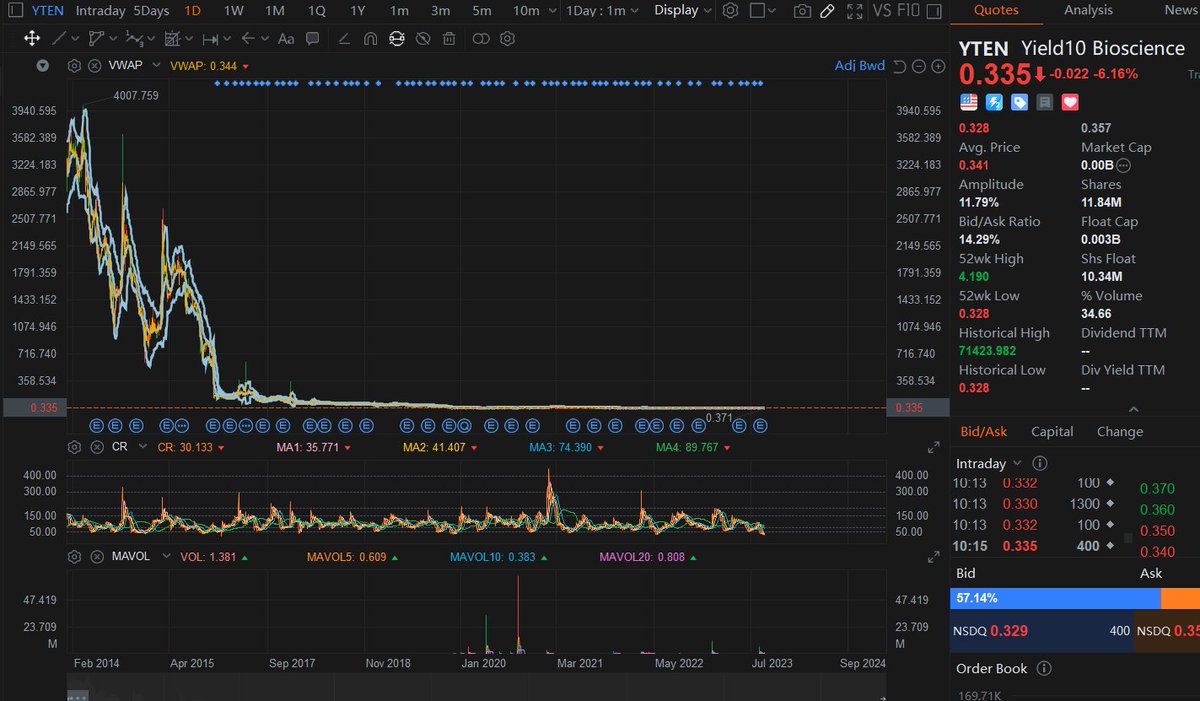
$YTEN This is an undervalued stock,and maybe someone will discover its quality soon,let's hope.After all,it is Platform crops for large-scale production of low-carbon sustainable seed products.
$AMZN $EBS $PYPL $F $AAPL $UVXY $TTOO $SPY $TUP $TOP $AMC $TSLA $QQQ $NKLA $DUO $SYTA
Is MasterCard grossly overvalued?
$sofi $job $aapl $sq $tsla $pltr $pypl $open $baba $amzn $btc $amc $gme $muln $jpm $bac $wfc $lcid $td $c $nvda $amd $mstr $meta $spy $bb $abnb $hood $nflx $cvna $mara $riot $rivn
1
Market
The credit card market is mainly composed of four different key players:
1. Card issuers: Companies that offer credit cards are usually financial organizations such as banks and credit unions. They generate income through annual fees, interest rates on outstanding amounts, and substantial additional taxes. They are also responsible for screening potential cardholders.
2. Cardholders: These are the customers and companies who use the credit card for transactions. They benefit from the ease and functionality of online shopping, as well as the opportunity to build credit, but they also face the danger of falling into debt due to high interest rates.
3. Merchants: This group includes companies that accept credit cards as a form of payment. It is an inevitable evil that companies must pay transaction networks and card issuers while expanding their consumer base with credit cards.
4. Transaction Network: Two of our companies, Visa and Mastercard, are involved. They join other competitors like American Express ( AXP ) and Discover ( DFS ) in facilitating transactions between cardholders and merchants. They act as intermediaries in the transaction process and are compensated with fees.
The overall credit card market is expected to grow at a CAGR of 8.5% through 2030. This growth is mainly driven by the increasing use of credit cards in Asia-Pacific countries.
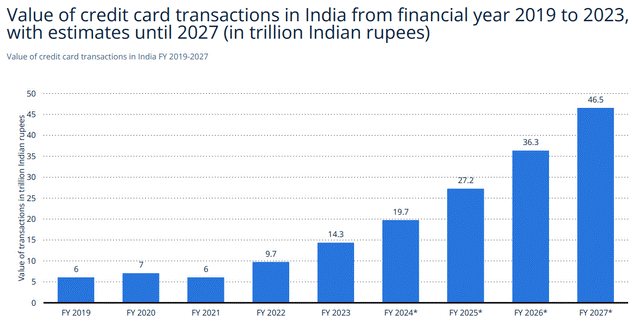
India's projected growth is particularly impressive:
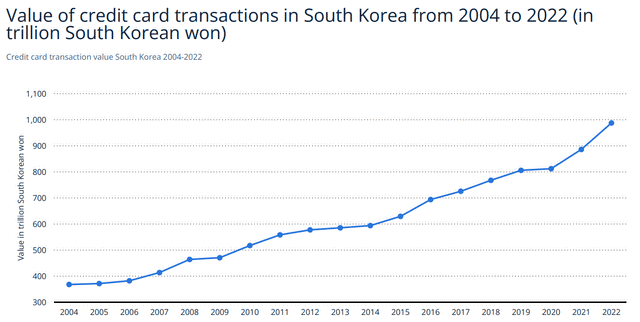
Equally impressive was the growth in credit card transactions in South Korea. This confirms that India's projected growth rate is fully achievable.
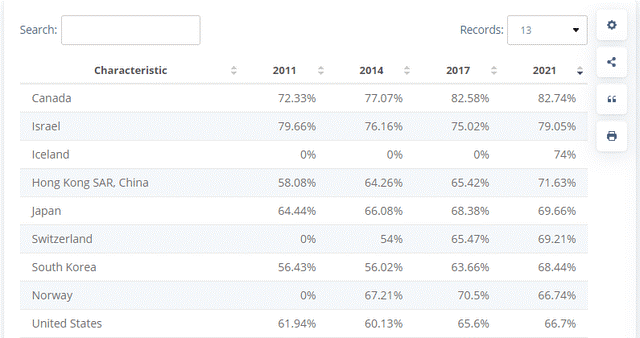
Credit card ownership is already very high in many countries such as Canada, Israel and of course the largest credit card market by 2022 - the US:
The entire credit card market appears to be a very promising one. Especially the trading network should be able to take advantage of the growing market, as these are pure businesses in the space. To summarize the main points of MasterCard as a transaction network, I performed a small SWOT analysis.
2
Advantage
Global brand recognition and extensive network
As one of the most recognized brands in the world, MasterCard has considerable competitive advantages. The company has also built a global reach that new competitors cannot match, with millions of ATMs and recognition in tens of millions of institutions around the world.
technical infrastructure
The company has a strong technical infrastructure that can safely and efficiently manage billions of transactions, providing a solid foundation for its expansion and innovative products.
partnerships and alliances
Partnering with banks, retailers and other financial institutions, Mastercard is able to offer a range of value-added services, rewards and discounts to attract and retain customers.
The strength of MasterCard can be summed up in one word: double dragon head.
As of 2020, the two companies Visa and MasterCard together accounted for approximately 65% of the global market for online purchase transactions. Visa currently has about 40% of the market, while Mastercard has "only" 25%. The rest of the market is almost occupied by UnionPay. So, it can be said that the entire western world depends on Visa or Mastercard to process payments.
3
Weakness
Reliance on Banking Partners
MasterCard's business relies heavily on its relationships with card-issuing banks. The company's market coverage and revenue could be directly affected by any tension in these relationships.
Limited direct customer interaction
Unlike other fintech businesses that offer consumer-facing platforms, Mastercard largely acts as a middleman, with little direct interaction with end users.
04
Chance
Emerging Markets
In underdeveloped countries, the majority of transactions are still conducted in cash, so there is a sizeable untapped market. If Mastercard wanted to expand internationally, it could certainly focus on those markets.
digital transformation
As the digital payment trend continues to develop, Mastercard has the opportunity to further develop its online and mobile payment solutions.
Expansion into financial services
By expanding its existing financial services, such as insurance, loans and investment product services, directly or through partners, Mastercard can broaden the range of products it offers.
B2B payment
The business-to-business (B2B) payments market is mostly unaffected and offers considerable opportunity for expansion.
5
Threaten
Intense competition
MasterCard has become second only to Visa in the credit card market. Mastercard could continue to lose market share as Visa leverages its size to strike more attractive deals with banks and other partners. Additionally, other fintech companies such as PayPal and even Apple are increasingly trying to gain market share in the payments industry.
cyber security risk
Cyberattacks frequently target the financial services industry, and any compromise could seriously damage Mastercard's reputation and customer confidence.
economic fluctuations
Mastercard is vulnerable to a U.S. recession because it operates in the financial sector, which can affect consumer spending and thus transaction volumes.
technology disintermediation
Blockchain and other distributed ledger technologies could eliminate the need for middlemen in financial transactions, jeopardizing MasterCard's main activity.
The SWOT analysis shows that MasterCard is a high-quality company that is well positioned to capitalize on the growing credit card market. While there are weaknesses and threats, I believe the company's strengths and opportunities outweigh the negatives.
06
Valuation
Mastercard currently trades at about 38 times earnings. While that might seem high at first glance, it's about 10% below the company's 5-year average price-to-earnings ratio of 42. These high P/E ratios indicate that the company is of very high quality.
When comparing Visa and Mastercard, we can see that Mastercard currently trades at a sizeable valuation premium compared to Visa.
Over the past 10 years, it's clear that they've traded pretty much in line with each other, but overall, Mastercard is the higher P/E of the two. However, this discrepancy appears to have widened over the past few months:
To justify this premium, one could argue that Mastercard has to be the higher quality of the two companies. However, when we look at the current growth and profitability metrics, the two are very close, with Mastercard growing faster on most metrics and Visa appearing to be ahead on many profitability metrics.
We get a similar picture in almost every other valuation metric, with Visa being lower in almost every metric:
As already mentioned above, Visa currently has a decent valuation.
7
Discounted Cash Flow Analysis
To independently value Mastercard for Visa now, I performed a small discounted cash flow analysis (DCF) that takes into account Mastercard's projected future growth rate. The blue cells in the analysis are the main assumptions I used to evaluate the company.
Revenue: I expect 13% annual revenue growth over the next 8 years. That's 1% higher than the company's ten-year compound annual growth rate, but in line with analysts' expectations. That might seem aggressive considering the credit card market is projected to grow 8.5%.
EBIT margin: For EBIT margin, I used the average of the past 3 years and expect it to remain at 55% for the next 8 years.
Financial results and taxes: I averaged the past three years' values, so using -19% to calculate net profit from 2023 to 2030.
Tax Rates: For tax rates, my calculations are pretty much the same. I calculated the average over the past three years and then projected that it will remain at 16% for the next few years.
Free Cash Flow: I calculated EBIAT using the above tax rates and then tried to estimate an appropriate EBIAT to FCF ratio. Here again I average the past three years and use -3% to calculate MasterCard's future cash flow.
WACC: I'm using MasterCard's current WACC of 9.5%.
Perpetual Growth Rate: A perpetual growth rate of 3.5% is assumed in the analysis.
Based on the above assumptions, we arrive at a target price of around $320. This suggests that the company's valuation may be about 20% overvalued.
8
Conclusion
MasterCard is a very high quality company. The almost duopoly situation between Visa and Mastercard (and thus the high achievable margins) is definitely worth some sort of premium relative to the market as a whole.
The credit card market as a whole is an extremely attractive investment market. With an estimated annual growth rate of 8.5%, and with many emerging countries to tap, the growth rate for this market is attractive.
However, Mastercard is currently overvalued based on our competitor analysis and DCF, and with Visa being the market leader with ~40% global market share, Visa's current valuation is more attractive.
Fed's "big hawk": U.S. inflation is too high, labor market remains strong
$TUP $VVOS $MULN $LTRY $WAVD $SVFD $SNMP $MNK $BPTH $GNS $ALLR $BIOL $RGTI $TNGX $EDBL $MGIH $ENVB $TTOO $AULT $ESGL $AMRS $EVLV $INVO $WE $IDAI $AWIN $GRRR $GBNH $MOB $VTGN $SBFM
The "big hawk" of the Federal Reserve, Cleveland Fed President Mester, said that despite the recent improvement, inflation in the United States is still too high and the labor market remains strong.
Mester said in a speech on Friday that policymakers need to keep a close eye on markets and economic data to assess how the economy is doing to inform their future policy decisions.
The Cleveland Fed president did not specify whether she thought another rate hike would be warranted, nor did she offer her thoughts on the Fed's September meeting. She said:
"Despite some progress, inflation remains too high, and the question for monetary policy is whether the current level of the federal funds rate is restrictive enough, and how long that restrictive policy needs to be maintained, to bring inflation to a sustainable and way down in a timely manner and hit our 2% target."
The Fed chose to raise interest rates by 25 basis points in July, raising the benchmark federal funds rate to 5.25%-5.5%, the highest level in 22 years. Officials had previously opted to leave rates unchanged in June.
The U.S. non-farm payrolls report released on Friday showed that the unemployment rate rose to 3.8% in August. Mester commented that the Fed's actions are helping the labor market to better balance, but the job market is still strong. She said:
"Future policy decisions will be about risk management."
Federal Reserve Chairman Jerome Powell emphasized at the Jackson Hole annual meeting last week that officials' work to fight inflation was not over and further rate hikes were likely if the economy and inflation failed to cool.
It's worth noting that Mester, who is not voting this year, said last month that policymakers likely have more work to do to bring inflation steady back to 2% and that insufficient austerity would be a more serious problem. Serious mistake.
ASML: The lithography machine overlord continues to fly against the wind
$ASML $ADMP $YELL $MSGM $IDAI $MGAM $AMSC $LIDR $ABVC $RBT $XOS $RGTI $QBTS $RYTM $SDC $ANEB $ARQQ $TUP $DRTT $VS $IRNT $SNMP $MGRX $HUBC $APCX $BDSX $GENQ $RVMD $ANET $APRN $UFAB $EQRX $MOBQ $NKLA
1
Overview
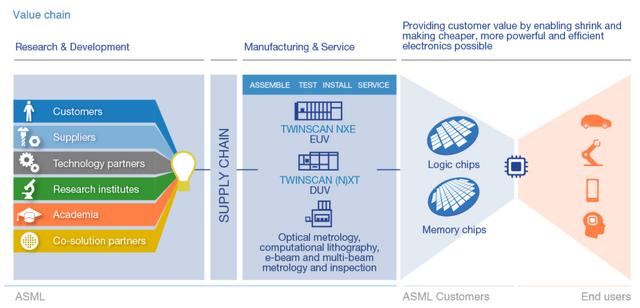
ASML (NASDAQ: $ASML) is an industry-leading company at the forefront of semiconductor lithography technology. ASML has become a key player in the semiconductor manufacturing ecosystem. Their cutting-edge lithography facilities play a vital role in producing the world's most advanced microchips, driving the digital revolution.
A commitment to innovation and precision has enabled ASML to achieve a near absolute leadership in extreme ultraviolet lithography, a transformative technology for the semiconductor industry. Their relentless pursuit of technological excellence, combined with a unique market position, has made ASML a global powerhouse poised to shape the future of microelectronics.
ASML's performance over the past decade has been impressive indeed, consistently beating the total return of the S&P 500 and the MSCI Europe Index. While the company has recently lagged slightly behind rivals such as Applied Materials and Lam Research, that dynamic will change over the next decade. ASML currently has no competitors to challenge its dominance in EUV technology.
In its latest financial report, ASML continued to outperform, with revenue up 27% year-on-year and raising its full-year 2023 guidance to an even more impressive 30% from an initial 25%.
With the backlog in the DUV equipment segment fully booked and operations at full capacity, coupled with the construction of new plants in the US and Europe, ASML is expected to not only meet or exceed its guidance ceiling over the next seven years, thereby strengthening its industry position as a leader and drive further growth.
2
Financial performance
ASML continued to beat expectations in the second quarter, demonstrating the company's resilience in the face of market dynamics. Their second-quarter revenue came in at 6.9 billion euros, missing a guidance range of 6.5 billion to 7 billion euros but beating analysts' forecast of 6.74 billion euros. This achievement reflects an impressive 27% year-over-year growth rate.
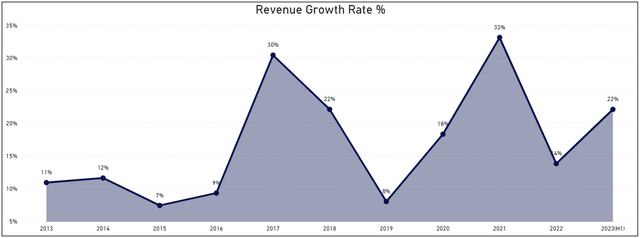
Revenue growth of 27% year-over-year is indeed impressive, and ASML has proven capable of greater expansion. ASML posted its highest revenue growth rate of 33% in 2021 over the past decade, driven by surging demand for chips prompting companies to expand production capacity. During this decade-long period, the company has maintained strong growth, with a compound annual growth rate of 17.3%.
When it comes to financial performance on the bottom line, ASML's margin growth continues to be impressive. In the second quarter, gross margin expanded to 51.3%, up from 50.6% in the first quarter and 49% in the same period last year. The positive gross margin development also translated into a higher operating margin of almost 33 percent, further driving earnings per share to €4.93. The company's profitability has continued to improve over the past decade, mainly due to the advantages of economies of scale, pricing advantages afforded by its leading position, and technological advancements.
During the quarter, ASML shipped 107 new systems, a significant increase of 29% over the previous year. The surge in shipments was mainly driven by strong demand for DUV machines. ASML found itself in a situation where demand for DUV machines exceeded its production capacity, underscoring the extraordinary strength of this market segment. As a result, ASML expects faster growth in the DUV segment this year than previously expected.
One of ASML's outstanding qualities as a company is its clear and reliable guidance, which provides an intuitive understanding of its business prospects. Their ability to efficiently manage the large order backlog gives us a strong sense of the company's likely revenue in the coming years.
During the most recent earnings call, ASML revealed their forecast for year-end net sales growth, targeting an impressive 30%. This beats their previous forecast of more than 25%, and also beats the 27% growth reported in the first half of 2023. This significant growth was primarily driven by a surge in DUV revenue, although this growth is expected to be partially offset by lower expectations for EUV and installations. base management. In addition, ASML is optimistic about a slight improvement in gross margins compared to 2022. They attribute this optimism to a positive margin impact from higher DUV immersion revenue, which they expect to offset dilution from lower upgrade revenue in 2023.
During ASML's Capital Markets Day 2022, the company unveiled its revised financial models for 2025 and 2030. Based on the model, they expect sales of 2.4-30 billion euros in 2025 and 4.4-60 billion euros in 2030. Their success in reaching the €60 billion sales mark in 2030 implies an impressive CAGR of 14% in revenue in 2022. While slightly lower than the 17.3% CAGR over the past decade, the growth trajectory is still excellent.
ASML's projected growth will significantly outpace the industry average, with a CAGR expected to hover around 7.4% from 2023 to 2033. The main reason for this difference is ASML's significant lead over its competitors, driven by heavy investment in research and development. These investments have resulted in huge technological advances and put ASML at the forefront of EUV technology. This technological advantage is expected to become increasingly important over the next decade.
3
Reward shareholders
ASML's returns to shareholders are indeed impressive. The company has consistently increased its dividend over the past nine years with an impressive 26.5% compound annual growth rate. Although the current dividend yield is relatively low at 0.95%, the payout ratio is still low at 24.42%. This leaves a lot of room for future dividend growth, especially given expected earnings growth in the coming years.
In addition to significant dividend growth, ASML is also actively involved in share buybacks. Interestingly, in absolute terms, the company actually allocates more money to its share repurchase program than it does to its dividend. While years like 2020 and 2021 are not ideal for buybacks due to soaring stock prices, 2022 and 2023 offer favorable conditions as the company's shares trade below their estimated fair value. Since 2013, ASML has successfully repurchased approximately 10.8% of its outstanding shares.
4
Valuation
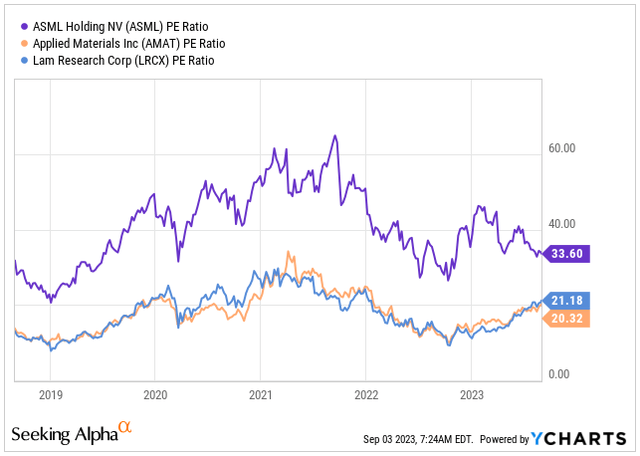
On a valuation basis, ASML doesn't look cheap by any means; instead, it commands a steep premium compared to rivals such as Applied Materials and Lam Research. Currently, ASML's price-earnings ratio for this year is 33.60 times, that of Applied Materials is 20.32 times, and that of Lam Research is 21.18 times. This equates to a premium of more than 60%.
The rationale behind this premium is fairly simple. ASML enjoys a special market position, especially in the field of EUV technology. The company is well-positioned to take advantage of this for years to come. While it is true that advances in competitor technology could challenge this unique positioning, high R&D costs and significant barriers to entry lead me to believe that ASML is well-positioned, even though its valuation is high relative to its peers.
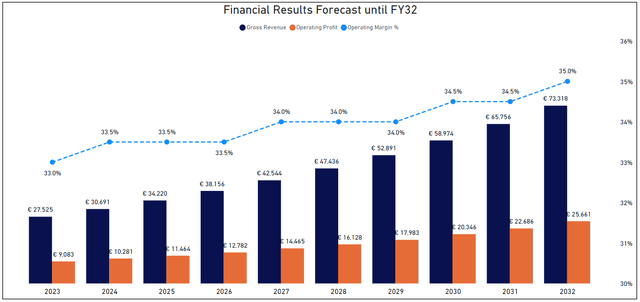
To calculate the fair value of ASML, the DCF model is used. In constructing the financial forecast for the next ten years, the upper end of management's revenue guidance was used, with sales projected to reach approximately EUR 58.9 billion by the end of 2030. The forecast reflects sales growth at a CAGR of 13.5% from 2022, coupled with a modest expansion in operating margin, from 33.0% currently to 34.5%, in line with management's expectations. In addition, operating margins are expected to continue to expand, reaching at least 35% by 2032. Meanwhile, sales growth is expected to slow after 2030, at a CAGR of 10%.
In addition to the growth assumptions mentioned above, a WACC of 10.50%, a tax rate of 15.02%, and a final growth rate of 3.5% are used, which tend to be conservative. Based on insights from historical data, estimates of D&A and CAPEX relative to EBIT could fall in the approximate range of 14.2% and 20%, respectively.
Also, use an EV/EBITDA ratio of 26.61 to calculate the average terminal value. After deducting these values over the next 10 years, FCF has a present value of approximately €70.3 billion, while TVs have a present value of almost €200 billion. The total enterprise value is therefore estimated at EUR 270 billion. After adjusting for cash, marketable securities, short-term and long-term debt, the final equity valuation is EUR 271 billion.
Calculations show that the company has a fair value of €690 (ADR of $745), an undervaluation of 11.5% compared to today's price of €612 (ADR of $663).
5
Conclusion
ASML's second-quarter financial results were once again impressive, with revenue up 27% year-on-year. Notably, the company has raised its full-year 2023 guidance to a stronger 30% from an initial 25%.
ASML's special position in its mature DUV business, combined with its near-leading position in EUV, puts it in a good position to capitalize on growing demand in the coming years. With a CAGR of no less than 14% expected over the next seven years, ASML's growth prospects remain bright.
If your actual purchasing power is greater than 50K,you can participate in the profit of more than 100% before the market,such as today's $ACER 160% $TUP $VVOS $MULN $LTRY $WAVD $SVFD $SNMP $MNK $BPTH $GNS $ALLR $BIOL $RGTI $TNGX $EDBL $TTOO $AULT $ESGL $AMRS $EVLV $INVO $SATX $F
Trading strategy
Trading plan
Trading analysis
Market integration
Suggested position
Entry and exit
Accurate timing
Perfect profit
Follow me to get it for free, without any charges
$AMC $GME $ICCT $MULN $SPCE $TUP $GTII $TTOO $AAPL $NVDA $AMZN $TSLA $PRST $FUBO $SPY $SONN
Today's intraday trading has ended $EBET
Get 52% of the income,if you want to participate
Follow me to get tomorrow's trading plan for free
$muln $trka $bbig $sonn $viri $gtii $wish $wisa $aprn $ape $amc $gme $hkd $ucar $top $f $xela $wkhs $ttcf $wen $ride $tsla $frgt $ai $bbai
Congratulations to the friends who participated in $AXLA,get 190% of the income, today's intraday trading plan has started,follow me to get free $muln $trka $bbig $sonn $viri $gtii $wish $wisa $aprn $ape $amc $gme $hkd $ucar $top $cei $cosm $coms $xela $wkhs $tsla $frgt $bbai
Taking advantage of the industry's recovery, TSMC will come out of the haze
$TUP $VVOS $MULN $LTRY $WAVD $SVFD $SNMP $MNK $BPTH $GNS $ALLR $BIOL $RGTI $TNGX $EDBL $MGIH $ENVB $TTOO $AULT $ESGL $AMRS $EVLV $INVO $WE $IDAI $AWIN $GRRR $GBNH $MOB $VTGN $SBFM
TSMC (NYSE: $TSM ) could be the first to ride the semiconductor industry's recovery in the coming quarters. During 2020-2022, the demand for electronic hardware and software will soar, driving the demand for semiconductors that drive electronic hardware and software, but this time will not last long, and the demand will quickly dissipate. Today, demand in the semiconductor industry is bottoming out.
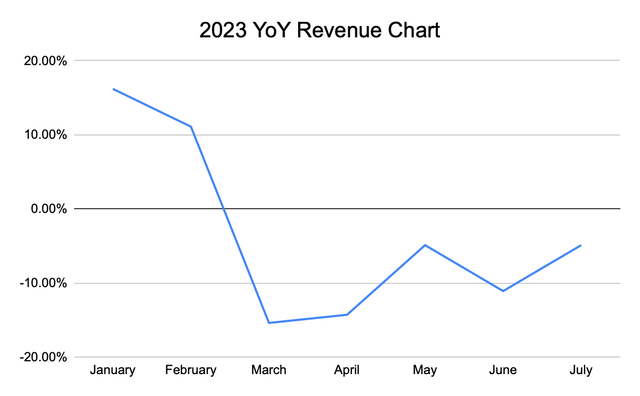
Judging from the revenue data released by TSMC, after bottoming out in March and April, the company's year-on-year performance has been showing signs of continuous improvement. This thesis is further supported by the positive future outlook of TSMC's management team. During the second-quarter 2023 earnings call, the management team stated that the company "expects third-quarter revenue to be around $17.5 billion, a 9.1% increase sequentially at the mid-point."
TSMC isn't the only company predicting a brighter future. This is true for many of the major players in the semiconductor industry. Analysts predict that AMD, Intel, and Samsung will all begin to experience year-over-year revenue growth after fiscal 2023. Although the business cycle is highly dependent on economic conditions and will be subject to some degree of volatility, the recovery of the semiconductor industry will create a tailwind for TSMC's future.
In addition to the potential tailwinds that the industry is starting to form, TSMC has a competitive advantage. Rather, the company has two unique strengths.
First, TSMC is the only major manufacturing company that does not compete with its own customers. At the 2022 Technology Symposium, TSMC CEO Dr. Wei Zhongxian said that TSMC "will never compete with you because we do not produce any of our own products. We remain committed to establishing long-term strategic partnerships with everyone." Today, that statement and commitment is more valuable to TSMC than ever because it creates a strong moat.
In the semiconductor manufacturing industry, there are two main players. Market leaders TSMC and Samsung. The current state of the market is that TSMC is dominating while Samsung is trying to catch up. Today, however, Intel is on the verge of entering a competitive landscape that began with a positive shift by the company that could create a more competitive market.
Knowing the current competitive landscape in the manufacturing industry, TSMC is likely to maintain its market leadership. Both Intel and Samsung compete fiercely with fabless chip producers. For example, Intel competes with AMD in the CPU market and Nvidia in the GPU market. Samsung competes with Qualcomm in mobile chips and with Exynos and Apple in smartphones. The sheer size of the two companies creates many conflicts of interest with potential future clients.
Google's self-driving unit Waymo competes with Intel's Mobileye, while Samsung's display and image sensor business competes with LG Electronics and Sony, to name just a few. So since both Intel and Samsung compete with fabless companies, tech companies that design their own chips, or with end product companies, many companies may be hesitant to rely on Samsung and Intel relative to TSMC, which doesn't have those conflicts .
Finally, TSMC currently has a first-mover advantage as an industry leader and likely will for the foreseeable future. Samsung and Intel are investing aggressively in the future of semiconductor manufacturing, but their own goals suggest that TSMC still has a competitive advantage that is expected to persist for the foreseeable future.
In June 2023, the Samsung management team "vowed to overtake TSMC within five years." Samsung's goal of surpassing TSMC in the next five years can also be understood as Samsung's acknowledgment and acceptance that TSMC is ahead of them by a considerable margin. Likewise, Intel's goal of regaining leadership from TSMC in 2025 can also be seen as TSMC's current dominance.
Therefore, this unique advantage that TSMC possesses creates synergies that give the company an edge in the market. Not only is TSMC free to acquire customers without them having to worry about conflicts of interest, but the company also has a technological leadership position in the industry today with no apparent end in sight.
Conclusion
TSMC currently holds a technological leadership in the semiconductor manufacturing industry, but one of the main risks is fierce competition from Samsung and Intel as the companies vow to become market leaders. Even in the pinch of Samsung and Intel, TSMC will not be replaced in the short term, but investors should be wary of competitive pressure.
The business cycle of the semiconductor industry has been the biggest headwind facing TSMC in the past few quarters. However, the tide is starting to turn and the company is poised to be one of the biggest beneficiaries of the changing tide. The semiconductor industry is beginning to recover from subdued demand in 2022 and 2023, and this trend is expected to continue for the foreseeable future. TSMC could benefit from this tailwind, as the company is somewhat unique in not competing with customers to create a conflict of interest, as is the case with its biggest competitor. Additionally, TSMC currently holds a technological leadership position in the industry, and this is expected to continue for the foreseeable future.
How many people know that Japan disregarded the opposition of many countries and discharged nuclear sewage into the ocean. It will not take many years for nuclear sewage to flow into every ocean $AAPL $TSLA $MSFT $FFIE $MULN $AMC $GME $TRKA $GTII $NKLA $QQQ $SPY $BBAI $MARA $F
https://t.co/CC0VECvLRZ
AbbVie, who has lost the "King of Medicine", has already retained enough "backhands"
$muln $trka $bbig $sonn $viri $gtii $wish $wisa $aprn $ape $amc $gme $hkd $ucar $top $cei $cosm $coms $xela $wkhs $ttcf $wen $ride $tsla $frgt $ai $bbai
1
Overview
In its most recent second-quarter earnings report, AbbVie (NYSE: $ABBV) reported a 25% drop in global Humira sales and a 26% drop in U.S. sales. That's because the drug's first generic version hit the market earlier this year, leading to a sharp drop in sales of the flagship product. At the same time, the stock's valuation is no longer as cheap as it was 2-3 years ago. Looking at the dividend yield below, the stock currently yields 3.94%, well below its historical average of 4.41%, as you can see in the chart below.
As for Humira, the company is now well positioned to produce two other promising new drugs: Rinvoq and Skyrizi. For valuation, this article will analyze from another method, following the so-called Buffett 10 times EBT rule. According to this timeless wisdom, the stock still offers a very attractive valuation and the potential for solid returns.
2
Buffett's 10x pre-tax rule
For those unfamiliar with Buffett's 10x EBT rule, this article will provide a brief introduction:
The guru paid about 10 times earnings before taxes (referred to as "EBT" in the rest of this article, for Earnings Before Taxes) for many of his biggest and best trades. The list is very long and includes Coca-Cola, American Express, Wells Fargo, Walmart, Burlington Northern, and most recently, Apple. This is no coincidence because:
The best equity investments should be bonds. When we talk about bond yields, that yield is the pre-tax yield. Thus, an EBT of 10x would provide a pre-tax yield of 10%, directly comparable to a 10% yielding bond. Any growth would be a bonus.
The second reason the rule makes sense is that after-tax returns do not reflect business fundamentals. Taxes can change due to factors unrelated to business fundamentals, and there are many ways companies can optimize their tax liability.
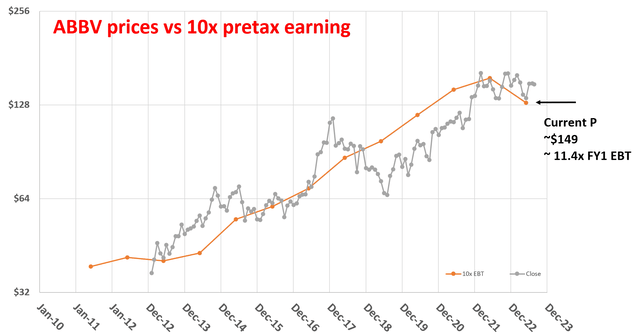
Right now, in the case of AbbVie, the stock is trading around $149 as of this writing. The consensus forecast for fiscal 2011 is $11.05 per share. The company's effective tax rate has averaged 15% in recent years. Assuming the same tax rate, its FY1 EBT is about $13.0 per share. Therefore, at current prices, it trades at around 11.4 times FY1 earnings before interest and taxes (EBT), as shown in the chart below.
It's a bit higher than 10x, so not optimal for Buffett's 10x EBT rule. However, as you can see from the chart, whenever the price is near or below 10x EBT, it is usually a good time to buy. And the stock has indeed been trading well above 10 times EBT for a very long time. Therefore, if the entry price is only slightly above 10 times EBT, don't worry too much, there will be good growth potential in the future.
But the 10x EBT rule doesn't mean that everything that sells for close to or less than 10x is a good investment.
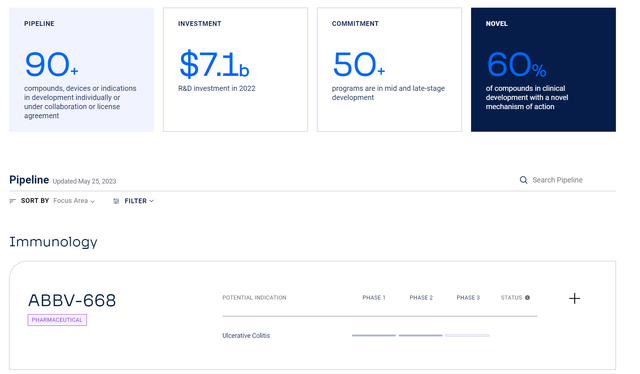
AbbVie is well-positioned for patent expiration and has a strong lineup of alternative and pipeline drugs. As shown below, its pipeline includes more than 90 compounds, devices or indications that are being developed individually or under collaboration or licensing agreements.
Rinvoq and Skyrizi have been going strong since their releases. Management expects they will strengthen their immunology portfolio following Humira's losses. They expect sales of the two new drugs to exceed $20 billion by 2027. In addition to a strong immunology portfolio, the company's pipeline includes promising drug candidates in other key areas such as neuroscience (e.g. for Alzheimer's disease) and oncology (e.g. for lung cancer) .
3
Growth Prospects
AbbVie certainly has the financial muscle to continue investing in these new drugs. As the chart below shows, the company's financial strength, as measured by interest coverage (above), is near multi-year highs, and capital allocation flexibility, as measured by its dividend payout ratio (below), is near a multi-year peak. So even if its financial strength and staying power stop growing, its 11.4x EBT valuation should feel good. 11.4xEBT has translated into a pre-tax return of about 9%.
The stock offers great growth potential. As the chart below shows, the consensus forecast is for EPS growth of 7.2% over the next five years. As shown in Figure 2 below, AbbVie's return on capital employed ("ROCE") has been strong and expanding in recent years. In other words, its ROCE has averaged 71.3% over the past 10 years. Current levels are well above historical averages. Long-term earnings growth depends on product or ROCE and reinvestment rate. Its reinvestment rate in recent years is estimated to be around 10%, so organic growth is around 7.1%, in line with consensus estimates.
4
Conclusion
Investing in AbbVie also comes with some risks. First, as with any drug development, trial results and approvals are often inconclusive. The current uncertainty concerns AbbVie's acquisition of IPR&D and milestone fees. The acquisition could affect AbbVie's future earnings and new drug development. Its second-quarter earnings report expected the acquisition to have an adverse impact on its EPS of $0.23. The earnings report acknowledged that further impact cannot be reliably predicted at this time. The acquisition could also delay the progress of its pipeline of drugs in a number of ways. The acquired intellectual property and research and development results may relate to products that are still in development and have not yet proven successful. And acquisitions may require more resources than anticipated, including capital and management time.
All in all, the overall reward/risk ratio is favorable under current conditions. In terms of business fundamentals, the company is well positioned for the Humira patent cliff and positioned for continued growth. In terms of valuation, the stock remains at an attractive level based on Buffett's 10x EBT rule. Priced at 11.4x FY1 EBT, the pre-tax yield is close to 9%. Combined with growth, the stock offers the potential for double-digit total returns annually.