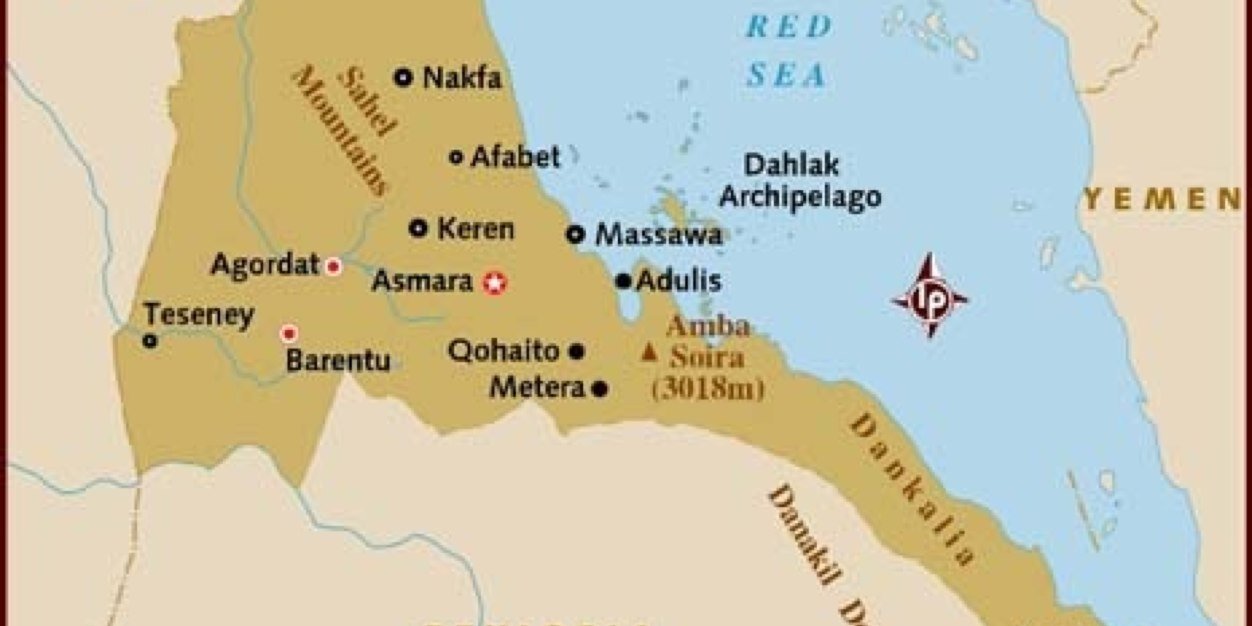
I am entirely fascinated—and frankly mesmerized—by the thousands of declassified U.S. Foreign Relations documents, especially those revealing how the U.S. and the U.K. worked to help Haile Selassie unjustly transfer the #European colony of #Eritrea to the #African empire of #Ethiopia.
Their own documents clearly show their motives were driven purely by geopolitical interests, not by justice or self-determination. What Eritrea has argued for decades is now written clearly proven, in black and white, straight from the horse’s mouth.
As this particular document (attached) shows, Ethiopia cared very little about Eritrea’s territorial integrity. Haile Selasie was perfectly willing to see Eritrea carved up—its western lands pushed into Sudan and the rest absorbed by Ethiopia—so long as the Emperor secured access to the sea. This alone is a telling sign that Eritrea was never historically ruled by Ethiopia; if it were, Ethiopia would not be bargaining away its “own” territory so casually.
The British, meanwhile, behaved like a child let loose in a cookie shop and they were still convinced that the British Empire would endure for centuries, they busied themselves redrawing borders to suit their imagined imperial future. Their goals were clear:
1) To place the arable and mineral-rich western lowlands of Eritrea under the Anglo-Egyptian Sudan (today’s Sudan).
3) To merge British Somaliland, Italian Somaliland, and the Ogaden into a Greater Somalia under British protection—an idea Haile Selassie was willing to entertain as long as he received Assab and its surrounding areas.
3) To flirt with the idea of a Tigray–Tigrigni territory under British influence.
The Americans, new on the global stage, were also carving out spheres of influence. Partly out of sympathy for Haile Selassie—humiliated during his exile—and partly because they saw him as a useful anti-communist ally during the early Cold War, the U.S. viewed Ethiopia as a strategic asset. Eritrea became collateral.
The Italians, defeated in World War II, had little leverage. Their demands were modest: trusteeship over #Asmara and #Massawa, and guarantees for the rights of Italians living in Eritrea.
Against this backdrop, this March 1950 declassified U.S. State Department document (attached) shows how the U.S. and U.K. were preparing for the upcoming vote in the UN regarding Eritrea’s fate. It exposes the clear sabotage, maneuvering, and manipulation outside the formal UN process:
Washington feared the rapidly deteriorating situation in Eritrea. Rising tensions among Eritreans, prominent Italians such as Barrattoli being killed and terrorized by Ethiopians threatened peace—and raised the possibility that the UN Commission of Inquiry might favor independence, something neither the U.S. nor the U.K. wanted.
The U.S. and U.K. were anxious that the UN Commission might fail to reach a clear recommendation. Without a decisive outcome, the General Assembly might not achieve the required two-thirds majority—or worse, might vote for Eritrean independence. The U.S. and U.K. therefore agreed on a shared position to split Eritrea into two:
Most of Eritrea → to Ethiopia
Western Province → to #Sudan
This plan reflected the dominance of the emerging post-WWII powers, not the will of Eritreans. The U.S. advised Ethiopia to appear flexible—to signal acceptance of partition—so that the UN would view Ethiopia as reasonable and deserved of a favorable outcome.
The U.S. State Department warned Ethiopia not to threaten unrest if it did not receive Eritrea. Such arguments could backfire, portraying Ethiopia as aggressive or coercive in its approach.
The U.S. and U.K. sought to jointly reaffirm their position in order to steer the UN deliberations and shape the final outcome.
The U.S. also pushed for renewed Italian–Ethiopian negotiations, preferring talks based on the previous Geneva formula and ideally held in London.
This was part of keeping the entire process within Western control. Most strikingly, Eritrean self-determination was completely absent. The discussion focused entirely on:
- U.S. strategic interests (Red Sea access, Cold War calculations, and control of the Kagnew Station intelligence base in Asmara)
- U.K. imperial interests
- Italian and Ethiopian demands
Eritrean voices were almost entirely excluded. The fate of Eritrea was negotiated by powerful states over a territory whose people were denied a seat at the table.
https://t.co/hupzeyBpwT
The U.S. has quietly placed Eritrea and Ethiopia back at the center of its Horn of Africa risk map. What does that signal about borders, security, and the Red Sea? A concise breakdown of what’s changing and why it matters now.
https://t.co/N75nasutIz
Thank you @teazabi as always.
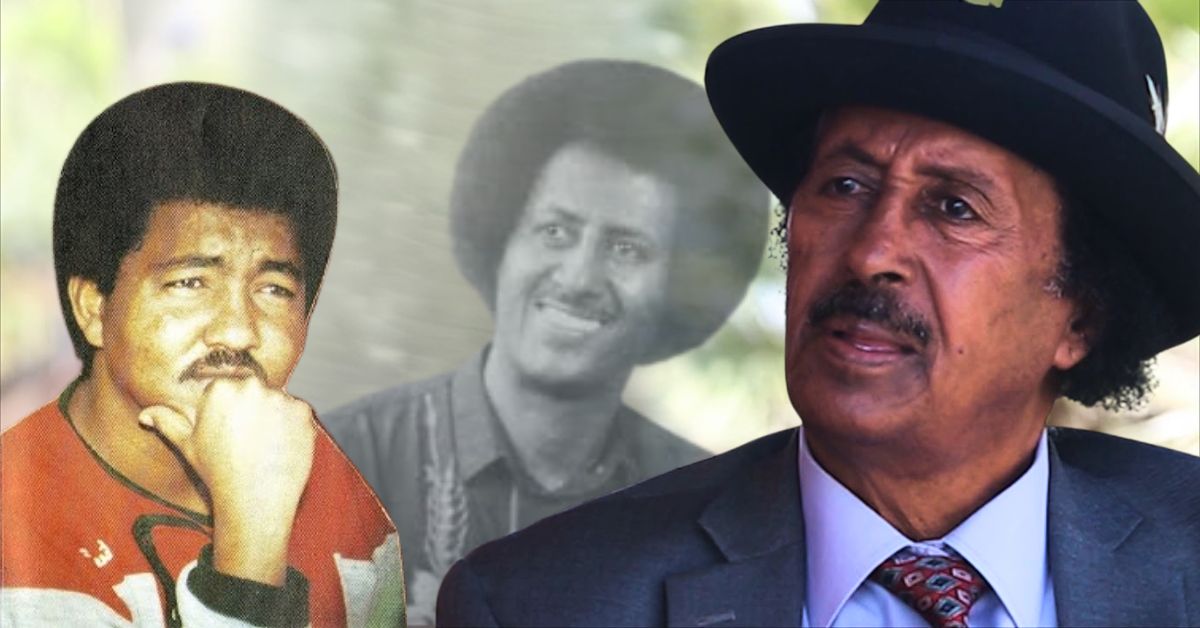
A Public Tribute to the Legend Abrar Osman -
https://t.co/UJqxrdSask | Inspired by His Farewell Words to the Late Legendary Artist Berekhet Mengsteab
When I listened to the recent BBC Tigrinya interview with the legendary artist Abrar Osman, in which he offered a heartfe...
In fact #Ethiopia should be held accountable for all the heinous crimes it committed in #Eritrea violating international law by annexing and occupying it by force for more than thirty years before independence Eritrea was never part of Ethiopia
Thank you Suleiman Adam Hussein🇪🇷✊🏾
HOW MUCH DID ETHIOPIA PAY TO USE ERITREAN PORTS?
"As stipulated under an intergovernmental transit and port services agreement as well as a customs arrangement (amended annually), the port of Assab is a free port for Ethiopia, with its own Ethiopian customs branch office, and goods transshipped to or from Ethiopia remain exempt from Eritrean customs duties and related charges. Procedures for the clearing of goods and the exchange of documentation are to be harmonized, and port and shipping charges are paid in birr."
IMF Staff Country Report 95/4
January 1995
https://t.co/K0eu7tPO7m
Eritrea’s ruling class remains among the few genuine Pan-Africanist leaders on our continent. 🇪🇷
Eritrea is the rock-solid anchor of stability in the Horn of Africa, grounded in unwavering good neighborliness.
As a close observer of the region and one of peace loving people in the Horn of Africa
I question Ethiopia’s distracting allegations against Eritrea .
Ethiopian elites should first look inward before pointing fingers. True Pan-African leadership is about peace, cooperation, and progress not stoking tension after tension.
Now is the moment for economic integration and regional prosperity, not manufactured conflict
Ethiopia's Abrogation of the UN-Backed Eritrean Federation: A Legacy of Annexation, Atrocities, and Unresolved Demands for Justice.
The United Nations Panel of Legal Consultants, in its report dated 23 November to 20 December 1951 in Geneva, articulated the following perspective on the applicability of the General Assembly's resolution following the implementation of the Federal Act and Eritrea's Constitution: "It is true that once the Federal Act and the Eritrean Constitution have come into force the mission entrusted to the General Assembly under the Peace Treaty with Italy will have been fulfilled and the future of Eritrea must be regarded as settled ; but it does not follow that the United Nations will no longer have any right to deal with the question of Eritrea. The Federal Act and the Eritrean Constitution will still be based on the resolution of the United Nations and that international instrument will retain its full force. That being so, if it were necessary either to amend or to interpret the Federal Act, only the General Assembly, as the author of that instrument, would be competent to take a decision. Similarly, if the Federal Act were violated, the General Assembly could be seized of the matter".
The Panel studied the provisions of the Federal Act concerning the Federal Government and agreed that the legal interpretation of the "sovereignty" of the Ethiopian Crown must not entail any change in the respective jurisdictions of the Federation and of Eritrea as laid down in paragraphs 2 and 3 of the Resolution..."
As noted by the United Nations Secretary-General in 1993: "...Ethiopia abrogated the federal agreement and annexed Eritrea in 1962, a movement of resistance to Ethiopian rule was ignited..."
Through its unilateral termination of the international agreement establishing the federation between Eritrea and feudal Ethiopia, Ethiopia proceeded to annex and occupy Eritrea. During this period, Ethiopian forces perpetrated acts of genocide and crimes against humanity, including the killing of hundreds of thousands of civilians, the imprisonment and torture of thousands more Eritreans, and the destruction through burning and looting of numerous villages and towns.
These actions also led to the forced displacement and exile of over one million Eritreans. Furthermore, Ethiopia systematically plundered Eritrean industrial assets, exploited its ports and airports without any form of compensation, and between 1998 and 2000, expelled approximately 100,000 Eritreans, seized Eritrean-owned property valued at hundreds of millions of dollars, and launched incursions into sovereign Eritrean lands, maintaining occupation for 18 years.
Ethiopia should have faced accountability for these instances of genocide, crimes against humanity, and war crimes, including the payment of reparations to address the immense harm inflicted upon Eritrea and its people. Ethiopia's brazen assertions of claims over Eritrean territory represent not only a profound moral failing but also a deeply repugnant stance, consistent with its longstanding pattern of expansionist policies and actions spanning millennia.
Consequently, all future engagements with Ethiopia—irrespective of the prevailing regime—ought to be predicated on an unequivocal and permanent renunciation by Ethiopia of any territorial aspirations toward Eritrea. Ethiopia must also be held accountable for genocide, crimes against humanity as well as war crimes and pay reparations.
Video credit: TVR Exploring YouTube Channel
Since the ETH PM seems determined to escalate the situation that is already dangerous, some facts may be necessary to remind:
1. The Assab refinery that was build by the former Soviet Union was built in Eritrea and belongs to Eritrea. What should have happened after Eritrea became independent was that ETH should have been made to account for its illegal annexation of Eritrea;
2. ETH should have been made to account for the atrocities committed against the Eritrean civilian population during the period when Eritrea was annexed;
3. ETH should and must compensate Eritrea for the systematic looting of Eritrea and the damage it inflicted on the Eritrean economy:
AND THE LIST GOES ON ABD THE TIME WHEN ERITREA STARTS TO TAKE STEPS TOWARDS THIS WILL COME, THERE IS NO DOUBT ABOUT IT. ONLY WHEN CRIMES ARE ACCOUNTED FOR CAN REAL PEACE WOUKD BE ACHIEVED.
Here he comes again every speech filled with propaganda, trying to brainwash his followers with lines like, ‘When we own Assab Port, we will do this and that.’ The real question is: why build projects on land you don’t even own?
#Eritrea#HornOfAfrica@AbiyAhmedAli#Ethiopia
Listening to the pronouncements these days, one wonders:
■ Does being landlocked exempt a state from international law?
■ If all 16 landlocked African countries, or the 44 globally, threatened or waged wars of aggression on their coastal neighbors—what would that be?
Anarchy!
Nation building needs leadership with vision. Independence alone isn’t enough. Just look at Sudan & Somalia. Without vision, leaders become like students unprepared for the exam: failure is guaranteed. Stability comes only through vision, unity & principle.