It's just so important to see things from a different angle.
So here is how an IT helpdesk experienced the #Crowdstrike outage. 🧵
Please, read this even if you no interest in IT or know nothing about it. It doesn't matter. It's about appreciation for those who keep us going.
For the next episode of our @aspoonfulofdata podcast, we're going to be talking about fictional AI's. What's your favourite? Please let us know on this 2 minutes survey and we might just talk about them on the episode! #AI#whatareyoudoingdave#illbeback https://t.co/WDqw6RBmeE
This week's episode is on a hot topic and one that isn't often discussed: the #environmental cost of #AI. There are a range of impacts at the manufacturing, running/cooling, and end of life phases. Check it out and let us know what you think! https://t.co/lo51f2R0b6
🚨EXCELLENT PRIVACY & AI PAPER ALERT: Prof.
@DanielSolove has recently published "Artificial Intelligence and Privacy," and you can't miss it. Interesting quotes below:
"Privacy laws generally do not mandate that a site protect against scraping. It is up to organizations to protect user data in their terms of service and then to enforce their terms of service. But privacy laws should mandate protection against scraping. If an organization attempted to transfer massive amounts of personal data to third parties without consent, this practice would violate many privacy laws. Failing to prevent third parties from just taking the data is the functional equivalent of selling or sharing it." (page 27)
-
"Decisions derived from predictive models challenge the principles of due process. Justice traditionally dictates that individuals should not face penalties for actions they have not committed. However, predictive models enable judgments and potential repercussions based on actions that individuals have not undertaken and may never undertake. As Professor Carissa Véliz contends, “by making forecasts about human behavior just like we make forecasts about the weather, we are treating people like things. Part of what it means to treat a person with respect is to acknowledge their agency and ability to change themselves and their circumstances.” (page 39)
-
"One remedy that is increasingly being used is algorithmic destruction. For example, in In re Everalbum, Inc., the FTC ordered a company to delete “any models or algorithms” developed with data it had improperly collected. However, Li argues that the remedy of algorithmic destruction can be too severe and might “harm small startups and discourage new market entrants in technology industries.” Additionally, it is one thing for the FTC to order a small company to delete an algorithm, but what about a gigantic company such as Open AI? It is hard to imagine the FTC or any regulator ordering the deletion of a hugely popular algorithm with a multi-billion dollar value." (page 59)
Link to the full paper below.
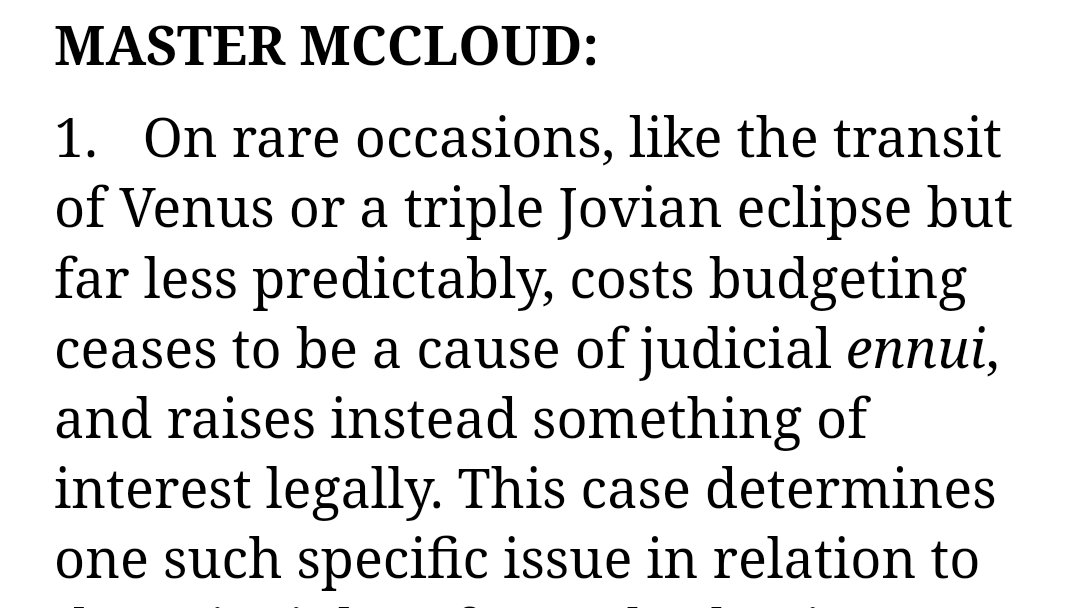
Given the news Master McCloud is leaving the judiciary, an example here of her ability to explain and even entertain. An all-too-rare example of a judge who can make a ruling accessible without dumbing down. https://t.co/IgexM7QV1p
@MissIG_Geek For clarity - I don’t think it’s incompatible with joint controller status for the controllers to agree that data is only used for the shared purpose. I would only be wary of one controller dictating that to the other.
@MissIG_Geek …but really, if another controller is gathering data for a shared purpose, and also wants to use it for an independent purpose, isn’t that something between them and their data subjects - so long as transparency, minimisation, purpose limitation etc are observed?
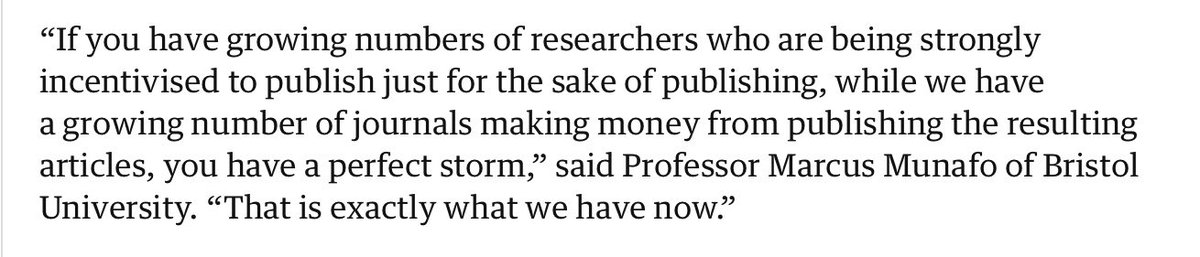
Professor Munafo calls the situation a perfect storm. If only! The perfect storm hits when AI is trained on bogus science articles which melt seamlessly into our new collective truth, the components of which are wholly untraceable.
@MarcusMunafo@RobinMcKie@j2bryson
Are you a busy C-suite who is worried about #AI#Governance but don't know where to start? A colleague and I have started a weekly podcast of short (c. 15 mins) episodes, tackling the topic a spoonful at a time. This week: "What is AI?" https://t.co/4TRIAVkwGp
"Representatives from EU member states unanimously voted Friday to advance the Artificial Intelligence Act, paving the way for a paradigm-shifting set of rules that will influence how AI is governed in the region and around the world." (via @ActualCAndrews and @JedBracy, IAPP)
We're now on most of the major podcast apps, so rather than using the link above, do search up 'A Spoonful of Data' in the Apple/Google/Amazon podcast apps among others. The episodes are only 15 minutes long, and each week we focus on different topics in #AI and #DataProtection
After a Data Protection Day special last week, the first episode of our new podcast series A Spoonful of Data is now available. We're starting out with an overview of the main topic we're going to be covering: #AI Governance https://t.co/RwRBuyFnoU @ASpoonfulOfData#data
I'm sure it will be a great relief to those who get your podcasts from iTunes to know that the Spoonful of Data podcast is now set up there, ahead of our "proper" launch this weekend. The episodes are short (c. 15 mins) so do please take a listen and let me know what you think!
Exciting news! We are now on iTunes... Do please check out our teaser episode and, if you enjoy it, follow for future episodes on all things #data, #informationlaw and #ai related, with the first episode dropping this weekend! https://t.co/8CsPjx3UjN #iTunes
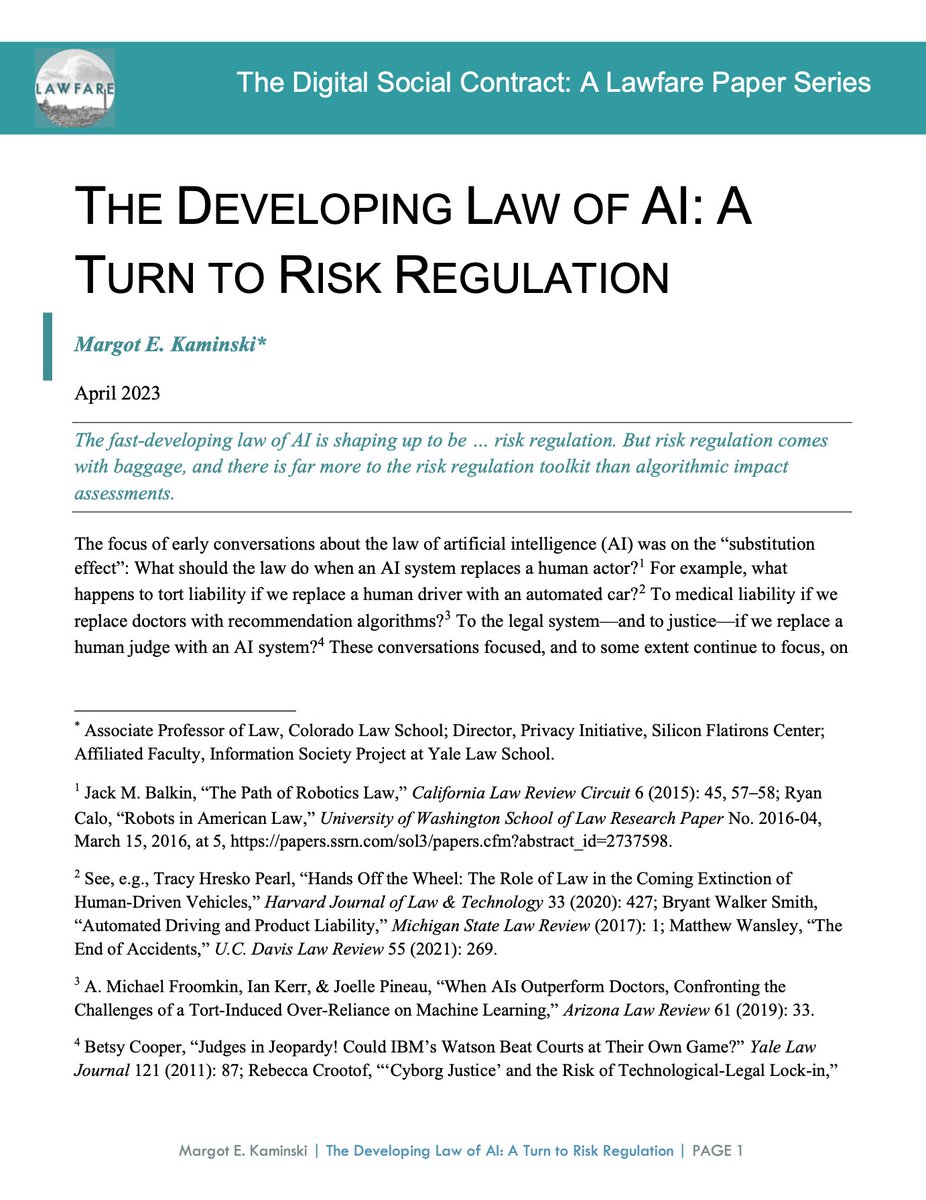
🚨 GROUNDBREAKING PAPER ALERT: check out "The Developing Law of AI: A Turn to Risk Regulation" by @MargotKaminski, Professor at @ColoLaw. Important quotes below:
"Risk regulation is regulation that aims to mitigate risks. It often is overseen and enforced by an expert agency rather than by courts and generally aims to encourage benefits and minimize harms at the collective level rather than afford restitution or recourse at an individual level. Risk regulation is futureoriented, trying to channel technological development and uses as they occur rather than responding to harms after the fact. And risk regulation typically adopts the normative stance of opting in to a technology and its uses, assuming that the technology can, and should, be fixed so that we can use it. (...)" (page 2)
-
"By far, the most common regulatory instrument in the new law of AI is the algorithmic impact assessment. A tool originating in environmental, data protection, and human rights regulation, an algorithmic impact assessment typically requires a company or government entity to identify, document, assess, and often mitigate risks before releasing a technology into the world. (...) Proponents argue that a good impact assessment process can result in significant risk-mitigation, better and more deliberate organizational values, public accountability (sometimes), and feedback for policymakers at a nascent stage of regulation (sometimes). Critics point out that impact assessments can in practice be a meaningless box-ticking exercise, empty corporate compliance that is little more than heavy navel-gazing. "(page 8)
-
"Multiple aspects of AI systems, and their harms, get lost in the current framing. AI is often the product of surveillance; this fact typically gets lost in discussions of AI risk regulation. The individual gets lost. The harms of AI systems can echo and reify problematic aspects of society. We should be asking, in the first place, whether we really want to measure, scale, and reproduce what are often deeply troubling aspects of existing social systems. The use of AI systems can leave less room for change, discretion, or compassion. There are big normative arguments to be had—and being had—on what this means for marginalized people and communities. These are policy conversations, not decisions to be left for enterprise risk management. "(page 25)
-
As the AI Act enters its final approval stage and dozens of countries around the world discuss AI policies and AI regulation, Prof. Kaminski's arguments offer important insights.
Before we decide on specific clauses, we must understand what type of regulation we want and what are the concrete implications of this choice.
Also, for those outside of the legal field: there are many ways to "regulate."
The policy suggestions section on page 19 is especially interesting and extremely valuable for decision-makers.
Read the full paper below (see link).
We've put out a teaser preview episode, and will be launching properly this weekend. If you're interested, you can search for A Spoonful of Data on Amazon/Google podcasts (or other platforms, iTunes is coming soon!) or click this link for the RSS feed: https://t.co/iwxGAGOYBi
I keep hearing about the challenges of keeping on top of #AI, its capabilities and the risks it poses (particularly around data protection/privacy). That's why (with my @Freeths colleague Mona) we're putting out a new weekly podcast breaking down the issues into bitesized chunks
Yes - our podcast is now available on Amazon Music (link below). I'm really looking forward to getting going with the main series from next week, but we had a lot of fun talking about the origins of Data Protection Day, why it's not Data Privacy Day, and what we have coming up!
Our teaser preview episode is now available on Amazon Podcasts: https://t.co/alWdEHRFdG Check it out, and if you enjoy what you hear, follow us for a new weekly podcast series starting next week, talking all things #data and #tech which a special emphasis on #AI