China backs stronger India-Russia-China (RIC) cooperation, saying stable ties among the three nations would promote regional, global peace, security & prosperity
The combined GDP is nearly $70 TRILLION that’s ONE-third of the entire world’s economy!
Bypassing Turkey: Washington’s Strategic Pivot to Greece as the New Anchor of the West
Washington has shifted its Eastern Mediterranean strategy by deliberately reducing reliance on Turkey and elevating Greece as a stable, reliable partner for military logistics, energy security, and regional influence. This pivot addresses longstanding concerns about Turkish unpredictability—ranging from its transactional diplomacy and S-400 dealings with Russia to periodic strains over shared facilities—by diversifying access through Greek ports, bases, and energy corridors. The result is a more resilient architecture that strengthens NATO’s southern flank while minimizing vulnerabilities tied to Turkish territory and decision-making.
Turkey remains a significant NATO member with substantial military capabilities and geographic relevance. However, its assertive policies in the Aegean, hedging with non-Western powers, and potential for friction in crises have prompted Washington to seek alternatives that offer greater consistency and alignment.
This realignment emphasizes concrete investments in three key Greek locations: Souda Bay, Alexandroupoli, and Elefsina. Together, they form a network that enhances mobility, supports LNG imports, and provides north-south energy routes that effectively bypass traditional dependencies on the Turkish-controlled Straits.
Souda Bay: The Enduring Naval Strongpoint
On Crete, Souda Bay is one of NATO’s most valuable Mediterranean facilities. Its deep-water harbor and strategic location provide reliable access for U.S. and allied naval forces, with far less exposure to political disruptions than options in the Near East. Significant infrastructure upgrades, including multi-million-dollar maintenance and logistics contracts, have expanded its capacity for carrier support, training, and sustained operations.
In recent regional crises, Souda has proven its worth as a dependable node when access elsewhere has been complicated. It anchors broader U.S.-Greek defense ties, providing predictability that allows Washington to maintain a robust presence without constant renegotiation. This reliability supports power projection across the eastern Mediterranean, North Africa and the Middle East while reducing single-point risks associated with more volatile partnerships.
Alexandroupoli: The Northern Gateway and Bypass Hub
In northeastern Greece, Alexandroupoli has become a vital logistics and energy hub. Situated near the Bulgarian border and with strong connectivity to the Balkans and the Black Sea region, it enables efficient movement of troops, equipment, and energy resources—bypassing the Turkish-controlled Straits and their associated chokepoints.
U.S. investments have modernized the port to support brigade-scale deployments and sustainment. The addition of an LNG floating storage and regasification unit (FSRU) with substantial annual capacity feeds pipelines such as the Interconnector Greece-Bulgaria (IGB). This creates a “Vertical Corridor” that delivers American and other gas northward to Bulgaria, Romania, Ukraine, and Central Europe. Economically, it boosts Greek development and enhances allied energy security.
Geopolitically, Alexandroupoli reduces any single actor’s leverage over transit routes. By routing logistics and energy through Greek territory, the U.S. and its partners gain resilience against potential disruptions or restrictions. Its performance during heightened tensions has validated its role as a cornerstone of Washington’s diversified approach.
Elefsina: Countering Influence and Building Industrial Depth
West of Athens, Elefsina’s port and historic shipyard are emerging as focal points for Western strategic investment. Once associated with Greece’s economic challenges, the site will support modernization efforts focused on naval repair, commercial logistics, and reducing the concentration of external influence in nearby facilities such as the Chinese-operated Port of Piraeus.
Elefsina adds critical redundancy to the network—providing maintenance capacity near central Greece that complements Souda’s southern naval strength and Alexandroupoli's role as a northern gateway. This layered infrastructure spreads risk, protects against localized disruptions, and signals an enduring commitment to Greek territory as a platform aligned with transatlantic priorities.
Energy Corridors: Redrawing the Map
These military and port developments take on greater importance because of their ties to energy infrastructure. Greece serves as a primary entry point for U.S. LNG via terminals at Revythousa and Alexandroupoli, with pipelines that reduce European dependence on older, more contested routes. Offshore exploration in the Ionian Sea and south of Crete, through partnerships with companies such as ExxonMobil and Chevron, further embeds Western commercial interests in Greek waters.
Forward-looking elements, such as hydrogen-ready infrastructure, prepare these corridors for future energy transitions. The Vertical Corridor model—gas arriving on Greek shores and flowing northward—offers a clear alternative to east-west dependencies that have historically been vulnerable to control via the Turkish-controlled Straits. This not only diversifies supplies but also fosters deeper economic integration with Balkan and Eastern European partners.
France has reinforced the framework through defense agreements, joint exercises, and capability transfers (including Rafale aircraft), establishing complementary European support alongside the U.S. operational and energy focus. This synergy strengthens Greece’s anchoring role without forcing binary alignments.
Why This Matters: Reliability in an Uncertain Region
Washington’s emphasis on Greece stems from a pragmatic assessment of reliability. As a stable EU and NATO democracy with transparent governance, Greece offers a foundation less prone to abrupt policy shifts - like in Ankara. Investments in these sites yield compounded benefits: stronger deterrence, secure supply lines, reduced exposure to single points of failure, and greater influence in regional energy markets.
While Turkey remains important in select areas, such as engagement in the Middle East, the Greek pivot serves as effective hedging against risks stemming from Ankara’s assertive and scheming posture.
Washington's direction is clear - expanded U.S.-Greek cooperation across bases, ports, and energy corridors to forge a more robust regional framework.
Alexandroupoli secures logistics flows that once carried higher risk; Souda ensures naval continuity; Elefsina contributes industrial resilience. Collectively, these elements position Greece as the functional anchor of Western strategy in the Eastern Mediterranean.
As security requirements persist and energy landscapes shift, Greece’s geography and partnerships position it at the center of the updated strategic map.
A federal judge just ruled that Trump’s $100,000 H-1B fee was not an immigration restriction, it was a tax.
And under the Constitution, Congress, not the President has the power to impose taxes.
Here are the most important excerpts from the ruling
The death toll from the Philippines earthquake has risen to 32, with more than 200 people injured. The quake caused building collapses and damage to schools and shopping centers.
Keshav Negi did not get bail & has been sent to jail for 14 days in judicial custody. A 65 yr old poor chef is rotting in jail while corrupt municipal officials who allowed that illegal death trap to run are probably enjoying air conditioned rooms.
— ABSOLUTE MOCKERY OF JUSTICE
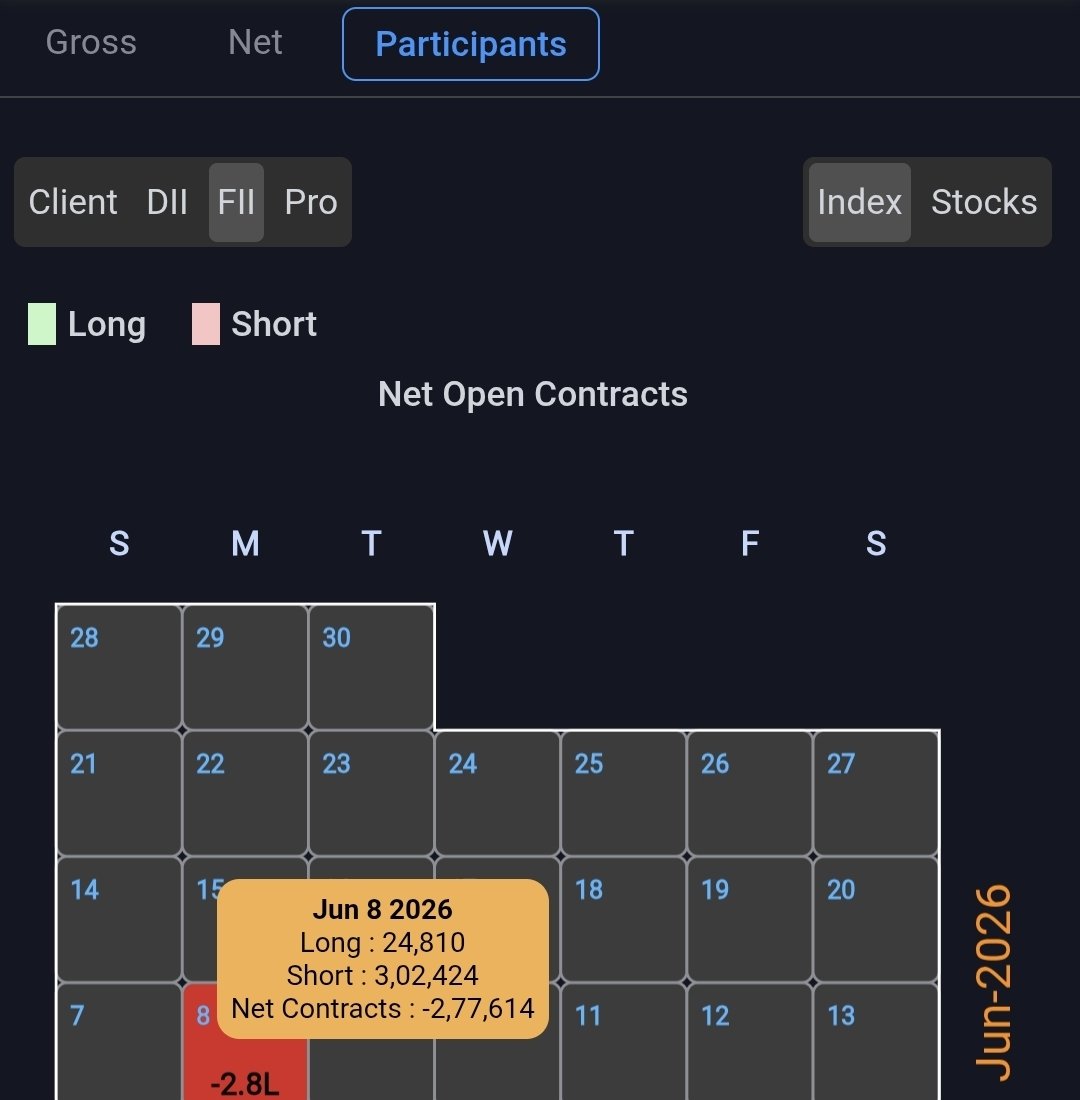
@TheNavroopSingh Data is extremely bearish.
Govt is doing something extremely wrong and unnecessary stuff.
Shorts now stands tall at 92.42% and Longs at 7.58%
🚨 SHOCKING BENGAL TWIST 🚨
Firhad Hakim, one of Mamata Banerjee’s closest aides, has met the rebel camp of MLAs 🤯
Hakim has long faced allegations over illegal property networks
Any probe must proceed without political protection!
Situation is worsening in PoJK-- Pakistani 🇵🇰Rangers have blood on their HANDS‼️
🔴More than 400 dead/ injured as Pakistani rangers fire at protestors in Rawalakot 👇👇👇
🔺Internet shutdown and curfew imposed
🔺Canada based Kashmiris offer prayers for those who were killed in PoJK
(Pakistan occupied Jammu & Kashmir #PoJK)
@PMOIndia@alok_bhatt Sooner or later rate hike will follow. If it's later, it may start hurting everybody from Kitchen to corporate. Right now only hurting kitchen and for corporate , stress is limited to few. You take late decision and bamboo will be up our asses.
8 workers killed in molten iron spill at Vizag steel plant; several others injured - Here are details
#steel#Visakhapatnam#AndhraPradesh
https://t.co/NJJ4H9C7Pk
Pakistan-backed terror module neutralized before it could strike.
After the crackdown on illegal encroachments at Bandra's Garib Nagar, their Abbus were rattled.
They plotted, but the Government spoiled the game.
The message is clear - Bharat won't bow, it will strike first.