This year, XPENG's main focus at CVPR wasn't VLA, but World Models.
@liuxianming explained it in a simple way: VLA teaches a model how to act, while World Models teach a model how the world changes after each action.
Ultimately they're solving the same problem, helping AI understand and interact with the physical world.
XPENG continues to show up where AI research is happening.
At CVPR 2026, the company was invited to present at the Embodied AI workshop alongside Tesla, NVIDIA, and Waymo, while also having a paper accepted on driving scene generation.
As the industry moves toward Physical AI, simulation, foundation models, and embodied intelligence are becoming just as important as the vehicles themselves.
XPENG’s first Robotaxi fleet has started road testing.
Built on the GX platform with VLA 2.0 and a pure vision stack, the rollout marks another step toward real-world autonomous operations.
700mm wading depth with no cabin water ingress, stable power delivery, and battery safety maintained throughout the test.
XPENG GX is bringing off-road-level wading capability into the intelligent family SUV segment.
From urban flooding to outdoor crossings, robustness is becoming part of the smart EV experience.
A snippet of the Xpeng VLA 2.0 test drive the other night in Beijing.
What's my final verdict, especially coming from a FSD user point of view?
Stay tuned for full video (hopefully I'll upload tomorrow).
(p.s. I said lots of "very good"s)
The idea that Tesla is alone in the race to develop end-to-end vision system for self-driving and delivering into consumer vehicles is officially dead.
Like dead, dead.
I tested Xpeng's VLA 2.0 in the streets of Beijing, and it is comparable to my experience of daily driving Tesla FSD v14.
Xpeng is not charging $100 a month to drive this. It is inlcuded in its higher-trim vehicles and it already caught the attention of Volkswagen, which is going to integrate into its own vehicles - something Tesla hasn't been able to do despite trying.
You can watch the full 40-minute drive on @ElectrekCo
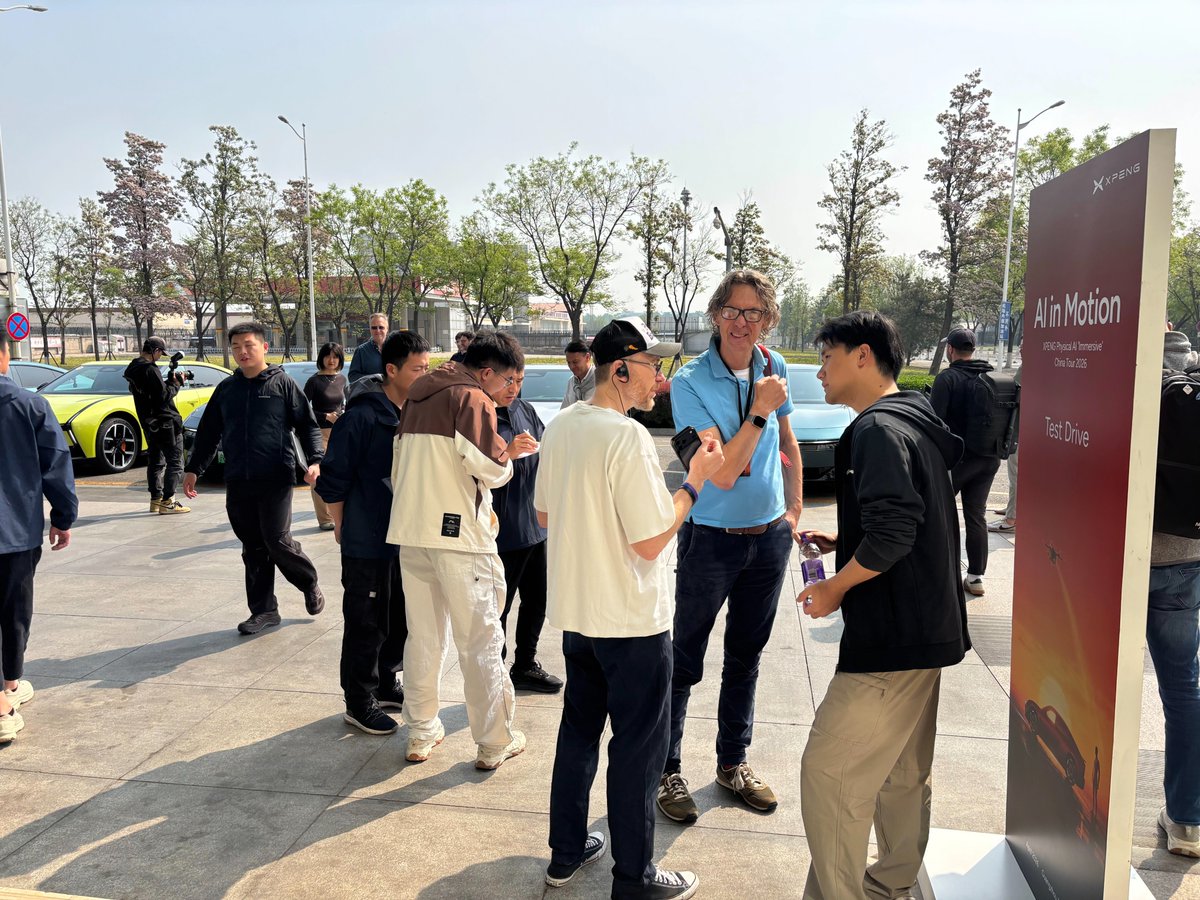
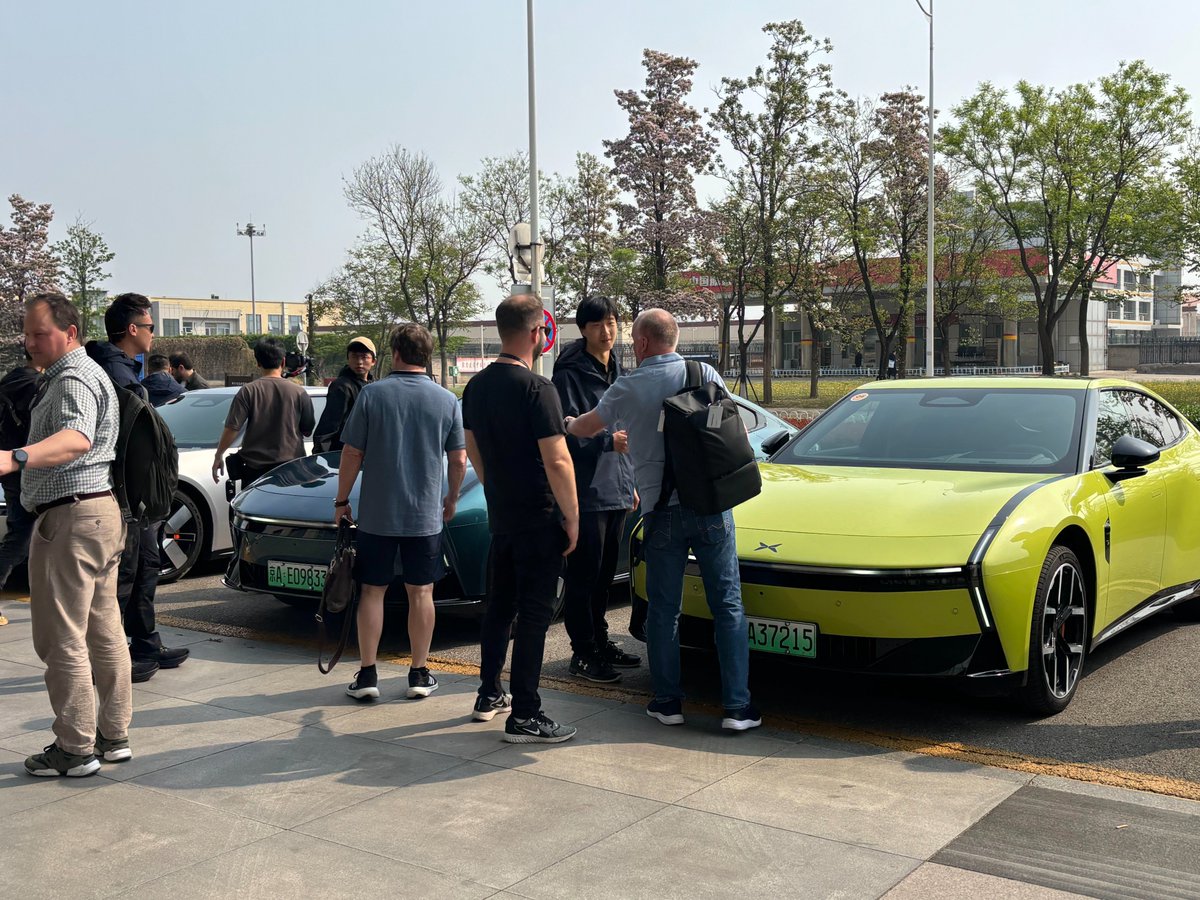
XPENG recently wrapped up their VLA 2.0 tour around Auto China - test drives, factory visits, the whole thing.
After actually riding in the car, Dick said something that stuck with me:
“If Tesla’s FSD is even half as good as this (VLA), it must already be very, very impressive.”
From what XPENG shared, it also seems like people are reacting pretty strongly once they try it - nearly 100k test drives so far, and the time from test drive to order has dropped a lot.
Feels like the shift might be less about “what features it has” and more about how natural the whole experience feels when you’re actually in it.
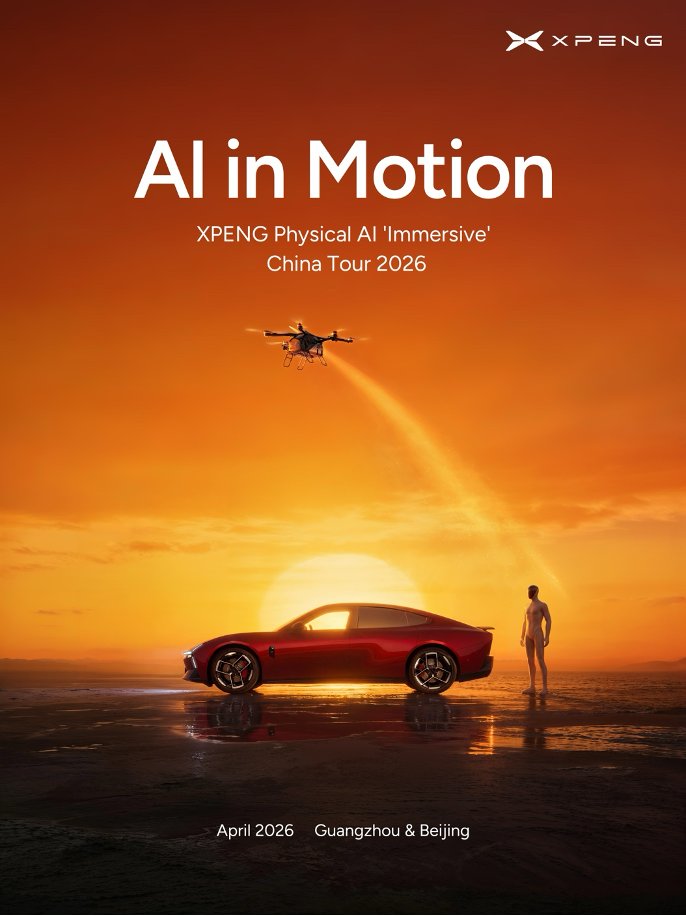
XPENG will host global media in China for its 2026 Media Tour under the theme “AI in Motion.”
Expect a closer look at VLA 2.0, the Turing AI chip, and how AI is being integrated across driving, cockpit, and robotics.
Robots that can move are common. Robots that can connect face to face aren’t.
AheadForm is making that real, backed by hundreds of millions RMB and a focus on emotion, expression, and real-time interaction.
I'm delighted to share a newly released technical report from our engineering team on the latest advances in world models. XPENG X-World is a physics AI system that can "think through" driving scenarios. It simulates and predicts how road conditions will evolve seconds into the future, based on real-time road environments and driving maneuvers.
XPENG X-World has already become a foundational enabler across key pillars of our autonomous driving development, including closed-loop simulation testing, reinforcement learning, and targeted data generation. For example, leveraging its core capability of controllable generation, X-World is focused on improving the performance of our VLA 2.0 in challenging scenarios such as sudden pedestrian dart-outs at intersections and hesitation during lane changes in congested traffic. Meanwhile, X-World generates region-specific overseas driving data for model training, accelerating the global rollout of XPENG's autonomous driving technology.
Please dive into the full details in our technical report: https://t.co/Bua50tBv4i
This is XPENG’s customized parking feature.
Simply mark where you want the car to park, and it will navigate and park there automatically with precision.
Figure released a demo of its humanoid robot performing household tasks.
The key detail: the behavior wasn’t pre-programmed.
The robot used a vision-language-action AI system to interpret the scene and generate actions in real time.