@krbaylor618@TomNiziol Dynamic braking. And, the way the brakes wear without it, they would need a shop ready to deal with worn brakes too frequently to be practical and those shops are long gone.
Dear @Roku - please, for the love of 2026 - add options to clear device and app cache. I’m tired of having to reinstall apps, and restoring my device to factory then signing back in to everything. It’s not 2010 !
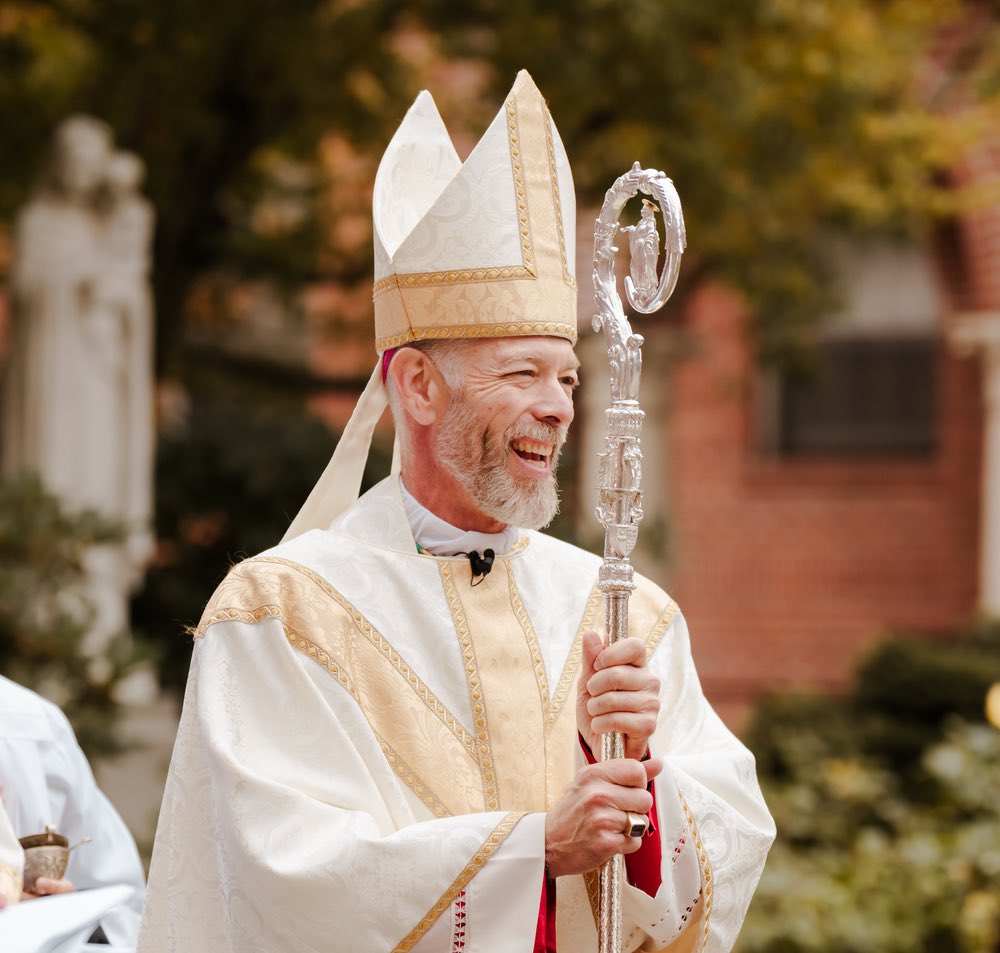
“Today, to be in full communion with the Holy See, one must accept those affirmations and teachings of Vatican II that are pastoral and certainly non-definitive in terms of their magisterial nature. This raises an important question: Why is the unconditional acceptance of the texts of Vatican II presented as a conditio sine qua non for full communion with the Holy See, while no comparable requirement exists with respect to the pastoral, disciplinary, or non-definitive teachings of the preceding twenty Ecumenical Councils?” — Bishop Athanasius Schneider
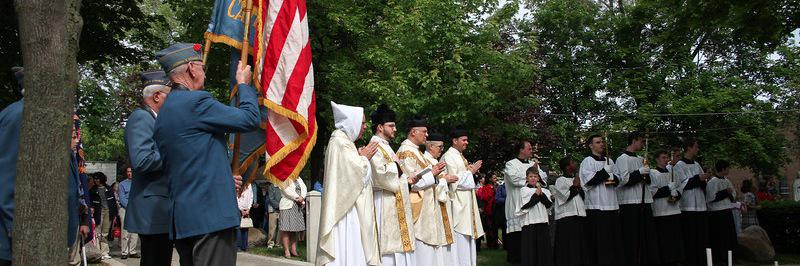
Catholic priest Canon Jean-Marie Moreau suffered a medical emergency while celebrating a Corpus Christi Mass at St. Joseph Oratory in Nevada, but he did not stop the Mass. The church shared that he prayed for “only the strength necessary to finish the Mass,” completed the liturgy, and then sought emergency medical care.
Image: St Francis De Sales Oratory
In what will certainly become one of the most fundamental speeches of his pontificate, Pope Leo XIV told the Spanish Parliament, before receiving a 7-minute standing ovation: "The defense of human life is neither a partisan issue nor a confessional interest: it is a goal of civilization."
"If life ceases to be recognized as a fundamental value, what future can our societies have?" he said, speaking to a gathering of politicians, many supporting abortion and euthanasia.
"Can a community that casts into the shadows the unborn child, the elderly, the sick, those who suffer in silence, or those who depend entirely on the care of others be called fully just?"
"Every human life must be recognized and safeguarded from conception to its natural end, in every circumstance of its existence. When this certainty is obscured, the most vulnerable are the first victims, and the law loses its deepest meaning: to serve and protect every person."
"For this reason, the moral greatness of a nation is manifested, above all, in its capacity to accompany, protect and love those lives that are most fragile," he said, repeating what John Paul II emphasized decades ago.
Starting his speech he commented that Church's is the "message offered in the spirit of service to the human person."
"When the Church addresses anything concerning public life, she does so while respecting the proper mission of institutions and the legitimate responsibility of those who have received the mandate to legislate," Pope Leo said, emphasizing "the Church offers a reflection born of the desire to serve the common good."
He hailed Spain as country that "has known how to view the human being as more than just a cog in the social, economic or political order. It has recognized the human being as a creature open to truth, endowed with freedom, and driven by a thirst for eternity that no temporal reality can quench -- in a word, as someone whose dignity takes precedence over all utility and to whose service legislative action is subject."
He said it was Catholic orders that "helped to shape a legal and moral consciousness capable of remembering that authority always entails responsibility and that every human being must be recognized as a subject of rights and duties."
"That aspiration continues to resonate today: that dignity, justice and the common good should be the measure of social relations, both at the national and international levels."
Referring multiple times to his "Magnifica Humanitas" encyclical, he said: "When the common good ceases to be a shared horizon, public action runs the risk of fragmenting into partial interests, incapable of safeguarding what belongs to all."
"In this context, the family — the primary human reality and the natural foundation of the community — takes on particular importance," Pope Leo said.
"The family will always be the first school of humanity, where one learns, before anywhere else, the basic grammar of living together: welcoming life, caring for others, forgiving, serving and belonging."
"Human life can never be treated as a commodity," the pope said.
"A law does not attain its true greatness merely by having been formally enacted; it attains it when, in addition to being valid in form, it can stand before the dignity of the person and pass that test without shame."
"I invite you, then, to lift your gaze to the world around you, not to turn away from reality, but to remember that every decision by public authorities affects real people, especially those who have less power to make their voices heard."
"The expanse of one’s vision consists precisely in looking more deeply at what is at stake in every public decision. This is why, alongside technical solutions and legal reforms, a moral renewal is also needed."
Video: Vatican Media
(fragment of speech follows)
@McJuggerNuggets Sadly, this is false compassion. The Down Syndrome community will have the last word. My guess is, in time, you will both regret this decision. The weight will be heavy. Once your eyes open, know that no sin is unforgivable.
My father grew up in the segregated South.
He had to walk around to the BACK of a restaurant just to order a sandwich because he was black.
THAT was Jim Crow.
Not showing a photo ID to vote.
You need an ID to:
• Board a plane
• Cash a check
• Buy alcohol
• Enter federal buildings
But suddenly showing an ID to vote is “racist”?
Give me a break.
This is not civil rights.
This is political theater.
The Democrat Party survives by manufacturing grievance because they have nothing else to run on.
Comparing voter ID laws to segregation is not just dishonest, it is insulting to the people who actually lived through Jim Crow.
Asking Americans to prove they are who they say they are when they cast their vote is called common sense.
@MI_Republicans If you want seniors to sell their homes to help open the market, someone needs to to address the Medicare IRMAA issue. When one needs to move due to age or illness they shouldn’t get hit with Medicare IRMAA surcharges on that sale.
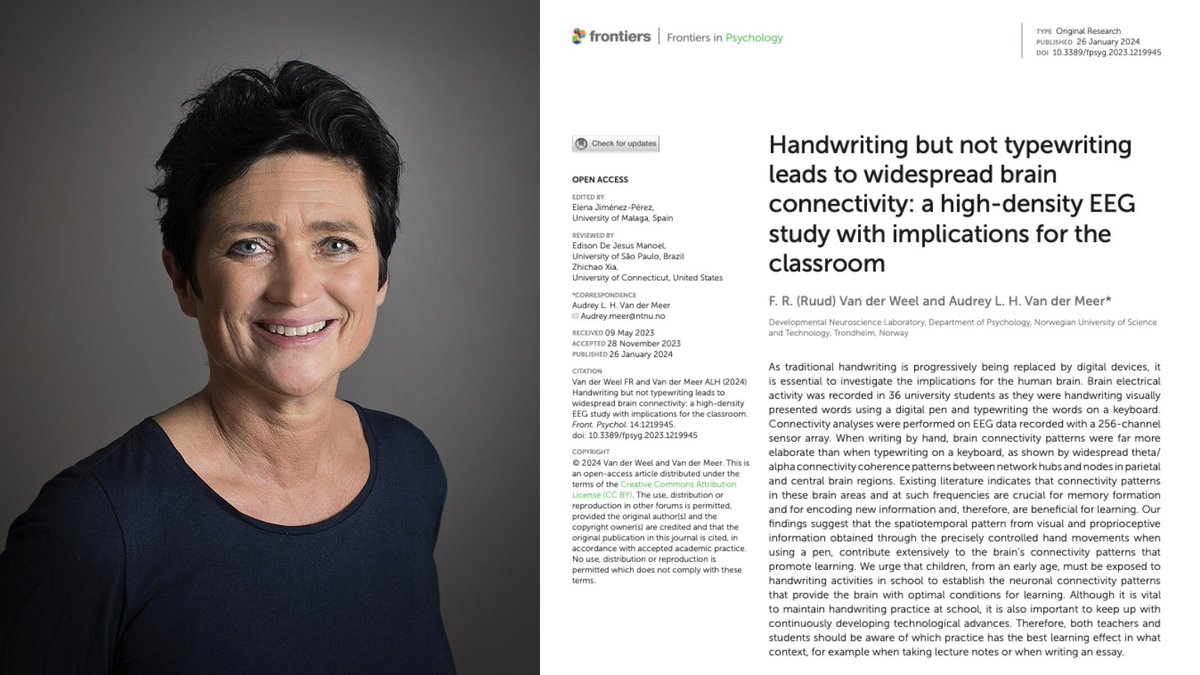
A Norwegian neuroscientist spent 20 years proving that the act of writing by hand changes the human brain in ways typing physically cannot, and almost nobody outside her field has read the paper.
Her name is Audrey van der Meer.
She runs a brain research lab in Trondheim, and the paper that closed the argument was published in 2024 in a journal called Frontiers in Psychology. The finding is brutal enough that it should have changed every classroom on Earth.
The experiment was simple. She recruited 36 university students and put each one in a cap with 256 sensors pressed against their scalp to record brain activity. Words flashed on a screen one at a time.
Sometimes the students wrote the word by hand on a touchscreen using a digital pen, and sometimes they typed the same word on a keyboard. Every neural response was recorded for the full five seconds the word stayed on screen.
Then her team looked at the part of the data most researchers had ignored for years, which is how different parts of the brain were communicating with each other during the task.
When the students wrote by hand, the brain lit up everywhere at once.
The regions responsible for memory, sensory integration, and the encoding of new information were all firing together in a coordinated pattern that spread across the entire cortex. The whole network was awake and connected.
When the same students typed the same word, that pattern collapsed almost completely.
Most of the brain went quiet, and the connections between regions that had been alive seconds earlier were nowhere to be found on the EEG.
Same word, same brain, same person, and two completely different neurological events.
The reason turned out to be something nobody had really paid attention to before her work. Writing by hand is not one motion but a sequence of thousands of tiny micro-movements coordinated with your eyes in real time, where each letter is a different shape that requires the brain to solve a slightly different spatial problem.
Your fingers, wrist, vision, and the parts of your brain that track position in space are all working together to produce one letter, then the next, then the next.
Typing throws all of that away. Every key on a keyboard requires the exact same finger motion regardless of which letter you are pressing, which means the brain has almost nothing to integrate and almost no problem to solve.
Van der Meer said it plainly in her interviews.
Pressing the same key with the same finger over and over does not stimulate the brain in any meaningful way, and she pointed out something that should scare every parent who handed their kid an iPad.
Children who learn to read and write on tablets often cannot tell letters like b and d apart, because they have never physically felt with their bodies what it takes to actually produce those letters on a page.
A decade before her, two researchers at Princeton ran the same fight using a completely different method and ended up at the same answer. Pam Mueller and Daniel Oppenheimer tested 327 students across three experiments, where half took notes on laptops with the internet disabled and half took notes by hand, before testing everyone on what they actually understood from the lectures they had watched.
The handwriting group won by a wide margin on every question that required real understanding rather than surface recall.
The reason was hiding in the transcripts of what the two groups had actually written down.
The laptop students typed almost word for word, capturing more total content but processing almost none of it as they went, while the handwriting students physically could not write fast enough to transcribe a lecture in real time, which forced them to listen carefully, decide what actually mattered, and put it in their own words on the page.
That single act of choosing what to keep was the learning itself, and the keyboard had quietly skipped the choosing and skipped the learning along with it.
Two studies. Two countries. Same answer.
Handwriting makes the brain work. Typing lets it coast.
Every note you have ever typed instead of written went into your brain through a thinner pipe. Every meeting, every book highlight, every idea you captured on your phone instead of on paper was processed at half depth.
You did not forget those things because your memory is bad. You forgot them because typing never woke the part of the brain that would have made them stick.
The fix is the thing your grandmother already knew.
Pick up a pen. Write the thing down. The slower road is the faster one.
CORRECTION: In an earlier version of this article (pictured below), I mistakenly translated the Italian word “ictus” (i.e. “stroke”) as “heart attack” and sincerely apologize for the mistake.
Here is my amended and updated article: https://t.co/YDGFmF5d5I