Technological progress — valuable in itself — requires careful discernment of the anthropological vision that guides it and the ends it pursues. If technological development advances without a corresponding ethical and social progress, the result may be an increase in means without a growth in humanity: “having more” without “being more.” There is a risk that individuals will be evaluated principally according to the outcomes they produce. #MagnificaHumanitas
https://t.co/6i9MWs7jyT
A founder just apologized for dialing in to office hours from a car. It’s the sixth time he’s done this.
He spends close to 100% of his time meeting customers in unglamorous places a long way from San Francisco.
I wish more founders did this.
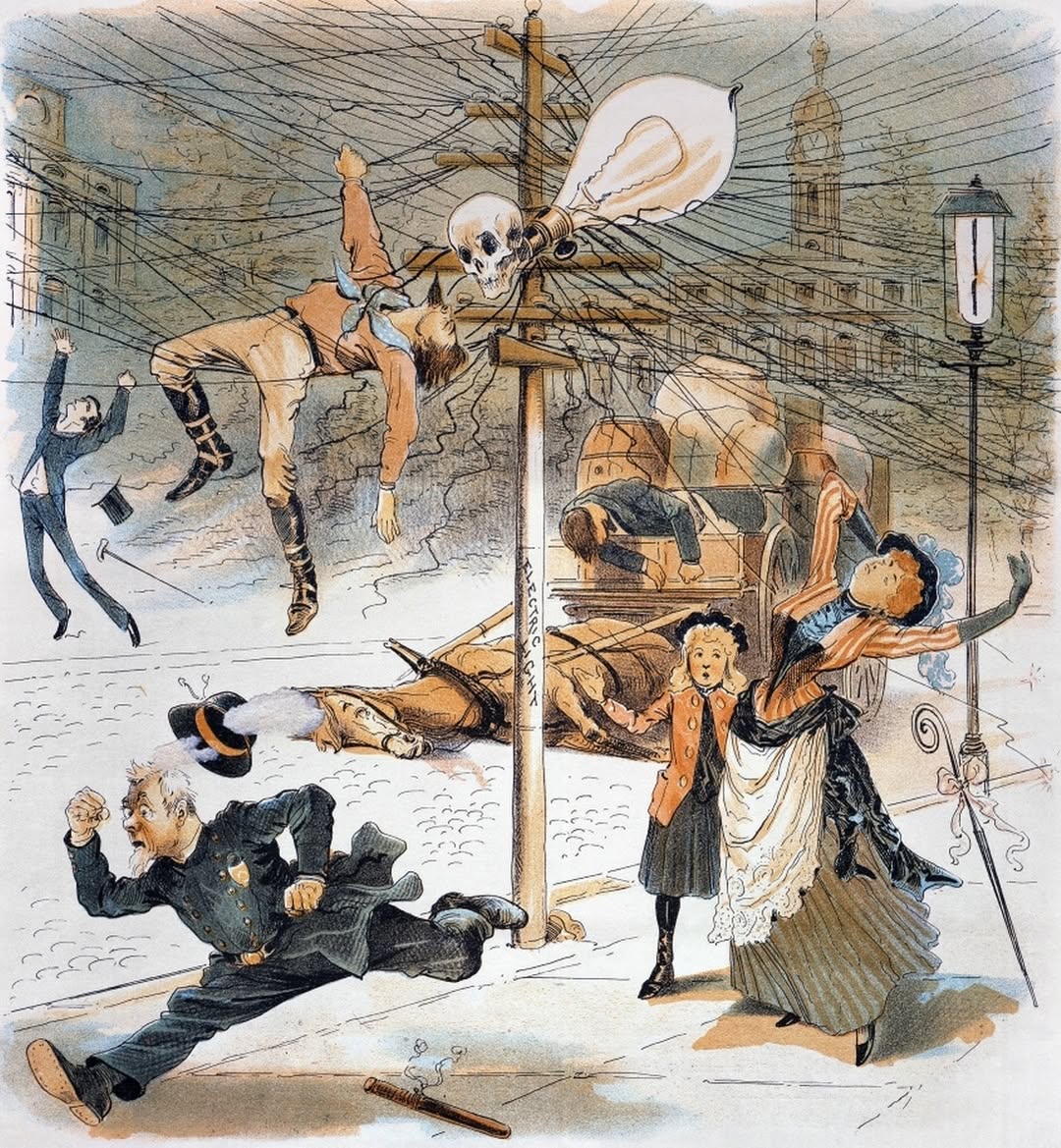
Today, nobody is against electricity, or electrification.
But the anti-data centre backlash we are seeing today has a precedent: the anti-electricity backlash of the early 1900s.
They thought electricity would lead to horrible things.
Here's a propaganda cartoon from then:
@a1expark And I think a big part of that is the relative safety/security of being in one of these spaces where demand is always there leads to a lack of innovation/complacency in those spaces. Disrupters abound—eg very bullish on the modernization of the funeral home industry
@a1expark Ex. Chegg had great consistent demand. Every school year a new batch of kids come in needing help w/ hw. Crushes it…until a technological advancement (in this case both logistical and societal with AI) makes their entire business model irrelevant.
In 2023, Stanford professor Graham Weaver gave his last lecture on how to destroy fear & live a wildly ambitious life.
His frameworks:
- Suffering is inevitable
- Signup for "10 years" test
- "Not me" & "Not now" traps
13 lessons on how to build an asymmetric life:
@lukeburgis Read Wanting for the first time last year and genuinely favorite book I’ve ever read. Is this meant as a kind of sequel building off the last book or completely different?