@TVGolfJunkie@motihari1903go Ich habe selbiges von einer Soz.-Päd. an einer Sprachförderschule in D gehört. (Dort natürlich Bürgergeld, für die Klugscheisser)
@Neckarman239272@RbrtStrss@cem_oezdemir Saublödes Geschwätz ist, wenn man das euphemistische Politiker-Geblubber auf Teufel komm raus meint verteidigen zu müssen.
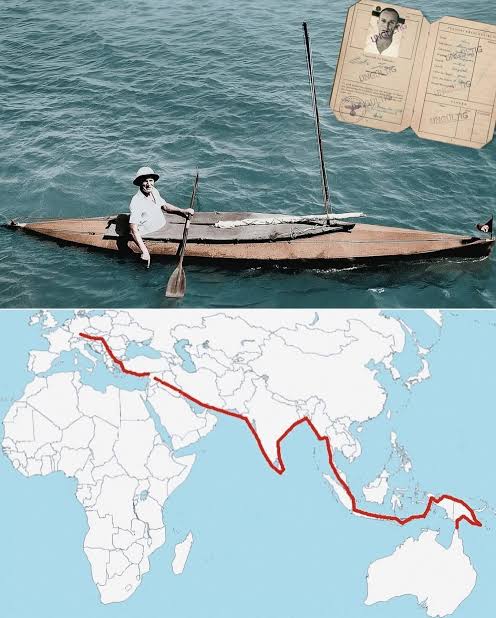
In 1932, Oskar Speck left Germany in a folding kayak, not as a famous explorer, but as an unemployed electrical contractor looking for work. His original plan was much smaller than the legend that followed. He intended to paddle from Germany to Cyprus, where he hoped to find a job in the copper mines. But once he reached the Mediterranean, the journey kept pulling him farther east.
Over the next seven years, Speck paddled through rivers, coastlines, storms, heat, hunger, and dangerous waters. He traveled through the Middle East, India, Southeast Asia, New Guinea, and finally toward Australia. By then, the world had changed around him. Germany had gone to war, and a lone German man arriving by kayak was no longer seen simply as an adventurer. He reached Australian territory in September 1939, just after World War II had begun.
After one of the most unusual kayak journeys ever recorded, Speck was greeted, congratulated, and then arrested as an enemy alien because he was traveling on a German passport. He spent the war years in internment camps in Australia and was only released after the war ended. Instead of returning to Germany, he stayed in Australia, later working in the opal trade and building a new life there. His journey began as a search for work, but it turned into a seven-year accidental epic across half the world.
#drthehistories