Today, India takes a defining step in its civil nuclear journey, advancing the second stage of its nuclear programme.
The indigenously designed and built Prototype Fast Breeder Reactor at Kalpakkam has attained criticality.
This advanced reactor, capable of producing more fuel than it consumes, reflects the depth of our scientific capability and the strength of our engineering enterprise. It is a decisive step towards harnessing our vast thorium reserves in the third stage of the programme.
A proud moment for India. Congratulations to our scientists and engineers.
India's batting depth is unbelievable and with, effectively, four all-rounders, it would need teams to play at a very high level to get past them. This is as good as I have seen a team play white ball cricket
A TON OF THINGS HAPPENED IN THE STOCK MARKET TODAY.
Here's a full recap:
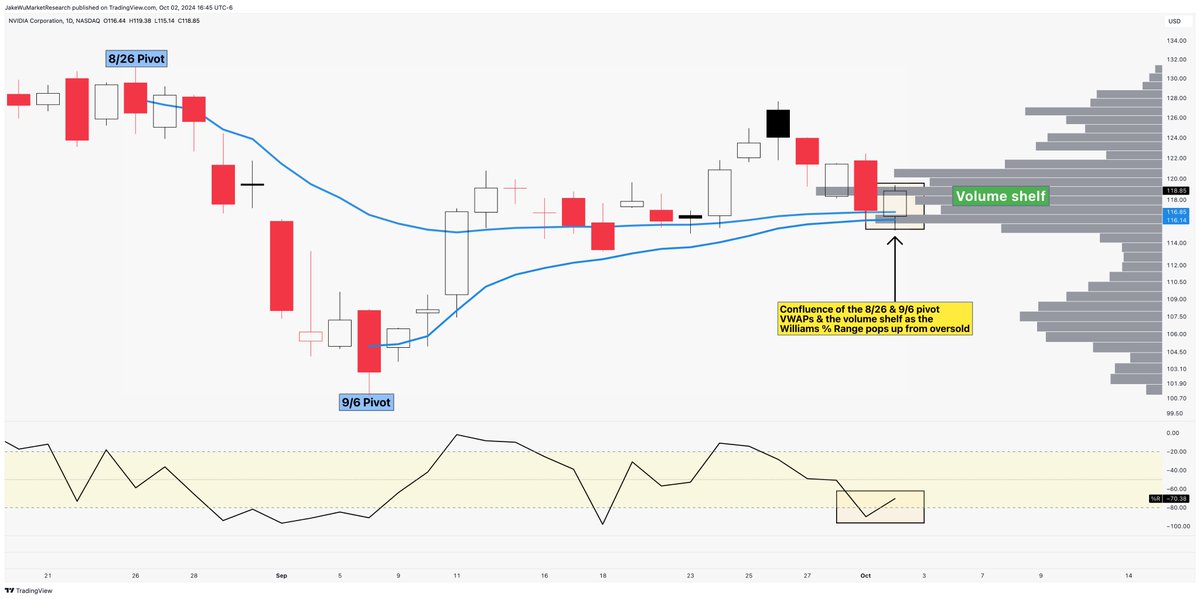
1. $NVDA Nvidia’s stock dropped by 9% today after The Wall Street Journal reported Chinese buyers were illegally accessing its latest chips, evading U.S. export controls. The news raised fears of tighter regulations. Nvidia claims it’s not liable for resellers’ actions, but concerns linger about potential U.S. government restrictions impacting its revenue. The uncertainty has also pulled down the broader semiconductor sector. While the short term pain erased another $250B+ of market cap today, bulls argue that this is just noise given the earnings we saw. In its latest fiscal year, Nvidia reported a 114.2% year-over-year revenue increase to $130.5 billion, with net income increasing 144% to $72.8 billion, achieving a robust 55% profit margin. Analysts forecast revenue to reach $204.3 billion this year and $247.5 billion next year, with EPS growing 43% to $5.7 by 2027, yet the stock trades at an attractive 19.32 times 2027 earnings, undervalued compared to peers like $WMT Walmart and $COST Costco.
2. President Trump has signed an action to tariff China at 20%, per the White House. He also confirmed that the US will impose 25% tariffs on Canada and Mexico starting tomorrow. By late afternoon today, Bloomberg reported that Trump has officially paused all US aid to Ukraine following his public clash with Zelenskyy last Friday and any aid in transit will be immediately halted as well. The S&P 500 $SPX was down 2% today, now down 0.32% for the year. The 10-year treasury hit a low for the year at 4.15%.
3. What happened with Crypto over the weekend: First, President Trump posted this on Sunday: "A U.S. Crypto Reserve will elevate this critical industry after years of corrupt attacks by the Biden Administration, which is why my Executive Order on Digital Assets directed the Presidential Working Group to move forward on a Crypto Strategic Reserve that includes $XRP, $SOL, and $ADA. I will make sure the U.S. is the Crypto Capital of the World. We are MAKING AMERICA GREAT AGAIN.And, obviously, $BTC and $ETH, as other valuable Cryptocurrencies, will be the heart of the Reserve. I also love Bitcoin and Ethereum!" After this post, the entire crypto market gained +330B of market cap with $BTC getting to $95K. The White House then announced their first ever Crypto Summit happening on March 7th. David Sacks, the AI/Crypto Czar, announced that he sold all his personal crypto holdings before taking the job, but many people felt this crypto reserve including assets other than $BTC was because of his VC fund, Craft, having a stake in a company called Bitwise $BITW that also shares the same top 5 holdings as what Trump announced. Many people are confused around why US tax dollars would be funding something like this but David Sacks said that no one knows exactly how it will be funded and people should wait until they see what happens. $BTC Bitcoin is now back to $85K, erasing the pump from when Trump posted about the strategic crypto reserve.
4. The Atlanta Fed has sharply lowered its Q1 GDP estimate to -2.8%, doubling the contraction rate from its -1.5% forecast issued just last week. This revision follows a weak ISM report missing nearly all key metrics, signaling lower inflation but also stunted growth. The bond market reflects this with the 10-year Treasury hitting 2025 lows as investors scoop up treasuries, anticipating rate cuts amid tariff threats. Some suggest this downturn may tie to companies front-loading imports to dodge tariffs, skewing Q1 export figures. The aggressive revision raises questions about whether a major economic slowdown is looming or if other factors are at play.
5. President Trump and Taiwan Semiconductor $TSM have revealed plans for a massive $165 billion investment in the U.S., including $100 billion specifically noted by the WSJ, to construct five new chip factories. The bulk of this funding will target Arizona, aiming to bolster advanced semiconductor production. This move supports a longstanding U.S. ambition to revive its domestic chip industry, which has largely shifted to Asia over the years. The expansion promises to enhance cutting-edge manufacturing capabilities on American soil.
6. Leon Cooperman, an American billionaire investor, is trimming his portfolio and keeping 15% in cash—far more than Wall Street’s norm—due to unease with market conditions. Speaking to CNBC, he expressed concerns over lofty valuations and policy ambiguity, stating, “I don’t like what I see.” Though he backs Trump’s deficit-cutting goals, he cautioned that tariffs might “contract” businesses tied to government funds. Cooperman added, “The president is on the right track, but he’s doing things in a very destabilizing manner.”
7. GitLab $GTLB reported a strong Q4’25, beating estimates with adjusted EPS of $0.33 (versus $0.23 expected) and revenue of $211.4 million (up 29% year-over-year), supported by a 123% dollar-based net retention rate and a 40% increase in total RPO to $945 million. For FY26, GitLab projects revenue of $936M–$942M and adjusted EPS of $0.68–$0.72, though slightly below estimates, while boosting adjusted free cash flow to $62.1 million (up from $24.5 million) and expanding its adjusted operating margin to 18%. Okta $OKTA also outperformed in Q4’25, posting adjusted EPS of $0.78 (versus $0.74 expected) and revenue of $682 million (up 13% year-over-year), with RPO rising 25% to $4.215 billion and adjusted free cash flow jumping to $284 million (42% of revenue), while guiding FY26 revenue to $2.85B–$2.86B and adjusted EPS of $3.15–$3.20, both ahead of projections.
8. HD Hyundai, $PLTR Palantir and Siemens have partnered on AI shipbuilding. The partnership between HD Hyundai, Palantir, and Siemens to implement AI and digital twin technology in shipbuilding through the “Future of Shipyard” (FOS) project could significantly transform the industry. By enhancing automation and reducing human intervention, the initiative is projected to boost productivity and cut shipbuilding time by 30% by 2030, potentially lowering costs and increasing efficiency for HD Hyundai. Palantir began working with HUD in 2019 and secured a 5-year $45M contract from them in 2022.
9. CoreWeave, a cloud provider specializing in $NVDA Nvidia-based processors, has filed for an IPO and will list on Nasdaq under the ticker $CRWV. The company saw its revenue soar to $1.92 billion in 2024, a 737% year-over-year increase, though it recorded a net loss of $863.4 million. Microsoft, a key customer driving 62% of CoreWeave’s revenue, also competes with the firm. Operating over 250,000 Nvidia GPUs, CoreWeave is supported by investors like Magnetar (7%) and Nvidia (1%). The IPO is being managed by $MS Morgan Stanley, JPMorgan $JPM, and $GS Goldman Sachs. It is one of the first major IPOs of 2025.
10. Warren Buffett $BRK.B critiqued Trump’s tariffs in a CBS interview, labeling them “in a way, an act of war” and warning they could drive inflation and harm consumers. He described tariffs as "excise taxes" that burden payers, saying, “The tooth fairy isn’t going to come and pay for it! And then what? In economics, you always have to ask, ‘And then what?’”
11. In February 2025, Ken Griffin’s Citadel and Izzy Englander’s Millennium, two leading hedge funds, experienced declines amid a challenging market environment, as the S&P 500 fell 1.4% for the month. Citadel, founded by Ken Griffin, manages the Wellington fund, a multistrategy hedge fund that employs a variety of investment approaches—such as equities, fixed income, commodities, credit, and quantitative strategies—to generate returns and navigate market volatility, making it a key player in providing liquidity and stability to the stock market. Similarly, Millennium, led by Izzy Englander, operates as a multistrategy hedge fund, diversifying across numerous trading strategies and asset classes to capitalize on market opportunities, contributing to market efficiency by actively trading and managing risk, though both funds saw losses of 1.7% for Citadel’s Wellington and 1.3% for Millennium during the month due to geopolitical tensions and shifting trade policies.
12. Today, Tom Lee, co-founder and head of research at Fundstrat Global Advisors, expressed confidence in the resilience of AI spending on CNBC, stating, “I don’t think AI spending is really going to weaken,” despite market shifts. Tom believes we are going to bottom this week for the first half of the year but he does express concerns around if the labor market is strong or beginning to weaken. He also offered a short-term bearish outlook for Bitcoin, forecasting a potential drop to $62,000—but remained bullish long-term, highlighting its decade-long growth and increasing utility. He believes $BTC will be above $150K by end of year.
WALL STREET IS THE GREATEST SHOW ONE EARTH.
Is Quantum Computing the Next Revolution or an Overhyped Trend?
Quantum computing has emerged as one of the most polarizing topics in recent months, sparking debate over its future trajectory. Is it destined to follow the path of overhyped technologies like 3D printing or the dot-com bubble, or are we witnessing the dawn of a structural transformation in computation, comparable to the foundational days of AI?
Once relegated to the confines of academic research and futuristic imaginings, it now stands as a seismic paradigm shift in the way humanity approaches computation. At its core, quantum computing challenges the binary constraints of classical systems, leveraging the unique properties of qubits and their ability to exist in states of superposition -- simultaneously representing multiple possibilities. Whether this marks a fleeting trend or a paradigm shift in technology remains the question defining its moment in history.
This revolution could not have arrived at a more critical moment. Industries across the globe are buckling under the strain of bottlenecks in data processing, optimization, and security. As quantum capabilities advance, they pose a direct challenge to traditional encryption -- threatening the very foundations of digital trust. Yet, disruption breeds opportunity. The same quantum innovations that jeopardize current systems also hold the key to rebuilding cybersecurity for a new era, fortified against quantum-enabled threats. Simultaneously, artificial intelligence, another transformative force, stands poised to amplify its capabilities through quantum computing’s unparalleled ability to process data at incomprehensible scales. From reimagining materials science to revolutionizing supply chains -- quantum computing is rapidly evolving from a niche pursuit to an economic catalyst.
Driving this metamorphosis are visionaries transforming quantum potential into real-world progress. $IONQ, a leader in trapped-ion technology, has redefined scalability and precision in quantum systems. Through strategic collaborations with tech giants like $AMZN and $MSFT, IonQ is turning theoretical capability into applied breakthroughs in logistics and artificial intelligence. Similarly, $NVDA, with its CUDA Quantum platform, has established itself as a linchpin in bridging quantum theory with practical adoption, enabling developers to simulate quantum algorithms on GPU infrastructure -- a critical step in democratizing access to quantum innovation.
Despite these advancements, the road to quantum ubiquity is fraught with challenges. $RGTI, a key player in superconducting qubit technology, showcases promising systems like its Ankaa-3. Yet, hurdles in scalability and system reliability underscore the complexities of achieving widespread adoption. In parallel, $QBTS continues to carve out a niche in quantum annealing, excelling in optimization problems but facing limitations in general-purpose applications. These divergent approaches illustrate the multifaceted nature of the quantum race -- where no single solution reigns supreme but each innovation contributes to an evolving tapestry of progress.
Beyond computation itself, quantum technology is reshaping the very concept of security. The looming specter of quantum-enabled cyber threats demands an entirely new framework for protecting sensitive data. Rising to this challenge, $ARQQ QuantumCloud platform offers encryption solutions robust enough to endure the quantum era. Meanwhile, tech giants like $GOOGL and $IBM are pushing the boundaries of quantum hardware. Google’s Willow processor is driving advancements in materials simulation and optimization, while IBM’s Qiskit platform merges accessibility with cutting-edge fault-tolerant processors -- bringing quantum computing to enterprises at scale.
$HON, too, exemplifies the potential of quantum technology in enterprise settings. Through its precision-engineered trapped-ion systems, developed in partnership with Cambridge Quantum, Honeywell is unlocking applications in aerospace and logistics -- demonstrating how strategic collaborations can accelerate progress.
Quantum computing is a decade-long thematic play. The near-term volatility for first movers is inevitable, but for investors with patience and conviction, these fluctuations are part of the journey. The potential for quantum computing to redefine industries, drive efficiencies, and unlock unprecedented opportunities makes it one of the most compelling long-term narratives in technology. Embrace the turbulence -- it’s the price of being early in a revolution.
The reason top tech companies often hire foreign-born & first-generation engineers over “native” Americans isn’t because of an innate American IQ deficit (a lazy & wrong explanation). A key part of it comes down to the c-word: culture. Tough questions demand tough answers & if we’re really serious about fixing the problem, we have to confront the TRUTH:
Our American culture has venerated mediocrity over excellence for way too long (at least since the 90s and likely longer). That doesn’t start in college, it starts YOUNG.
A culture that celebrates the prom queen over the math olympiad champ, or the jock over the valedictorian, will not produce the best engineers.
A culture that venerates Cory from “Boy Meets World,” or Zach & Slater over Screech in “Saved by the Bell,” or ‘Stefan’ over Steve Urkel in “Family Matters,” will not produce the best engineers.
(Fact: I know *multiple* sets of immigrant parents in the 90s who actively limited how much their kids could watch those TV shows precisely because they promoted mediocrity…and their kids went on to become wildly successful STEM graduates).
More movies like Whiplash, fewer reruns of “Friends.” More math tutoring, fewer sleepovers. More weekend science competitions, fewer Saturday morning cartoons. More books, less TV. More creating, less “chillin.” More extracurriculars, less “hanging out at the mall.”
Most normal American parents look skeptically at “those kinds of parents.” More normal American kids view such “those kinds of kids” with scorn. If you grow up aspiring to normalcy, normalcy is what you will achieve.
Now close your eyes & visualize which families you knew in the 90s (or even now) who raise their kids according to one model versus the other. Be brutally honest.
“Normalcy” doesn’t cut it in a hyper-competitive global market for technical talent. And if we pretend like it does, we’ll have our asses handed to us by China.
This can be our Sputnik moment. We’ve awaken from slumber before & we can do it again. Trump’s election hopefully marks the beginning of a new golden era in America, but only if our culture fully wakes up. A culture that once again prioritizes achievement over normalcy; excellence over mediocrity; nerdiness over conformity; hard work over laziness.
That’s the work we have cut out for us, rather than wallowing in victimhood & just wishing (or legislating) alternative hiring practices into existence. I’m confident we can do it. 🇺🇸 🇺🇸
The reason I’m in America along with so many critical people who built SpaceX, Tesla and hundreds of other companies that made America strong is because of H1B.
Take a big step back and FUCK YOURSELF in the face. I will go to war on this issue the likes of which you cannot possibly comprehend.
Shares of $PLTR are on pace for another record close.
@PalantirTech CTO @ssankar discusses what’s behind the company’s recent surge in demand, its overall AI ambitions and how it has helped ramp up defense strategy for the U.S. and its allies.
$NVDA playing out to perfection 😎
Something has changed tho!
Big money hit the options market hard today. Tagging an Alpha Gold Alert ‼️
Find out how I plan to trade $NVDA into the rest of this week, and if $110 is still a possibility ⬇️