My go to channels on YouTube for Data Analytics contents:
9. Data With Ezekiel
8. Alex the Analyst
7. Kevin Stratvert
6. Leila Gharani
5. Luke Barouse
4. How to Power BI
3. AnalyzeWithAli
2. Pragmatic Works
1. Learnit Training
Don't forget to repost🔥
Earlier this year, I worked with a few international hiring panels. And I saw a lot of recruiters go out of their way to disqualify African talent.
If you’re prepping for an international remote job interview, here are the curveball questions you should be well prepared for:
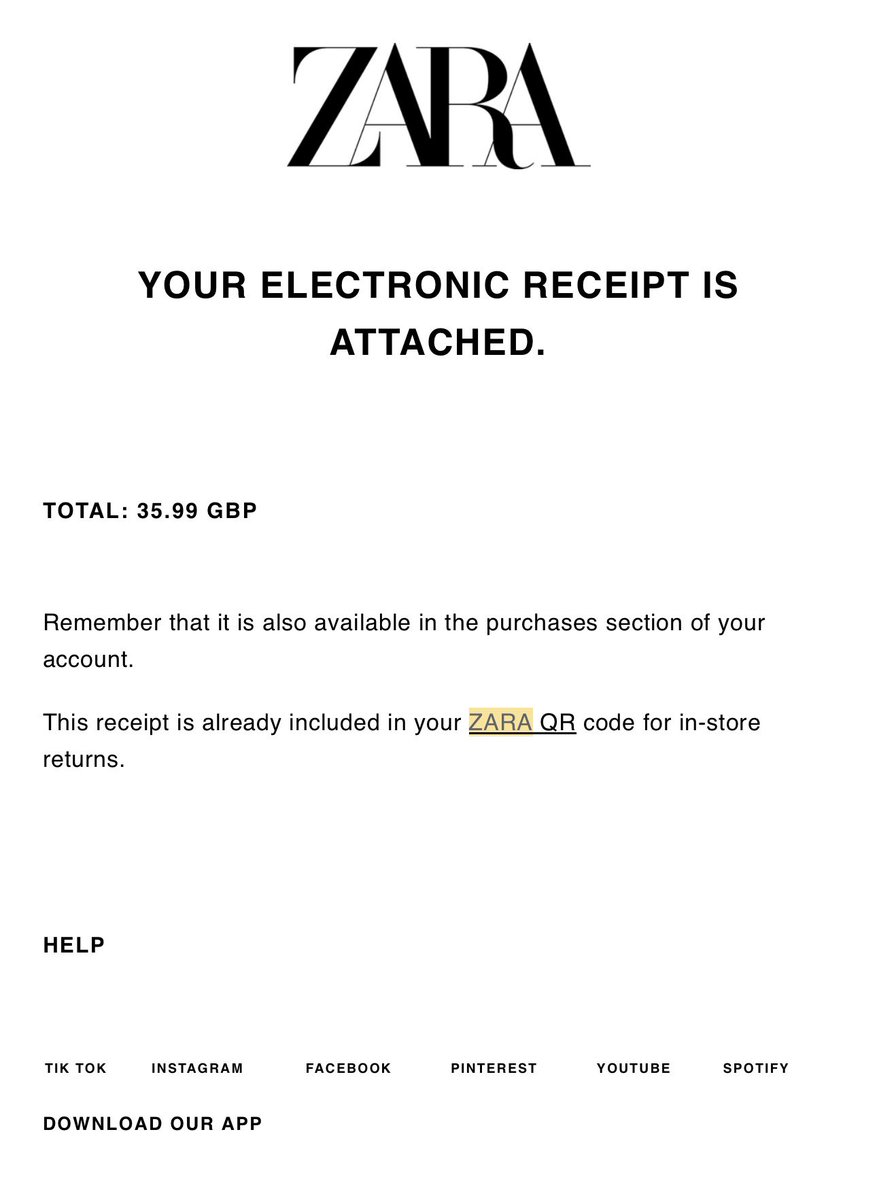
At Heathrow Airport on my way to Glasgow this morning, I noticed a sweet, pleasant smell that made me delay my check-in for a couple of minutes just so I could get the name of the perfume.
Man was on call, but he kinda noticed I was trying to get his attention.
He said, ZARA (FASHIONABLY LONDON N°O4).
Entered ZARA store and to my greatest surprise, the perfume is less than £50.
The reason why I’m never caught off guard, especially at work or in a corporate setting, is because I use frameworks to structure my thinking, actions & responses. That quick, in-the-moment brain analysis significantly helps you sound more prepared, polished and competent.
A few frameworks I use:
Tell me about yourself (SEAT) – Skills, Experience, Accomplishments, Type of Person.
Communication (SCR) - Situation, Complication, Recommendation.
Critical Thinking (RED) – Recognize Assumptions, Evaluate Arguments, Draw Conclusions.
Presentation (SCQR) – Situation, Complication, Question, Recommendation.
Problem Solving (DDAI) - Define Problem, Data Gathering, Analyze Root Cause, Implement/Evaluate Solutions
Decision Making (DAC) – Define Options, Assess Trade-offs, Choose & Commit.
Training (TSDG) – Teach, Show, Do, Give Feedback.
Giving Feedback (SBI) – Situation, Behavior, Impact.
Root Cause Analysis (5 Whys) – Keep asking “Why?” until you uncover the underlying cause.
Goal Setting (SMART) – Specific, Measurable, Achievable, Relevant, Time-bound.
Project Reviews (SSC) – What to start, stop, and continue doing.
Prioritization (4Ds) – Do, Decide, Delegate, Delete
Meeting Updates (PPP) – Progress, Problems, Plan.
Beyond work, frameworks also improve how I approach life and decision making in general, also saves me a lot of time.
"Do you see someone skilled in their work? They will serve before kings and not before officials of low rank." - Proverbs 22:29
Skill, at the highest level, always finds its reward.
Excel + VLOOKUP = Beginner
Excel + XLOOKUP + INDEX MATCH = Intermediate
Excel + Power Query + Power Pivot = Advanced
Excel + VBA + Macros = Expert
Which one are you?
As someone who works with SQL daily and runs SQL queries on over 900 Terabytes of data here are some of the SQL rules i work with:
- Capitalize all commands/functions, lowercase fields with underscores
- Quote table names with “”
- Leading commas before field/CTE names (not trailing)
- WHERE 1=1 pattern for easier debugging
- Indentation to clearly delineate code blocks
- Comments for complex calculations, corner cases, special logic
- Clean names - no cryptic abbreviations, use full descriptive words with underscores
- CTEs over subqueries (except for deduplication/ranking patterns)
- Descriptive CTE names - no single letters, no reusing field names
- Explicit GROUP BY field names - no numbers; grouped fields listed first in SELECT
- Parameter CTE at the top for reusable values (dates, thresholds, etc.)
- Field ordering: Keys Timestamps → Dimensions → Metrics
- USING instead of ON when joining on same-named columns
Do you have any more I can incorporate?
For everyone asking, I'm currently learning SQL from Data with Baraa!
He breaks everything down so well for beginners
I'll drop the link to his SQL course in the comments below! 👇
Someone turned Claude into an entire company.
42 skills, organised like a real org chart (links below):
Here is every department, and where to get each one.
Developers
Superpowers → https://t.co/pPPxKoPEwD
Context7 → https://t.co/3Kk9U8PG1T
Skill Creator → https://t.co/Lanao7tpOh
MCP Builder → https://t.co/Lanao7tpOh
Webapp Testing → https://t.co/Lanao7tpOh
Claude-Mem → https://t.co/yTb8qxqa7S
Designers
UI UX Pro Max → https://t.co/MQTtS9flwt
Taste → https://t.co/AEq4GZc60x
Frontend Design → https://t.co/AEq4GZc60x
Transitions → https://t.co/Z7JOt7lJb2
Web Artifacts → https://t.co/Lanao7tpOh
Brand Guidelines → https://t.co/Lanao7tpOh
Marketing
45 skills to run your marketing, from copywriting to SEO to lead magnets.
Access them all here → https://t.co/OWo258NM7L
Social Media
17 skills to run your social media, from post writing to Reels to thumbnails.
Access them all here → https://t.co/2qawCgAyQF
Finance
8 skills to run your finances, from statements to reconciliation to audits.
Access them all here → https://t.co/X6dVFcZBIJ
Small Business
31 skills to run your small business, from cash flow to payroll to invoicing.
Access them all here → https://t.co/7Prb2sXVpI
Legal
9 skills to handle your legal work, from contract review to NDAs to compliance.
Access them all here → https://t.co/GKaZzGYPOr
Every skill on the chart is real and installable from the links above.
Same departments. Same output. No payroll.
Bookmark this.
People often ask:
“How do companies handle trillions of rows in ETL? Their jobs must take hours to load.”
The truth? They don’t process all the data all the time.
8 concepts that make large-scale data engineering possible:
1. Incremental Loading
Only process what’s new or changed. If 20 million records changed today, you process 20 million—not the entire 50 trillion-row table.
2. Partitioning
Split data by date, region, business unit, etc. Instead of scanning trillions of rows, you query only the relevant partition.
3. Parallel Processing
Distribute workloads across hundreds or thousands of workers. Big data is processed simultaneously, not sequentially.
4. Streaming Architecture
Many organisations process data in real time. By the time a dashboard is opened, most of the transformations have already happened.
5. Multiple Data Layers
Raw data is rarely queried directly. Data moves through Raw → Clean → Business → Aggregated → Dashboard layers, making analytics fast and efficient.
6. Materialized Views & Pre-computed Tables
Frequently used KPIs are calculated beforehand and stored. Your dashboard shouldn’t be recalculating five years of revenue every time someone clicks a filter.
7. Modern ETL is ELT
Today’s architecture is often Extract → Load → Transform. Load the data first and let your data warehouse do what it’s designed to do at scale.
8. Data Retention Policies
Not all data needs to live on expensive, high-performance storage. Recent data stays hot, while older data is moved to warm, cold, or archive storage.
The secret to handling trillions of records isn’t a bigger server. It’s good data architecture.
Incremental processing + Partitioning + Parallelism + Streaming + Aggregation + ELT + Smart Storage = Scalable data platforms.
That’s how the biggest data teams in the world do it.
“Data Engineering is so difficult to break into. There are too many things to learn. The tools are overwhelming.”
Those are the words of many people trying to break into the Data Engineering profession. Whether they come from Data Science, Data Analytics, or have no prior data background at all, the concern is usually the same.
Instead of worrying, approach it this way:
1.Accept that you can’t learn every tool. I’ve been in the data space for more than 10 years and haven’t used many of them.
Tools are not the critical success factor.
2.Understand the core functions of a Data Engineer. In your current role as a Data Analyst, you are probably already applying some Data Engineering concepts just on a smaller scale. Your goal is to deepen and expand that knowledge.
3.Focus on concepts. What concepts do Data Engineers work with daily? Learn them and practise them through projects. Those projects will eventually become your portfolio.
4.Don’t chase tools. Start with the fundamentals:
●SQL
●Python
●One cloud platform (AWS, Azure, or GCP)
Pick one cloud platform and learn it well. You can compare the others later.
The reason you should eventually understand the differences is simple you don’t know where your first opportunity will come from.
Having awareness of how these platforms work will help you communicate confidently during interviews.
5.Join a serious learning community. If it requires payment and you can afford it, consider it an investment in yourself.
6.Pray, if you’re a person of faith. Stay consistent and trust the process.
Breaking into Data Engineering isn’t about knowing every tool in the market. It’s about understanding the fundamentals, building projects, and staying persistent.
The tools will change.
The concepts won’t.