I feel more and more like the only innovation these new marketplaces bring is figuring out creative ways to profit from enabling manipulation, and provide incentives for volume inflation.
It’s honestly sad to watch the space operating with such economics, I really hope this changes soon.
thank you everyone for your participation and support through papertrade's launch.
we flipped the stock market’s volume in the first 6 hours. one day after launch, papertrade is a fully working 1000x exchange with 5m in the LP and has paid out 25M to stakers.
addressing two points that have come up:
-it was never possible to allow small notional to have the same priority as large notional. it opens the frontend up to spam congestion, which would have been infinitely worse than the existing queue. we designed the fair launch to be as inclusive as possible given those constraints.
-speaking of constraints, the overnight manipulation attempts on btc/eth on the hl bbo were not an oversight in the mechanism design we spent six months working on. these were always accounted for and only possible because the oi caps were extremely permissive for launch congestion. any oi cap during the queued launch demand would have exacerbated the slow experience, and the queue itself provided a natural protection against manipulation as confirming opens/closes had non-deterministic timing. as the congestion rolled off, we began the process of tightening up oi caps both onchain and at the relayer level. in a system like this, a manipulation attack is always possible - whether economically advantageous to attempt is the question. our goal is to set the parameters such that it is almost never profitable, and that the risk is extremely high/-EV at the tail even when it does work. evidence of this can be seen in the user that won overnight and continued to try again, ultimately donating almost all his profit back to the house via new accounts, without accounting for the cost of manipulating the bbo on hyperliquids side. a number of users equally opted to "undo" their manipulated trades in exchange for their farmed paper.
we are proud to be the first through the wall with this mechanism, at scale, in an adversarial environment. the market parameters cannot give undue advantage to either house or trader, such that the system becomes unstable and we have thought about these risks continuously since we began on this journey.
good luck to us.
@TheFatMbappe Thanks man, really appreciate it!
Tbh haven’t looked at HIP-4 properly yet, but I keep seeing more and more about it. Would definitely be interesting to dig into at some point.
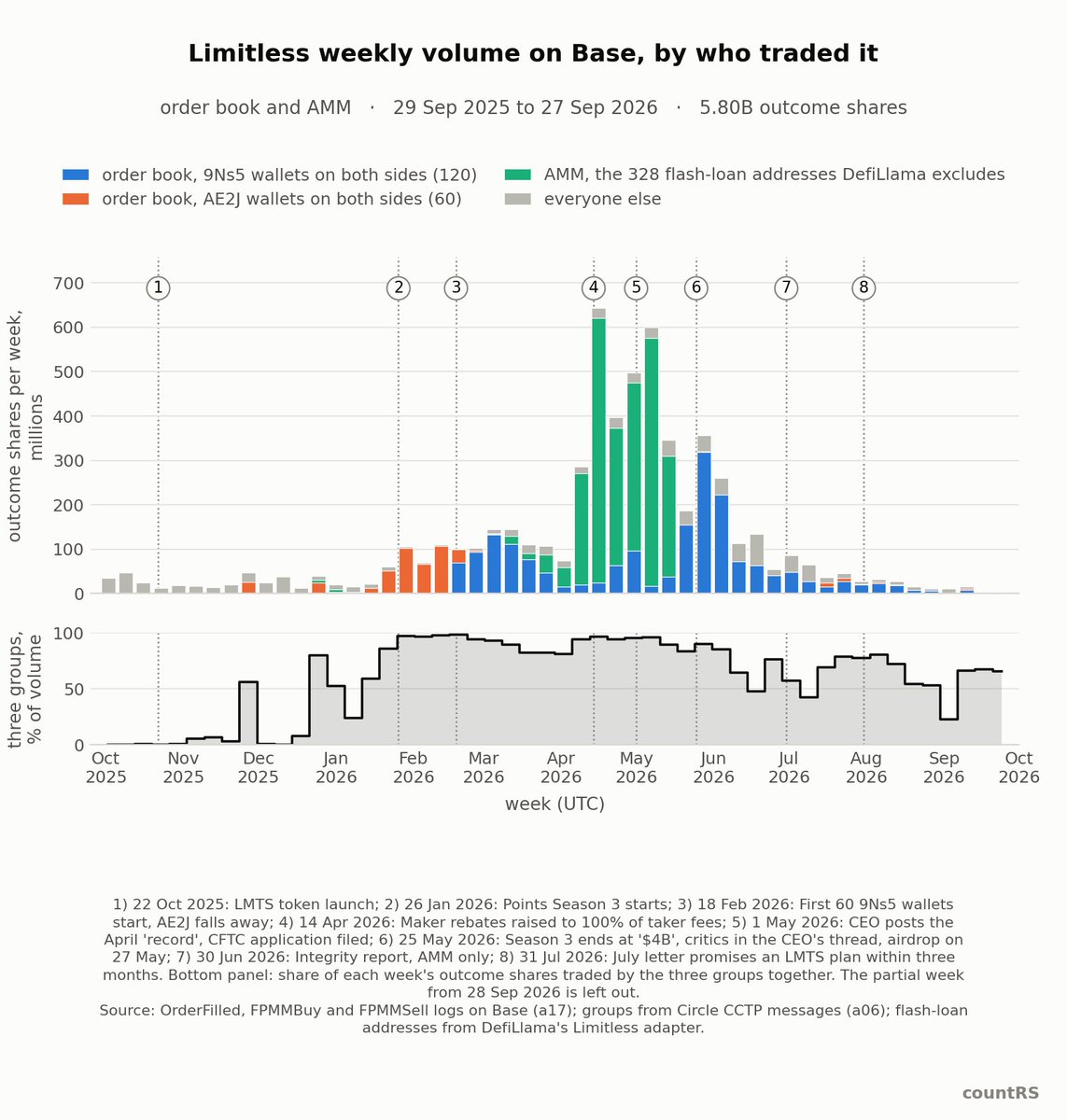
In this github repo, we researched the case of Limitless - one of the largest prediction market exchanges which has experienced large fluctuations in volume as of recent.
What we found underpinning these fluctuations were strange behaviors rooted in incentive design.
Interesting piece by @TheFatMbappe, worth checking out!
Unfortunately not idiosyncratic. Incentives shape outcomes, and venues should put more effort into building systems that limit such behaviour in the first place.
When the system is flawed, there is only so much you can do to defend it. Reminds a bit of ERM (1992).
🚨 TODAY: I'm exposing what's really behind Polymarket PERPS' numbers. And it's absolutely insane:
📊 ~50% of open interest is just 4 groups betting AGAINST THEMSELVES
💹 ~60% of all trading volume = went through JUST 4 groups or 54 linked accounts.
That's it. 🤯
The money paying them -- traces back to Polymarket's own fee wallet. 🤯
54 accounts in 4 groups.
Let's dig it, folks 👇🧵
━━━━━━━━━━━━━━━
📊 THE OPEN INTEREST THAT ISN'T THERE
On Polymarket Perps, a massive chunk is the same groups going LONG on one account and SHORT on another.
For example:
📅 Sept 3 → $21.0M of $52.3M (40%) -- Just trading against each other
📅 Oct 3 → $41.1M of $77.4M (53%) -- Same here, trading against each other. 0 Exposure.
The exchange added ~$25M in open interest over the month.
BUUUUT:
~$20M of it which is ~80%, came from these self-cancelling positions. 🤯
━━━━━━━━━━━━━━━
💹 THE VOLUME
💰 $2.79B traded in the period.
$1.73B of it, 62%, had one of these 54 accounts on at least one side and often on both sides
More than half of all volume.
EVERY. SINGLE. DAY. 📆
Sure, those can be MM trading against each other. But is it worth calling real volume if they are getting paid for it?
━━━━━━━━━━━━━━━
The route, on-chain:
🏦 Polymarket international exchange fee wallet
⬇️
🔀 Pooled intermediary
⬇️
📤 Two payout wallets
⬇️
🎯 50 of the 54 accounts
🧾 Example, Sept 25:
The fee wallet sends 422,285.41 pUSD to the intermediary.
Same day, the intermediary sends 525,000 and 122,502.10 to the two payout wallets.
Over the month, those payout wallets sent 1,021,697.58 pUSD to these accounts.
The accounts paid 204,961.31. pUSD in fees and got back almost 5x what they spent.
━━━━━━━━━━━━━━━
Some of them are so trivial, its embarrassing.
Check this one:
Two accounts. Connected funding wallets.
🔁 50 trades in the month.
🔁 All 50 against each other.
🔁 $9M in "volume."
Then on Oct 2, the payout wallet paid each of them:
💵 8,266.347405 pUSD
💵 8,266.347405 pUSD
Identical. To the SIXTH decimal. 🤡
Fees paid: 4,442.23
Payments received: 16,532.69
That's a profitable trading strategy! 🧼
━━━━━━━━━━━━━━━
🔍 EXHIBIT B: THE TEN-ACCOUNT BASKET 🧺
One wallet funded all ten accounts.
⏱️ Sept 15: five accounts withdrew, the money was pooled, then redeposited into the other five.
Total time: 144 seconds.
Now look at their weekly payouts 👇
📅 Sept 18 → all ten got ~749.5 pUSD (spread: 23 cents)
📅 Sept 25 → all ten got ~1,903 pUSD (spread: 31 cents)
📅 Oct 2 → all ten got ~2,072 pUSD (spread: under 2 cents)
Ten "independent traders" 🙃 earning the same reward to the cent, week after week.
Sure. 😏
━━━━━━━━━━━━━━━
🔍 EXHIBIT C: THE SHARED-FUNDING NETWORK 🕸️
11 accounts. 48 direct USDC transfers between them.
On July 2, one member sent 365,000 USDC each to four others.
1.46M USDC in one go.
Their payouts come in matching pairs too 👯
5,963.56 / 5,962.82
6,061.17 / 6,061.18
7,429.09 / 7,429.12
Net trading fees paid: NONE. 🚫
They actually RECEIVED 6,220.57 pUSD in net rebates, on top of 142,040.71 pUSD in payments.
━━━━━━━━━━━━━━━
🐋 THE BIG ONE: THE TREASURY NETWORK
31 accounts tied together by shared funding routes, recycled withdrawals, and cash-out links. 🔗
On its own, this group was involved in 57% of ALL volume on the exchange. 😳
♻️ One route: a 500,000 USDC treasury deposit, followed by 190,100 pUSD recycled into the next account.
📥 Received: 815,877.93 pUSD
📤 Paid in fees: 207,775.20 pUSD
━━━━━━━━━━━━━━━
📜 POLYMARKET'S OWN RULES
Polymarket runs a Perps liquidity rewards program: $75,000 a day. 💰
Its rules say trades between accounts in the same KNOWN "rewards entity" don't count.
The key word is "known." 👀
Its terms also say it can disqualify activity that is manipulative or abusive. ⚖️
━━━━━━━━━━━━━━━
❓ WHAT WE DON'T KNOW (YET)
Public data only goes so far.
So here are the questions Polymarket needs to answer 👇
1️⃣ Were any of these accounts registered as rewards entities? If not, how did 54 accounts with shared funding wallets go unnoticed?
2️⃣ Are these payouts the liquidity rewards program, or something else? Either way, why is fee money flowing to accounts trading against themselves?
3️⃣ Who runs the treasury network? An official market maker? A partner? Someone Polymarket knows?
4️⃣ Did Polymarket know this was happening?
5️⃣ Why did the groups' internal trading almost completely STOP from Sept 28, while their offsetting positions kept growing? 🤨
6️⃣ What do Polymarket Perps' real OI and volume look like without them?
7️⃣ Are these 54 accounts the full picture, or just what we could trace?
8️⃣ Will Polymarket disqualify them or claw anything back, as its own terms allow?
━━━━━━━━━━━━━━━
⚠️ WHAT WE'RE NOT SAYING
We're not saying every dollar of the $1.73B is fake. A lot of it touched outside traders.
Here's what we ARE saying 👇
🔴 More than half of the open interest nets to zero
🔴 A handful of linked groups sit on one side of most of the volume
🔴 They're being paid with money that traces back to Polymarket's fee wallet
When a market's "liquidity" is mostly the same groups, paid by the house... 🏠
How much of it is real? 🤷
━━━━━━━━━━━━━━━
🔗 DON'T TRUST US. CHECK IT YOURSELF.
📄 Full report + all 54 wallets:
https://t.co/1AGIFQWz8w
💸 Every payment, with tx hashes:
https://t.co/GtHuMYASz0
🕸️ Funding connections:
https://t.co/WyFA09nCcn
📊 Daily OI + volume:
https://t.co/5h6KGgLFtk
🏛️ Polymarket's own venue stats:
https://t.co/c5CCnvwH5m
🧾 Sept 25 fee-wallet transaction:
https://t.co/FvO4B7jdtG
Bookmark this. I'm not done.
$POLY
@jpickett713 Exactly! We'll share the full repo soon so you can check the exact derivation, but keep in mind at the end of the day it's just a projection. In reality MMs don't display full liquidity on the OB and book refills after a push are very hard to model in general.
SHORT-TERM CRYPTO PREDICTION MARKET MANIPULATION, PART 3 🧵
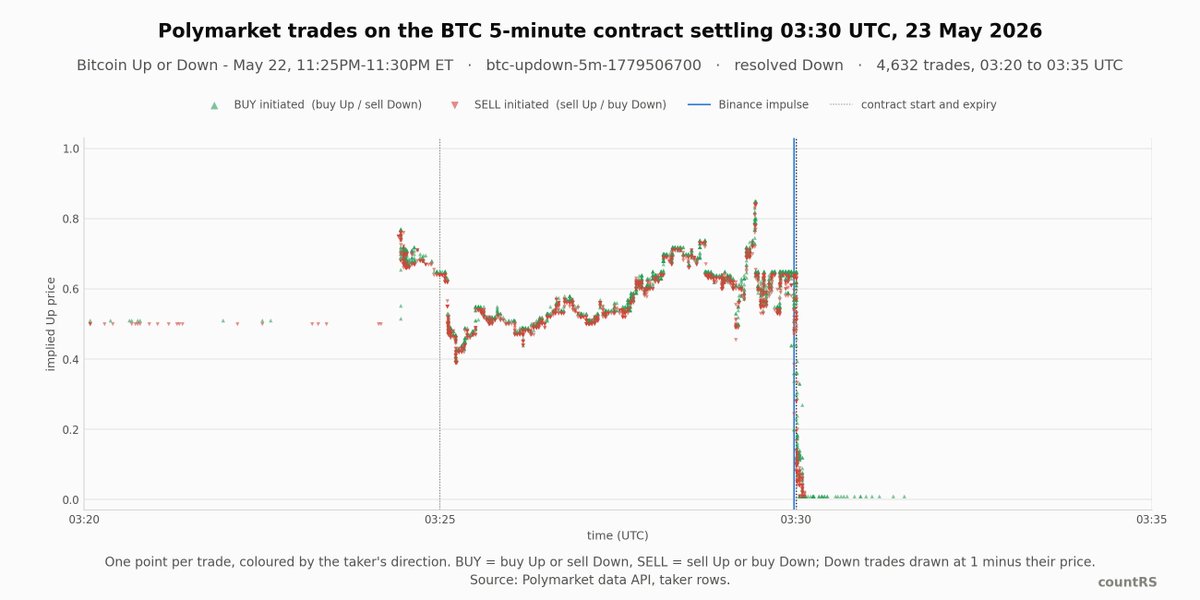
In our last post we talked about manipulation mechanics
As we said, in July @Polymarket announced the change of its crypto settlement rules, and the TWAP was officially introduced in August (https://t.co/XcX6qsfYUa)
So did this actually fix the manipulation problem?
SHORT-TERM CRYPTO PREDICTION MARKET MANIPULATION
In this thread, we're looking to explain how this manipulation manifests itself
This is not a new problem - anyone who MMs on these contracts has been aware of these issues for quite some time (https://t.co/JaNuSthejG)
However, since most of them wish to protect their relationships with venues, it's in their best interest to stay silent (nobody wants to shit where they eat)
That's why we wish to share more details on the underlying mechanics
Kalshi's perps report volume rivaling major crypto venues.
But let's check the order book.
Depth (±10bps), BTC: $6.4M vs Binance's $42M: 7× thinner.
Cost to trade $250k: 2.1bps vs 0.006bps: ~360× worse (excluding trading fees).
Real volume leaves a deep book. Manufactured volume doesn't.
10/10 Ultimately, we urge exchanges to take this seriously and act preemptively to stop malicious actors
This isn't just a @Polymarket problem; @Kalshi and all other venues offering these super short-term contracts are exposed to it even WITH a TWAP!
This means more responsibility in both product structure and incentives, but also in supervision of wallet activity and stricter KYC
Again, this problem is NOT limited to crypto, and it can manifest itself in traditional markets too, as more contracts start trading on TradFi assets
We'll have more interesting things coming, so stay tuned!
9/10 The biggest problem is the incredibly short expiry of these contracts
A 1h or 1d contract is not exposed as much because the reference price has a lot more time to move, so the IV is greater and by expiry the price is usually far from the strike
10 seconds before expiry, BTC sits at a median:
5.6 bps from the strike on a 5m contract
20 bps on a 1h contract
130 bps on a 1d contract
Which naturally means the longer the contract, the more expensive it is to flip