@daddyhope These people are supposed to be demanding justice in the Zuma-firearms scandal and fight for repayment of over R28 million state money which he used to fund his legal battle. But they have chosen to defend and push his dying political career through xenophobia.
@daddyhope You are always on point. The 2013 Zimbabwe constitution brought their full recognition. Before they were not allowed to vote or join the police or the army and they were called aliens. They were issued IDs marked "A" for alien and even for a child born and raised in Zimbabwe.
Two cases which were brought before the Constitutional Court of Zimbabwe challenging Constitutional Amendment Bill No. 3 (CAB 3) have been struck off, NOT dismissed.
CAB 3, which seeks, among other things, to extend President Emmerson Mnangagwa’s term of office and change the method of electing a president from direct election by citizens to election by Parliament, requires two referendums in law, but the ZANUPF faction sponsoring it wants to avoid a referendum.
The Constitutional Court struck both cases off the roll this morning. It is important to understand that the cases were not dismissed on their merits. Rather, the Court held that the issues raised could not originate and be determined solely by the Constitutional Court and should first be ventilated in another forum, High Court.
Professor Lovemore Maduku, who is arguing the cases, has indicated that they will now proceed to the High Court. Should the applicants fail to obtain the relief they seek there, the matters will inevitably return to the Constitutional Court on appeal.
Many lawyers have described the Constitutional Court’s decision as an example of constitutional avoidance. In their view, the Court has declined to confront what has become a highly contentious constitutional question, preferring instead to defer consideration of the substantive issues.
A central argument in the war veterans’ challenge, led by Professor Madhuku, is that Constitutional Amendment Bill No. 3 was discussed and approved by Cabinet, which included President Mnangagwa, the two Vice Presidents, and Cabinet ministers.
Professor Madhuku argues that because President Mnangagwa stands to benefit directly from provisions extending his term of office, he should not have participated in deliberations on the amendments. According to the argument, the Constitution prohibits public officials from participating in decisions in which they have a direct personal interest.
However, the Constitutional Court did not determine the merits of that argument, ruling instead that the matter should be heard elsewhere first. The legal battle is therefore far from over. It now moves to the High Court and, whatever the outcome there, is likely to find its way back to the Constitutional Court for a final determination.
Many have asked for Madzibaba VeShanduko’s EcoCash number.
It is +263 78 521 6668.
The name that will reflect is Rosina Bafulemu.
Please RETWEET so that others can see and assist. Every contribution, no matter how small, can make a difference.
For Go-Fund, use the link below👇🏿
https://t.co/hsLy1LNsmw
Former South African President Thabo Mbeki yesterday delivered a striking reflection on African leadership while speaking at an event commemorating NEPAD, using a historical anecdote from Zambia that carries strong parallels with the growing controversy around Zimbabwe’s Constitutional Amendment Bill No. 3 (CAB 3).
Mbeki recalled how former Zambian President Frederick Chiluba once attempted to extend his stay in power by seeking a third presidential term in violation of Zambia’s constitutional framework. According to Mbeki, leaders within the Southern African Development Community (SADC) quietly intervened to stop the move in defence of constitutionalism and democratic order.
He said regional leaders at the time looked among themselves for someone with the moral authority and political credibility to confront Chiluba directly. They settled on former Botswana President Festus Mogae, whom Mbeki described as clean and respected. Mogae was then tasked with delivering a firm message to Chiluba that the region would not tolerate the undermining of constitutional term limits.
Mbeki used the story to argue that Africa’s leadership standards have sharply declined, saying the continent has regressed and no longer demonstrates the same collective political courage that once existed within the region.
His remarks inevitably draw parallels with developments in Zimbabwe, where critics argue that CAB 3 seeks to fundamentally reshape the country’s democratic framework while creating pathways for President Emmerson Mnangagwa to extend his political influence and remain in power beyond existing constitutional limits.
Indirectly, Mbeki’s remarks amount to a devastating commentary on the current state of leadership in Southern Africa. The former South African leader was effectively suggesting that today there is no respected regional statesman willing, or able, to stand up and stop what is unfolding in Zimbabwe.
The regression Mbeki spoke about is now visible in real time, where regional leaders increasingly watch constitutional manipulation unfold in silence, avoiding confrontation while democratic institutions are weakened before their eyes.
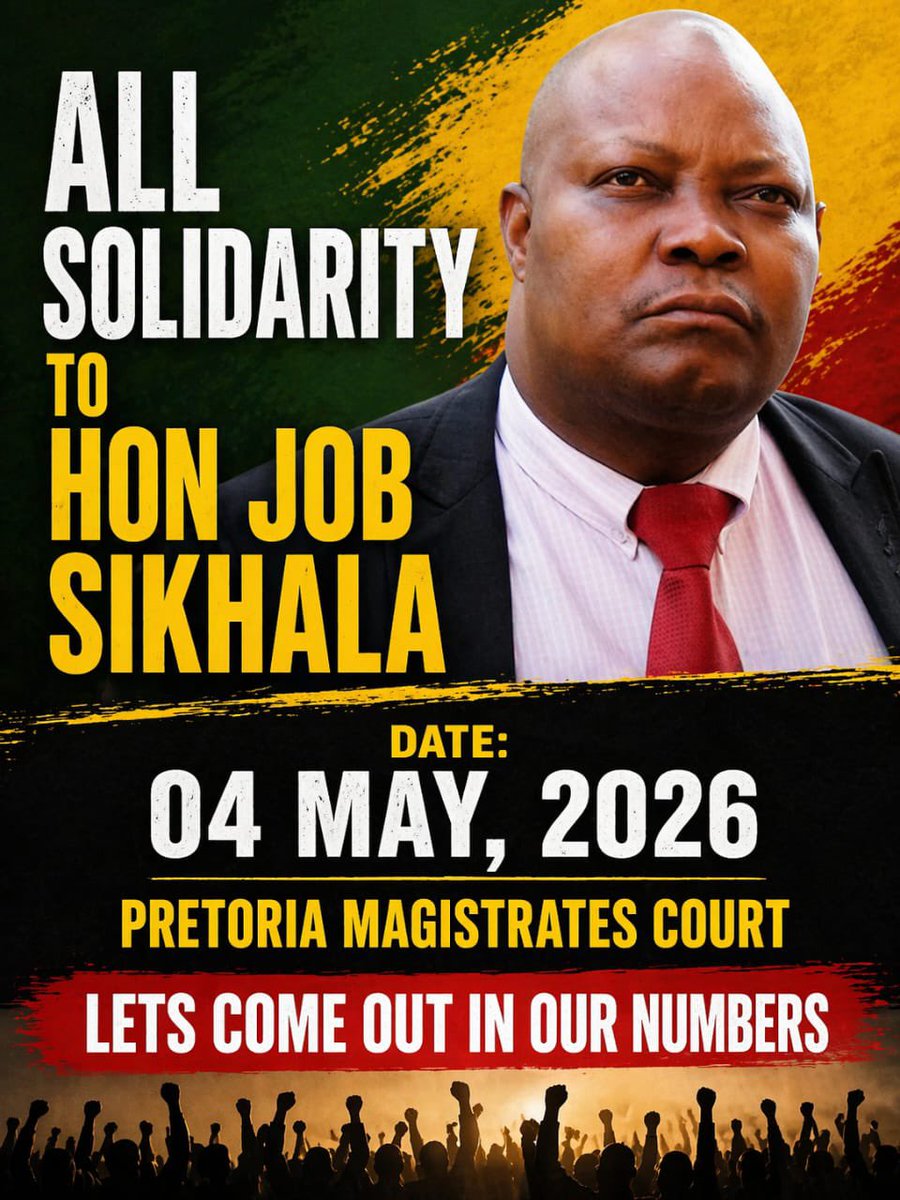
Zimbabwean opposition politician Job Sikhala is due in court tomorrow in South Africa after his arrest in November in Pretoria, following an alleged setup in which explosives were found hidden in his uncle’s car in which he was travelling.
The irony, according to his lawyers, is that when the vehicle was stopped, South African police officers moved swiftly to handcuff Sikhala, who was a passenger, while leaving his uncle, the driver and owner of the car, unhandcuffed. They argue that in normal circumstances, the driver and owner of the vehicle would have been treated as the primary suspect, and that this conduct suggests that the operation was targeted specifically at Sikhala.
The South African court has given the police until tomorrow’s hearing to conclude the matter, failing which the case risks being dismissed.
Very senior officials within the South African police have indicated that Sikhala’s case appears to have been a trap. Job Sikhala has been arrested 68 times in Zimbabwe without a single conviction.
Calling on all Zimbabweans who have time tomorrow to go and give him moral support to the brother.
@daddyhope Today Zimbabwe has independence without democracy. So our parents fought for what was already there. Getting democracy was going to give equal opportunities for both blacks and whites in Zimbabwe Rhodesia. Zimbabwe was going to be a better place than what we have now.
@daddyhope That is very true, ZANUPF always take independence as their own and not national event.
But @daddyhope I think the comrades were supposed fight for democracy and not independence because Rhodesia got it through UDI. Democracy would make that UDI internationally recognized.
@daddyhope The gun disappeared,the Gardner can't remember who short him. I hope he has been promised pension. However he is likely not going to get it, only then he will remember who shot him.
@CyrilRamaphosa Children from your next-door the other side of Limpopo are starving. They are economic refugees in your own country. They are being deported everyday. Any word for their corrupt government Sir?
@daddyhope I think there is nothing wrong in worshiping wadzimu. Our ancestors used to do so. The colonisers changed it all by demonising our religion and culture.