The Black Friday problem isn't sales. It's everything after.
1. Order confirmed → clear next steps
2. Low stock → alert before you oversell
3. Shipped → tracking sent automatically
4. Delivered → thank-you + review request
Booking shouldn't take 6 messages.
1. Customer picks a real free slot
2. Deposit at booking
3. Reminders 24h + 2h before
4. Missed it? Rebooking link
5. Review request after
Set it up once.
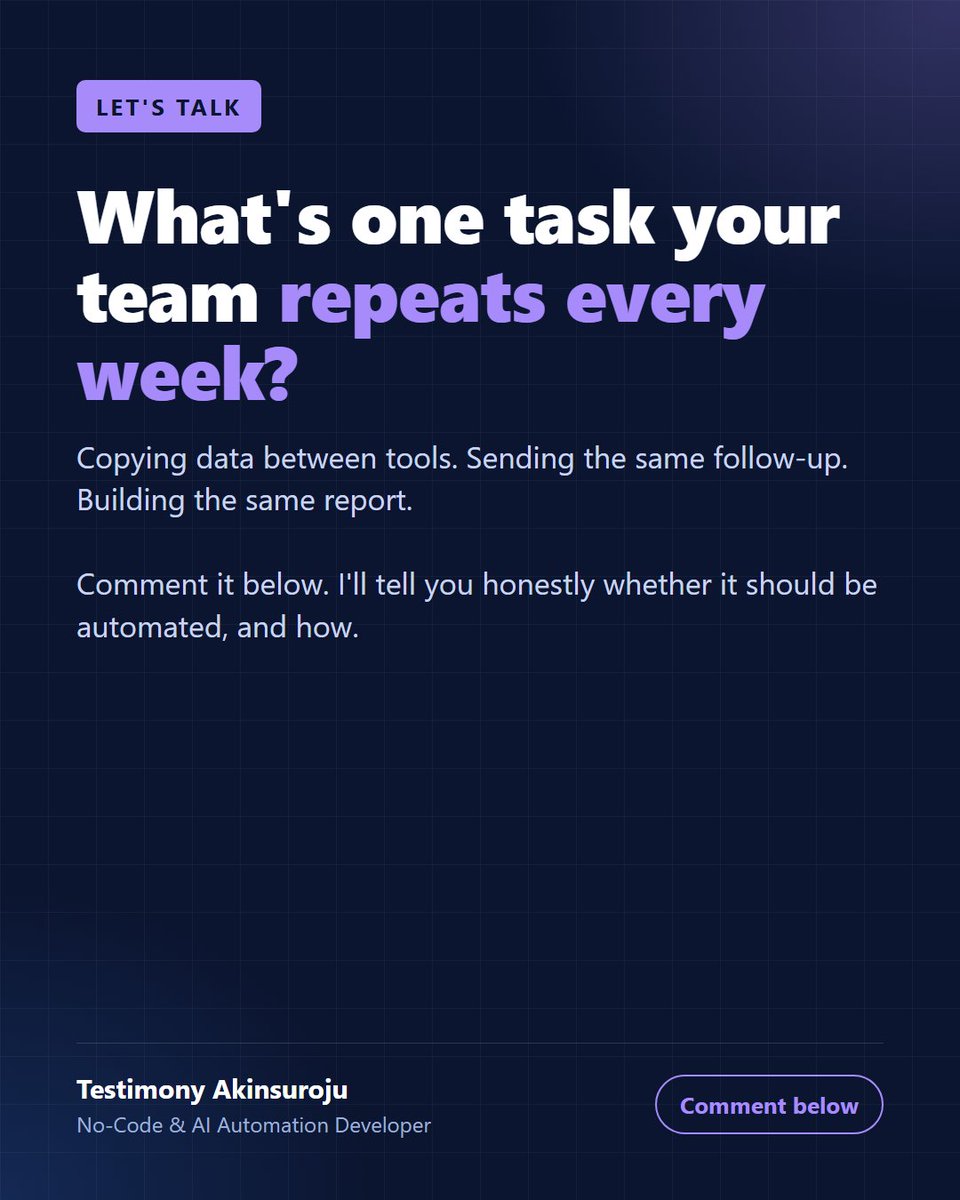
The best projects this year all started the same way: someone was honest about the mess.
"Our sheet has 14 tabs."
"Nobody trusts the numbers."
Once the real problem is out, the fix is usually smaller than you think.
Thank you to everyone who shared theirs.
Before you hire a developer, answer these:
1. What's the one problem it must solve?
2. Who uses it, on what device?
3. Where does your data live?
4. What must it connect to?
5. Who owns it after launch?
Clearer quote. Faster build.
Stop chasing invoices. Let it chase for you.
Day 0: invoice + pay-now link
Day 3: friendly reminder
Day 7: firmer reminder + alert
Paid: reminders stop, books update
How long do your customers take to pay?
Claude Code, Cursor, Lovable:
Great at: first versions, repetitive code, explaining code
Careful with: security, data structure, long-term changes
AI goes fast. A person decides what's safe.
Building business apps for clients since 2022. 3 lessons:
1. Start small
2. Your data matters more than the tool
3. Someone must own it
None of them are technical.
Automation bill growing faster than your business?
1. Filter early
2. Batch records
3. Delete unused workflows
4. Move heavy volume to n8n
Check your cost per task.
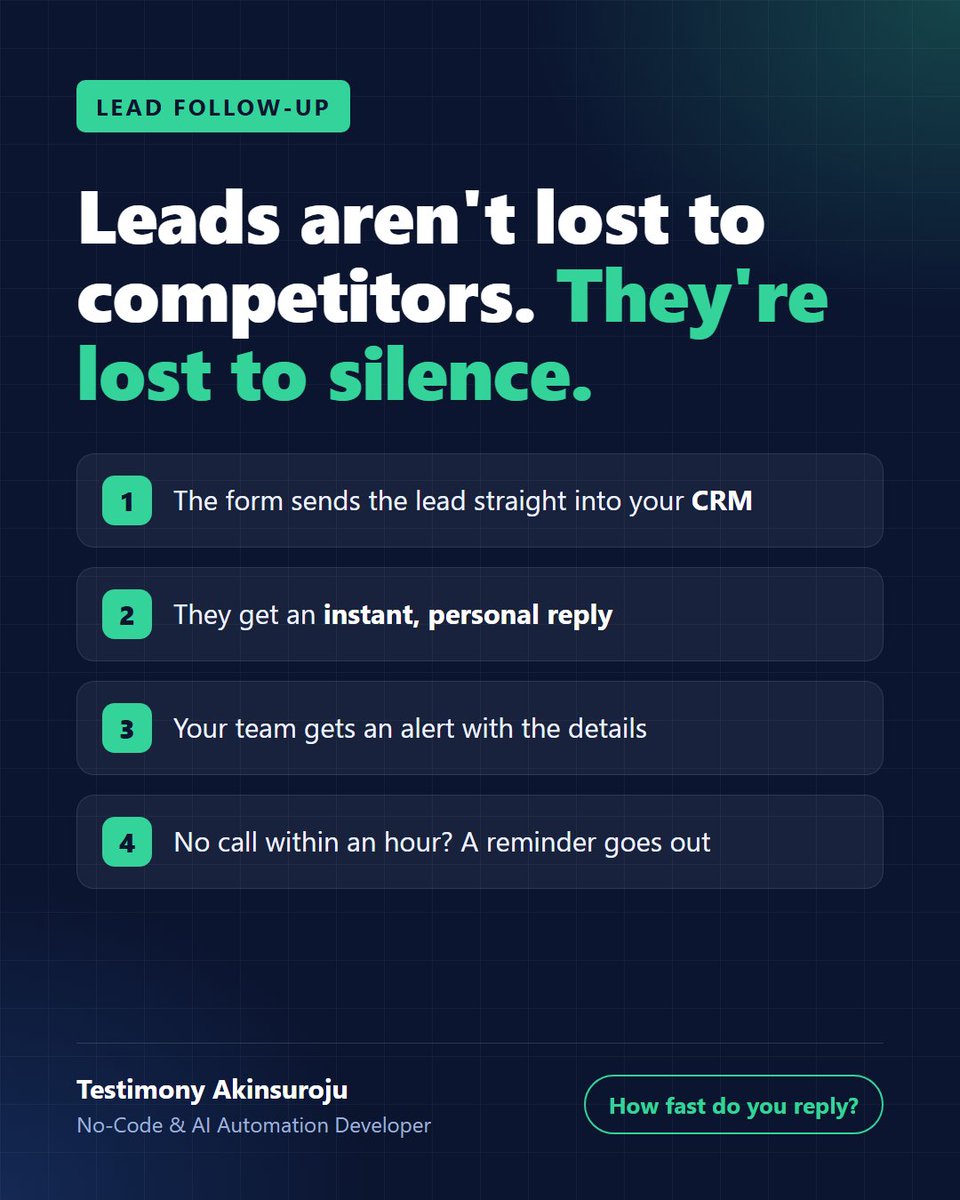
Most leads aren't lost to a competitor. They're lost to silence.
1. Form → CRM
2. Instant reply
3. Team alert
4. Reminder if nobody calls in an hour
How fast do you reply to a new lead?
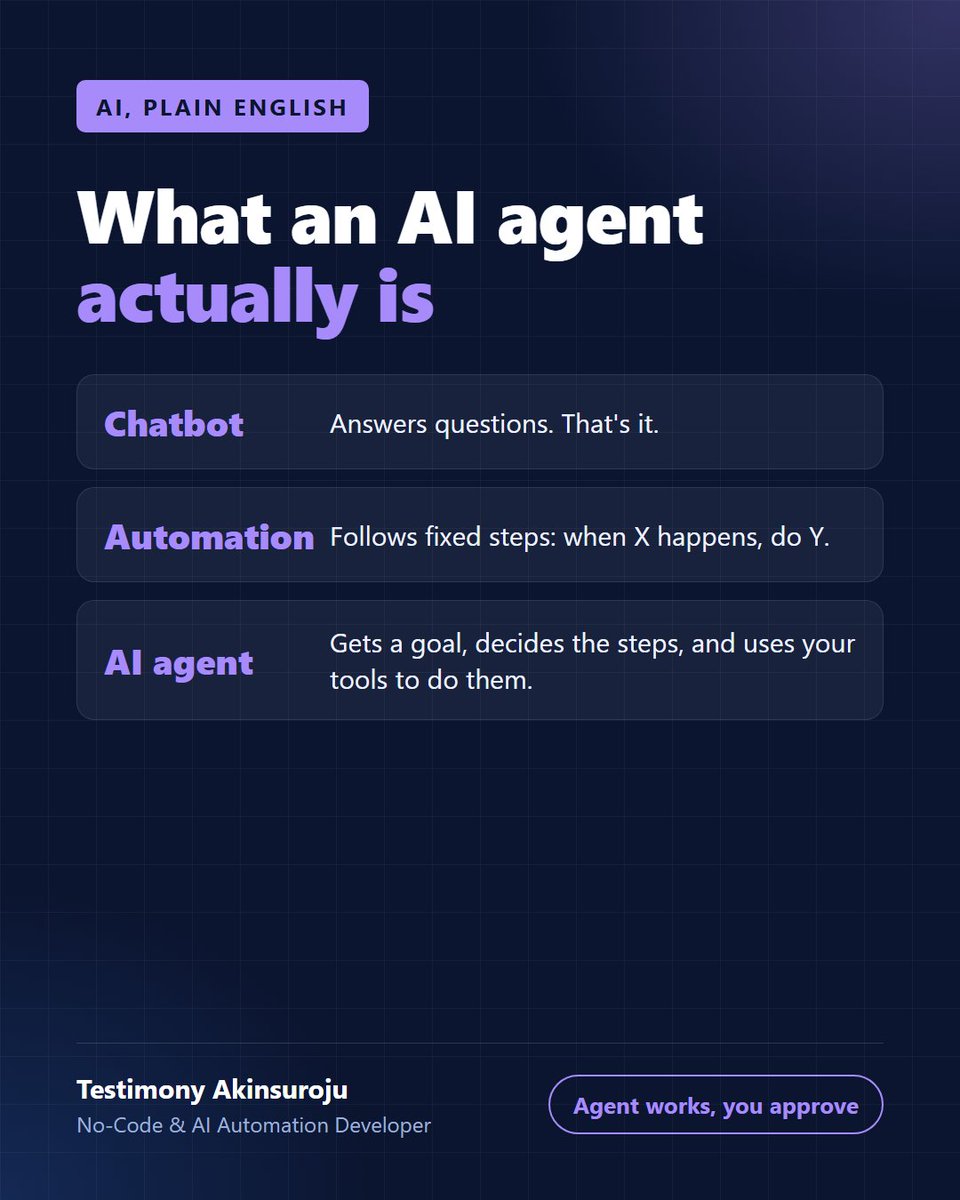
Chatbot: answers questions.
Automation: follows fixed steps.
AI agent: gets a goal, picks the steps, uses your tools.
Let the agent do the work. Let a person approve the result.
5 signs you've outgrown your spreadsheet:
1. Nobody trusts the numbers
2. You copy data into another tool every week
3. Someone has to "remember" to update it
4. It's unusable on a phone
5. You hide columns so people stop breaking formulas
2 or more? Put an app on top of it.
Switching your email or CRM tool?
1. Map every automation first
2. Run old + new side by side for a week
3. Switch forms and emails last
The data is easy. The forgotten automations are the risk.
Your AI-built app is breaking. Don't rebuild yet.
1. Test with real data
2. Check who can see what
3. Find the one flow that breaks
4. Give it an owner
Most apps need fixing, not rebuilding.
Consignment store on autopilot:
Airtable holds items + consignors
n8n pushes approved items to Shopify
Sales flow back automatically
Payouts calculate themselves
No more updating 3 places per sale.
5 mistakes that kill a first no-code app:
1. Every feature before one works
2. Messy data structure
3. No user roles
4. Testing only with demo data
5. Nobody owns it after launch
Which one got you?
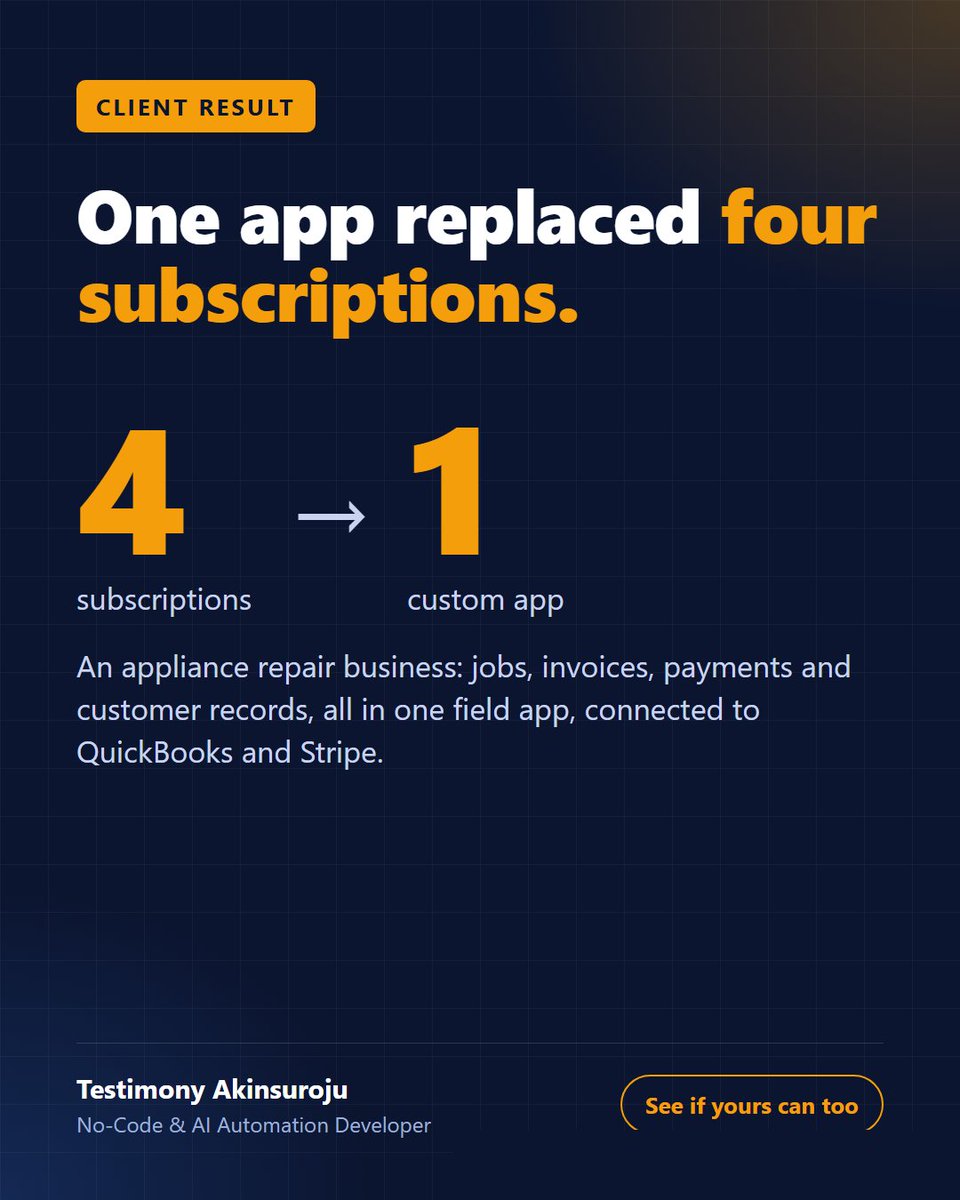
An appliance repair business paid for 4 tools that didn't talk to each other.
We replaced them with 1 field app: jobs, invoices, Stripe payments, QuickBooks sync.
How many of your tools hold the same data?
n8n vs Make vs Zapier, from someone who uses all three:
Simple + few tasks → Zapier
Complex logic on a budget → Make
High volume, AI agents, self-hosting → n8n
Which one are you on?
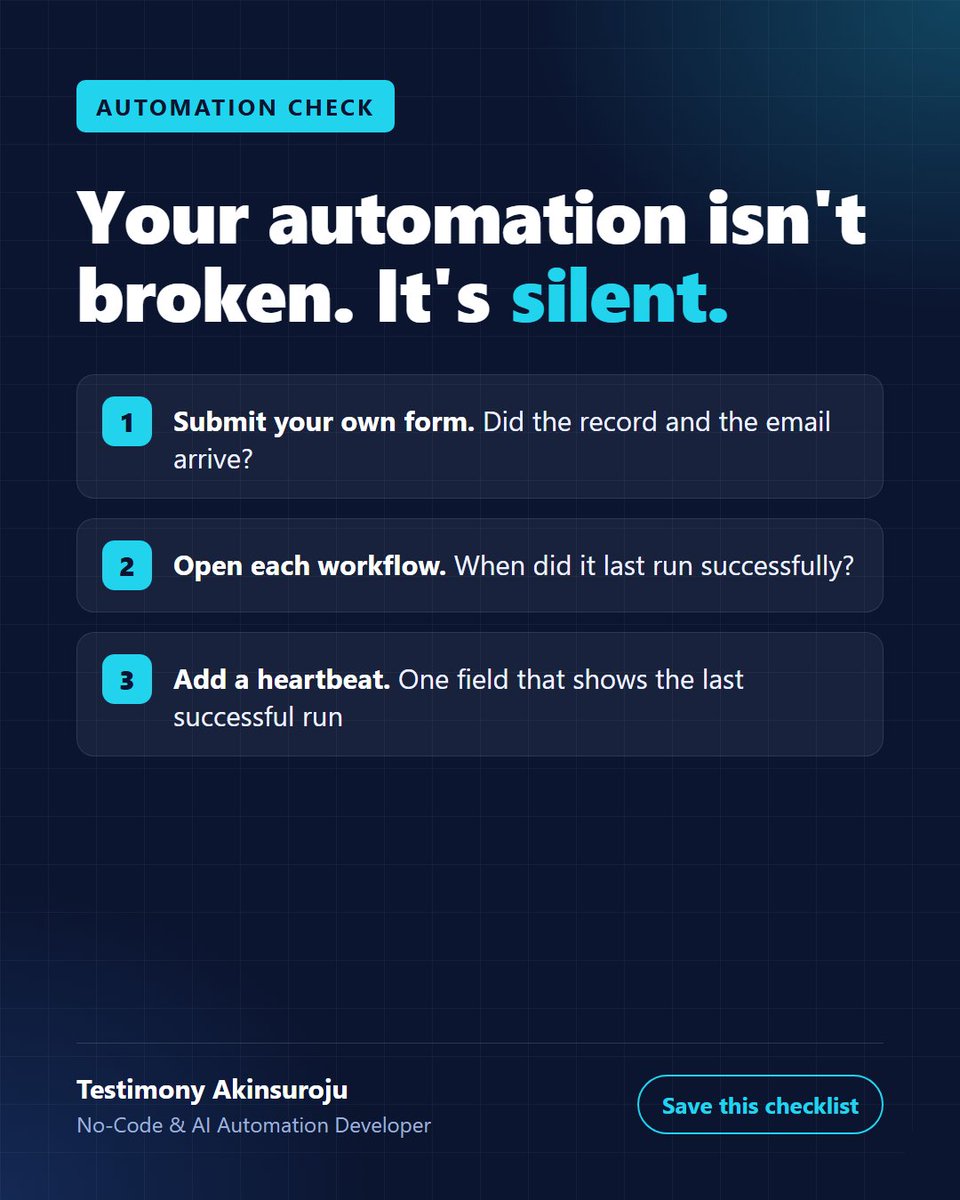
Your automation isn't broken. It's silent.
3 checks, 10 minutes:
1. Submit your own form
2. Check when each workflow last ran
3. Add a "last successful run" heartbeat
Catch it before your customers do.