They are our ten finalists for the 2026 Women’s Ballon d’Or… who you got?
🇲🇼 Temwa Chawinga
🇭🇹 Melchie Dumornay
🇳🇴 Caroline Graham Hansen
🇪🇸 Patri Guijarro
🇩🇰 Pernille Harder
🇵🇱 Ewa Pajor
🇪🇸 Clàudia Pina
🇪🇸 Alexia Putellas
🏴 Alessia Russo
🇯🇲 Khadija Shaw
Follow the ceremony live on https://t.co/qkKEZsOmy9, with analysis and data from the London Palladium!
#ballondor
“Without the white man’s technology, the natural resources in Africa is just dirt under the ground..”
This is a flawed and malicious logic. And it falls apart when you examine it closely.
The logic is basically: finders keepers. You didn’t know what was beneath your feet, so someone else came along, discovered its value, and now your claim to it is somehow less legitimate. The outsider supplied the knowledge, therefore the outsider deserves the wealth and your claim to it is greedy, What exactly are you claiming when you couldn’t even make use of them?
But this miss some very important points.
First, technology is cumulative. Technology belongs to no single race, because it accumulates. China gave the world gunpowder, paper, and the compass. Indian mathematicians created the decimal system and the zero. Al-Khwarizmi, a Persian scholar in Baghdad, gave us algebra and the algorithm. Africans developed advanced ironworking, and the Haya of Tanzania made carbon steel about 2,000 years ago. Europeans built on all of it. Calling it the white man’s technology is a gross cultural erasure.
Second, it assumes that because you haven’t discovered a use for something, you never will. European societies spent centuries without knowing how to exploit many of the resources they use today. The knowledge accumulated over generations. Just because one society discovered something earlier does not mean we would never have discovered it. Nobody knows what Africans would have developed, invented or discovered had history taken a different course.
Third, the resource may have been underground, but the land was not worthless. People lived on it, farmed it, hunted on it, drew water from it and depended on its forests and ecosystems. Extracting the mineral introduces new economic possibilities, but it can also destroy existing sources of value. And then there are the environmental costs: polluted water, contaminated soil, poisoned air, displaced communities and damaged livelihoods. You cannot declare the resource worthless before extraction while ignoring everything that extraction takes away.
Fourth, and this is something people rarely consider, these resources are finite. Suppose a country has a million tonnes of coal. An outsider discovers that coal can power trains and proceeds to extract 600,000 tonnes. Decades later, the country develops its own technology and discovers a far more productive use for coal. It now has only 400,000 tonnes left. The outsider’s early discovery has depleted a resource that the country might have used more productively with knowledge it had not yet acquired.
Every tonne extracted today is a tonne unavailable for a future use. Every deposit exhausted closes off possibilities that might have become valuable as knowledge advanced. You are not doing a country a favour simply because you found a use for its resources before it did.
Finally, even if we grant that an outsider supplied the technology, capital and expertise required to extract a resource, how does that establish an exclusive or disproportionate claim to the resulting wealth? The land belongs to someone. The mineral belongs to someone. The right to extract it belongs to someone. The labour involved belongs to someone. The investor’s contribution can justify compensation and returns on investment, but it does not erase everybody else’s claim.
If discovering a technology first were sufficient to justify exclusive control, whoever developed a technology could claim disproportionate rights over every finite resource that technology made profitable, regardless of who owned the land or what the people living there stood to lose.
That is the logic hiding behind the mockery of “our resources.”
#CurrentAffairs
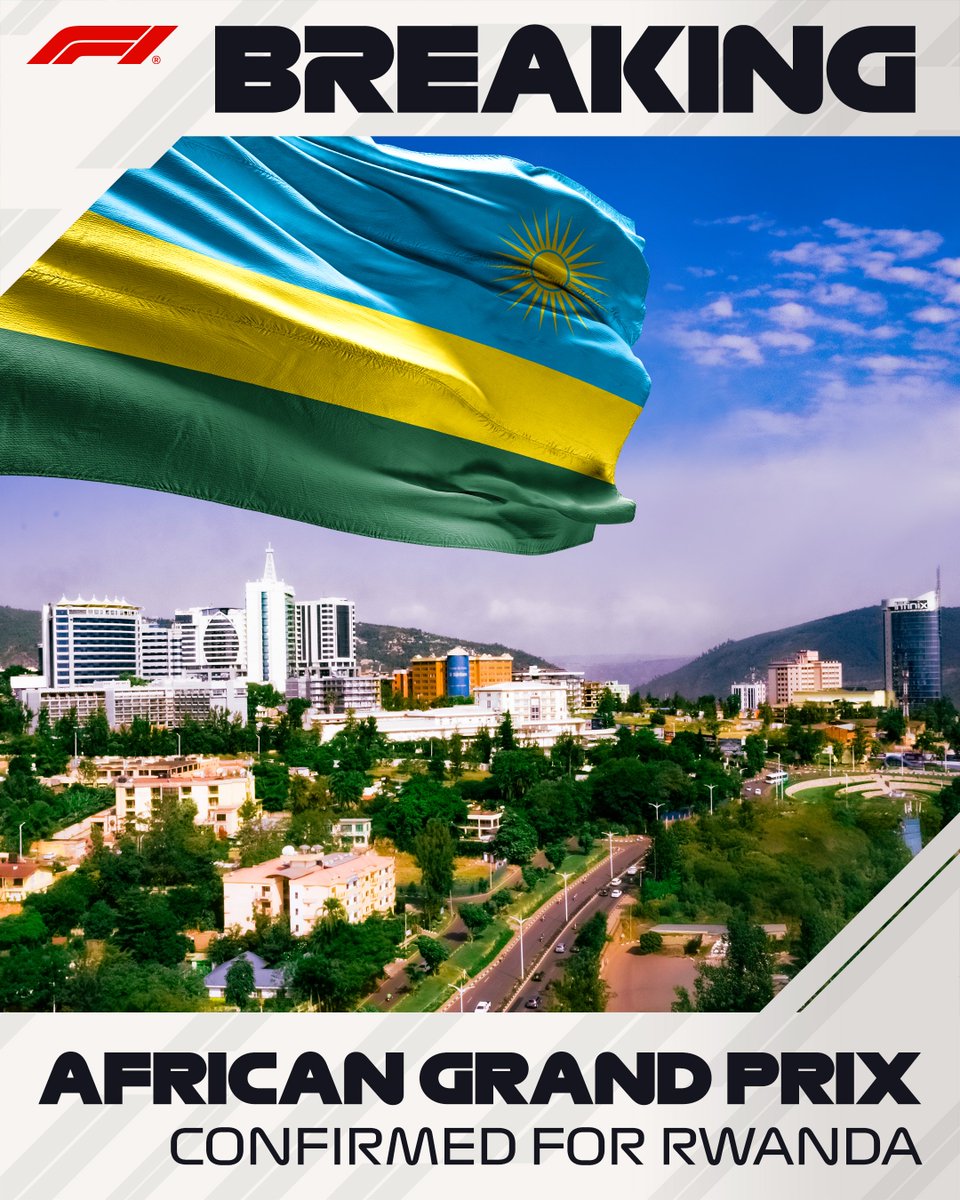
Africa is set to welcome Formula 1 action again, with a 10-year deal bringing the race to Rwanda starting in the early 2030s.
It has been over three decades since the motorsport has been hosted on the continent, with Alain Prost beating the late great Ayrton Senna in South Africa in 1993.
Want to read more? Click here⤵️
https://t.co/80v6QX7BjZ
BREAKING: Formula 1 returns to Africa with 10 year agreement to race in Rwanda
The African Grand Prix is set to join the F1 calendar in the early 2030s
#F1
The Nobel Prize in Literature has yet again gone to someone I have never read. The world of literature is too expansive, and one cannot really read every great author. Congratulations to Ms. Anne Carson!