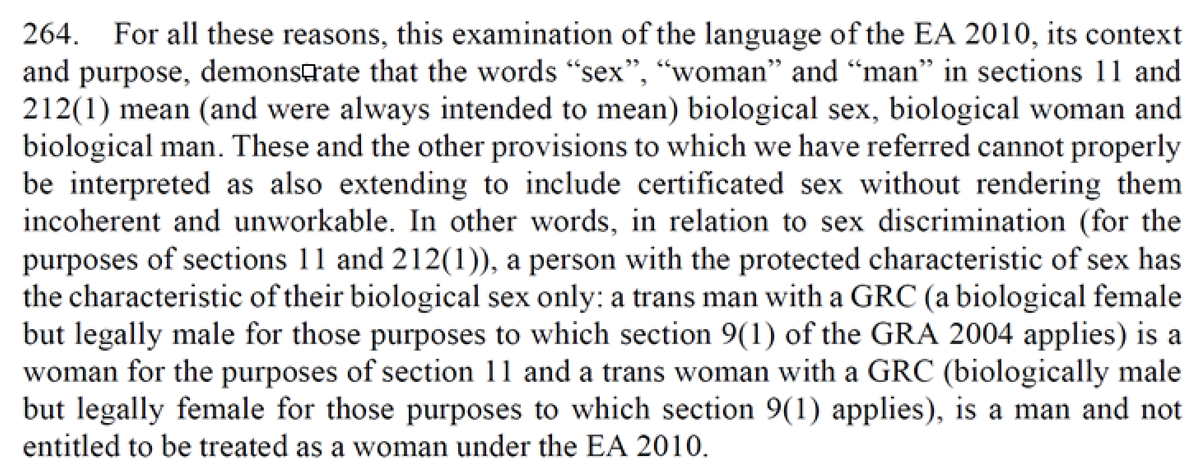
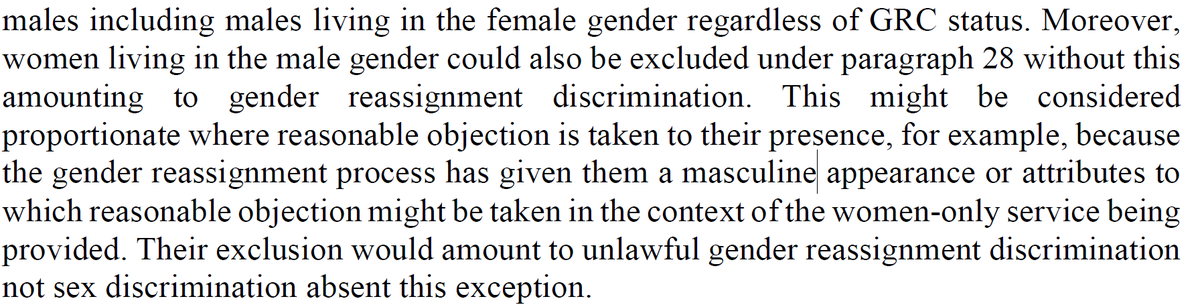
You've taken this short clip completely out of context.
In the whole video, it is clear they are talking about situations where the service provider refuses service just because they have GC beliefs or have expressed them in a way that is unobjectionable.
They also give examples where it may become objectionable.
@AudreySuffolk@hightreebud This is a problem with law firms that advertise themselves as specialists in employment law; very few of them actually specialise in Equality law, and rather than admit it, they pretend otherwise.
@LsMc459856@AudreySuffolk Yes, the SC did give a definitive answer, but that doesn't mean every case will get the right result the first time around.
If the lower courts misinterpret it, then it'll require an appeal court to correct it.
That's all she means.
It is true to say that no PC trumps another in all circumstances, but that's why we have exemptions to make clear the circumstances in which one PC does succeed another.
It seems already clear from the two cases we've had come out this week from Scotland that the Scottish ETs are continuing to get the law wrong.
We've yet to see any ET judgments from the rest of the UK, but if that trend continues and the ETAs and COA don't sort it out, I think we'll likely have to ask the SC for another judgment.
This is crazy and nonsensical.
When toilets or changing rooms are being cleaned or worked on by a tradesperson, they are closed with a sign outside and sometimes with a barrier preventing entry.
How on earth the judge could compare that to when they are open and actually in use is beyond me.
Point her in the direction of the Court of Appeal judgment in Higgs v Farmor’s School.
“The dismissal of an employee merely because they have expressed a religious or other protected belief to which the employer, or a third party with whom it wishes to protect its reputation, objects will constitute unlawful direct discrimination within the meaning of the Equality Act.”
@QcWynter Their legal team also claimed the SC ruling only had a narrow meaning in relation to members on Scottish public sector boards and had nothing to do with toilets and other single sex spaces.