Thank you for making #AGU25 unforgettable. 💚
To every scientist, student, speaker, exhibitor, partner, and volunteer—your ideas, energy, and connections are what made this meeting so special. From inspiring sessions to meaningful conversations and moments of joy, you reminded us why community is at the heart of science.
We can’t wait to keep the momentum going. See you next year in San Francisco, December 7–11, 2026. 🌉✨
In collaboration with AGU's Chapman Conference on sea level, a new #AGUPubs special collection welcomes submissions that capture work on advances in sea level projections, their drivers, and how they are used and communicated.🌊
🔗Learn how to submit: https://t.co/xchSgrhHmi
#Oceans #ClimateChange #SeaLevelRise
📢New Project Page on the Community Science Exchange! 📢
Learn about how a group of scientists, Tribal environmental staff, and local educators and community members developed a four-step #CommunityScience protocol to assess landslide risk on Prince of Wales Island in #Alaska.
🔗Project Page: https://t.co/WrBZJWd4Qp
🔗Full Project Description: https://t.co/DSgRQeFn6V
#AGUPubs #participatoryscience #landslide @uoregon@forestservice@RANDCorporation@SitkaScience@tlingithaida@OregonState@NWSJuneau@Sitka_Wild
With unique monsoon, mesoscale and submesoscale processes, the Indian Ocean offers critical insights and new challenges to achieving a full understanding of marine environments and the Earth system. 🌊
🔗 Learn more in @AGU_Eos: https://t.co/7PmK1fPysj
#AGUPubs#IndianOcean #OceanScience #Oceans #ClimateChange #SDG14 #Ecosystems
Last week, the Administration's Office of Management and Budget (OMB) released a proposed rule that would politicize federal science grantmaking, replacing scientific rigor with ideological gatekeeping.
AGU President Brandon Jones spells out all that's at stake and why it's more important than ever to make your voices heard and submit a public comment today: https://t.co/8txtf6yMb1
Data reveal that changes in nutrient levels vary depending on depth and distance from shore—and that these changes are happening more quickly than scientists realized.
🔗Learn more about the study in @AGU_Eos: https://t.co/IiTjEpw5dD
#Oceans#Biogeo#Carbon#AGUPubs #WorldOceanDay @UCIrvine@uciess
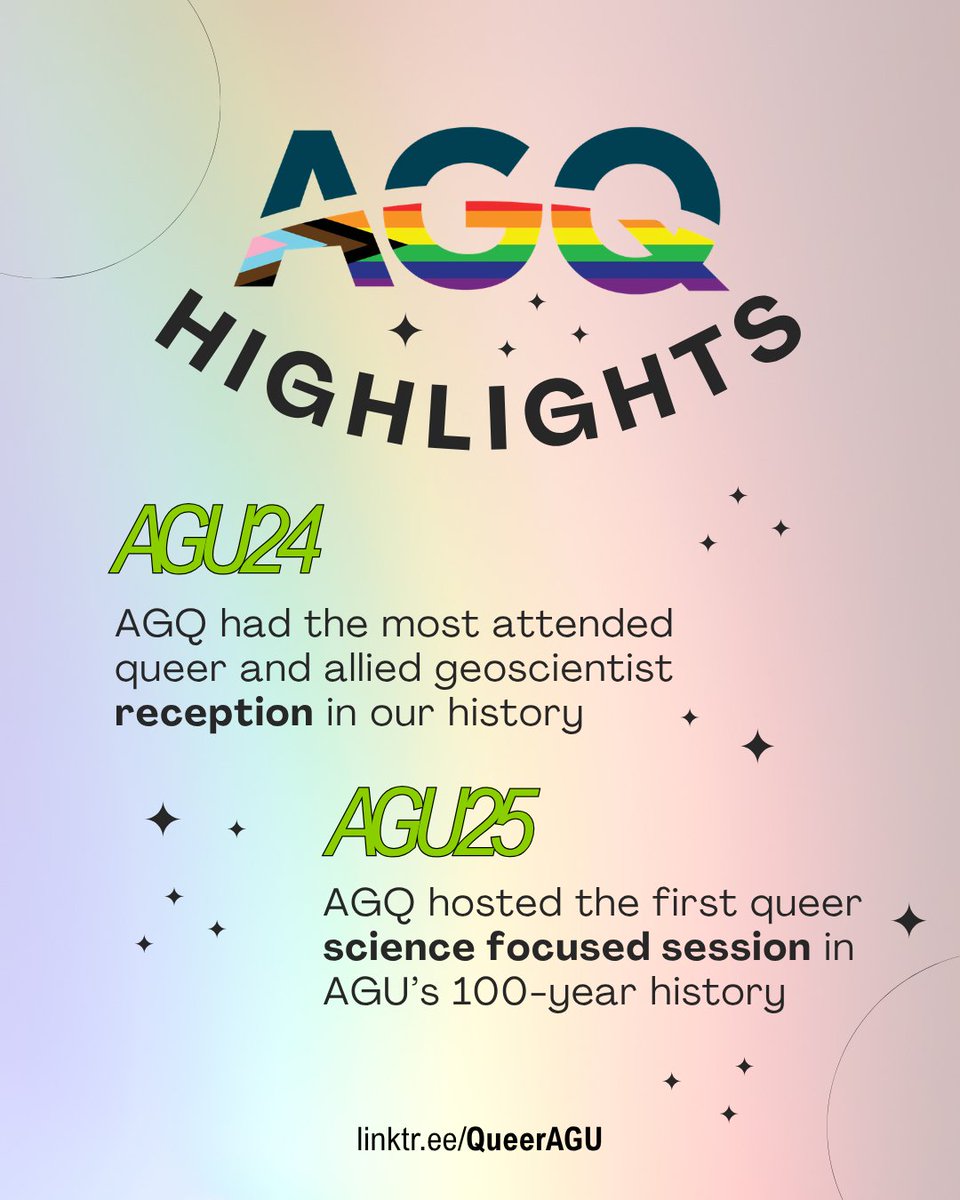
🏳️🌈AGQ, the queer affinity group of AGU (@theAGU ) is still early in our organization. However, there are several significant highlights over the past few years!
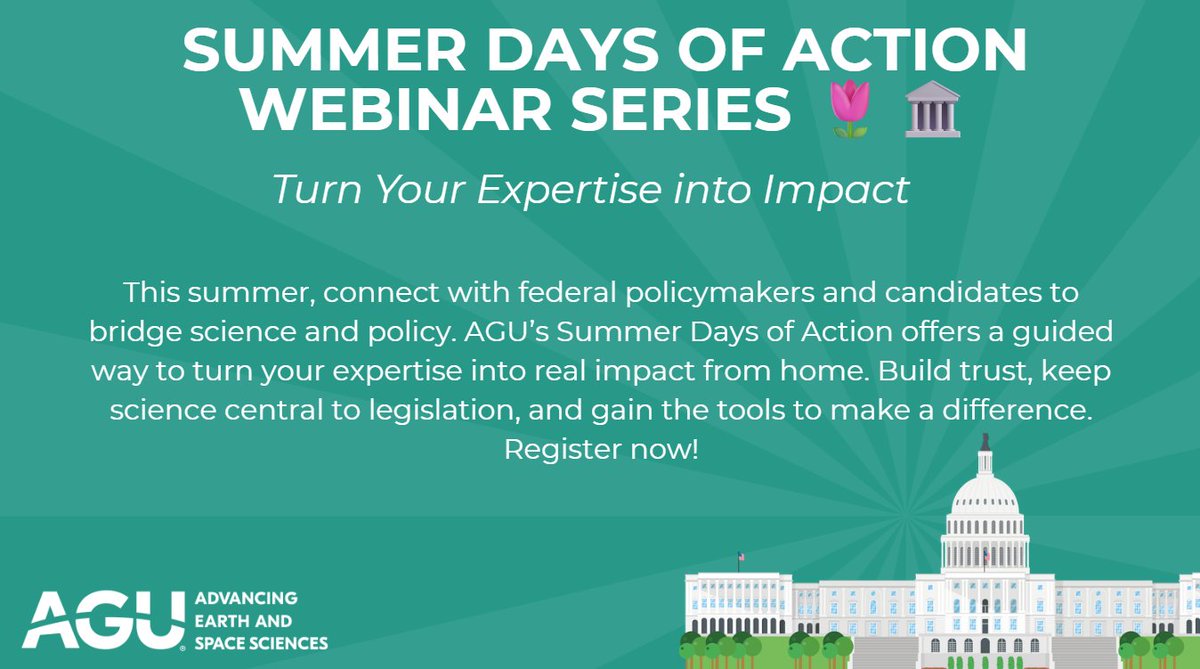
Ready to make your voice heard where it matters most? 🌷🏛️
Learn how to engage, influence, and lead conversations that shape the future of science. ✨
Sign up for @theAGU’s Summer Days of Action 👇
https://t.co/jxEePP2OWh
Join AGU's Summer Days of Action: Your Roadmap to Scientist Advocacy This Summer! Select your specific science policy goals as you register, and then get immediate access to:
💡Science Policy Webinars
💡Hands-On Advocacy Opportunities
💡Tailored Election Resources & More
REGISTER TODAY: https://t.co/ccgN1gaszL
Along mid-ocean ridges, hydrothermal vents circulate fluids enriched with elements into the ocean environment, changing the chemical composition of seawater. Novel methods and techniques are advancing understanding of hydrothermal systems and their impact on the Earth system. 🌊
📚Learn more in the AGU book ‘Hydrothermal Circulation and Seawater Chemistry: Links and Feedbacks’: https://t.co/LXZyXJap32
📷: Chad King / OET, NOAA
#AGUPubs #WorldOceanDay #Octopus #OceanScience #Publishing #ScholarlyPublishing
In support of the @UNOceanDecade, a new special collection welcomes articles that showcase the broad range of solutions-focused research and capacity-sharing efforts that meet the Ocean Decade's vision: "the science we need for the ocean we want."🌊
🔗 Learn more: https://t.co/vxXBiIo7n5
#AGUPubs #OceanScience #OceanDecade #SDG14 #WorldOceanDay @aslo_org@TOSOceanography
📖How does science inform policy—and how can policy better serve science?
The Bridge, an @TheAGU blog, brings scientists, policymakers, and experts together to explore the science–policy interface.
🔗 Read & join the conversation.
https://t.co/tKjCuitX4A
On #WorldOceanDay2026, we highlight the conservation efforts that aim to restore ocean habitats. In @JGROceans, scientists find that coral reef restoration efforts can lead to a reduction in wave height and therefore can reduce coastal flooding and erosion.🌊
🔗Read the #OpenAccess article for free: https://t.co/ASHmSyXczR
📷: MARS Sustainable Solutions
#AGUPubs #Oceans #Coral #WorldOceanDay @WorldOceansDay
In AGU's Perspectives, researchers argue that a model called co-creation is a powerful strategy for accelerating scientific progress through open approaches.🔬
🔗Learn more: https://t.co/PGLSGdj7Ue
#AGUPubs#CoCreation#OpenScience
A new study in Geophysical Research Letters provides robust confirmation that northern hemisphere atmospheric circulation on the largest scale is responding to greenhouse gas emissions.
🔓Read the #OpenAccess article for free: https://t.co/40ksb8AYRI
#AGUPubs#Atmosphere #GreenhouseGases @environmentca
A new study in JGR: Space Physics explains how human-made very low frequency (VLF) transmitter signals from the ground can directly affect Earth's near-space environment with possible space weather consequences.🌐
🔗Learn more: https://t.co/07YHMED8x0
#AGUPubs#SpacePhysics #SpaceWeather
Some thunderstorms grow so tall that they reach into the stratosphere, transporting water vapor and other chemicals upward where they can influence atmospheric composition and climate. But what conditions cause this to happen?⛈️
Using aircraft observations over the United States, scientists investigate which storm and environmental conditions create the greatest impacts.
🔗Learn more in JGR: Atmospheres: https://t.co/wzb8FLwEef
#AGUPubs #Thunderstorms #Atmosphere #Stratosphere #ClimateChange #WaterVapor