SMART is a new mental health website for people who have experienced psychosis. It is currently available through a research project at Swinburne University.
Pleased to share our new paper exploring the use of trauma-focused imaginal exposure for trauma-related voices. https://t.co/cn6vpL971v Here we outline clinical observations from a small trial, describing the therapy of two ppts with very different outcomes. 1/4
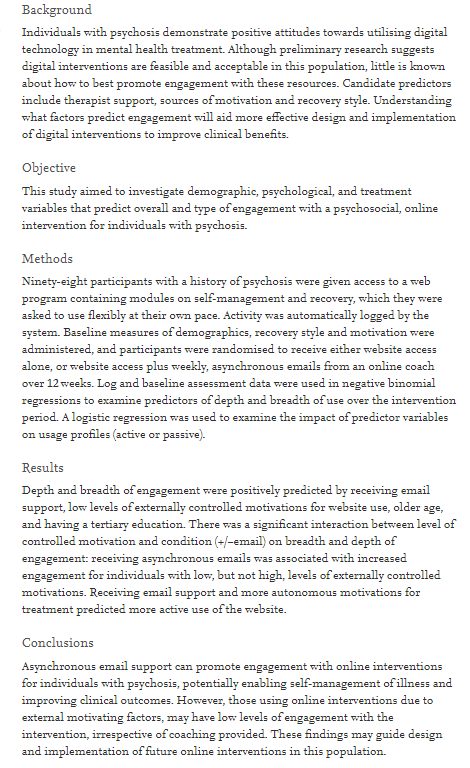
Predicting engagement with an online psychosocial intervention for psychosis: Exploring individual- and intervention-level predictors.
https://t.co/jFBWJLVIiI
Today @SimonMHR explores a recent Australia study, which looks at individual- & intervention-level engagement with online interventions for people with psychosis, & discovers some of the things that can predict engagement with online psychosocial support.
https://t.co/jFBWJMdjHi
Predicting engagement with an online psychosocial intervention for psychosis: Exploring individual- and intervention-level predictors
https://t.co/kNe26E8x4S Important work from @chelsea_arnold_ @neilthomas3182 and team
The first paper from my PhD is online now!
Examining engagement with a #recovery focused online intervention for #psychosis: email support, motivations for treatment, education & age were all sig predictors.
https://t.co/xWp1fD5QrQ
#DigitalHealth#ehealth#Mentalhealth
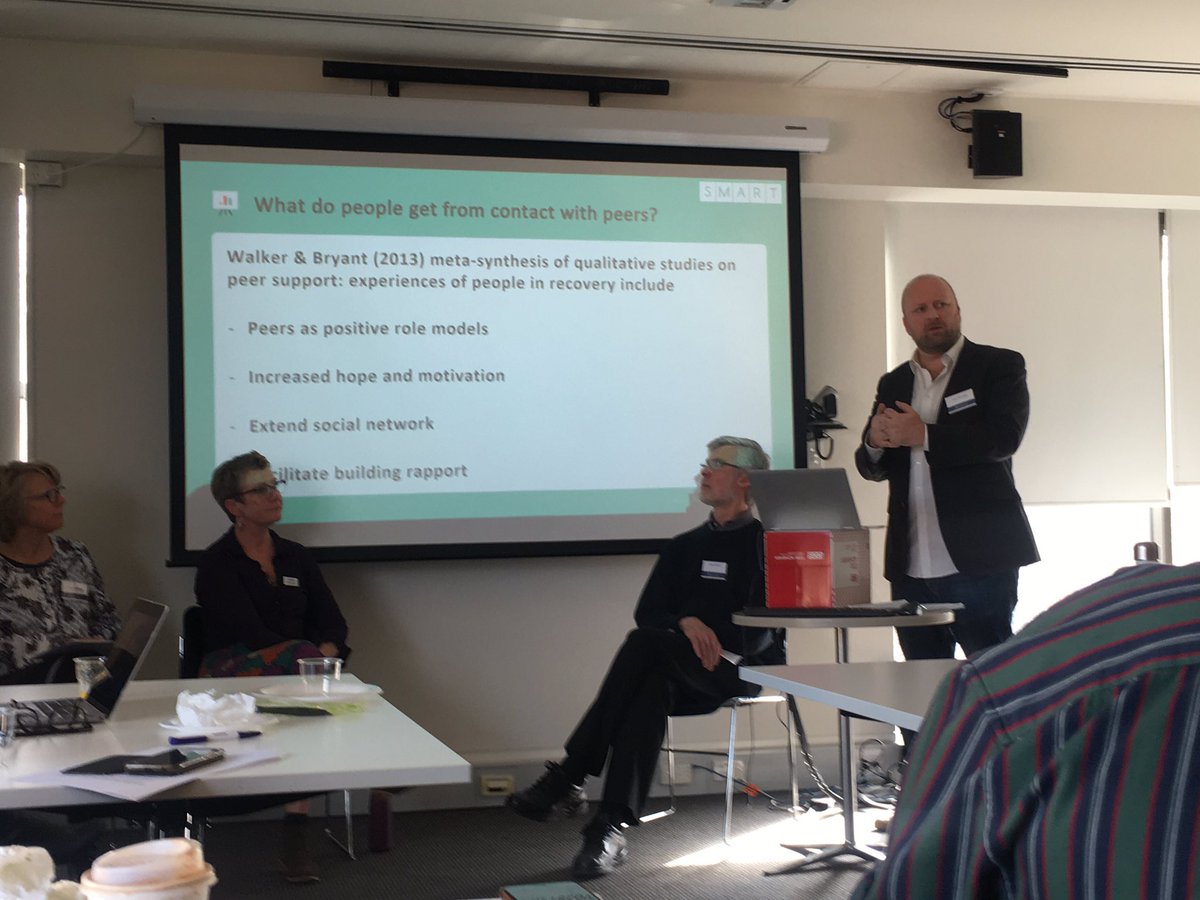
@theSMARTwebsite team together at #digitalta2019, sharing findings of ppls experience of using #livedexperience videos in an online therapy program & in peer work sessions. Users established a relationship with the ppl in the videos - personal connection & similarities important.
@brontemcleod: “we need to think carefully about how we deliver biomedical messages given impact on self-efficacy”.
Watching a brief video with biomedical framing reduced self-efficacy for personal #recovery amongst individuals with experiences of #psychosis. Language matters!
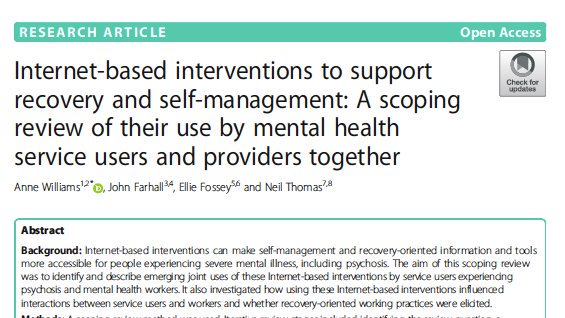
New review on internet interventions used by service users and providers together.
Potential to support #recovery but further research focusing on human support and implementation required.
https://t.co/ZJu5Dz75ew
#eHealth#mentalhealth#AcademicTwitter
Our recent study investigating internet use amongst people with #psychosis. Factors such as loneliness and employment associated with using the internet for #MentalHealth
https://t.co/AK1bTAVSV7
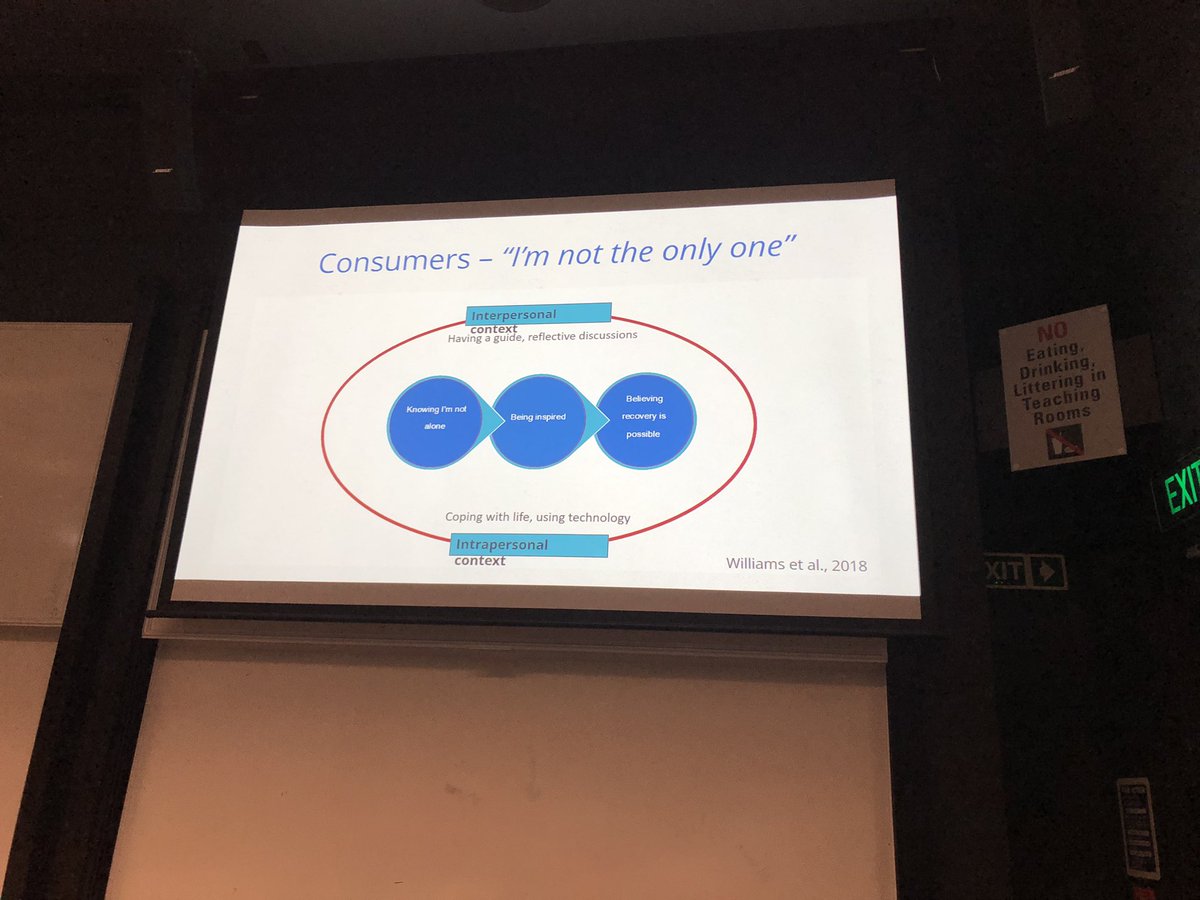
Really interesting to hear qualitative data from the @theSMARTwebsite research - service users all had persistent mental illness & staff/workers integrated into existing practice. Findings include feelings of being not alone, inspired and belief that recovery is possible #ISRII10