What's the first thing coaches usually mention after huge wins? A game plan or what happened on the field
Lars Tiffany is different:
•Doing it right off the field
•Highest GPA ever
•The honor of coaching good kids
Didn't mention anything that takes talent
#NCAALAX#Lacrosse
Actually, Jaylen Brown took a master’s degree course while in his first (freshman) year of undergraduate studies at UC Berkeley (which requires permission from the Dean) and reportedly held his own.
He turned down an internship at NASA. He is thus obviously smartest than most people. Not just on a basketball court, but in general.
Some people are just confused because he happens to ALSO be a world-class basketball player and an NBA Champion. It is certainly unusual.
Intelligence is multifaceted (academic, practical, emotional, creative, etc.), so labeling anyone the absolute “smartest” is subjective and unquantifiable. That said, the documented record shows Jaylen Brown operates at a high level intellectually and uses his platform thoughtfully. This is far beyond what most people, athletes or otherwise, achieve.
The combination of world-class athletic talent and genuine academic/advocacy engagement is rare enough to be misunderstood. I wouldn’t be surprised if he’s made mistakes as well.
But he really is brilliant. I don’t pretend to know what happened in this case though, and can’t speak for any organization.
Having someone like that could be an incredible asset to an NBA front office and their data scientists with the right approach.
Naturally, it will generate insecurities in a minority, but it should inspire most.
Let me trace the timeline here because nobody's connecting it.
Step 1: Scrape the entire internet. Every book, every article, every conversation, every piece of art, every forum post. Do it without asking. Do it without paying.
Step 2: Train a model on all of it. Call it "artificial intelligence."
Step 3: Go to BlackRock's Infrastructure Summit and announce: "We see a future where intelligence is a utility, like electricity or water, and people buy it from us on a meter."
Step 3 is where you sell people's own knowledge back to them. On a meter.
They took the collective output of human thought, compressed it into a model, and now they want to charge you by the token to access a version of what you and everyone you know already created.
One Reddit user put it perfectly: "They stole all this data from us, the people, our life's work, creativity, art, by devouring the internet and blowing through all copyright laws. Now they want to sell it back to us in the form of a utility."
Imagine if someone photocopied every book in the public library, burned the library down, and then opened a subscription service for the copies.
That's the metered intelligence business model.
And they're pitching it to infrastructure investors as though they invented water.
Those magnificent structures on the top were all over America in the 90s thanks to volunteers.
Almost no one knows the name Bob Leathers but they should.
He grew up in Maine, studied architecture at Rhode Island School of Design, and landed in Ithaca raising kids. In 1970 his children's elementary school needed a playground. He organized the parents to build one. That weekend reorganized the rest of his life.
He founded Leathers and Associates a few years later. The product was a four-day community build. The town raised the money, the kids drew the design, and 500 to 2,000 volunteers showed up with hammers and built the entire castle.
Materials cost $10,000 to $60,000. Donated labor was worth multiples of that. The Washington Post called it a "burgeoning movement" in 1982. Mister Rogers filmed an episode at one of his builds in 1986. Sesame Street did the same. The Chicago Tribune called him "the guru of contemporary playground design" in 1989.
His firm coordinated more than 3,400 playgrounds across the United States, Israel, and Australia. An entire generation of American kids climbed turrets, crossed rope bridges, and disappeared into wooden tunnels designed by a guy in upstate New York who took his cues from their drawings.
He never franchised the model. He never sold the firm. His son Marc runs it today, still in Ithaca, still doing community builds.
The bottom picture is what the market built when nobody was there to organize the volunteers.
Three-day-old bull calves are selling for $2,200 right now.
Three days old.
Still drinking milk.
And someone is paying twenty-two hundred dollars for that calf.
That calf won’t become beef for 16–18 months.
So why are buyers willing to pay that much today?
Because the U.S. cattle herd is now one of the smallest in decades after years of drought, rising costs, and ranchers being pushed out of the industry.
The beef you see in stores today came from a much bigger herd in the past.
But the cow herd behind it is shrinking.
When someone pays $2,200 for a newborn calf, they aren’t buying beef today.
They’re betting on what beef will cost in the future.
And that should make every American stop and think.
From ranchers to parents to everyday consumers — we all depend on a food system that most people never see.
The real question is:
What will beef cost when that calf finally hits your dinner plate?
Support the American Rancher Alliance as we work to restore transparency and rebuild America’s cattle supply chain.
Donate or become a sponsor to help us bring real American beef back to American families.
⸻
#CattleMarket
#BeefPrices
#RanchTok
#AgTok
#FarmNews
Man jailed after fighting 3 college kids who shot his dog 40 times.
When three college kids returned home on break, they used BB guns for target practice on a neighbor's dog shooting him more than 40 times. The punishment? A fine and community service...
The dog's owner couldn't accept it. He stormed over to their house and challenged all three at once. "Fight someone your own size," he told them. What they didn't know, he was a black belt in jujutsu.
By the time police arrived, the kids were bloodied and brokenlesson learned. The man left in handcuffs, but with a smile on his face.
He'll spend 30 days in prison. His dog is recovering at his mother's home. When asked why, he said simply:
"Kids need to learn there are consequences to their actions."
Dear house flippers,
Please, be more intentional with your work.
I'm trying to buy a house for my family & all I can find are flips.
I just wanna buy a normal house. Not one with white brick & gray plastic floors.
Please stop flipping in areas where there aren't a lot of inventory, bc then people that don't want flips have 0 options.
I'd rather have an old 70s ugly house that I get for an ok price instead of a more expensive gray box I STILL want to redo.
False
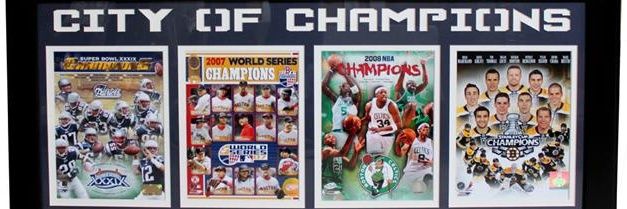
Haven’t seen a SB title since 02/03/2019
Haven’t seen a WS title since 10/29/2018
Haven’t seen an NBA title since 05/17/2024
Haven’t seen a Stanley Cup since 06/15/2011
For a fan base who has witnessed 12 titles from 2000-2019 along with 18 champion appearances only seeing 1 title and 2 total championship appearances form 2020-2026 is very difficult for us.
I have an idea how to compete with AirBNB
Hear me out…
We buy a large building, split it into like 400 rooms… each room has its own bathroom, maybe a fridge.
No kitchen because who cooks on vacation anyway?
Rent each room by the night. Someone comes in the morning and cleans it for you, makes the bed and it’s INCLUDED in the price
No hidden cleaning fees, booking fees, no bad ratings from mom and pop operators
We’ll call it HAAS (housing as a service)
Who’s in?
Everyone is looking at this map and asking “why can’t we do this?”
China builds high-speed rail at $17-21 million per kilometer. California’s HSR costs roughly $200 million per mile. That’s a 10x cost differential on identical technology.
The US doesn’t need to build American HSR at American prices. Here are five paths that could actually work.
Path 1: The Indonesia Play
Indonesia played Japan against China in 2015. Japan offered Jakarta-Bandung at $6 billion with a government guarantee. China countered at $5 billion, no guarantee, faster timeline. The train opened in 2023, has carried 10 million passengers, and cost $7.3 billion after overruns. That’s still cheaper than California’s 171-mile segment connecting Merced to Bakersfield ($35 billion). Japan pledged $550 billion in US investments in October 2025. American states could run the same playbook.
Path 2: The Boring Company Model
Issue a $50 billion fixed-price contract to Elon for a 500-mile demonstration line. Vegas to LA. Milestone payments, real penalties. The Boring Company tunnels at $10 million per mile versus $500 million to $1 billion for traditional US subway tunneling. SpaceX got good because NASA contracts had consequences. California HSR started in 2008 and still hasn’t carried a passenger.
Path 3: State-Level Competition
DeSantis announces Florida will partner with China Railway for Tampa-Miami at Chinese prices. Abbott counters with a Japanese consortium for Houston-Dallas. California explains why its project costs 10x more. Brightline West (218 miles, $12 billion, private) breaks ground this year. California’s state project (171 miles, $35 billion) won’t open until 2033.
Path 4: The TSMC Model
China Railway builds the first two lines with Chinese crews and equipment, training American workers on Chinese methods. By line three, the workforce is American, the costs stay low. This is how China learned from Siemens and Kawasaki in the first place.
Path 5: Defense Authorization
Frame it as military infrastructure. Norfolk to DC. San Diego to LA. Defense contracts move faster, environmental reviews compress, cost overruns disappear into a budget that already absorbs them.
The Math
The 17,000-mile network in that map costs $550 billion at Chinese prices. At American prices, $5 trillion. California has spent $15 billion without laying a single mile of high-speed track. At Chinese prices, that buys LA to San Francisco.
Brightline Vegas-LA opens before the 2028 Olympics. If private rail succeeds while state rail stalls, the political question shifts from “should we build” to “why are we so bad at building.”
Sometimes you can just do things.
Sometimes you let people who can do things, do them for you.
And sometimes you create enough competitive pressure that your own people figure out how to do things they claimed were impossible.