Data | privacy | digital | human rights | UNCRC | education | research | AI&Ed Council of Europe | @defenddigitalme | no consent to 3rd-party reuse | school gov
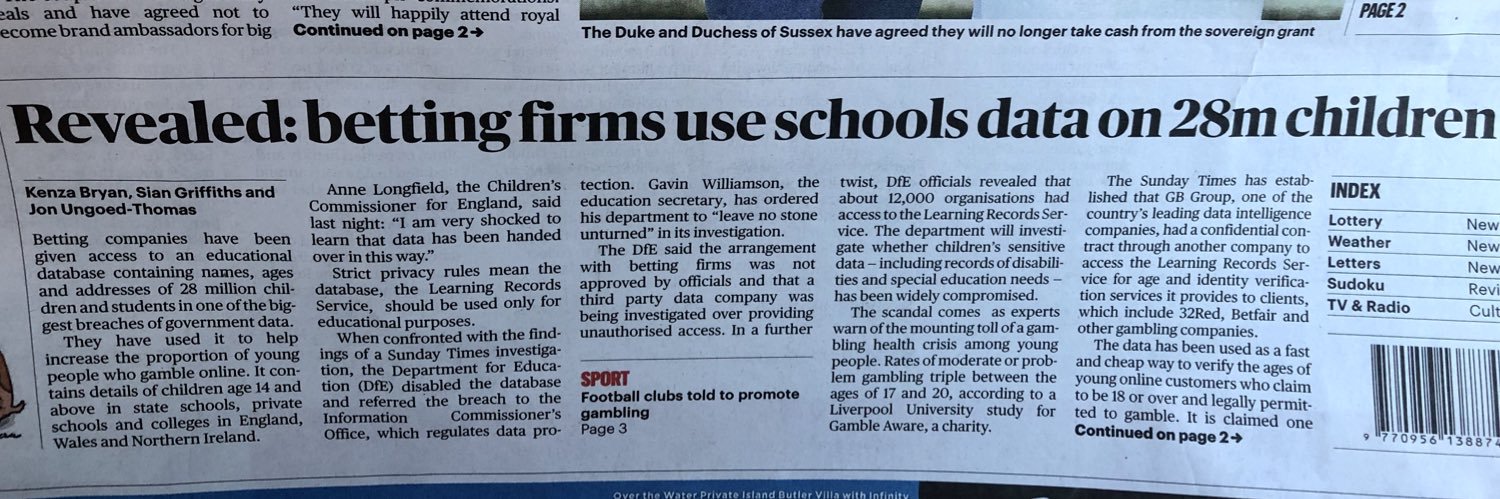
#ICYMI on Oct 7, the ICO published its executive summary from a compulsory #audit of the Department for Education with implications for over 21 million people in the National Pupil Database in England https://t.co/MkUfRtppvF #education#privacy#ChildRights#GDPR
@michaelsavage@PippaCrerar See case in point, stats used by Philips in resignation letter, with which she lambasts PM—an error of 91% vs 27% is non-trivial—and repeated even more strongly in follow-up Rigby podcast. “We’re not making it up”. Maybe. But too often those who do aren’t corrected or challenged.
@LBC Any parent who chooses can already buy a phone for a child without access to restricted features—any adult who chooses to provide a phone to a child set up as an adult can bypass any restriction—reform that targets users not systems will only replace parenting not platform design
@NationCymru Survey the same parents to ask if they back its implications: kids’ biometric facial print (digital version of their face) is taken, profiled and potentially retained by umpteen 3rd party companies; obligation to perform on-cam ‘liveness’ checks, and/or submit state ID details.
‘Where do you stand on the ban on social media?’- @TrevorPTweets
Children's Commissioner for England @Rachel_deSouza tells Sky’s Trevor Phillips that she would go further and put 'a ban and restriction on services that are unsuitable for under-18s'.
https://t.co/4YpU0z1AuV
Has anyone seen academic research on how current extensive online application tests (often 100s long question sets each in literacy, numeracy, personality and psychometric testing) are affecting young people's access to employment? Strongly suspect they create barriers for many.
Apprentice Rushid Afzali says society should use the term LEETs (Looking for Education, Employment and Training), rather than NEETs (Not in Education, Employment and Training).
He says the word NEET suggests young people do not want to work and instead portrays them as "absent".
It comes after a new report published this week has found that the number of 16 to 24-year-olds in that bracket has now increased to more than a million in the UK.
Channel 4 News led a discussion on the issue with Rushid, 24-year-old graduate Oscar Brown, University of Manchester Vice Chancellor Duncan Ivison and Kate Nicholls, CEO of UKHospitality.
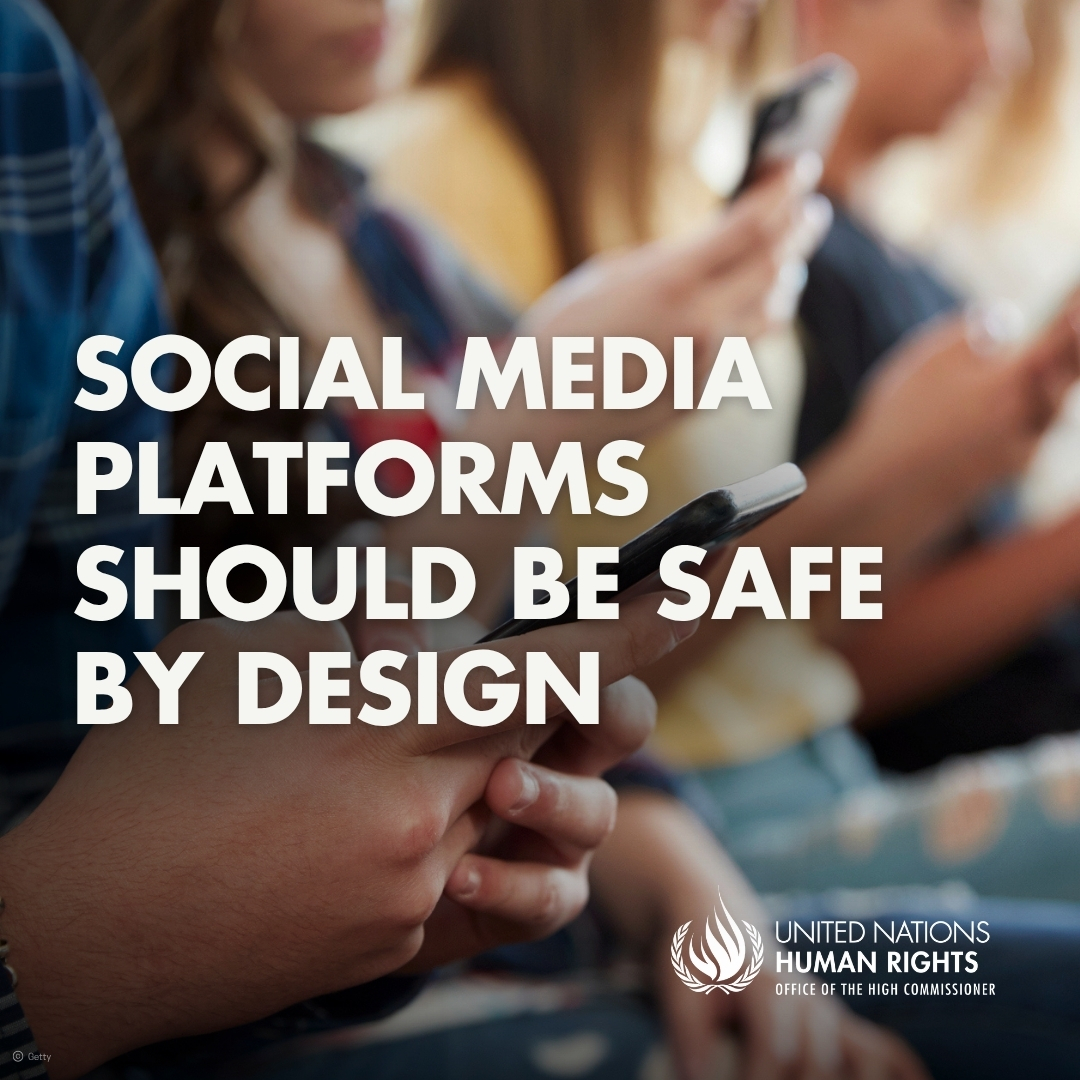
The risks posed by social media to children’s safety stem from platform design and practices that prioritize profit at all costs. Addressing them through regulation and human rights can take us further than blanket bans.
More in my Office's new guidelines:
https://t.co/PI1LHO6YSa
Enhancing the protection of children online is an urgent priority that needs to be done right. Governments and tech companies must make digital platforms safer by design, strengthen data protection, and ensure accountability for those responsible for harm.
➡️ @UNHumanRights has issued a set of guidelines aimed at improving children’s safety online and protecting their rights: https://t.co/bEev0QHrcw
We add regulation, we take away regulations we have ZERO meaningful enforcement of the regulations and still do nothing to replace the infrastructure. It’s all a political game and politics is ruining this country and leading to a lot of sick and dead people.
Artificial intelligences do not undergo experiences, do not possess a body, do not feel joy or pain, do not mature through relationships, and do not know from within what love, work, friendship or responsibility mean. Nor do they have a moral conscience, since they do not judge good and evil, grasp the ultimate meaning of situations, or bear responsibility for consequences. They may imitate or even simulate, but they do not understand what they produce, for they lack the affective, relational, and spiritual perspective through which human beings grow in wisdom. #MagnificaHumanitas
@RidgeandFrost@SophyRidgeSky Of course it points in only one direction if based on only a sample of the population interested in coming to talk to government about online harms, oft conflating correlation and causation https://t.co/S1SdXQs3tR Too many are “weaponising misinformation dressed up as evidence”.
@MumsnetTowers@Justine_Roberts@Independent Even though *the* leading UK academic in the subject, described the campaign as, "weaponising misinformation dressed up as evidence."
Inspired by @ITVJoel reporting Alan Milburn's comments on evidence for a UK #SocialMediaBan. No, the evidence does not all point in one direction. But recent media coverage has been extremely imbalanced.
https://t.co/S1SdXQsBjp
#OnlineSafety#ChildSafety#ChildRights#Privacy
Alan Milburn has told Sky News "the evidence points in one direction" when it comes to a ban on social media for under-16s.
Yesterday, the former Chair of Ofcom said he supports a ban.
Michael Grade said that despite the introduction of the Online Safety Act, too much online content remains “toxic”, the tech companies have resisted change and the government needs to do more to protect children.
@ITVJoel@defenddigitalme So perhaps if you really want a ban, cherry-pick from the evidence, and ignore the rest, you might imagine it only "points in one direction," but you would be incorrect, and there is plenty of evidence, opinion and supported research against a #SocialMediaBan in the UK. (13/13)
@ITVJoel And our own research at @defenddigitalme finds that age-gating tech from a wide range of companies, used thanks to the Australian #SocialMediaBan obligations, has lifelong implications for children's privacy, biometric and data protection rights, not yet considered by government.