🚨RUMOR🚨
Former NYC Mayor Eric Adams may make an appearance in season 35 of ‘Dancing With the Stars’
Rumors of Adam’s appearance begun circulating on February 22nd, 2026 after a leaked conversation with Adam’s assistant appears to confirm his appearance.
@GolfWYF@RadicalForge@Team17 I am really excited. Any idea when GWYF 2 will drop? I am asking in Jan 2026!! I am so prepared to throw all of my money at you guys!!
The employed class is a dying transitional group from the era of initial specialization to the age of AI development. By the time we hit the mid-20s, this wage-earning class will no longer be the dominant social stratum on the planet.
1. Progress is driven by entrepreneurs and visionaries who come up with the ideas and take on the risks.
2. The nature of these risks is the need to secure resources. In other words, these necessary resources are an unavoidable evil for the entrepreneur. They're what stand between them and the realization of their idea.
3. Progress continually lowers the barrier to entry for entrepreneurs in terms of implementing their ideas. Resources are needed at the scaling stage, and 99% of the time, this means money, which is a commodity and always in higher supply than demand on the market.
4. However, scaling risks aren't high if there's a working business model, a product, traction + LTV > 4CAC.
5. Therefore, for many products, the main risks lie in the creation and testing phase. The more experienced the entrepreneur, the lower the risks of defining the product's value proposition and the risks of testing.
6. But at least in products based on code, the highest risk has always been in the actual product's implementation, and this risk boils down to the production and maintenance of code. Why?
7. Because right now, for an experienced person, creating a product - up to and including designing its interface, scenarios, and preparing art for the front-end input - and especially formulating specs for developers, isn't an issue.
What remains is the last mile with the highest entry cost - development, deployment, and maintenance.
8. Until recently, development, deployment, maintenance, and bug fixing accounted for 90% of the costs, and thus the risks, and thus the barriers for entrepreneurs.
Because for a newbie to understand what a product is and how to come up with one, it requires about a week of a typical course. Not like getting a corporate job, getting promotions, and being good at brown-nosing the boss. Just creating a product.
Learning to code decently used to take up to a year.
9. Therefore, developers of all kinds and levels, plus devops, represented a massive beneficiary class in all industries compared to the rest, who have expertise but CAN'T code. Second literacy rules. It ruled until recently.
10. This situation lasted about 25 years, creating a demand for the profession, myths, secondary markets, and even a whole new industry:
"How to become a developer, get a corporate job, and climb the ladder to a product or manager position to get big salaries, bonuses, and stocks."
Hence the talent war, new heroes, and so on.
11. All this created massive disproportions and imbalances that we're now seeing in many areas of life.
A crappy coder who works in a big corporation and writes crappy code makes three times more than a nurse who saves lives in a hospital, or a cop trying to ensure safety while facing a wave of criticism.
12. A few years ago, it was obvious that developers, not office workers, would be the first target of automation. It was simply easier to automate the processes, so that's where they started, with low code. I remember four years ago when low code was picking up steam, how developers were laughing and scoffing. Not hearing much laughter now.��
13. When I wrote 3-4 years ago that an algorithm would replace 95% of developers, everyone was laughing and scoffing. Now the laughing has stopped and they're spewing venom, insisting that AI will NEVER surpass the current level and they're in no danger. And now it's the CTOs saying this, not the rank-and-file devs.
14. Perhaps 50 years ago some stubborn agricultural worker thought he was irreplaceable. Now, you rarely see people in the fields, it's mostly combines, although seasonal Mexican laborers do pick berries.
15. Business thinks in terms of efficiency. If you can deliver the same quality code while reducing developers by 90%, it WILL be done INEVITABLY.
Elon Musk set the example, laying off 85% of unnecessary staff. There was an outcry that everything would fall apart within a month. What actually happened? Not only did nothing fall apart.
16. In the end, all companies realized Musk was right, and started laying off extra people, first non-technical staff, but then developers too. And this was before ChatGPT. What happens next? The answer is clear.
17. You don't need to create a powerful general AI for an AI at the current level of ChatGPT to be able to fully create, debug, deploy, and modify code WITHOUT human intervention.
This is no longer a technical problem. The problem lies solely in selecting the right sequence of prompts with feedback.
18. At the moment, a human is a middleman between AI and AI, and this middleman will also be removed relatively quickly. And again!
It doesn't require a MORE POWERFUL AI. The current AI is already capable, the infrastructure just hasn't been implemented yet.
19. I've been creating code with AI, and my entire function was to formulate tasks, then copy the code into VS code, test it, notify AI of errors, and repeat, in a loop.
Of course, I described the product, input and output, plus acted as a tester.
20. However, even for me, it's obvious that 90% of the tasks I'm doing NOW can already be handed over to AI, if I just create a dedicated Docker container, give AI access to manage the server, dependencies, create and debug the code. What's left for me?
21. All that's left for me is to clearly describe what is at the input and what is at the output. And even in this, AI helps me, i.e., the better the task is described, the higher the quality of the result.
22. So, AI can interview me and create prompts for itself to write better code. This can be done NOW. And this is exactly how it will be! Why?
23. I'm an entrepreneur, and I know how an entrepreneur thinks, and we don't need all that BS about a dream team.
Entrepreneurs want results and less headache.
And where is the main source of headache, errors, risks, and costs for the entrepreneur?
The correct answer is the employed person, and if AI gives hope to eliminate the human from the equation, it will be done.
You see, employed people still can't create a vision. They can only follow instructions, get paid, and do just enough not to overwork. Otherwise, the employed becomes an entrepreneur himself.
24. Conclusion - employed people are a dying transitional class from the era of the beginning of specialization to the era of AI development.
25. Hiring began about 10-12 thousand years ago when the first groups of hunters and gatherers appeared, and then the first specialized function, the warrior, appeared. As soon as humanity shifted to cultural farming, animal husbandry, systematic trade, and warfare, a class of hired people emerged.
26. It seems that it will take about 20-25 years before the employed class ceases to exist as the dominant social stratum on the planet.
Freelancers with unique skills will remain. Some cooperatives with unique competencies will remain. But I don't see a future for the hired class in the 20-30 year horizon.
27. Of course, this will happen faster in developed countries, slower in developing countries.
Certainly, such a situation will trigger a massive shift in people's paradigm about the meaning of life.
Currently, there are nearly 3.5 billion hired employees worldwide.
Right now, the main purpose for all these people and almost 1.5 billion students is to land a good job.
However, such jobs won't be around in the next 20-25 years, except for highly skilled ones or in sectors where human labor is still cheaper than using machines.
What will all these people strive for? What kind of life purpose will they seek?
It's clear that 90% of people can't come up with a life purpose for themselves and resort to substitutes invented by cunning priests, politicians, marketers.
Absolutely, the creation and selling of "life's purpose" has always been a potent business.
Whether it's through religion, personal development, education, or even marketing and advertising, providing people with a sense of purpose or direction can be both lucrative and impactful.
However, as with all things, it's crucial to approach such a business with ethics and a genuine desire to help others, rather than just to profit.
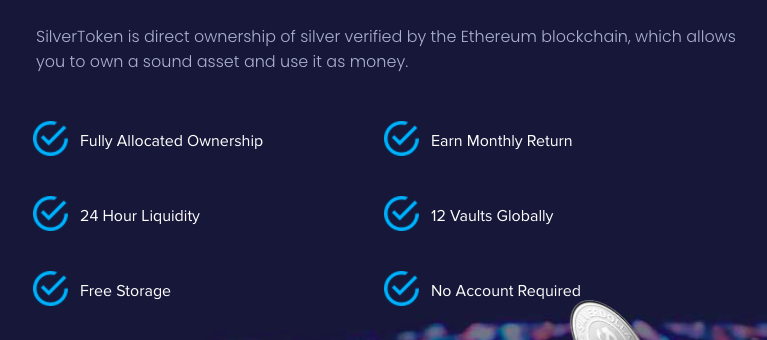
CryptoAlchemy allows holders to craft using ancient alchemical symbols. By doing so, they will get either gold silver or platinum.
Yields are airdropped to the crafter in the form of metal backed crypto. SilverToken will deliver hard metal to your door upon your request 🚀
Which alchemist will you mint??
The Alchemist wont affect your crafting yield. Yields are determined purely by the symbols in which you craft with.
However, there are still rarities that go along with the alchemists.
Join our discord, whitelist spots are still available!!
Remember, CryptoAlchemy will allow holders to craft REAL gold, silver or platinum.
Yields will be paid out in the form of real metal backed crypto. This means that upon your request, you can have the hard metals delivered to your door!!!
Alchemical symbols are still used for crafting.
Creating a recipe of any three symbols through the crafting station on our website will craft you either Gold, Silver or Platinum!
All crafting yields are airdropped to the alchemist via a metal backed crypto 🏆🏆🏆