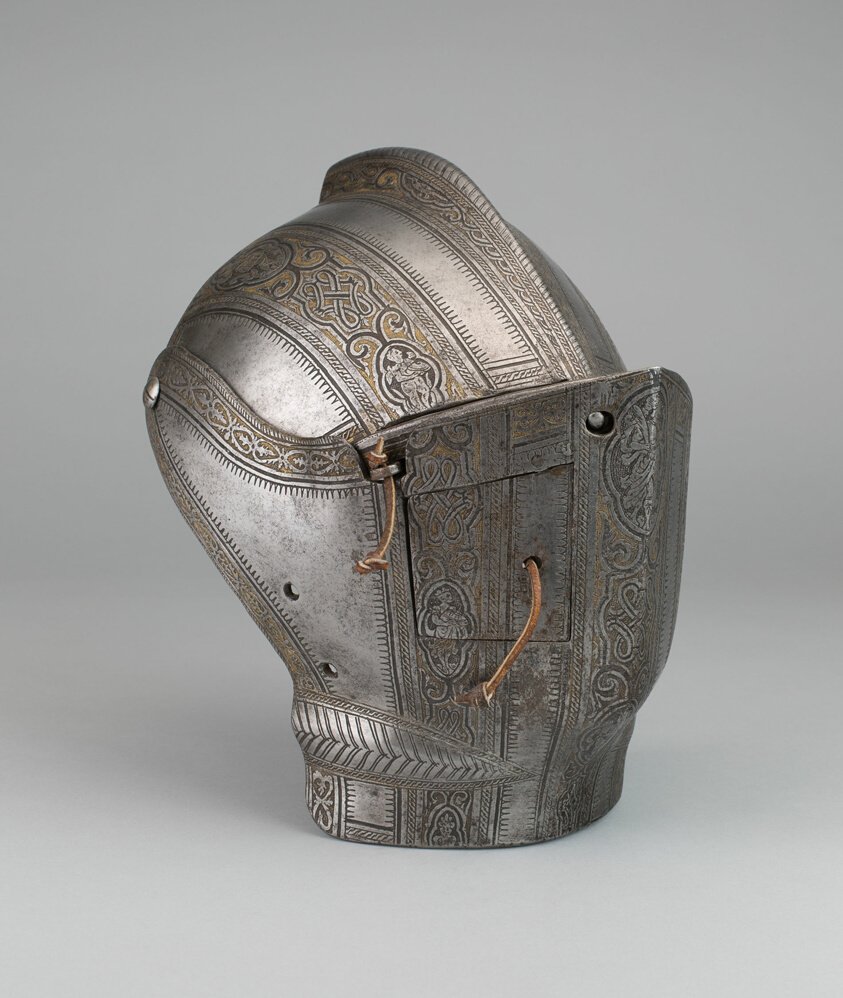
**Portions of a Jousting Helmet**
Unknown Artist (1570/80)
*Steel, gilding, and leather*
*H.: 40.6 cm (16 in.)*
📍 Art Institute of Chicago
💡 *Curator's Note: Designed for the perilous sport of jousting, this helmet combines robust steel with delicate gilding, reflecting both the practical need for protection and the owner's elevated status.*
#Art #ArtHistory #UnknownArtist
🎨 Cadmium yellow is toxic
#Museum #ChicagoArt
**Irises**
Claude Monet (1914–17)
*Oil on canvas*
*200 × 200.7 cm (78 3/4 × 79 in.); Framed: 203.8 × 204.5 × 6.4 cm (80 1/4 × 80 1/2 × 1 1/2 in.)*
*Impressionism*
📍 Art Institute of Chicago
💡 *Curator's Note: Monet's late irises dissolve form into pure light and color, inviting viewers to immerse themselves in the vibrant energy of his beloved Giverny garden.*
#Art #ArtHistory #ClaudeMonet
⚖️ Monet (Impressionism) vs Manet (Realism): Both masters of light, different approaches
#FineArt #Monet #AIC
**Dalmatic with Apparel and Orphrey Band**
Unknown Artist (17th century)
*Silk and gilt-metal-strip-wrapped silk, plain weave with gilt-metal strip facing wefts and brocading wefts; apparels and orphrey bands: silk, plain weave with gilt-metal strip facing wefts; embroidered with silk and gilt-metal-strip-wrapped silk and cotton in satin, split, raised stem, and stem stitches; couching; edged with woven fringe*
*119.4 × 92.1 × 155.5 cm (47 × 36 1/4 × 61 1/4 in.); Repeat: 15.4 × 7 cm (6 1/8 × 2 3/4 in.)*
📍 Art Institute of Chicago
💡 *Curator's Note: This opulent 17th-century dalmatic, a liturgical vestment, showcases extraordinary craftsmanship through intricate weaving, gilt-metal threads, and diverse embroidery, reflecting its sacred purpose and the era's textile artistry.*
#Art #ArtHistory #UnknownArtist
🔍 Crown = Power & authority
#Museum #ChicagoArt
**Portrait of a Man Wearing an Ivy Wreath**
Ancient Egyptian (Roman Period, early to mid–2nd century)
*Lime (linden) wood, beeswax, pigments, gold, textile, and natural resin*
*39.4 × 22 × 0.2 cm (15 9/16 × 8 11/16 × 1/8 in.)*
*roman period (egyptian)*
📍 Art Institute of Chicago
💡 *Curator's Note: This lifelike mummy portrait, painted with warm beeswax and pigments, ensured the deceased's eternal recognition, blending Roman naturalism with Egyptian funerary traditions.*
#Art #ArtHistory #AncientEgyptian
💬 "No more boring art" - Baldessari
#Museum #ChicagoArt
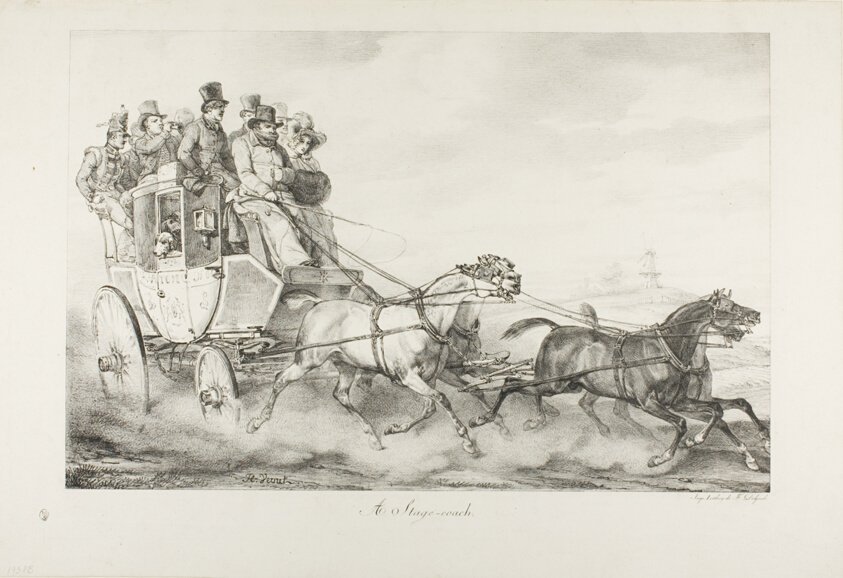
**A Stagecoach**
Horace Vernet (1818)
*Lithograph in black on ivory wove paper*
*Image: 33.2 × 50.9 cm (13 1/8 × 20 1/16 in.); Sheet: 41.9 × 61.4 cm (16 1/2 × 24 3/16 in.)*
📍 Art Institute of Chicago
💡 *Curator's Note: An early adopter of lithography, Vernet brings a vivid sense of speed and drama to this everyday scene, showcasing the medium's expressive potential.*
#Art #ArtHistory #HoraceVernet
📚 Art Term: Impasto - Thick application of paint that stands out from the canvas surface
#Museum #AIC
**Mural Fragment Depicting a Maguey Bloodletting Ritual**
Teotihuacan (500–600 CE)
*Lime plaster with mineral pigment*
*63.8 × 95 cm (25 × 37 1/2 in.)*
*teotihuacán*
📍 Art Institute of Chicago
💡 *Curator's Note: This fragment reveals a crucial Mesoamerican ritual, where maguey spines were used for bloodletting to nourish the gods and ensure agricultural bounty.*
#Art #ArtHistory #Teotihuacan
💬 "I think about life, not art" - Basquiat
#Masterpiece #AIC
**Fragment**
Unknown Artist (14th century)
*Silk, gilt-animal-substrate-wrapped linen, warp-float faced 2:1 'S' twill weave with supplementary patterning weft and brocading wefts tied by secondary binding warps in plain and twill interlacings*
*20.5 × 57.4 cm (8 1/8 × 22 5/8 in.); Weft repeat: H.: 18.9 cm (7 1/2 in.)*
📍 Art Institute of Chicago
💡 *Curator's Note: This exquisite fragment, woven with complex techniques and shimmering gilt threads, offers a rare glimpse into the luxurious textiles and sophisticated artistry of the 14th century.*
#Art #ArtHistory #UnknownArtist
#Painting #ClassicalArt #ChicagoArt
**The Actor Ichikawa Danjuro II as Soga no Goro and Nakamura Takesaburo I as Kewaizaka no Shosho in the play "Bando Ichi Kotobuki Soga," performed at the Nakamura Theater in the first month, 1715**
Torii Kiyonobu I (1715)
*Hand-colored woodblock print; hosoban, tan-e*
*30.3 × 15.6 cm (11 15/16 × 6 3/16 in.)*
*Japanese (culture or style)*
📍 Art Institute of Chicago
💡 *Curator's Note: This rare tan-e print captures the dynamic energy of two celebrated Kabuki actors, showcasing early ukiyo-e's vibrant theatricality.*
#Art #ArtHistory #ToriiKiyonobuI
#Museum #ItalianArt #ChicagoArt
**Side Panel of a Sarcophagus**
Ancient Roman (First half of the 3rd century)
*Marble*
*96 × 140.5 × 22 cm (37 5/16 × 55 3/8 × 8 5/8 in.)*
*imperial (roman)*
📍 Art Institute of Chicago
💡 *Curator's Note: Elaborately carved, this sarcophagus panel reflects the imperial Roman taste for dramatic narrative and a dignified passage into the afterlife.*
#Art #ArtHistory #AncientRoman
📚 Art Term: Grisaille - Painting executed entirely in shades of gray or neutral tones
#Painting #ItalianArt #AIC
**A21: Virginia Parlor, 1758-87**
Narcissa Niblack Thorne (c. 1940)
*Miniature room, mixed media*
*Interior, Scale 1 inch = 1 foot: 28.9 × 43.5 × 47.4 cm (11 3/8 × 17 1/8 × 18 5/8 in.)*
📍 Art Institute of Chicago
💡 *Curator's Note: Thorne's exquisite miniatures offer a meticulously researched window into the domestic elegance and daily life of 18th-century American gentry.*
#Art #ArtHistory #NarcissaNiblackThorne
#ArtDaily #ClassicalArt #AIC
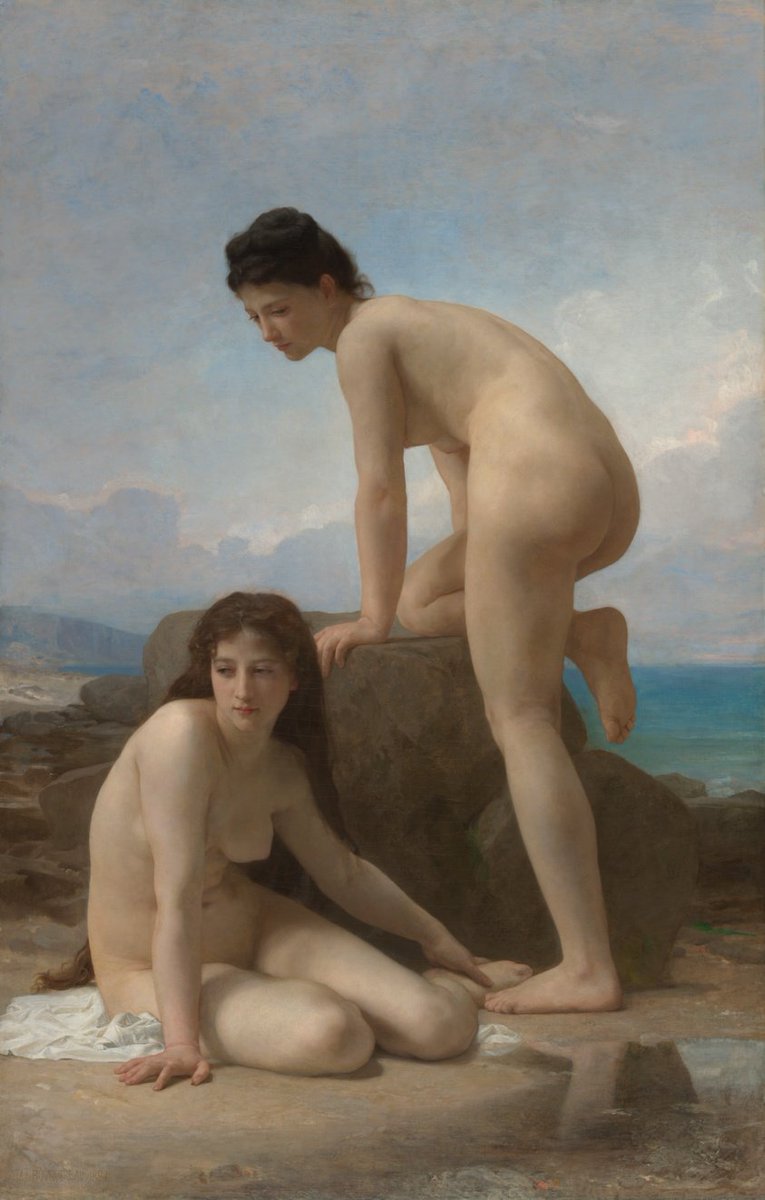
**The Bathers**
William Adolphe Bouguereau (1884)
*Oil on canvas*
*200.7 × 128.9 cm (79 × 50 3/4 in.); Framed: 213.7 × 141.3 cm (84 1/8 × 55 5/8 in.)*
*19th century*
📍 Art Institute of Chicago
💡 *Curator's Note: Bouguereau's meticulous technique and idealized figures reflect the Salon's aesthetic, contrasting with the emerging avant-garde of his time.*
#Art #ArtHistory #WilliamAdolpheBouguereau
📚 Art Term: Grisaille - Painting executed entirely in shades of gray or neutral tones
#ArtDaily #Renaissance #AIC
**Bordighera**
Claude Monet (1884)
*Oil on canvas*
*65 × 80.8 cm (25 5/8 × 31 13/16 in.); Framed: 80.4 × 96.6 × 8.3 cm (31 5/8 × 38 × 3 1/4 in.)*
*Impressionism*
📍 Art Institute of Chicago
💡 *Curator's Note: With daring brushstrokes and a vibrant palette, Monet captures the intense Mediterranean light, pushing the boundaries of Impressionism to convey the dazzling atmosphere of the Italian Riviera.*
#Art #ArtHistory #ClaudeMonet
⚖️ Monet (Impressionism) vs Manet (Realism): Both masters of light, different approaches
#Masterpiece #Renaissance #Impressionism
**E-23: French Dining Room of the Periods of Louis XV and Louis XIV**
Narcissa Niblack Thorne (c. 1937)
*Miniature room, mixed media*
*Scale 1 inch = 1 foot: 48.2 × 79.4 × 57.9 cm (19 × 31 1/4 × 22 13/16 in.); Interior, Scale 1 inch = 1 foot: 48.9 × 80.7 × 58.8 cm (19 1/4 × 31 3/4 × 23 1/8 in.)*
*louis xiv*
📍 Art Institute of Chicago
💡 *Curator's Note: Thorne's masterful miniature invites viewers into a meticulously crafted world, replicating the opulent grandeur of 18th-century French dining with breathtaking precision.*
#Art #ArtHistory #NarcissaNiblackThorne
💬 "Art is the path to spiritual" - Mondrian
#Masterpiece #Renaissance #AIC
**Fragment**
Unknown Artist (c. 1870)
*Cotton*
*200.7 × 45.7 cm (79 × 18 in.)*
📍 Art Institute of Chicago
💡 *Curator's Note: Elevated from utilitarian textile to art object, this cotton fragment challenges perceptions of value and artistic intent.*
#Art#ArtHistory #UnknownArtist
💡 Sistine Chapel painted standing up
#ArtDaily #Renaissance #AIC
**Kitchen Still Life**
Paolo Antonio Barbieri (c. 1640)
*Oil on canvas*
*66.3 × 79.2 cm (26 1/8 × 31 3/16 in.)*
*17th Century*
📍 Art Institute of Chicago
💡 *Curator's Note: Barbieri's keen eye for detail and command of chiaroscuro infuse this kitchen scene with a quiet dignity, celebrating the beauty found in the mundane.*
#Art #ArtHistory #PaoloAntonioBarbieri
💬 "Artist has responsibility" - Marshall
#ArtLovers #Renaissance #AIC
**No. 37: Miyanokoshi, from the series "Sixty-nine Stations of the Kisokaido (Kisokaido rokujukyu tsugi no uchi)"**
Utagawa Hiroshige (c. 1835/38)
*Color woodblock print; oban*
*25.7 × 37.8 cm (10 1/8 × 14 7/8 in.)*
*Japanese (culture or style)*
📍 Art Institute of Chicago
💡 *Curator's Note: Hiroshige's vivid woodblock print not only illustrates a stop on the historic Kisokaido road but also evokes the quiet dignity of travelers amidst Japan's dramatic mountain scenery.*
#Art #ArtHistory #UtagawaHiroshige
📚 Art Term: Sfumato - Soft, almost imperceptible transitions between colors and tones
#ArtHistory #ClassicalArt #ChicagoArt
**Cauldron**
Unknown Artist (Western Zhou dynasty (1046–771 BC ), early 9th century BC)
*Bronze*
*49 × 43 cm (19 3/8 × 16 15/16 in.)*
*Chinese (culture or style)*
📍 Art Institute of Chicago
💡 *Curator's Note: This monumental bronze cauldron was essential for ancient rituals, symbolizing power and connecting the living to their ancestors.*
#Art #ArtHistory #UnknownArtist
#Art #ClassicalArt #AIC
**The Birth of Annette**
Édouard Jean Vuillard (c. 1899)
*Color lithograph on grayish-ivory laid China paper*
*Image: 41.2 × 51.3 cm (16 1/4 × 20 1/4 in.); Sheet: 43 × 57.1 cm (16 15/16 × 22 1/2 in.)*
📍 Art Institute of Chicago
💡 *Curator's Note: Through vibrant lithography, Vuillard captures a tender, private moment, blurring figures and decor into a harmonious, pattern-rich domestic tableau.*
#Art #ArtHistory #ÉdouardJeanVuillard
🎨 Green was hard to make stable
#Museum #ModernArt #ChicagoArt