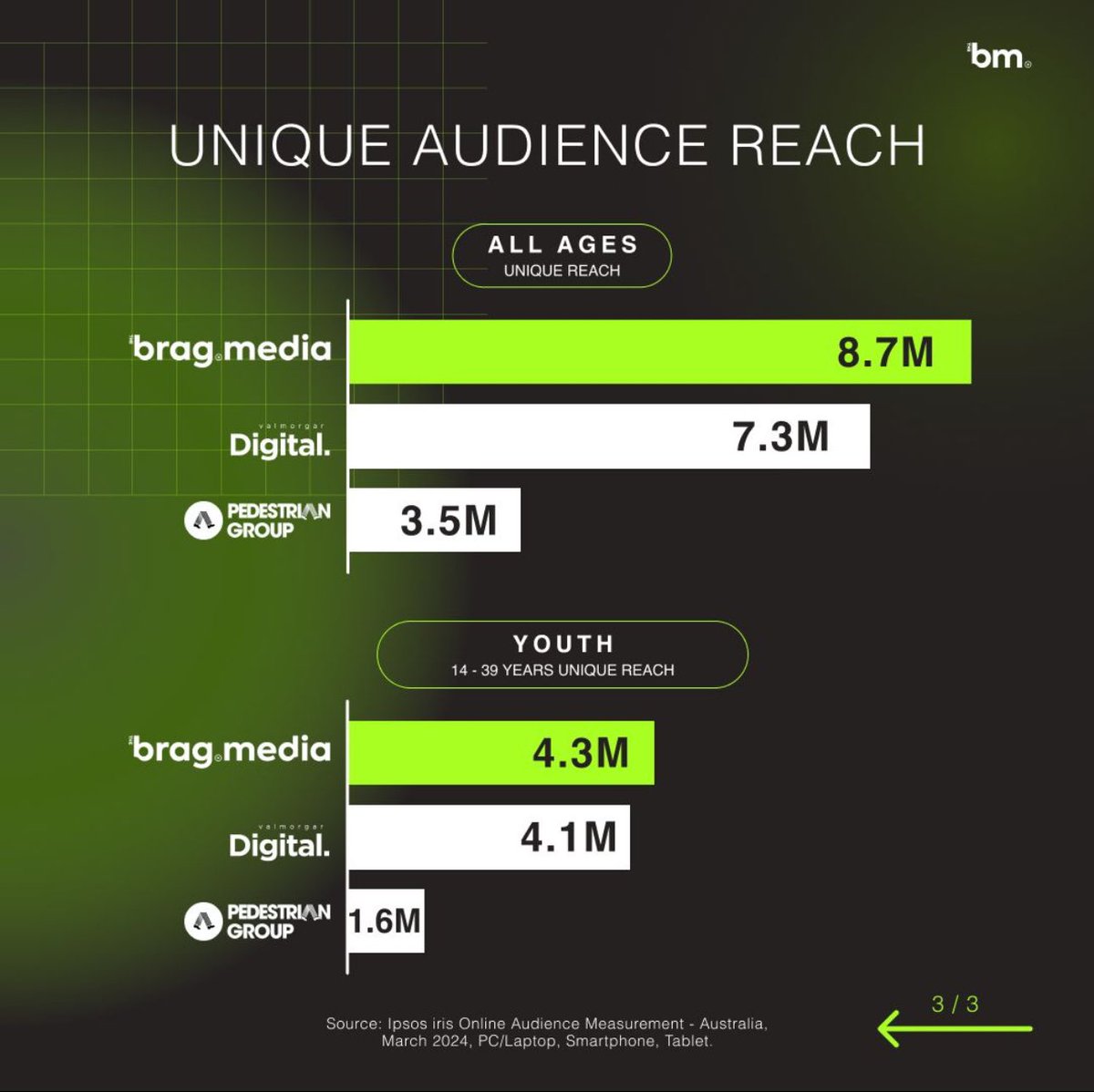
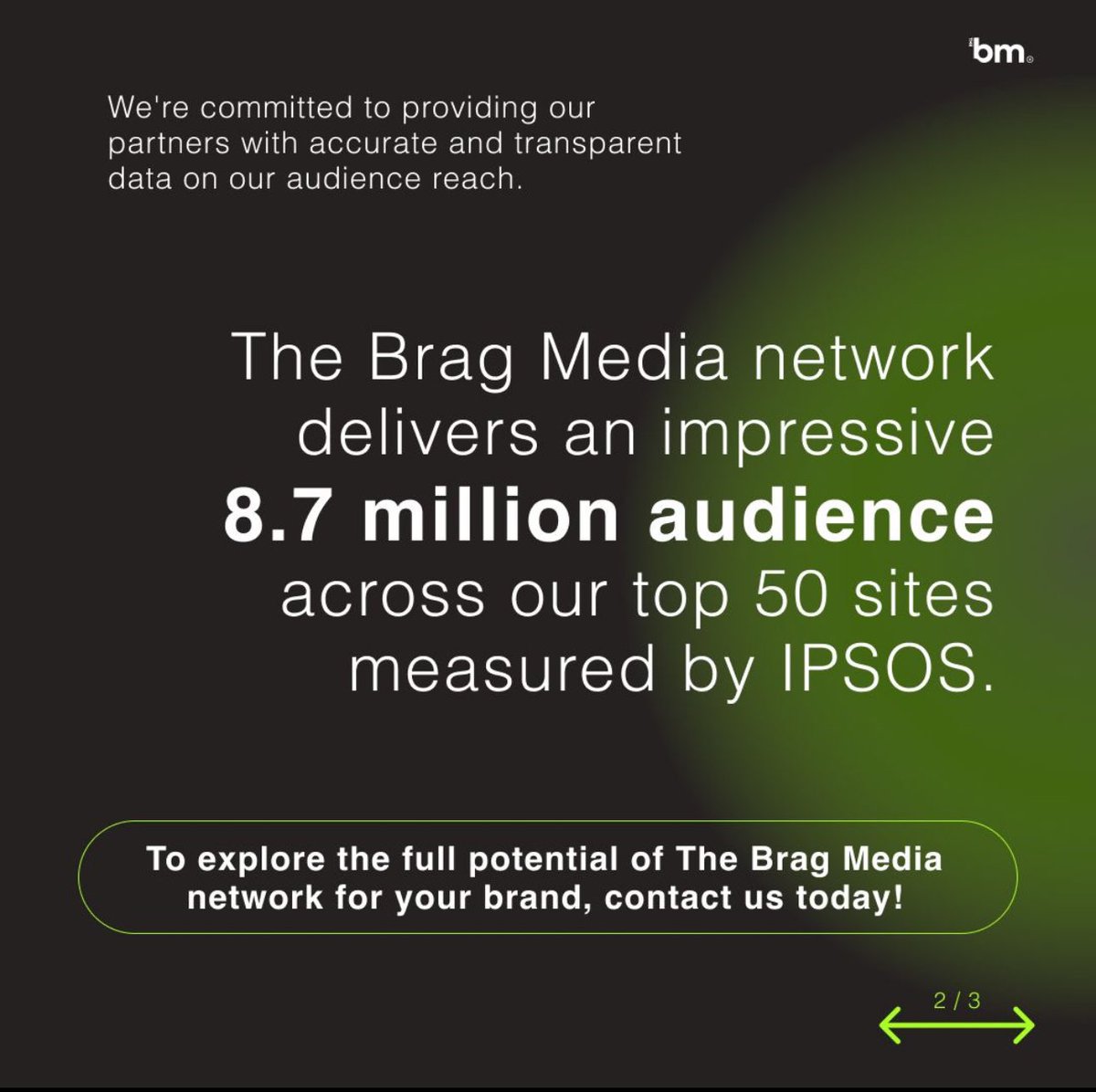
The Brag Media is the undisputed #1 youth publisher in Australia; we are lucky to have a team of the best media professionals in the country; it's invigorating to work with them daily.
https://t.co/YoYXxAajKy
With an unparalleled view of Sydney’s iconic fireworks display, attendees will also have unlimited access to Luna Park’s rides throughout the night, and bring in 2024 with a stellar lineup of DJ sets.
https://t.co/UhJheeH7Ms
🎉 Beyond excited to announce today Vinyl Group has signed an agreement to acquire The Brag Media, publisher of @rollingstoneaus & @VarietyANZ 🚀
🗓️ This represents a momentous day for music and media! As the CEO of @vnlasx (ASX: VNL), Australia’s only ASX-listed music company, I’m excited to share our acquisition of @TheBrag Media, Australia's largest youth publisher of content and events. This move includes the iconic PMC-owned titles Rolling Stone and Variety in Australia and New Zealand, among other influential mastheads.
💰 The acquisition reflects our commitment to innovate, invest in, and empower all parts of the music ecosystem and creator economy. The Brag Media's impressive $8.39 million revenue and robust EBIT growth make this a strategic and synergistic addition to our portfolio.
🤝 Welcoming @LukeGirgis and his team to the Vinyl Group family! His expertise and vision are wonderfully aligned with ours, promising a dynamic future for The Brag Media under Vinyl Group.
💰The deal was facilitated through an $11 million injection from Richard White, his second investment into the company, which includes $8 million cash for the transaction in addition to working capital to further fuel the growth of @vinyldotcom, @vamprapp, #Jaxsta and The Brag Media. We will never take Richard’s support for granted and on behalf of all stakeholders we thank him for facilitating such a transformational transaction.
🌟 This acquisition marks the beginning of an exciting new chapter for Vinyl Group and The Brag Media. We're ready to make waves in the Australian music industry and beyond. Stay tuned for more!
Read 👉 https://t.co/hhAirMh0Ay
#MusicIndustry #Acquisition #VinylGroup #TheBragMedia #Innovation #Growth
It’s time artist managers got paid properly
Power has shifted in the music industry, and a large share of that power is resting with artist managers.
Artist managers are the CEO’s of musicians, they are key to not only building equity in the artist’s brand but they also hold all of the artists’ investors accountable for delivering on their promises. This includes labels, promoters and publishers just to name a few.
50 years ago, the artist manager had less influence, and also less responsibility. On paper they did most of jobs they do now, but in reality, it was the labels and promoters who had all the power and ability to break an artist so it was them who did all the heavy lifting.
At that time, getting paid a 20% commission of artist income was a great deal for an artist manager; success and failure of a career did not fall exclusively on their shoulders as it does now.
However, in this new age, the artist manager is arguably the most influential and contributing factor to an artist’s career. They need to be 10 steps ahead of the record labels (the record labels are spread too thin), they are the ones who (together with the artist) speak directly to the fans and mobilise them (they couldn’t do that in the ’70s). And they are the ones who are the driving force for co-writers and building copyright (publishers do an amazing job, but the majors have hundreds of writers to every staff member, they too are spread thin).
50 years ago, the artist manager had less influence, and also less responsibility.
To put it simply, it is the artist manager who needs to develop the artist from nothing to a marketable entity so that the labels, publishers and promoters can begin their work and do what they do best.
Smart artists understand that if they are successful it is most likely because their manager is unbelievable at what they do, and they have put together the right team and investors and mobilised them effectively. It is a hard and highly skilled job that cannot be done by just anyone with a laptop and a love for music.
So this begs the question; managers have more influence, responsibility, are higher skilled and harder working than they have ever been in human history. Why are they paid the same rate, and in some cases less, than they have ever been paid?
What this means for artists
If your manager is living an infrequent pay-check to pay-check, waiting for that tour to settle so they can get their commissions, or hanging out for that APRA payment so they can pay their staff – how do artists expect to retain highly skilled managers within their industry?
Why are they paid the same rate, and in some cases less, than they have ever been paid?
This is why highly skilled managers usually do one of two things;
1. They move on to other industries or other parts of the music industry that have more stability or higher pay.
2. They start record labels, publishing or touring companies on the side to diversify their revenue and/or get some equity or exit strategy in their business.
When you think about it, artists should be incentivising their managers to only focus on management. Why would you want your manager to start a record label or promoting business?
I can guarantee you if managers had a better financial model they would never bother with those other ventures. The reason they do is because they need to.
When you think about it, artists should be incentivising their managers to only focus on management.
Currently, artists pay their managers like they pay their accountant, lawyer or publicist. Sure managers are paid via a commission structure rather than an hourly rate, but the commission structure actually puts managers in a far worse position early on in an artist’s career than any other person contributing to the artist’s business.
Managers take on this financial risk early in an artist’s career with no equity or extra incentive. That is no way to treat (and retain) your CEO, and the most valuable person in your career.
The solution
I’ve never been a fan of re-inventing the wheel. So how do other industries retain and look after their highly-skilled business leaders?
Well, most tech companies offer stock options (real equity) into the business for every staff member that joins. Why are artists not treating their managers, i.e. their CEOs, the same way?
If artist managers were given master points on each record their artist released, and some small publishing share on each co-write, then suddenly the artist manager would have real equity in the business they are building.
They would have a real asset and passive income on top of their commission, which will not only make their business model more viable but offer them something in their retirement.
I can guarantee you if managers were offered this you would see very few of them starting side hustles and therefore they would be 100% focused on artist management. What an amazing thing that would be for our industry.
Whenever I suggest this to leading managers it is always met with a bit of an awkward response. Something like;
“Yeah I guess you’re right, but I would never want to take a master or publishing cut from my artist.”
It’s admirable; artist managers love their artists and always want to put them first. But these are the same managers who have side hustles. Almost all of them have to do additional things like book venues, work for a music body, a festival, a conference, or run a record label.
Whenever I suggest this to leading managers it is always met with a bit of an awkward response.
By “putting their artist first”, they are actually not doing that at all, their focus is split from their artists because their business model is simply not viable.
It is well-intentioned, but it’s not good for anyone.
It’s time artist managers stopped being the martyrs of the music industry and start getting paid what they deserve. By definition martyrs die, and when good managers die that is very bad for artists.
It’s time artist managers stopped being the martyrs of the music industry and start getting paid what they deserve.
Lawyers, labels, publishers, promoters, artists and media should all be working together to ensure that artist managers are paid well so we retain highly-skilled talent and have them fully focused on managing their artists. If we do this, not only will artists get paid more, but the music industry will be far more profitable as a whole.
Being an artist manager is the most anxiety-inducing role in the music industry (only matched by a promoter with millions of dollars on the line).
Power in the music industry has shifted to Artist Managers, and now you could easily argue that the success of an artist (outside of the artist themselves) firmly rests on the shoulders of the manager.
This pressure, combined with the fact that the artist manager is usually the first one (sometimes the only one) in the team to get fired when things don’t go as expected, makes the task of managing an exceptionally stressful one.
Artists rightfully hold their managers to high standards, after all, they are effectively employing a CEO of their business. However often, managers share the blame or get fired for things that are not even within their control. Why? Because in most cases the artist manager is the only professional in the team who can get fired.
If an artist signs a record deal, and the label is doing a bad job, there is no easy or cheap method to fire the label. The label owns the artist’s masters and that’s the end of the story – same with a publishing deal.
So, if the artist has the perception that the label is doing a bad job, it’s on the manager to fix it. If the manager can’t then the manager is the one that ends up in the firing line, not the label. Notice I said “the artist has the perception”. Often it doesn’t matter how good of a job the label is actually doing, if the artist thinks they’re doing a bad job that is what the manager has to navigate. This is often why there is always a lot of tension between the label and an artist manager.
The best managers are the ones that can change artists’ perceptions when they don’t match reality. However, it takes a decade of experience to learn how to do that effectively, and sadly most managers don’t survive that long.
Secondary to getting fired, the other anxiety-inducing dynamic young managers have to push through is overwhelming imposter syndrome. Artists expect their managers to have all the answers and all the contacts – impossible as a new manager (and even as an experienced one). John Watson (who I believe is the best artist manager in Australia) often speaks about how an artist manager may always feel like the dumbest person in the room (forgive me John, I’m definitely paraphrasing here).
John points out that when a manager is speaking to a label, most know less about the recording industry than the label. When speaking to the publisher, they know less about publishing than the person they’re meeting. The same goes for lawyers, promoters, accountants etc and their respective professions. Artist managers need to manage these connections, ensure everyone is pulling in the right direction – all while knowing less about each sector than those they’re trying to collaborate with or hold accountable.
As a young manager new to the profession, this imposter syndrome is so overwhelming that most just quit. The more resilient operators can push through, learn and grow, but only for as long as their finances allow them. If their artist doesn’t break through and start making real money – all the resilience in the world won’t keep them managing artists.
The Artist Management industry in Australia has a real shortage of talented managers and that is simply because of the stress versus the remuneration dynamic at play. The money an artist manager makes at the start of their career is close to $0. This is obviously unsustainable unless one of the first few artists they sign starts to make a meaningful income.
If I think of the best artist managers in Australia right now (there aren’t many), I do see a pattern of big success in one of the first few signings they had early on in their career. A big break out act early can provide the cash flow an artist manager needs to have a long term career in the profession, without that early success, most highly skilled managers move into other parts of the music industry or even leave the industry entirely.
I actually proposed we need to pay artist managers differently (more) in my 2019 story to try and retain more highly skilled people in the profession.
If we have more talented artist managers, every sector of the music industry will make more money – especially the artists.
Fashion and music are something that often go hand-in-hand, but sometimes a music video comes along that truly stops us all in our tracks.
https://t.co/fJy76x2TL1
The fashion and beauty industry is known for its weird, wonderful, and just plain wacky trends, but these ones truly take the cake.
https://t.co/iZeStkqrbc
For this edition of Throwing Fits, we take a look at the forever iconic film that is 'Legally Blonde', talking Elle Woods' fashion and more.
https://t.co/yIfV97Sf6q
From Billie Eilish to Stevie Wonder, we've found the best 10 songs used within video game trailers to give them a little extra pizzazz.
https://t.co/cvbqPxgiF6
Britney Spears in an episode of 'Home and Away'? It sounds completely far-fetched but one former cast member insists it very nearly happened.
https://t.co/ccrKYcd7MH
It’s the hair your dad probably rocked in the ’80s, and whether you love them or hate them, there’s no denying that mullets are back.
https://t.co/ApizxRX7zP