I survived a heart attack and twenty-one years in the education bureaucracy. Defender of Liberty and the American Republic. All opinions here are my own.
A person who pays no price for being wrong can hold any opinion at all.
That's most of the commentary you read.
The people worth listening to have already been wrong in a way that cost them something.
I taught in public schools for 21 years, and the easiest line in the building was that the school was broken.
Often true. Also free.
The people who changed anything for kids did the unglamorous work of rebuilding something and answering for how it turned out.
People are not raw material for someone else’s plan.
It sounds obvious. But a lot of bad ideas in politics start when somebody forgets it, and so do a few in parenting.
The plan gets bigger, and the person gets smaller.
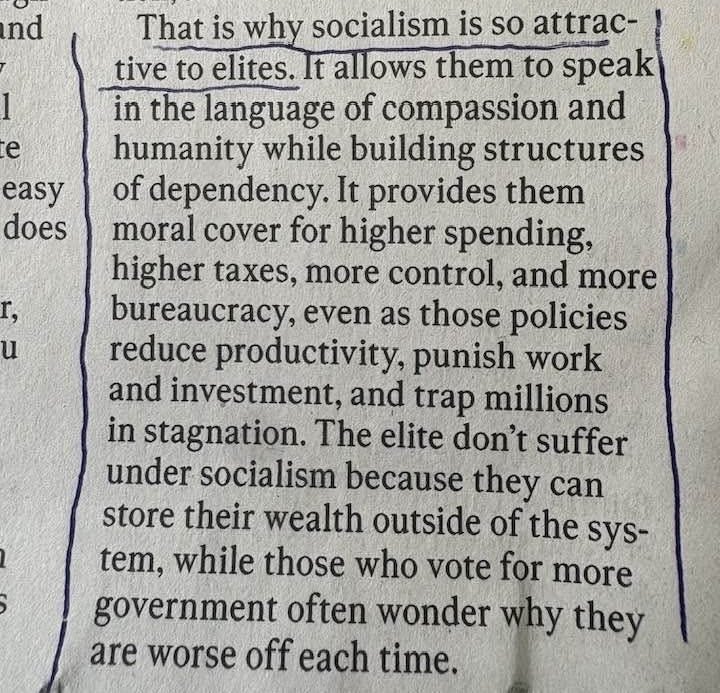
Communism is the ideology of manufacturing grievances against those who create wealth to justify policies that ultimately create real grievances for everyone else.
It begins by convincing people that someone else's prosperity is the cause of their poverty and ends by destroying the very incentives, freedoms, and productive capacity that made prosperity possible.
Envy is a remarkably effective tool for selling economic self-destruction.
I'm a public school superintendent in Florida. And I believe in school choice.
Some people find that surprising.
They shouldn't.
I believe in free markets and I believe competition makes everyone better.
Florida has given parents real power to choose where their children learn. Charter schools, private schools, virtual options, scholarships that follow the child.
I don't see that as a threat to public education. I see it as the push public education needed.
When a business knows its customers can leave, it gets better. It listens. It innovates. It earns loyalty instead of assuming it.
Our customers are students and parents. And in my district, we compete for them every day.
That means:
→ Building programs families can't find anywhere else → Responding to parents like their time and trust matter → Measuring ourselves by whether families choose to stay → Never treating an enrollment as something we're owed
Competition doesn't weaken public schools. Complacency does.
The question isn't whether families should have a choice. They should, and in Florida, they do.
The question is whether we'll give them a reason to choose us.
Capitalism is perhaps the most misunderstood economic system in history, largely because it is routinely blamed for the consequences of violating its own principles.
Capitalism means private property, individual rights, voluntary trade, and a government limited to protecting those rights. It is a system in which individuals are free to produce, compete, trade, and prosper without requiring political permission or favoritism.
Cronyism, by contrast, means government granting economic privileges through subsidies, bailouts, tariffs, regulations designed to protect favored businesses, and other forms of political favoritism.
Socialism, communism, fascism, theocracy, absolute monarchy, feudalism, mercantilism, corporatism, and cronyism differ in their doctrines, methods, and objectives. Yet all have permitted political authority or privileged groups to override individual economic freedom.
The fundamental distinction is between voluntary exchange and political coercion.
Under capitalism, economic success depends on creating value that others voluntarily choose to purchase. Under cronyism, political influence can substitute for earning that success through trade.
This brings us to the mixed economy, where elements of capitalism coexist with government intervention, redistribution, regulation, and political favoritism.
When intervention produces unintended consequences, critics routinely attribute those failures to capitalism simply because they occurred in an economy containing private businesses and markets.
That is a fundamental error of causation.
The existence of private businesses does not make every government policy capitalist. Nor does the existence of wealthy businessmen make political favoritism a product of free markets.
A businessman who earns a fortune through voluntary trade and one who obtains privileges through political coercion are operating on fundamentally different principles.
Pure laissez-faire capitalism has never been fully implemented. Yet to the extent economic freedom has existed, it has demonstrated its extraordinary capacity to create wealth, increase productivity, encourage innovation, and raise living standards.
And here lies the great irony.
The remaining economic freedom continues to generate much of the wealth that makes government intervention and redistribution possible, while helping cushion society against their destructive consequences.
Critics then demand further intervention to remedy problems caused or aggravated by previous interventions, perpetuating a cycle in which political power expands while capitalism receives the blame.
Before blaming capitalism for any economic problem, establish whether that problem arose from voluntary exchange or the coercive exercise of political power.
You cannot reasonably condemn a system for the consequences of violating its principles while ignoring the benefits produced when those principles are respected.
Communism’s greatest advantage is that it appeals to emotion. It promises equality, fairness, and a world without suffering, ideals so seductive that its supporters can mistake good intentions for good outcomes.
Capitalism makes a less romantic promise: freedom, opportunity, and prosperity through voluntary exchange, individual responsibility, and the right to keep what you earn.
Communism asks to be judged by what it promises. Capitalism asks to be judged by what it produces.
And therein lies the irony: capitalism must constantly defend its imperfections, while communism is too often excused for its failures.
One is held accountable for reality. The other is defended as an ideal.
We talk about wanting young people to have good judgment, then spend childhood removing every situation where they can develop it.
Judgment grows by being exercised in real situations where the answer isn't obvious.
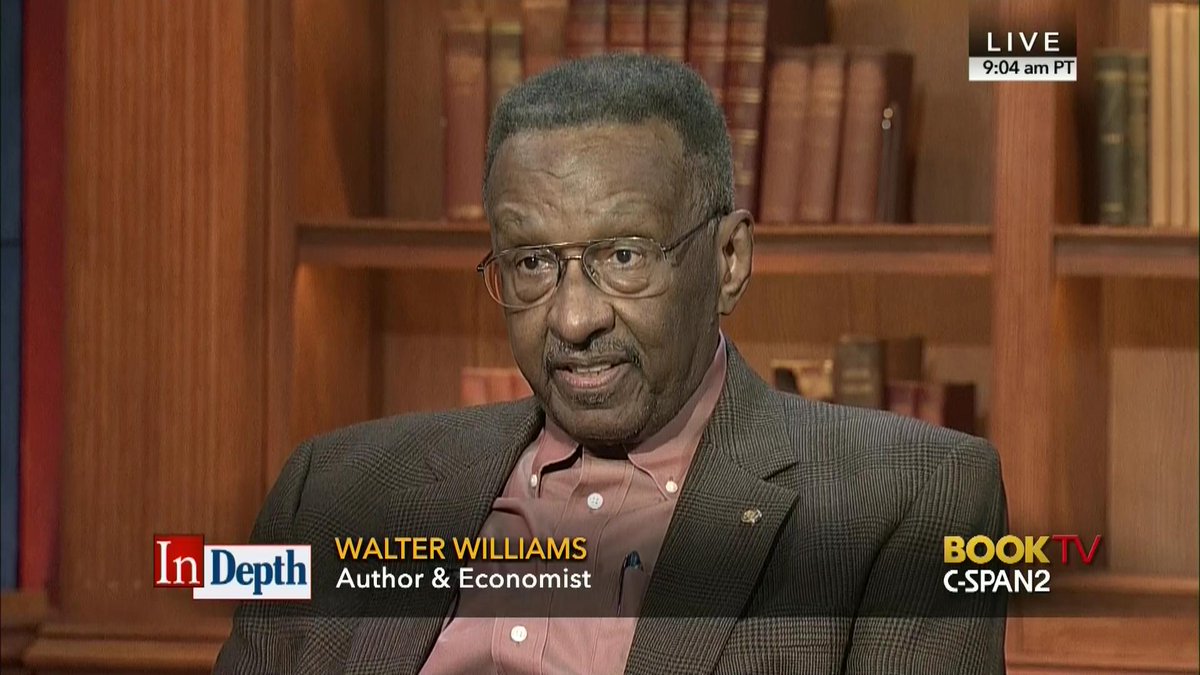
“No matter how worthy the cause, it is robbery, theft, and injustice to confiscate the property of one person and give it to another to whom it does not belong.”
— Walter Williams