On my way to learn Technical Analysis. This page will be used as my journal to share my failures, my achievements and to show that ANYONE can learn to trade.
Such a great initiative 💯
Anyone who wants to learn trading from @Moneytaur_ ‘s content, feel free to join this TG group so we can push and help each other 🤝📈
@beehiiv Hello there,
Any idea why my dashboard is showing an error message? I'm using Chrome, I've cleared my cache and I've tried different browsers and the issue persists.
Any help would be much appreciated
EDUCATIONAL POSTS 🧵
Explore my curated collection of educational content designed to strengthen your technical analysis skills and psychological behaviour.
Whether you're refining your strategy or starting from scratch, this resource hub will accelerate your learning curve, helping you build long-term profitability.
Dedicate a few months to gain a profitable edge for many years to come. Master the Markets with Precision 🎯.
▫️ SMC Dictionary: https://t.co/badYZImb9O
▫️ Psychological Thinking: https://t.co/LYROMD4vfK
▫️ Risk Management: https://t.co/glfS3jjLVU
▫️ Volume:
https://t.co/e8TpFietFC
▫️ Market Structure:
https://t.co/VoP7RgwyTU
https://t.co/x5mSZcyhAS (Candle confirmation)
▫️ Refining key levels:
https://t.co/BXpzxGXRKZ
▫️ Time Frames:
https://t.co/akcQjE4Q8D
https://t.co/JP40HFYpWB (Personal preference)
▫️ Fibonacci Retracement:
https://t.co/ldQAUsTaZs
https://t.co/KtXeYLZUSZ (Negative Fibonacci retracement)
▫️ Ranges:
https://t.co/Og4h6dj6P7
▫️ Fair Value Gaps:
https://t.co/oRsaskob28
▫️ Order Blocks:
https://t.co/2IrtrRff2B
▫️ Supply & Demand:
https://t.co/1ewblrKZqB
▫️ Discount & Premium:
https://t.co/t5nZOwuLz4
▫️ Entering Trades:
https://t.co/SMT4IXkOh3
▫️ Stop Loss:
https://t.co/A4ILDbw2Y2
▫️ Taking Profit:
https://t.co/6ngiaIXwSd
▫️ Confluences: https://t.co/h3xW8D7IdS
▫️ Volatility:
https://t.co/4HCQKlcQZ2
▫️ Journal Tracking:
https://t.co/LTYD54hNRs
▫️ Invalidation: https://t.co/f1ssyOY6u4
I’m truly grateful for every follow, repost, and like. The time and effort I’ve put into this mean a lot to me, and your support makes it all worthwhile. Thank you!
All work is referenced to @Moneytaur_ 👁️🧩
(Thank you very much MT 🫶)
@IamZeroIka Great post! The hardest part is to find the time to do it all.
I juggle between work, learning how to trade, make music and travel. I wish there was more time during the day as I still have so much to accomplish.
There’s no time for sadness, that’s for sure! 💯
📊 Liquidity is the key to deciphering the market📊
Basically, the whole financial market operates on one big concept: Liquidity. This is the key to understanding the market.
Identifying where the Liquidity is concentrated can give you a better chance at predicting future price movements.
Institutions and large players don’t trade without a plan; they search for areas with high Liquidity before making their moves... So should you!
Luckily for us, charts are the most effective tool for revealing these key areas.
But... What is "Liquidity"?
Liquidity is essentially the ability to buy or sell an asset without causing a major price movement. When there are enough buyers and sellers in the market, transactions happen smoothly. But when Liquidity is low, prices can become unpredictable and extremely volatile. For this reason, Smart Money (big institutions and banks) only trade assets with higher Liquidity.
How does Smart Money use Liquidity?
Big Institutions need Liquidity to fill their large orders, but they can’t just place massive trades at random levels. Otherwise, they would move the market against themselves.
Instead, they look for areas where retail traders have placed their Stop-Loss orders (a.k.a. Liquidity Pools). Smart money then deliberately pushes the price toward these levels to trigger the Stop Losses. This allows them to sweep the Liquidity (= the fuel) they need before moving the price in its intended direction.
How to use Liquidity Pools to your advantage?
As we just established, the main goal of Smart Money is to gather some fuel by triggering the Stop Losses of retail traders. This means that as a trader, identifying these Liquidity zones can show you where the price could potentially bounce/reverse.
Example
Let's take a look at the chart below with a common pattern known as "Double Bottom".
As we can see, the price initially went on an uptrend, then retraced and formed an internal low. It then attempted to move up again but failed to create a Higher High. This led to another pullback and the formation of a double bottom pattern.
Many retail traders, recognizing this bullish Double Bottom pattern, entered long positions and placed their Stop-Loss just below the equal lows, creating a Liquidity Pool.
At the same time, as the price broke below the bullish trendline, some retail traders also assumed that the market was turning bearish and entered short positions. They then placed their Stop-Loss above the internal high, forming another Liquidity Pool (Shorts).
Smart Money then proceeded to push the price higher, clearing the first Liquidity Pool (Shorts). The next move is a sweep of the Liquidity Pool (Longs) below the Double Bottom.
This allows Smart Money to trigger the stop-losses in both directions and grab the fuel they need for the price to keep on going with the initial uptrend.
As a trader, a good strategy here is to wait for the price to clear the liquidity below the Double Bottom and reach the Demand Area. Once all the Liquidity has been swept, we can then enter a long position, knowing that the stop-losses of retail traders have been cleared and the price will most likely resume its uptrend.
Conclusion
Mastering the concept of Liquidity can give you some insight into potential future market movements. By understanding how smart money operates, you can avoid common traps and enter your trades in strategic areas.
Always analyze liquidity zones before entering a trade, and make sure that the price has swept liquidity for confirmation. By staying ahead of liquidity trends, you can navigate the markets with greater confidence and precision.
@CryptoGirlNova@cyberpulse3 That’s very well thought of @CryptoGirlNova 👌🏼
A lot of people (especially in crypto) believe that $1million is not much money but it can actually go a LONG way if you play your cards right like you have.
Enjoy your freedom now 💫🙏🏼
BOS = Break of Structure
CHoCH = Change of Character
BB = Breaker Block
OB = Order Block
HOB = Hidden Order Block
PHOB = Potential Hidden Order Block
FVG = Fair Value Gap
MA = Moving Average
I'll keep updating the list as I keep on learning new ones.
When I decided to start this trading journey, the first thing I realized was that I didn't understand half of the abbreviations that were used by traders...
LTF, OB, CHoCH,... I had no clue what they meant
So, I created a list 👇
MS = Market Structure
PA = Price Action
TF = Time Frame
LTF = Low Time Frame
HTF = High Time Frame
HL = Higher Low
HH = Higher High
LH = Lower High
LL = Lower Low
TL = Trend Line
SH = Swing High
EQH = Equal High
EQL = Equal Low
SL = Swing Low (or Stop Loss depending on context)
📖 If you want to make it, you must become mentally strong, and you must change so you can become a more powerful version of yourself
🔹 Pay attention to your inner monologue
Almost all of us have an inner monologue that follows us through the day, narrating our thoughts and feelings as we go, but have you ever paid conscious attention to it?
A mentally strong person has an inner monologue that speaks with self-assurance and positivity. What does your inner monologue say?
- If you catch it saying things like…
“I don’t have enough time to finish…”, or
“I’m not skilled enough to achieve that…”
Well, it’s time to start making some changes.
Consciously transform these thoughts into…
“I should properly focus so I can work faster” and, “What skills do I need to develop to achieve that?”
Those are far more proactive and far more positive. These will make you keep going, never giving up, and ultimately achieving results most people only dream of. It's real. Believe in it and you shall experience it yourself.
🔹 Don’t let setbacks define you
Setbacks happen. They’re a part of life. Deep down we all know this is true, but we often deny this fact when the setback occurs to us. When faced with adversity, we often become our harshest critics don’t we?
“Nothing ever goes right for me…” or,
“This wouldn’t have happened to someone else..."
Put a stop to those thoughts immediately. If something can be done to mitigate the setback, start working on your solution. If nothing can be done, acknowledge the setback, think about what could have prevented it, and what you can learn from this moving forward. Then, move on. Setbacks do not define you. It’s your response to setbacks that is a true representation of your character.
What’s done is done and you cannot alter the past. To get mentally stronger you have to accept that setbacks happen, and they will happen again no matter what. Even though you cannot alter the past, you can design your future.
🔹 Change what you do professionally, where, and how you do it
Staying put only confirms how mentally weak you actually are. You're scared of change, but you must do it.
People waste their lives in jobs they hate, working with people they don’t like, jobs that won’t make them rich or at least fulfilled, and feeling stuck on a professional hamster wheel where they dread waking up to another day because they have to work.
It’s obvious from a distance, but they don’t see it.
If you’re always in a room full of sh*t, it won’t be long until you no longer notice the smell, but rest assured the sh*t is still there.
🔹 Change what you fuel your mind with
Your mind is your most valuable asset.
Every reward you will get in your life will be constructed first in your mind, so protect that gold mine of yours carefully. The mind is a fertile garden – it will grow anything you wish to plant. If you plant sh*t in it, it will grow sh*t. You should remove garbage from your house for it will fester and lead to disease, and the same happens inside your head.
You need to remove garbage beliefs and ideas that are not contributing to your well-being. This is why I often say to clean your “following” list. This space is filled with garbage that your brain will process if your eyes see. Think about it. You know better than anyone just how much time you regret wasting on endless scrolling through nonsense. Remove the garbage, add a daily dose of wisdom, and your life unlocks.
🔹 Change what you fuel your body with
I'm not going to tell you to eat a salad, but understand that your body would feel different if you changed some of the things you consume.
It turns out that some of you out there are feeling depressed, not knowing that you’re actually just iron deficient. It costs a couple hundred dollars to get all your blood work looked into. They’ll tell you exactly what you’re missing and why you’re feeling the way you are. If you feel tired, if you can’t focus, if you don’t sleep well, if you don’t feel motivated, if life is kind of gloomy, it means that you’re deficient in some chemical your body normally fills you up with, but for some reason, it doesn’t right now.
Then buy the foods that supplement your deficiency to go the natural route, or get the pills if that works better for you. Changing the biochemistry in your body opens you up and allows you to live. You're in charge of EVERYTHING you consume. Consume sh*t content and sh*t food and guess what you'll be?...
A large walking piece of sh*t.
You’ve been running in low battery mode for months now so it's time to charge up. Instead of buying the latest iPhone, invest that money in your health and in your mind. You play games where you gain XP and get your character faster, stronger, and smarter, but you don't do that to yourself? WTF is wrong with you?...
🔹 Change the volume
Nobody ever told you this but unlocking life is actually a simple formula (simplified):
Growth = (How much you do / How quickly you make decisions that impact what you do) x (How effectively you use what you know, the money you have, and the tools at your disposal)
Even if you’re going to make one good decision per year, meaning the time it takes to make a decision is high, you can still see massive growth if you take a lot of action and follow through. If you double the volume of effort and double the number of hours you put into your craft, you will achieve in a year what it would take everyone else two or more.
By year 3 or 4, you’re so far ahead that they can’t catch you. You increase the speed of making decisions as well, so now you’re learning faster.
You invest in yourself, in your education, and in your tools, and all of a sudden your growth is 10 times that of everyone else’s, and they’re looking at you as if you’re an alien.
If you want life to change, you need to change the variables that contribute to it. There’s no unlocking of life without change.
🔹 Dream BIG
The big rewards in life are exclusively reserved for those who dare to dream about their achievements.
This is a skill you have to develop on your own because your parents, your teachers, and society in general lack the ability to dream big.
They lack the fire that is within us. If you possess it, you will understand precisely what i mean.
When you tell people you’re going to be a millionaire or billionaire, they laugh at you. Their understanding of reality doesn’t allow for that kind of dream.
Yet, there are billionaires and millionaires in the world, so why not you?
When you tell people you’re going to write a bestseller, they say it’s impossible. They’ve never written a page in their lives, yet every month people publish bestsellers, so why not you?
People change jobs, friends, relationships, countries, and industries all the time, so why not you?
Once you do, they’ll look at you strangely. They’ll say you changed, like you somehow worked that hard to stay the same.
If you want to unlock the full potential of your life, start with changing yourself for real, or succumb to a life that you actually know it won’t be that great. If that’s enough for you, by all means, go ahead and good luck.
@IamZeroIka By “backtesting”, do you mean trying our own strategy with little money over a set period of time and study what works and what doesn’t?
Also, is there a time frame that you would recommend for a beginner? I imagine trading on LTF would require faster reactions than HTF?
@IamZeroIka Hey Ika, thanks for your posts, they have been so helpful to me so far 🙏🏼
This year, I made the decision to stop being a bagholder (aka “roundtripper”) and take the time to study the market properly and learn how to trade.
I just have a couple of questions 👇🏼
Many people ask me: "Mate, how do you chart? How is the process if I want to start from a naked chart?"
Time to drop the whole framework with the hope that you may find interesting ideas to apply to your journey.
Disclaimer: Before starting, it's important to remind that everyone has his own style and the crucial aspect is being able to find a methodology that offers the highest statistical probability over time, aka backtest, contextualized to goals/time horizons and time that an individual can commit.
(Quite long post, so if you're lazy "TLDR" skip it, this isn't for you -> but if you're drinking a Mojito 🍹on the beach, you have time to read)
- First step -
The first thing way before everything else is understanding the macro structure in order to have a clear view where the price is trending and thus being able to work on a strategy.
To do so I'm gonna directly switch the chart to HTFs, mainly weekly and daily which are my favorite TFs (monthly also, but after having made a "first touch-analysis") as they have more relevance than LTFs, of course.
From those TFs, the process is identifying:
- HHs/HLs for the bullish trend
- LHs/LLs for the bearish trend
Nothing difficult, this is the first and necessary step that leads to build up the main strategy.
- Second step -
Now that I know if the price is in a bearish or a bullish trend, I start to identify strong supply & demand areas where the price can be rejected or bounce.
S&D zones are more powerful than support and resistance levels as they provide wider areas, but this doesn't mean that S/R should be ignored but instead utilized as "2nd layer" once you grasped the bigger picture.
There are S&D zones that are stronger than other ones and they usually match historical and significant points in which the price has violently wicked or strongly rejected/bounced.
Take note as additional info that the more a S or D zone is touched, the weaker it becomes as orders on one side or another get absorbed -> this can change your overall perception and operational activities.
S&D zones together with S/R levels contribute to create the "main dish" which is completed by the "dessert" called Order Blocks.
OBs are zones where significant buying or selling from smart money, offering extra but valuable areas in which the price can reverse.
Bearish and bullish OBs can fail, there are no certainties, but being to properly contextualize them in an overall analysis can make a huge difference leading to profitability.
Not every OB plotted on the chart has the same relevance, most of them are weaker as they have already been tested multiple times, therefore increasing the likelihood of being melted like butter.
The process of finding good OBs doesn't only depend on looking at HTF ones, but also switching to multiple timeframes in order to find the best ones.
Weekly? Yes. Daily? Yes. But very often you can find good levels by switching to uncommon TFs like 2D/3D as there's liquidity contained in candles that are invisible to classic TFs.
Identifying and drawing these areas on a chart adds more clarity which is strengthened by the application of trendlines.
Trendlines are drew by taking into consideration at least 2 SHs/SLs but for my attitude 3 is the perfect number that validates a correct TL.
The 🔑aspect here is to not force a TL (don't chain yourself in finding one if conditions aren't met) + understanding that horizontal S/R are more powerful than diagonal ones.
- Third step -
Finding the liquidity.💧
This is one of the most important steps as everything turns around the concept of liquidity (more here if you're interested -> https://t.co/AIibrw2QM0)
Fair value gaps play an important role in my strategy, especially the ones who have never been tested, thus boosting the probabilities of seeing the price catching the liquidity 💧toward those areas.
Untested ones that find confluence with historical PA (especially areas in which the price has strongly reacted) are more powerful than "naked FVGs" that have less relevance.
As per the OBs, even FVGs might be evaluated on multiple TFs to find the best ones, meaning that if you find multiple confluences, those gaps become stronger.
In a strong trend, FVGs could act as supports if the body of the candle closes inside of them or the price wicks toward those areas, leading to continuation.
As a general rule, I tend to look for HTF FVGs in opposition of the trend meaning that, if we consider a reversal, the higher ones in a bearish trend and the lower ones in a bullish trend, will likely be more powerful contributing to attract the price over time.
FVGs alone don't tell you about the liquidity, they need to be contextualized to candle bodies in order to be effective.
- Fourth step -
The study of price action.
Once the chart starts to appear clearer as it incorporates the concepts we mentioned above, I start to monitor all the factors involved in the PA.
This includes:
- The candles (big or small bodies and when they appear)
- The wicks (where they spike and how long they are)
- Momentum & Dominance
- Closures above/below significant areas or SHs/SLs
The dominance is extremely tied to the concept of S&D, with SHs/SLs as points to overcome in order to see continuation/reversal.
Momentum, instead, refers to the "speed" of sellers and buyers.
The less it takes for a price to reach a specific level, the stronger the momentum from buyers or sellers.
The more it takes, the weaker the momentum for one side or another.
When the price closes HTF above SHs/SLs I know that could be a trigger for future continuation, usually preceded by a pullback, it's not "an instant shot".
I know, there are dozens of candle types (marubozu, hammer, hanging man, etc) and they surely help, but I prefer to move my focus on the bodies and on the wicks, as they can be enough to understand what is happening/about to happen.
Patterns?
Yes, the ones that have the highest probabilities like H&S/IH&S + 3 drives + ABCD correction.
Triangles? Sometimes, but more specifically to see if the price is compressing and can lead to a breakout.
- Fifth step -
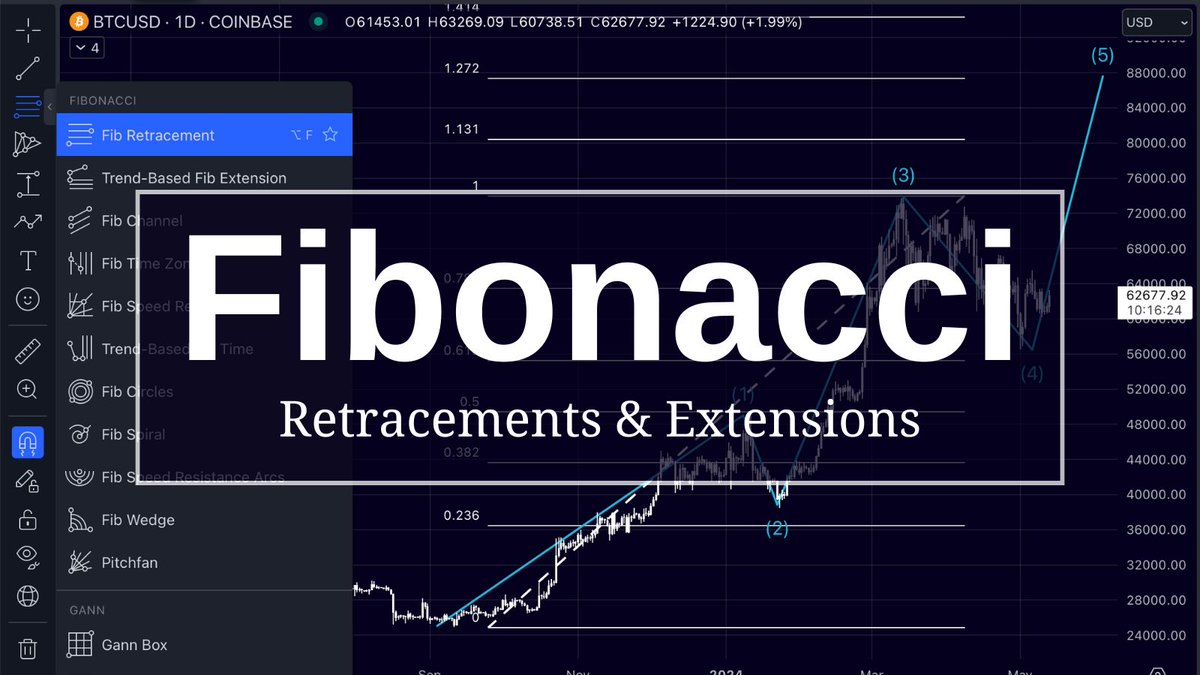
Adding Fibonacci retracements.
I apply them on a macro scale and on HTFs, both to calculate retracements and potential targets for the future.
I use them also on lower timeframes as they help me to calculate small retracements on uptrends and assess where I could potentially take profits and reload lower.
Areas of interest are usually 0.786 + 0.618 + 0.5 (equilibrium), both for uptrends and downtrends especially if they match with S&D zones or FVGs as they become more powerful.
Extensions to calculate targets are another crucial part of my strategy, with the area of 1.618 + 1.454 + 1.272 that often helps me to find amazing 🎯
- Sixth step -
Finding confluences with external "noise" like news or announcements as they often happen when the price reaches a significant 🔑level.
Bullish news +🔑 HTF upside level -> sell
Bearish news + 🔑 HTF downside level -> buy
Price action always moves first, then the news comes out to "justify" the impulse and to 🪤 retails.
- Seventh step -
The add of potential indicators.
I don't use common indicators if not the Volume Profile that helps me to spot volume voids that matched with gaps contribute to attract the price or see areas in which there was substantial trading activity.
I often utilize Velodata for OI, Funding rate, CVD spot volume, Premium & Perp which help me to sustain the main thesis led from the price action alone.
The other indicators, for my strategy/idea aren't helpful.
That's basically the whole framework of my strategy and how I setup my charts.
If you found this helpful, the like 👍and repost buttons are just few centimeters below.