The official account for The Faboratory at Yale University. Led by Prof. Rebecca Kramer-Bottiglio. Tweets about manufacturing, materials, and robotics.
We’re excited to announce our RoboSoft 2026 workshop "Adaptive Intelligence in Adaptive Bodies: AI for General Shape-Changing Robots (GSCRs)!" Submit your info + a 1–2 page abstract by March 15, 2026 here: https://t.co/Kx1HtO4xZz
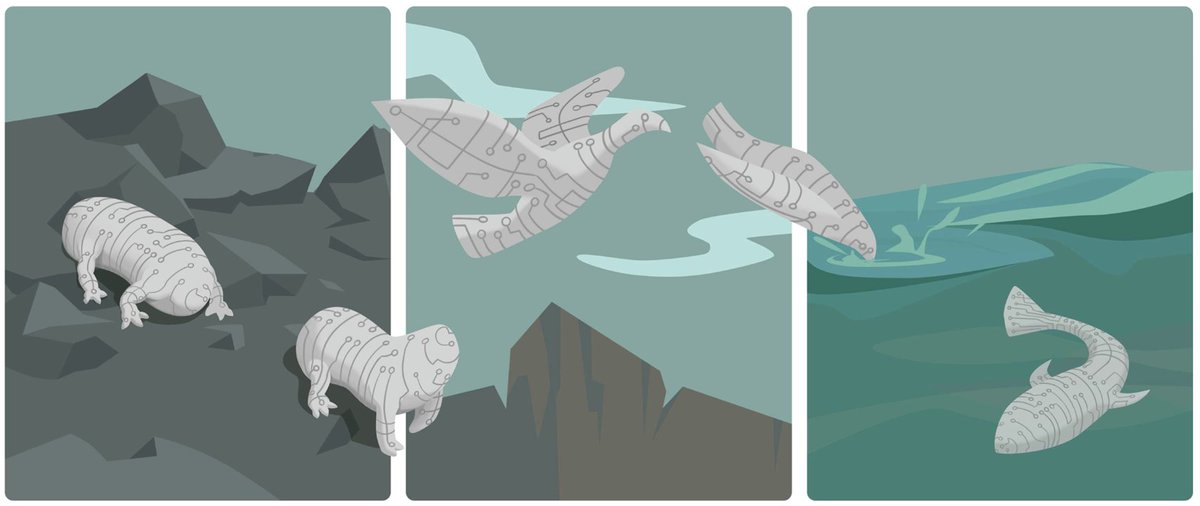
By using kirigami laminar jamming flippers, the Jamming Amphibious Robotic Turtle (JART) can quickly morph its limbs to adapt to changing terrain.
Read our paper here: https://t.co/sc7f0OGFP7
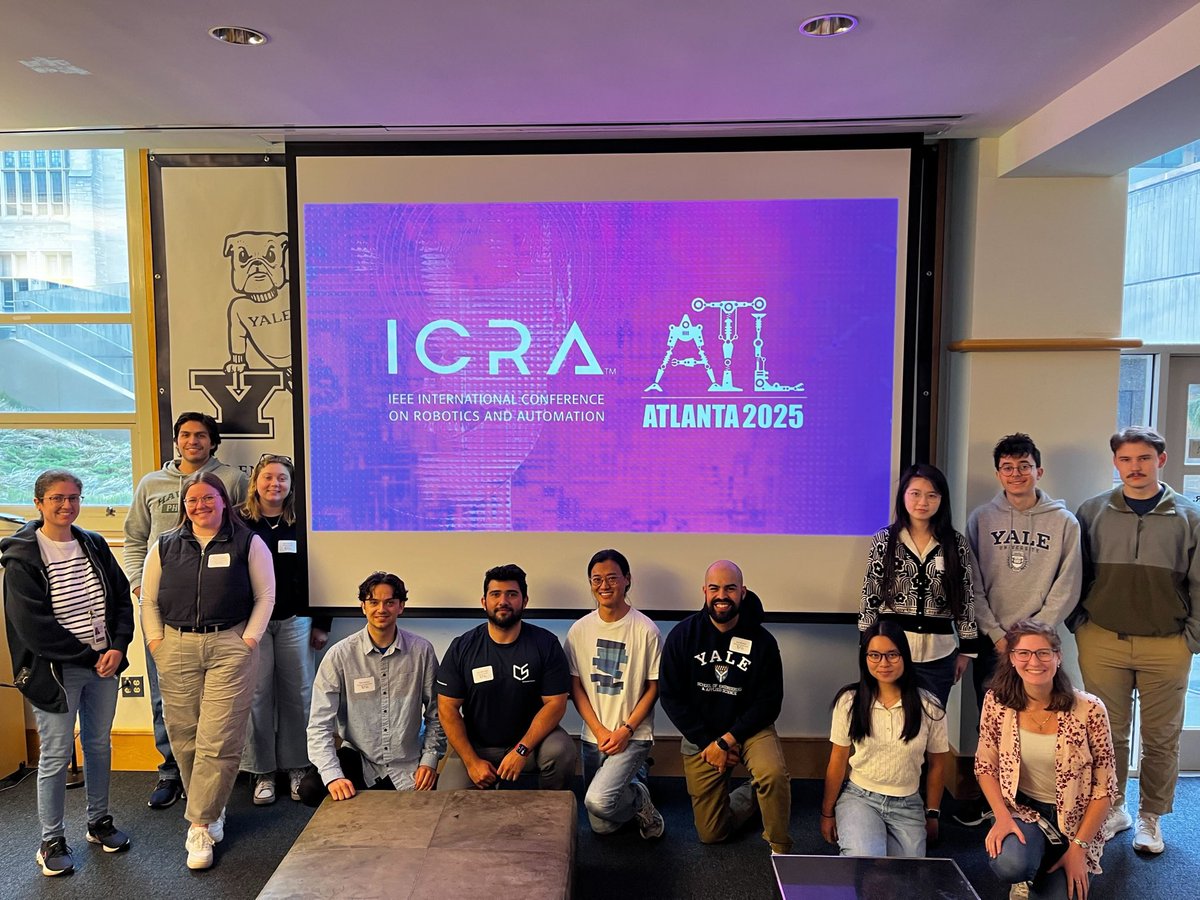
Last month, we attended #RoboSoft2025 with 📄 papers, 🌟 Rising Stars, ⚒️ workshops, and 🧠 extended abstracts! We had a blast meeting everyone, and see you next time!
Our latest review explores how softness enables natural burrowers to move efficiently underground, and how these biological insights can advance the next generation of burrowing robots.
🔗 Read: https://t.co/RhWZKIqLZb
🎥 Watch: https://t.co/dmWZeouMg0
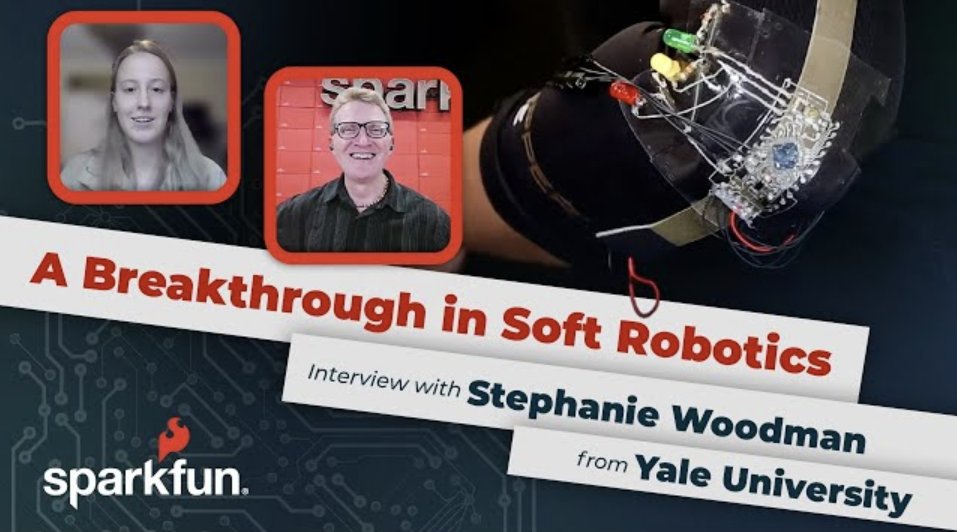
Stephanie Woodman, a PhD candidate from our lab, was interviewed by SparkFun Electronics about her recent publication "Stretchable Arduinos embedded in soft robots." Check it out here: https://t.co/0RAsb9XSeE
Our article "Robots that Can Survive the Egg Drop" was published today in the Soft Robotics collection of Frontiers for Young Minds. Young readers can learn about the advantages tensegrity robots and what they might be used for in the future.
https://t.co/2U4TlweKfD
In this review, we outline two key advancements needed for general shape-changing robots: robot-agnostic stretchable shape sensing and stretchable computing. Final version publishes May 2025. Pre-print available now: https://t.co/IeUa9GpW6F
Our new paper, led by our collaborators in the Pracsys Group at Rutgers, shows how the inherent graph-like structure of a tensegrity robot enables us to learn contact dynamics efficiently using a Graph Neural Network. Catch it next week at CoRL! Preprint: https://t.co/gRyqo08OCr
By patterning liquid metals onto a soft and tacky substrate, we created circuits that stretch to over 4x their length—making them stretchable and robust enough for use in soft robots.
Read our paper here: https://t.co/TJb6AOyGDb
In a complex pipe network, a vine robot may interact with itself when retracing its path. "This work presents an experimental approach to investigating and characterizing [this interaction] inside of a pipe T-junction."
https://t.co/FBRHbIhQsf
Using fibers that stiffen or soften on command, we can morph one robotic skin into two different shapes. Using a fiber merging protocol, we simplify the number of fibers used and improve the shape accuracy.
Read more here: https://t.co/0QevTvSvT5
By combining a layer of fabric with liquid crystal elastomers (LCEs), a "class of responsive materials for shape-morphable structures," a bilayer bending actuator can be made.
Read more here: https://t.co/s4uH7snZke
Using thermoplastic elastomer, we make a reversible joint that "allows for strong attachment and easy detachment of distributed soft robot modules without direct human handling."
Read more here: https://t.co/VCzEkXAmGp