Every day, Americans face censorship for exercising their First Amendment rights. And every day, FIRE is fighting back.
As 2026 comes to a close, you can help us take that fight into the new year.
Anonymous speech helped found this country. Can it survive the digital age?
Non-resident Senior Fellow Jeff Kosseff joins @TraceTheLaw, @ishapiro and @jcfarber for a discussion of online anonymity.
Hosted by @TheFIREorg ⬇️
And the distrust doesn't stop at the White House.
Only 9% of Americans have full confidence in Democrats to protect their First Amendment rights, and Republicans aren't faring much better at 10%.
See what else the data reveals:
https://t.co/0aOKXH1Jml
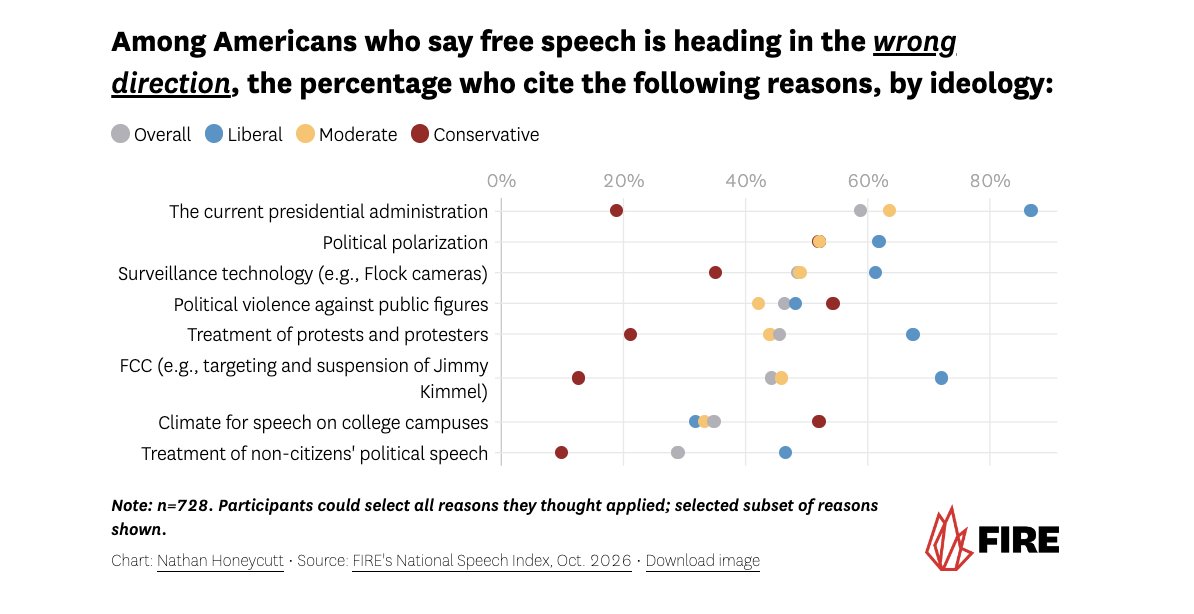
Nearly three in four Americans say free speech is headed in the wrong direction.
But our latest National Speech Index reveals sharp disagreements over what's driving the problem. See how liberals and conservatives answered. 👇
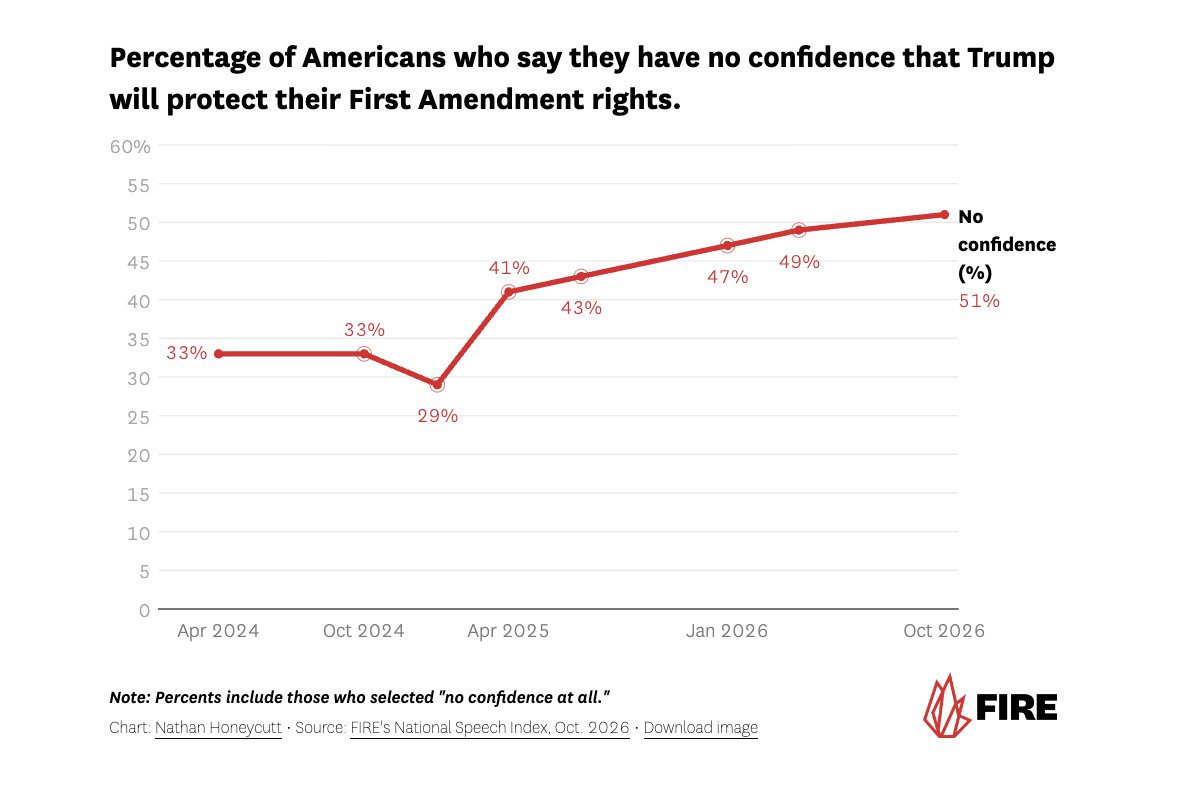
And it's not just the broader outlook on free speech that looks bleak. The majority of Americans now say they have no confidence President Trump will protect their First Amendment rights.
That's up from just 29% in early 2025, marking a steady erosion during his second term.
So what's the better approach? Hold government censors accountable.
In September, the same committee advanced the bipartisan JAWBONE Act, which gives Americans a way to fight back when federal officials pressure platforms to suppress their speech.
https://t.co/vOqO04qxJ3
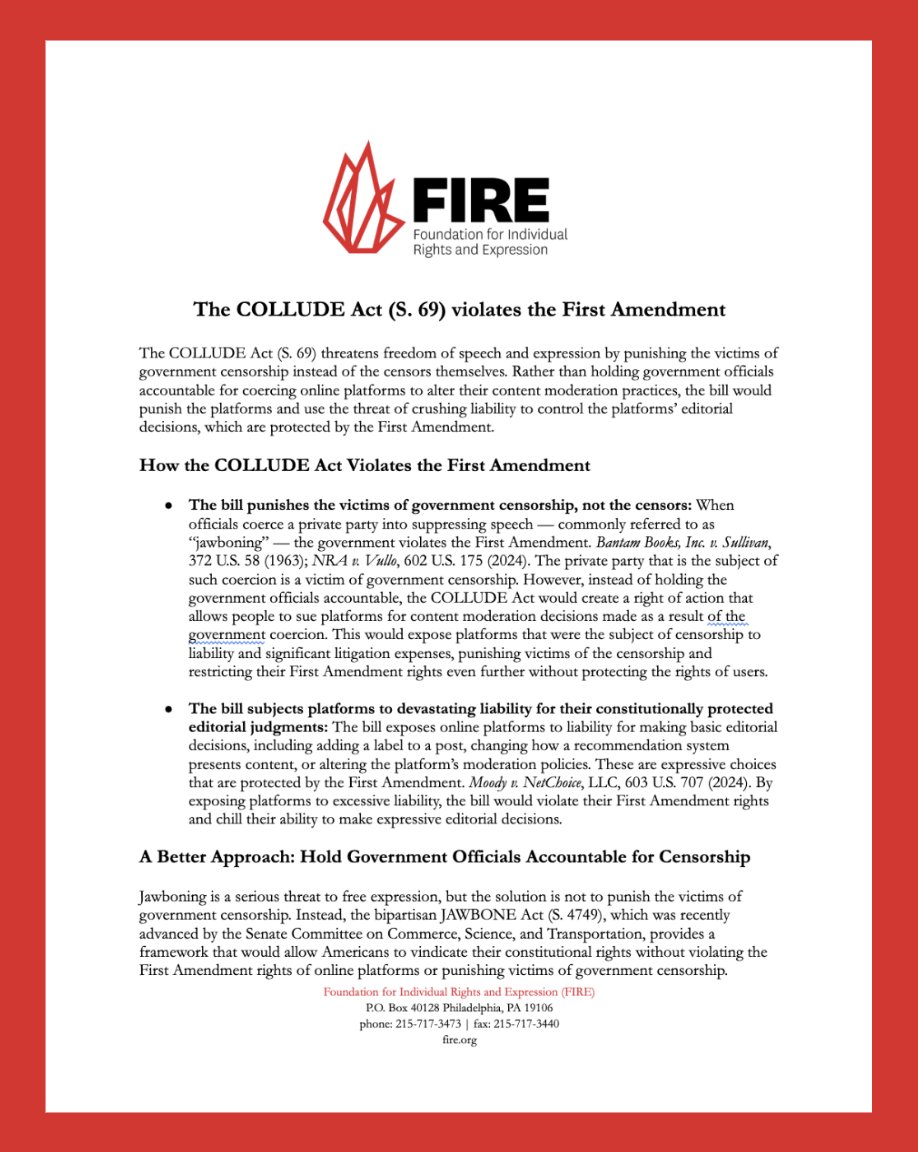
The Senate Commerce Committee is considering a bill tomorrow that gets the fight against government censorship dangerously wrong.
Instead of holding government officials accountable for pressuring online platforms to suppress speech, the proposed COLLUDE Act (S. 69) would punish the platforms that were victims of that censorship.
The bill could expose platforms to crushing lawsuits for decisions as simple as adding a label to posts or choosing what gets recommended in your feed — editorial judgments that are protected by the First Amendment. That legal pressure could change how platforms handle what millions of Americans see and share online.
Government censorship is the problem. Punishing its victims isn't the answer.
FIRE opposes the COLLUDE Act.
After protesters drove @GregoryKBovino offstage at Rutgers, it looked like the hecklers had won.
Then the university, despite its dismal speech record, surprised everyone. Campus police cleared the room, and Bovino returned.
This time, Rutgers got it right.
🖊 @ConnorMurnane
Tomorrow, the Senate Commerce Committee will markup the COLLUDE Act.
Instead of punishing government officials who coerce private parties, the bill would punish the victims of such coercion.
This bill is a major threat to free expression and would violate the First Amendment
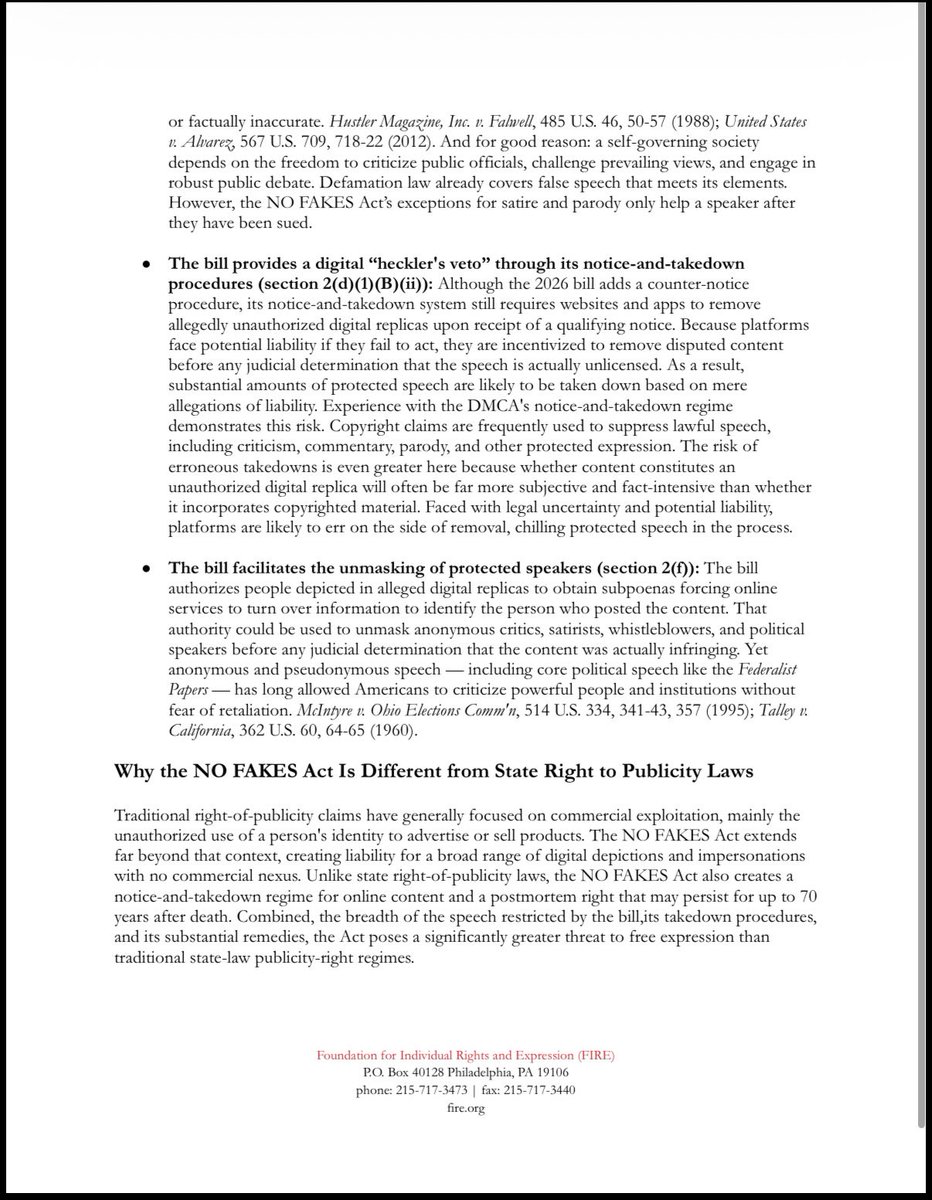
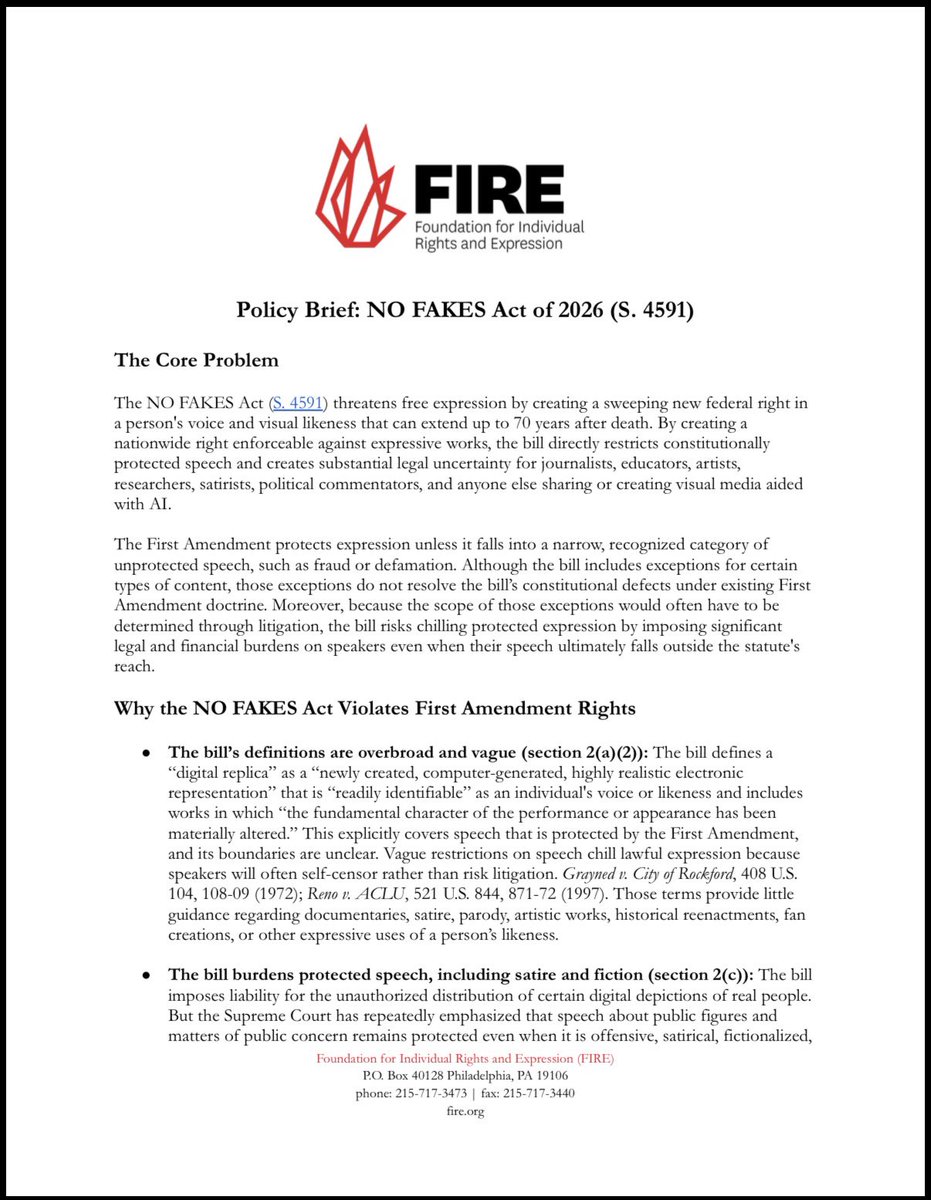
Today, the Senate is considering the NO FAKES Act, a bill that could expose everyday Americans to costly lawsuits over protected AI-generated speech.
At first glance, letting people sue over AI-made copies of their faces or voices sounds fair. But the bill could reach far beyond harmful deepfakes, putting documentaries, political jokes, and other creative works at risk of lawsuits while pushing platforms to take down lawful content rather than risk being sued.
AI-generated content isn't above the law. Fraud and defamation already carry legal consequences, and protecting people from harm shouldn't mean restricting lawful expression.
Creativity cannot thrive when every new work requires permission. New mediums shouldn't mean new muzzles.
FIRE opposes the NO FAKES Act and urges the Senate to reject it.
Hearing that the NO FAKES Act is likely to get a live UC today in the Senate.
This is a major threat to freedom of speech and expression. It would greatly burden protected speech and effectively create a digital “heckler’s veto.”
Congress should say NO to the NO FAKES Act!
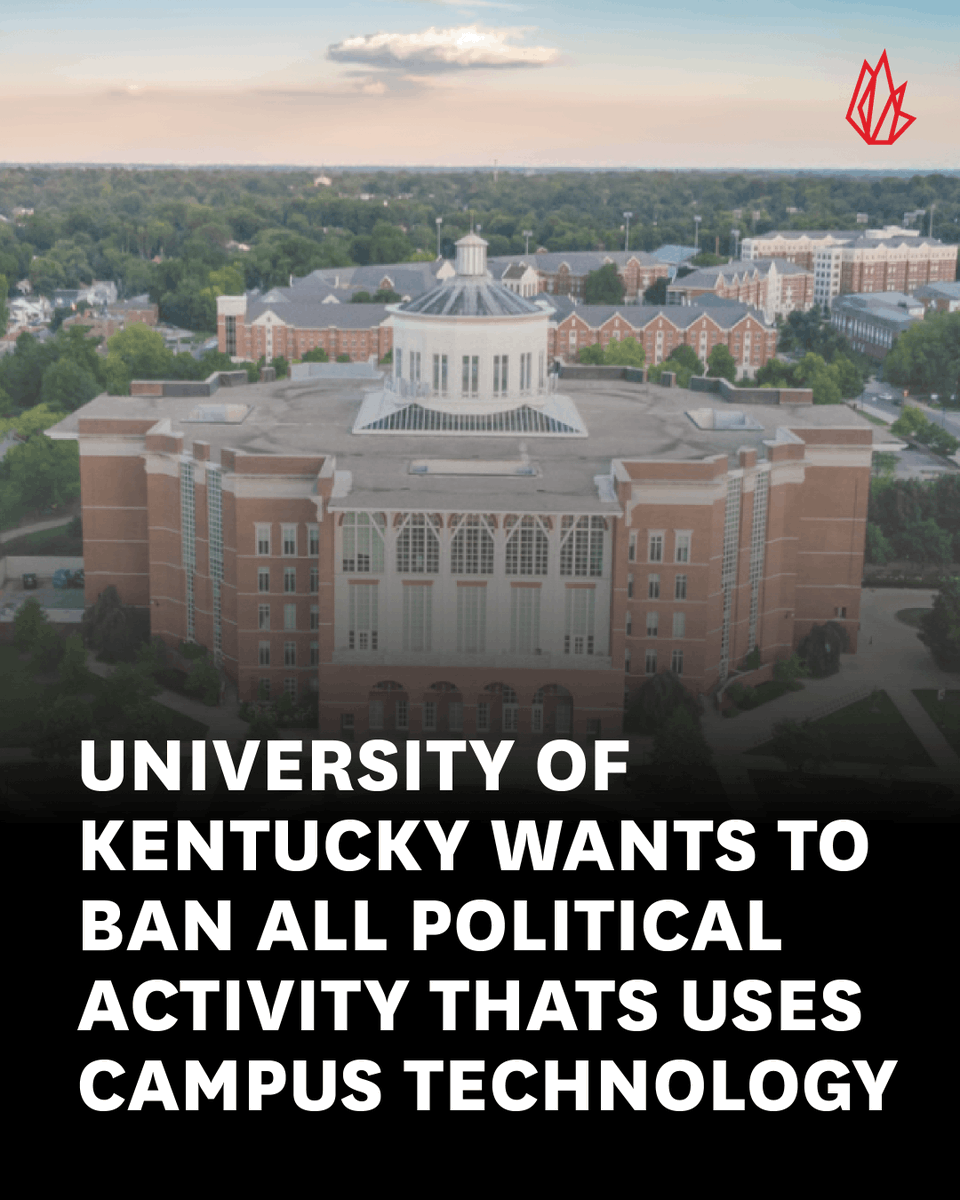
The University of Kentucky is considering a policy that could punish anyone for engaging in "political activity of any types" using campus Wi-Fi or university technology.
That could mean punishment for students emailing a political club about candidates or posting about the midterm elections from the library's Wi-Fi.
Meanwhile, campus employees receive an explicit exception for certain personal use, making the lack of protection for students all the more troubling.
@universityofky can protect its technology without restricting political speech. It can't call "debate and open inquiry" essential to its mission while punishing students for doing exactly that.
We're urging UK to reject these proposed restrictions.
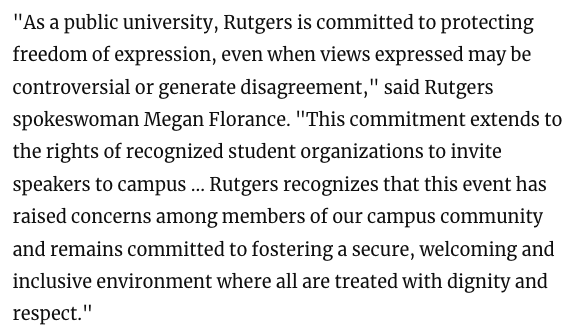
Good statement from Rutgers resisting the pressure to cancel former Border Patrol leader Greg Bovino's speech for the College Republicans this evening.
Now comes the hard part: making sure both Bovino and protesters can be heard.
The fight for free speech doesn't end in 2026. Or 2030. Or 2050.
During a live @wethefifth recording at our Soapbox conference, @kmele explained why we all must be prepared to defend free speech for decades to come.
Help us build that future. 🔥
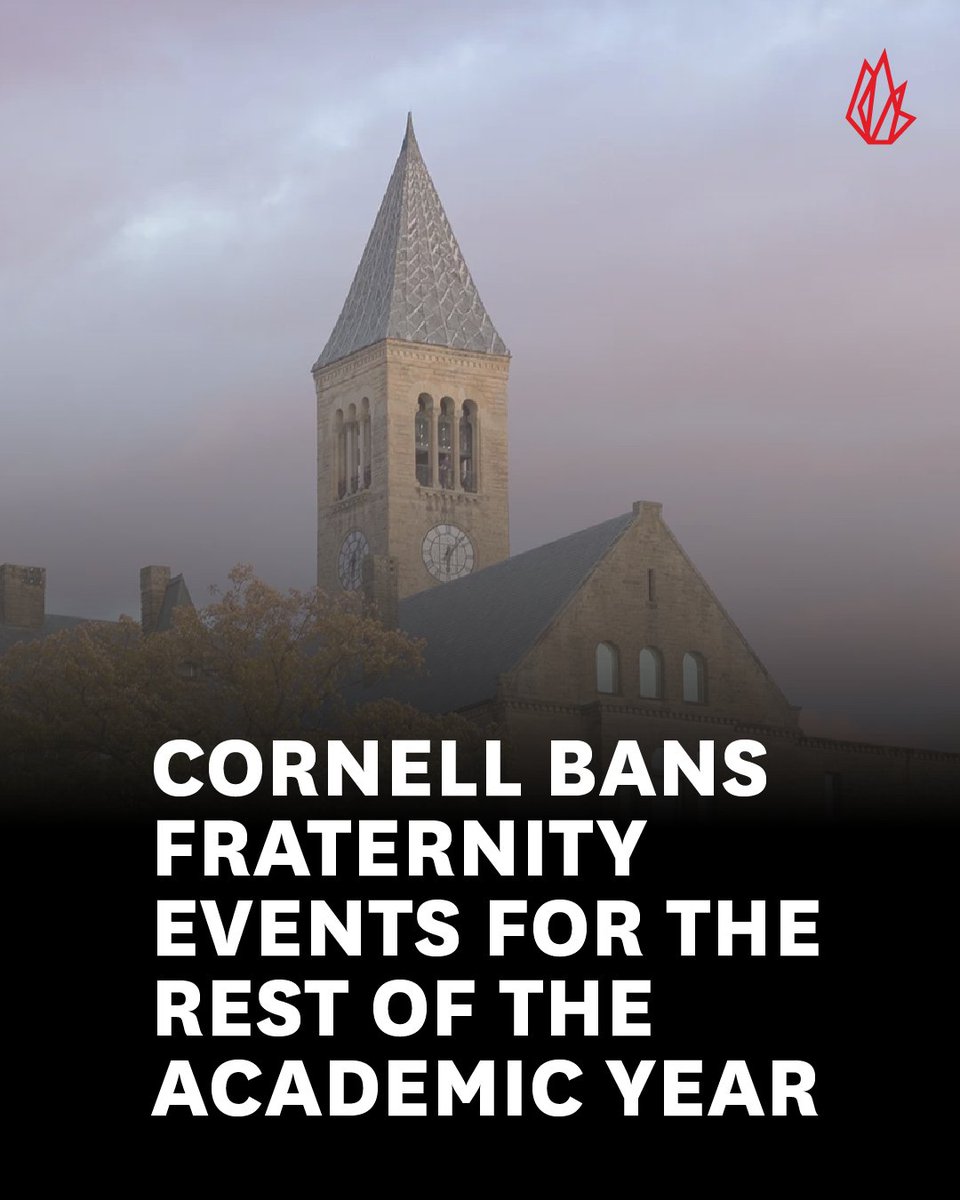
Cornell says it doesn't control private residences, yet reserves the right to inspect them. When does oversight become an invasion of privacy?
Student safety matters, but students don't surrender their associative rights when they walk through their own front door.
Cornell now requires fraternities to register certain social gatherings at off-campus homes it doesn’t own or operate, and campus security can enter for compliance checks at the university's discretion.
Violations can carry severe consequences, including immediate suspension.
Cornell has suspended all fraternity social events for the rest of the academic year after allegations of serious misconduct, punishing an entire community for the alleged actions of a few.
Cornell has every right to investigate misconduct and hold responsible organizations accountable for their members’ actions. But punishing students who had no involvement is guilt by association.
With roughly one-third of Cornell undergraduates participating in Greek life, the blanket ban restricts students’ freedom of association and shuts down even charitable fundraisers.
Protecting students and respecting their rights are not competing obligations. Cornell has a responsibility to do both.
The First Amendment protects documenting law enforcement and sharing truthful information about government activity.
Officials can't bypass those rights by pressuring private companies to censor speech for them.
https://t.co/04SapfHiAW
VICTORY! The government agreed to permanently stop censoring two Midwesterners who shared publicly available information about ICE activity after officials pressured Facebook to remove a group with nearly 100K members and Apple to take down an app documenting ICE operations.
LAWSUIT: FIRE is suing AG Pam Bondi and DHS Secretary Kristi Noem for strong-arming Facebook and Apple to censor groups and apps reporting ICE activity using public information.
The First Amendment protects the right to record and criticize what law enforcement does in public.